

As the demand for cheap, protein-rich food items increases in Bangladesh, soya badi emerges as an excellent manufacturing option. With increased demand, manufacturers require machines that will help them produce in bulk.
Several firms prefer Indian Soya Badi Machines in Bangladesh due to their practicality, affordability, and technical expertise.
Proper use of the Soya Badi Making Machine in Bangladesh would lead to effective extrusion and moisture management.
The purpose of the blog is to highlight the reasons for Bangladeshi companies opting for Indian soya badi machines, considering their cost-effectiveness, customization options, and technical assistance. This would help prospective buyers to have an idea about the factors they need to consider prior to purchasing such a machine.
Why Is Soya Badi Manufacturing Growing in Bangladesh?
Soya badi, also known as soy chunks, is a cheap source of plant protein, which is widely used at household and industrial levels. As the need for vegetarian and protein-based products increases, most companies are turning to local manufacturing rather than relying on imports. The selection of appropriate equipment is important for entrepreneurs who plan to start a Soya Badi Plant in Bangladesh.
Key Factors Influencing the Demand
- Growth in interest towards plant proteins
- Demand for cheap protein-containing foods
- Retail and packaged food market growth
- Increased foodservice and institutional demands
- Domestic production and distribution potential
- Opportunities for private label food manufacturers
Such factors create opportunities for those companies that would like to set up their commercial manufacturing plant for Soya Badi in Bangladesh.
Why Indian Soya Badi Machines Are Preferred in Bangladesh
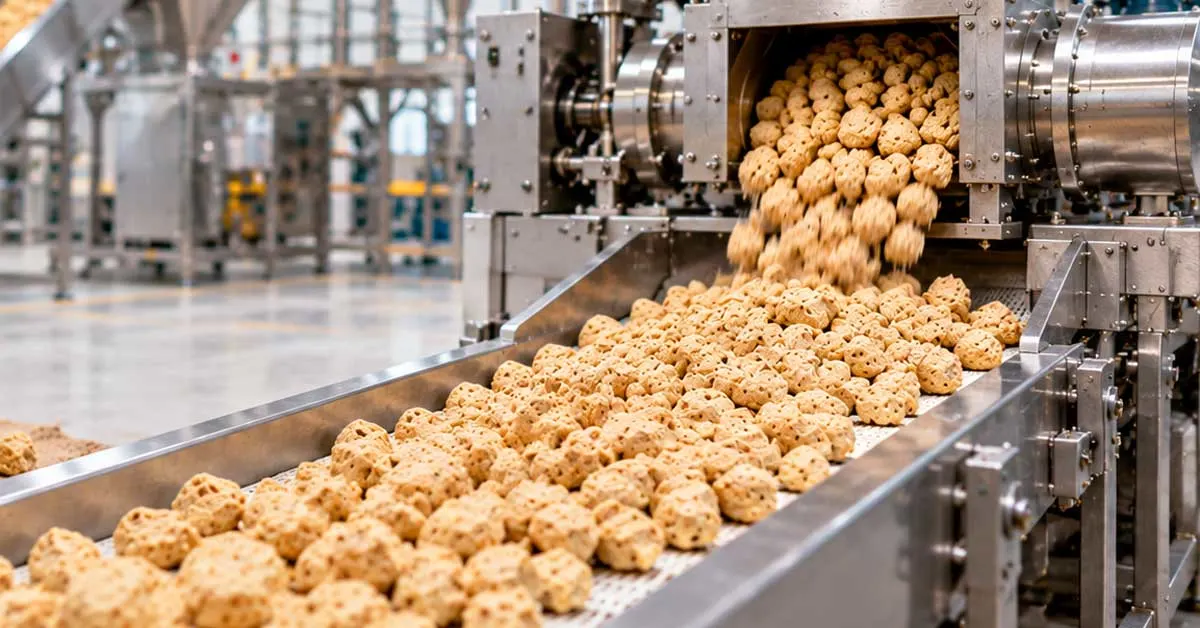
The Bangladeshi companies prefer to go for Indian machines owing to the proximity between India and Bangladesh and the availability of machines suitable for South Asian needs for processing food products.
Compared with obtaining machines from distant markets, there are certain conveniences that come with Indian machines.
Competitive Machinery Cost
The soya badi making machines produced in India are believed to be cost-effective options for producers in Bangladesh as they provide commercial-level production without excessive investments.
Key cost advantages include:
- Cost-effective machines: The Indian machines are available at realistic prices to both startups and existing manufacturers.
- Lower transport costs: The proximity of the countries could help in avoiding high transport costs when compared to importing machines from far countries.
- Flexible configurations: The manufacturers could choose machines depending on their manufacturing needs.
- Less dependence on labor: Automating production could save labor costs and efforts.
Suitable for Different Production Capacities
There are various kinds of soya badi manufacturing machines available in the Indian markets, and companies can choose the right one based on their current production needs.
While a new manufacturer can start with a smaller production setup, an existing food company may require a bigger production setup.
This kind of provision helps companies make their investments based on plans.
Easier Customization
The various manufacturers may have different requirements regarding the size, shape, texture, and production capacity of their products. The equipment manufactured by Indian manufacturers can be customized according to these requirements.
The customization process may include:
- Production capacity
- Configuration of the extruder
- Size and shape of the product
- Cutting process
- Drying process
- Automation process
- Packaging process
Such versatility is especially advantageous for companies considering developing a Soya Badi Manufacturing Machine according to their needs.
Role of Extrusion in Soya Badi Production
Extrusion forms an integral part of the production process of soya badi. It is through this process that the soy-based raw material is processed to achieve the required structure and texture. The extrusion system therefore has a direct impact on the final product.
- Consistent product shape
- Uniform texture
- Controlled production output
- Better process efficiency
- Reduced production variation
A soy protein extruder machine in Bangladesh would be an essential component in creating a system for making soya badi for companies seeking advanced extrusion equipment. The extruder must be chosen based on the nature of the raw material, required product specifications, and the plant layout.
Why Indian Soya Badi Machines Are Preferred in Bangladesh
Indian machines are widely adopted due to strong performance and reliability in the Bangladeshi food processing industry. They also align well with local production needs and budget expectations.
Cost-Effective Manufacturing Solutions
One of the main factors that makes the Indian soya badi machine an attractive choice for manufacturers in Bangladesh is the cost-effective nature of this machinery. Indian producers are able to manufacture industrial equipment competitively while maintaining configurations according to the manufacturing needs.
When making investments in the Soya Badi Plant in Bangladesh, the first step would be controlling the initial cost of machinery.
Suitable for Different Production Capacities
Soya badi machine models from India come in various capacity sizes so that manufacturers can choose based on their production capacity at present.
Capacity ranges may include:
- 200kg/hour
- 300kg/hour
- 500kg/hour
- 1000kg/hour
With such capacities, machines from India can be considered by new business ventures, as well as existing manufacturers looking forward to mass production and export to Bangladesh.
Robust Stainless Steel Construction
SS304 stainless steel is widely used for the construction of food contact parts in the processing machines for modern soya badi manufacture. It ensures durability and hygiene, making the machine easy to clean.
The use of hygienically constructed processing machines is vital for producers providing soy chunks and soya badi to retailers, wholesalers, foodservice, and distributors.
Integrated Processing System
Indian manufacturers can offer complete soya badi manufacturing solutions rather than just a single machine for their process. An integrated solution can comprise several stages of manufacturing like:
Raw material preparation
- Mixing
- Extrusion
- Cutting
- Drying
- Cooling
- Packaging
An integrated solution can help avoid manual intervention in the process and allow for better management of the manufacturing process.
Advanced Automation for Better Production Control
The present-day soya badi manufacturing plants can use PLC and HMI-based systems for better monitoring of machines and ease of operation.
Automation can aid manufacturers in controlling essential factors related to the production process while minimizing the reliance on manual operations.
Some benefits of automation are:
- Efficient production monitoring
- Reliable machine operation
- Less dependence on operators
- Process control made easy
- Increased efficiency in the production process
It is also helpful for manufacturers based in Bangladesh who aim to set up a commercially viable plant.
Why Indian Machinery Offers an Advantage for Bangladesh Buyers
The close proximity between India and Bangladesh renders the procurement of machines from India a viable option for many companies.
Indian machine suppliers can provide:
- Competitive machine pricing
- Tailored machine specifications
- Entire production lines
- Machine installation and commissioning services
- Operator training
- Technical expertise
- After-sales spare parts and technical services
Such an arrangement of machinery and technical services will simplify the entire process, as opposed to the procurement of individual machines from different suppliers.
Soya Badi Plant Investment in Bangladesh
Before setting up a soyabadi manufacturing plant, buyers need to look at aspects other than just the cost of buying the machine.
The overall Soya Badi Plant Investment in Bangladesh depends on several factors, including:
- Production capacity
- Degree of automation
- Number of processing stages
- Plant infrastructure
- Electrical needs
- Drying system
- Packaging needs
- Installation and commissioning
- Plans for expansion in the future
A plant that is set up considering current demands might not be enough once sales volumes go up. For this reason, manufacturers should consider production needs in the next few years.
Choosing the Right Soya Badi Machine for the Bangladesh Market
Machine choice is dependent on the production goals and market targets of the manufacturer.
Small and Emerging Manufacturers
New entrants to the market can opt for machines with lower capacities and relatively low investments that will be suitable for regional distribution.
Experienced Manufacturers
Manufacturers with products distributed among various distributors can consider medium-capacity machines with higher automation levels.
Large Commercial Producers
Companies with national marketing and exports in their target audience may need higher-capacity production lines with extrusion, drying, cooling, and packaging facilities. Selection of machinery based on production needs ensures that manufacturers are neither under-capacity nor over-invested.
Foodsure Machines for Bangladesh Soya Badi Manufacturers
Foodsure Machines offers complete soya badi processing equipment solutions based on production capacities, needs of factories, and plans of expansion.
The company can support manufacturers with:
- Choice of machines
- Design of the production line
- Factory layout
- Manufacturing of machines
- Commissioning and installation
- Training for operators
- Technical support
- After-sales services
For those planning to invest in a Soya Badi Plant in Bangladesh, one may consider complete processing solutions instead of buying machines separately.
If manufacturers are specifically in need of a soy protein extruder machine in Bangladesh, the purchase of an entire extruding and processing plant may aid them in establishing a more effective production process.
Easier Installation and Faster Technical Assistance
In terms of Bangladeshi producers, factors like machine installation and technical support are crucial after buying manufacturing machines. Dealing with an Indian company would ease communication and coordination since the geographical location of the two is quite near each other.
Technical teams can provide guidance related to:
- Machine usage
- Production settings
- Maintenance work
- Troubleshooting
- Requirement for spare parts
Quick communication would facilitate solving problems faced by the producers.
Better Availability of Spare Parts
Maintenance of the production line is very important for its operation. Parts of the machine, such as cutters, motors, bearings, electrical parts, and other wearing parts, can one day become unusable and need to be replaced.
Indian companies dealing with machines can provide spare parts and expertise for maintaining machines and not relying only on foreign manufacturers.
It can help to simplify the process of maintaining the machine in the long run.
Support for Product Quality and Consistency
The performance of the machine is very much related to the uniformity of the produced soya badi. Any variation in processes like extrusion, cutting, drying, or cooling may cause variation in size, texture, moisture content, and even appearance.
An appropriately set-up production process will aid the manufacturer in maintaining a uniform working process for all batches.
Continuous monitoring of:
- Product appearance
- Texture
- Moisture content
- Drying efficiency
- Output of batch
Hygienic Production for the Bangladesh Market
Producers who manufacture food items to sell through retailers, distributors, restaurants, or institutional purchasers must ensure good hygiene within their operations.
An appropriately designed system for making soya badi will make cleaning and sanitation simpler and also help to avoid unnecessary contamination.
The equipment used to make the food should be properly constructed, and manufacturers should develop cleaning and inspection schedules for the entire process.
Supporting Long-Term Production Growth
Soya badi makers need to take into account how the manufacturing needs of the company may evolve as it grows. Increased demand will at some point necessitate advancements in the processing, drying, packaging, storage, and distribution.
A properly planned manufacturing process leaves more room for future changes and advancements without having to scrap the whole manufacturing process.
This is especially useful for companies that plan on expanding their distribution network in the country or venturing into exports in the future.
Why Indian Soya Badi Machines Make Sense for Bangladesh Manufacturers

The choice of Indian machines for Bangladeshi manufacturers depends on several factors and not just one aspect.
Indian equipment can offer:
- Cost-effective manufacturing options
- Food processing designs suited to the region
- Communication with suppliers
- Technical support
- Spares and maintenance services
- Future expansion options in production
When selecting equipment suppliers, the value of the machine should be taken into account in addition to its price.
Key Points to Check Before Purchasing
Before settling on any machinery supplier, it is important to consider the whole project and not just the cost of the machines.
Machine Specification Check List
Make sure that the machine specifications meet your requirements for the product, production, and operating conditions.
Experience of the Supplier
Ensure that the supplier has enough experience in designing and supplying commercial soya badi manufacturing machines.
Documentation
Get technical specifications, electrical specifications, material specifications, installation specifications, and other necessary machine documentation.
Understand After-Sales Support
Clarify the availability of spare parts, technical assistance, maintenance support, and operator guidance after installation.
Consider Total Project Requirements
Assessing utilities, factory space, installation, drying, packing, labor, and expansion requirements before making the final investment decision.
Conclusion
The Indian soya badi machines are favored by many Bangladeshi buyers because they provide a feasible mix of manufacturing capacity, availability of the manufacturer, technical assistance, and services. In cases where manufacturers intend to manufacture commercially, it would be unwise to base the decision on just purchasing the machine. Maintenance services, spare parts availability, hygiene issues, quality of product, among other factors, need to be considered.
By selecting the right machine manufacturers, it becomes possible for Bangladeshi manufacturers to have a solid manufacturing arrangement and avoid operational difficulties while preparing for future growth of the market. Soya badi manufacturing systems can assist businesses in coping with the growing demand for low-cost plant-based protein products in the Bangladeshi food industry.
Have a Question? Let’s Connect
Need expert guidance on food processing machines, production setup, or process optimization? Our team is ready to help you choose the right solution for your business.
Frequently Asked Questions
Why are Indian soya badi machines preferred by Bangladeshi manufacturers?
Indian machines are relatively cheaper, have an appropriate configuration, provide technical support, and offer convenient transportation due to the proximity of the two countries.
Can Indian soya badi machines be used for large-scale operations?
Yes. The Indian machines can vary in size, and complete production lines are available for small, medium, and large-scale soya badi manufacturing.
What should Bangladeshi businessmen check before buying a soya badi machine?
Buyers should check the production capacity, machine construction, automation, extrusion technology, drying process, installation, and after-sales services.
Are Indian companies able to customize soya badi machines according to customer needs?
Yes. Machines can be adjusted depending on production capacity, product specifications, factory plan, requirements of automation, etc.
Is there any technical support provided in case of export to Bangladesh?
There are many machinery companies in India that are able to provide installation, training, and technical support in Bangladesh.




