How consumers purchase packaged foods in Bangladesh is evolving in terms of health, convenience, cost, product quality, modern retail and online food marketing. This presents an interesting prospect for entrepreneurs exploring protein-based and healthy snacks.
It is not only about protein bars. Depending on the target customer, a company can explore protein chips, roasted pulses, nutrition bites, granola clusters, seed-based snacks, protein puffs and many other formats.
The broader food-processing environment also provides a base for Protein Snack Manufacturing. As per the USDA Foreign Agricultural Service Bangladesh Exporter Guide 2025, there are about 1,000 value-added food processing firms in Bangladesh. The food processing industry is valued at approximately $8 billion annually and is increasing at an average annual growth of 8%. The same source indicates that the domestic food market in Bangladesh is worth about $9.6 billion.
This does not mean every protein snack will automatically succeed. Product taste, price, formulation, packaging, shelf life, compliance and distribution still matter. But the wider food-processing environment gives manufacturers a base from which a protein snack business can be developed.
For entrepreneurs specifically looking at Protein Snack Manufacturing in Bangladesh, the practical opportunity lies in identifying a product that fits local purchasing behaviour rather than simply copying products already successful in other countries.
This guide looks at the market opportunity, product categories, raw materials, manufacturing process, machinery, factory planning, regulations, distribution and the practical challenges involved in starting a protein snack business in Bangladesh.
Why Protein Snacks Are Becoming an Interesting Food Category
The opportunity for Protein Snack Manufacturing in Bangladesh comes from a combination of changing food preferences and the development of the country’s food-processing and packaging industries.
The USDA 2024 Bangladesh Exporter Guide mentions increasing customer preferences for more valuable and higher-quality food items, along with the emergence of the food-processing sector.
Along with that, products focused on providing protein are gaining visibility across the broader Asia-Pacific region. According to Grand View Research, the Asia-Pacific protein bar market was worth US$3.36 billion in 2024 and is expected to reach US$4.90 billion by 2030, representing a CAGR of 6.5% between 2025 and 2030. This is regional data and should not be treated as Bangladesh-specific market data.
For a Bangladeshi manufacturer, the opportunity is therefore less about copying an international protein bar and more about understanding which protein products can work at local price points and with familiar flavours.
Rising Interest in Nutrition
Protein has become a familiar part of conversations around fitness, sports nutrition and everyday diets. Social media and fitness communities have also made protein products more visible.
But a high-protein product still has to taste good. A snack that looks healthy on the label but has poor texture or an unpleasant protein aftertaste can struggle with repeat purchases.
This is where formulation becomes important.
Protein sources such as whey, soy, pea, chickpea, lentil and rice proteins behave differently during processing. They can affect texture, flavour, moisture, expansion and shelf stability.
For manufacturers considering Protein Snack Manufacturing, this means the product should be developed around the behaviour of the ingredients rather than simply adding protein powder to an existing snack recipe.
Foodsure Machines, for example, approaches high-protein snack production by considering protein source, ingredient functionality, texture, taste, cost, shelf stability and commercial manufacturing requirements.
Expansion of Food Processing and Modern Retail
The broader food industry is another important factor.
According to the USDA Bangladesh Exporter Guide 2025, the country had more than 750 supermarket outlets and around 1,000 small chain outlets, along with more than 700 online food retail websites and numerous Facebook-based food sellers. The report estimated annual modern food retail turnover at approximately US$600 million.
These figures cover food retail as a whole, not protein snacks specifically. Still, they show that manufacturers have more routes to market than traditional neighbourhood retail alone.
A protein snack manufacturer can potentially build a mix of supermarket, specialty retail, gym, pharmacy, e-commerce, distributor and direct-to-consumer sales.
For companies evaluating Protein Snack Manufacturing in Bangladesh, this wider retail network can create several possible routes to market. The right route will depend on the product’s price, shelf life, positioning and target consumer.
Fitness and Sports Nutrition
Protein snacks naturally fit fitness and sports nutrition channels, but the target market does not have to be limited to gym users.
A bar or roasted protein snack can also be positioned as a convenient option for office workers, travellers, students or consumers who simply want a snack with more protein.
The positioning will influence the formulation, serving size, packaging and price.
A product designed for sports nutrition may focus on protein per serving and functional ingredients. A product aimed at office workers may instead focus on convenience, taste and pack size.
Bangladesh’s Food Processing Industry Creates New Opportunities
Protein snacks fit into a wider shift toward value-added food manufacturing.
The USDA Foreign Agricultural Service’s 2025 Bangladesh Exporter Guide estimates the country’s food processing sector at US$8 billion, with approximately 1,000 value-added food processing companies and average annual growth of around 8%.
The same report also identifies bakery goods, cereals and pastas, processed fruits and vegetables, dairy products, food preparations and other value-added categories among important food opportunities.
For an existing food manufacturer, this matters because a new protein snack line does not necessarily have to be built as a completely separate business.
A bakery, cereal, confectionery or packaged-food manufacturer may already have some infrastructure needed for ingredient handling, mixing, baking, packaging and distribution.
A new product line can then be added around the existing setup, depending on the formulation and process.
This can make Protein Snack Manufacturing relevant not only to new entrepreneurs but also to established food manufacturers looking to expand their product portfolio.
Understanding the Bangladesh Protein Snack Market

There is currently no strong public government dataset that isolates the Bangladesh protein snack market as a separate market category.
That distinction is important.
Some market reports group protein snacks with broader snack, sports nutrition or functional food categories. Others may define protein bars, protein chips or nutritional products differently.
So it would be misleading to give a single Bangladesh protein snack market size without a clearly defined and verifiable source.
Instead, the wider market provides useful context.
The USDA’s 2025 report estimates Bangladesh’s domestic consumer-oriented food market at US$9.6 billion, while consumer-oriented food imports from the world were approximately US$2.1 billion in 2024. The report also notes demand for high-value and quality food products.
This creates room for local manufacturers to develop products that sit between traditional snacks and imported functional foods.
For anyone assessing Protein Snack Manufacturing in Bangladesh, these wider food-market figures are useful context, but they should not be interpreted as direct measurements of protein snack demand.
Potential Customer Segments
These segments should be treated as potential target groups rather than evidence that each group is already buying protein snacks at scale in Bangladesh.
What Makes Protein Snacks Different From Traditional Snacks?
Traditional snacks can be built mainly around cereals, starches, pulses, potatoes, nuts, or other familiar ingredients.
Protein snacks usually have an additional nutritional target.
That makes formulation somewhat more complicated.
Common protein sources include:
- Whey protein concentrate
- Whey protein isolate
- Milk protein
- Soy protein
- Pea protein
- Rice protein
- Chickpea protein
- Lentil protein
Other ingredients can include:
- Oats
- Rice crisps
- Chickpeas
- Lentils
- Peanuts
- Almonds
- Pumpkin seeds
- Sunflower seeds
- Chia seeds
- Dates
- Cocoa
- Natural flavours
- Sweeteners
The exact ingredient system depends on the product.
For example, a protein bar needs a structure that holds together without becoming too hard. A protein chip needs expansion, crunch and seasoning adhesion. A roasted pulse snack has different moisture and roasting requirements.
This is one reason formulation should be considered before buying machinery.
Business Models Worth Exploring
A protein snack business does not have to start with a large consumer brand.
There are several possible models.
Own Brand Manufacturing
The company develops its own product, packaging, positioning and distribution network.
This gives greater control over the brand but also requires investment in marketing and distribution.
Private-Label Manufacturing
The manufacturer produces snacks for another brand.
This can be useful for companies that want to focus on production rather than building their own consumer brand.
Contract Manufacturing
A food company can manufacture products for retailers, nutrition companies or emerging food brands under a contractual arrangement.
Export-Oriented Manufacturing
Manufacturers can develop products for overseas buyers, provided the formulation, food safety system, packaging and labelling meet the requirements of the destination market.
B2B Supply
Protein snacks can also be supplied to gyms, sports nutrition stores, offices, distributors and other institutional buyers.
The right model depends on available capital, product development capability, production capacity and distribution access.
Bangladesh Protein Snack Market Outlook
The protein snack category in Bangladesh should not be treated as an isolated market.
It sits within a much larger food-processing and packaged-food ecosystem.
The USDA’s Bangladesh Exporter Guide shows a sizeable domestic consumer-oriented food market, a growing food-processing industry and an expanding modern retail sector.
At the regional level, protein bars are also an established category. Grand View Research estimates that Asia-Pacific generated US$3.36 billion in protein bar revenue in 2024, with the regional market projected to reach US$4.90 billion by 2030.
The regional numbers do not tell us exactly how much Bangladesh will consume. They do, however, show that protein-based snack formats are no longer limited to a small Western market.
For Bangladeshi manufacturers, the more practical question is:
Which protein snack can be produced at the right cost, with the right taste and at a price consumers will actually pay?
That is where product development and manufacturing planning become important.
Consumer Trends That Can Influence Protein Snack Demand
Health-Focused Young Consumers
Younger consumers are exposed to nutrition information through social media, fitness communities and online food brands.
However, it is better not to assume that every young consumer is a protein-snack buyer.
Price remains important in Bangladesh, and the USDA’s 2025 report specifically notes that current economic conditions are affecting consumer buying power.
This means a protein product may need more than a strong nutrition claim. It needs a sensible price and a taste that encourages repeat purchase.
Fitness and Sports Nutrition
This is one of the more obvious target segments.
Possible products include:
- Whey protein bars
- Plant-based protein snacks
- Peanut protein bites
- Protein granola
- Protein puffs
- Roasted pulse snacks
Packaging can communicate protein per serving, ingredients and other relevant nutritional information, subject to applicable labelling and claim requirements.
Parents and Family Buyers
For family-focused products, familiar ingredients and flavours may be more important than complicated nutrition positioning.
Oats, dates, nuts, seeds, pulses and cereals can be used in different combinations.
The product still needs to meet the applicable regulatory requirements before making nutritional or health-related claims.
Office and On-the-Go Consumers
Convenience is one of the natural advantages of snack products.
Small packs, easy-to-carry formats and products that do not require preparation can work across multiple consumption occasions.
But convenience alone does not guarantee demand. Shelf life, price, taste and packaging quality still have to work together.
Protein Snack Categories Manufacturers Can Explore
Rather than calling one category the most profitable, manufacturers should evaluate each product according to raw material cost, processing requirements, competition, price point, shelf life and consumer demand.
Protein Bars
Protein bars are one of the most recognizable protein snack formats.
The Asia-Pacific protein bar market generated approximately US$3.36 billion in 2024, according to Grand View Research, which projects the regional market to reach about US$4.90 billion by 2030.
Possible product variants include:
- Chocolate protein bars
- Peanut protein bars
- Oat protein bars
- Date protein bars
- Plant-based protein bars
- Lower-sugar protein bars
Roasted Protein Snacks
Roasted chickpeas, lentils, soybeans, peanuts and mixed pulses can be used to develop protein-focused snack products.
These formats also have the advantage of using ingredients that are already familiar to consumers.
The challenge is making the final product different enough to justify its positioning and price.
Protein Chips
Protein chips can be made using ingredients such as:
- Soy protein
- Pea protein
- Chickpea protein
- Lentil protein
- Rice protein
- Pulse flours
- Cereal ingredients
The formulation has to balance protein level with crispness, expansion, flavour and shelf stability.
Manufacturers evaluating a High Protein Snack Machine Bangladesh setup should consider these product characteristics before selecting extrusion and forming equipment.
Foodsure Machines’ approach to high-protein snack equipment considers protein interaction, texture, flavour, extrusion behaviour, moisture and packaging requirements during product development.
Granola and Nutrition Clusters
Granola clusters can combine oats, nuts, seeds, dried fruits and protein ingredients.
They can be sold as snacks or used in breakfast-oriented products.
The key manufacturing challenge is getting a consistent cluster structure without making the product too hard or too fragile.
Protein Cookies
Protein cookies are another route because the format is already familiar to consumers.
Possible variations include:
- Chocolate protein cookies
- Oat protein cookies
- Peanut butter protein cookies
- Whole-grain protein cookies
The product still needs to maintain a good balance between protein content, texture and taste.
Seed and Nut Mixes
These products may require less complex processing compared with extruded snacks.
Possible ingredients include:
- Almonds
- Cashews
- Peanuts
- Pumpkin seeds
- Sunflower seeds
- Raisins
- Dates
The challenge here is often cost control, ingredient consistency and packaging rather than complicated processing.
Choosing the Right Raw Materials
Raw material selection affects more than nutrition.
It can change texture, taste, processing behaviour, shelf life and final product cost.
Protein Sources
Dairy-based proteins
- Whey protein concentrate
- Whey protein isolate
- Milk protein
Plant-based proteins
- Soy protein
- Pea protein
- Rice protein
- Chickpea protein
- Lentil protein
There is no single protein source that works for every snack.
For example, a protein source that works well in a beverage may not provide the desired texture in a baked or extruded snack.
Functional Ingredients
Depending on the product, manufacturers may also use:
- Oats
- Flaxseed
- Chia seeds
- Pumpkin seeds
- Sesame seeds
- Cocoa
- Natural flavours
- Dates
- Honey
- Fibres
- Vitamins
- Minerals
Ingredient availability and supplier consistency should be checked before finalizing the formulation.
Protein Snack Manufacturing Process
The exact process changes according to the product, but a typical flow can look like this.
Step 1 Ingredient Inspection
Raw materials are checked before entering production.
The checks may include appearance, moisture, identity, quality and other parameters relevant to the ingredient.
Step 2 Ingredient Weighing
Ingredients are weighed according to the approved formulation.
This is important because even a small change in a protein ingredient, binder or moisture component can affect the finished product.
Step 3 Mixing
Dry and liquid ingredients are mixed to create a uniform mass.
The mixer type depends on the formulation and final product.
Step 4 Forming
The mixture may then be:
- Extruded
- Rolled
- Pressed
- Moulded
- Deposited
Protein bars, bites, puffs and chips may each require different forming systems.
Step 5 Baking, Roasting or Extrusion
The processing method depends on the product.
Some snacks are baked. Others are roasted or processed through an extruder.
Process temperature and residence time need to be developed around the actual formulation rather than copied from another product.
Step 6 Cooling
Products are cooled before the next stage where required.
For bars and baked products, cooling can be important for achieving the desired texture and preventing packaging problems.
Step 7 Cutting and Portioning
Bars and similar products are cut into consistent dimensions.
Uniformity matters for both presentation and declared net quantity.
Step 8 Packaging
Packaging needs to protect the snack from environmental factors that can affect quality.
Depending on the product, this may include moisture, oxygen, light and contamination.
Step 9 Quality Inspection
Finished products can be checked for:
- Weight
- Appearance
- Texture
- Taste
- Packaging integrity
- Nutritional parameters
- Shelf life
- Label information
The exact testing plan should be established according to the product and applicable regulations.
How Automation Can Improve Production
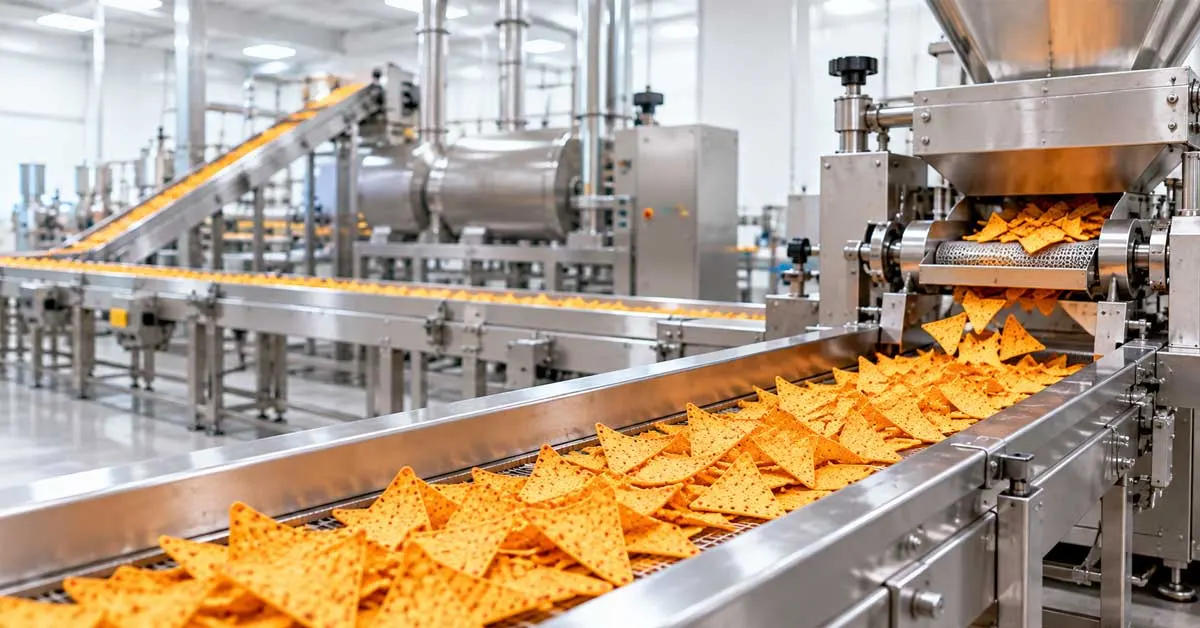
Automation becomes more useful as production volumes and SKU counts increase.
A small business may start with manual or semi-automatic operations. As orders increase, automated mixing, forming, conveying and packaging can improve consistency and reduce dependence on individual operators.
Instead of assuming that automation is always necessary from day one, manufacturers should consider:
- Expected production volume
- Number of SKUs
- Labour availability
- Product consistency
- Packaging requirements
- Future expansion
- Available floor space
- Maintenance capability
A modular approach can make more sense for some businesses because the manufacturer can expand specific sections instead of replacing the whole line.
For businesses entering Protein Snack Manufacturing in Bangladesh, this can be particularly useful when initial demand is still being validated.
Machinery Required for a Protein Snack Manufacturing Plant
The machinery should be selected after deciding the product.
A protein bar line is not the same as a protein puff line, and neither is identical to a roasted pulse snack line.
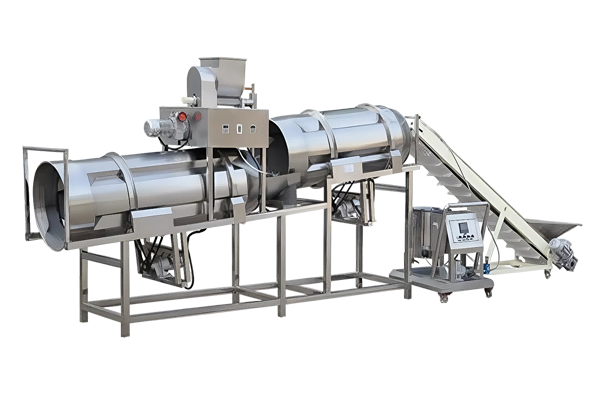
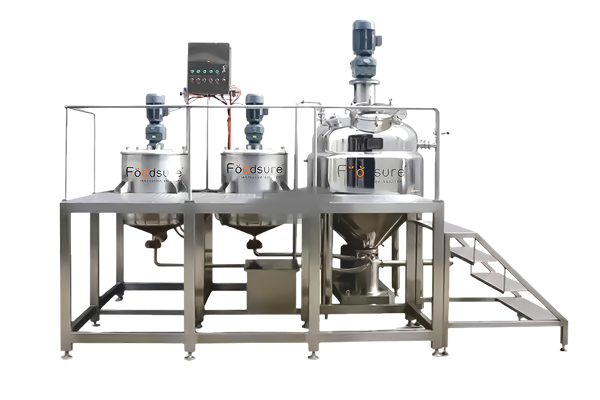
A typical setup may include:
Not every factory needs every machine listed above.
For example, a manufacturer producing roasted chickpeas will have different equipment requirements from a company producing protein bars.
For projects evaluating a High Protein Snack Machine Bangladesh solution, the final equipment list should therefore be based on the selected product, formulation, output and packaging format.
Where Foodsure Machines Can Fit
This is also where choosing a machinery partner becomes more important than simply comparing machine prices.
For a protein snack project, the machine needs to match the actual formulation and production process. A machine that works well for one bar formulation may not perform the same way with another recipe.
Foodsure Machines works across food product manufacturing, and its published high-protein snack machinery covers commercial manufacturing equipment for products such as chips, puffs and rings.
For a manufacturer setting up a new line, connecting formulation and machinery can reduce some of the trial and error during commercialisation.
For Bangladesh-based manufacturers, the practical approach is to first define the product, target output, pack format, formulation and factory space, and then select machinery around those requirements.
Businesses looking into a High Protein Snack Machine Bangladesh project can also use pilot trials to understand how the formulation behaves before committing to a larger production line.
Choosing the Right Production Capacity
There is no single production capacity that is right for every protein snack business.
The correct capacity depends on confirmed demand, distribution plans, SKU count, working hours and expected expansion.
A startup supplying a small number of retail outlets does not necessarily need the same line as a contract manufacturer supplying several brands.
Before buying machinery, manufacturers should estimate:
- Expected monthly sales
- Number of production days
- Production hours per day
- Product yield
- Number of SKUs
- Packaging speed
- Expected future demand
Capacity should be calculated from the actual manufacturing process rather than using a generic kg-per-hour number.
This is especially important for protein products because different formulations can have different processing behaviour.
Factory Layout Considerations
A protein snack plant should be designed around product flow.
A typical layout can include:
- Raw material receiving
- Ingredient storage
- Weighing area
- Mixing section
- Forming or extrusion area
- Baking or roasting section
- Cooling area
- Packaging room
- Finished goods storage
- Quality control area
- Dispatch area
The exact layout will depend on the product and equipment.
The basic idea is simple: raw materials should move through the process in a controlled direction, while finished products should not cross back through dirty or uncontrolled areas.
This becomes particularly important when a manufacturer wants to supply larger retailers or export customers.
Food Safety Regulations in Bangladesh
Food safety should be considered from the beginning of the project rather than after machinery is installed.
The Bangladesh Food Safety Authority, BFSA, maintains regulations covering food businesses, food safety, microbial contamination, additives, food recall and packaged-food labelling.
There is also a specific Food Safety (Health Food/Dietary Supplements, Foods for Special Dietary Use, Foods for Special Medical Purpose, Prebiotic and Probiotic Food) Regulation, 2025 listed by BFSA. This can be relevant when a protein product crosses into a category covered by those rules.
BFSA also published the Food Safety (Advertisement and Claims) Regulations, 2025. This matters for protein products because statements such as high protein, low sugar, health claims or other nutrition-related claims should not be treated as simple marketing copy. They need to be checked against applicable requirements.
BFSA’s regulations page also lists requirements and rules related to food businesses, microbial contaminants, additives, food recall and packaged-food labelling.
Depending on the product and market, manufacturers may also work toward food safety systems such as:
- HACCP
- GMP
- ISO 22000
- FSSC 22000
- Halal certification where applicable
The exact certification requirement depends on the buyer, product and destination market.
Quality Control Measures
Quality control should cover the full production cycle.
Raw Material Testing
Depending on the ingredient, checks may include:
- Moisture
- Purity
- Microbiological quality
- Appearance
- Identity
- Supplier documentation
Process Monitoring
Manufacturers may monitor:
- Mixing time
- Processing temperature
- Product weight
- Moisture
- Texture
- Processing consistency
Finished Product Testing
The final product can be assessed for:
- Nutritional composition
- Taste
- Texture
- Moisture
- Packaging integrity
- Shelf life
- Label accuracy
- Microbiological quality where applicable
Shelf-life testing should be performed under conditions relevant to the intended storage and distribution environment.
Packaging That Adds Value
Packaging does two jobs.
It protects the food and communicates information to the buyer.
For protein snacks, packaging may need to protect against moisture and oxygen, depending on the formulation.
Important packaging information can include:
- Product name
- Ingredient list
- Nutrition information
- Allergen information where applicable
- Net quantity
- Batch information
- Manufacturing or packing information
- Expiry or best-before information where required
- Storage instructions
- Manufacturer details
- Barcode
Nutrition and health-related claims should be reviewed against Bangladesh’s applicable requirements before printing the packaging.
The Food Safety (Advertisement and Claims) Regulations, 2025 are particularly relevant for brands planning claims around nutritional or health benefits.
Distribution Channels for Protein Snacks
A good product still needs a route to the customer.
Supermarkets and Modern Retail
Modern retail can provide visibility and access to a larger customer base.
The USDA’s 2025 Bangladesh report counted more than 750 supermarket outlets and around 1,000 small chain outlets, showing the scale of the organized retail network.
Grocery Stores
Traditional grocery stores remain relevant, especially when manufacturers want broad geographic coverage.
Fitness and Nutrition Stores
These outlets can be useful for products specifically positioned around protein and sports nutrition.
Pharmacies
Some nutrition-oriented products are sold through pharmacy channels, although manufacturers need to make sure their product positioning and claims are appropriate for the channel.
Online Sales
Online food retail is another route for packaged-food brands.
The USDA report identified more than 700 online food retail websites in Bangladesh in its 2025 guide.
This does not mean all of them sell protein snacks, but it shows that online food distribution is already part of the country’s food retail environment.
Corporate and Institutional Sales
Manufacturers can also explore:
- Offices
- Universities
- Gyms
- Hotels
- Corporate cafeterias
- Sports events
- Nutrition stores
The best channel mix will depend on product price, shelf life and target consumer.
For companies building Protein Snack Manufacturing in Bangladesh around a specific customer segment, distribution should be planned alongside product development rather than after production begins.
Export Opportunities
Bangladesh-based manufacturers can also consider export markets.
However, export should not be treated as simply shipping the same domestic product overseas.
Each destination may have different requirements for:
- Ingredients
- Food safety
- Nutrition claims
- Allergens
- Labelling
- Packaging
- Product registration
- Certifications
- Traceability
The USDA’s Bangladesh Exporter Guide notes that the country’s food-processing industry is creating opportunities around safe and high-quality food products.
For an export-focused protein snack business, it makes sense to design the product and manufacturing system around the target market from the beginning.
Common Challenges and Practical Solutions
One of the biggest mistakes is buying equipment before finalizing the product.
The machine should support the product you actually want to sell, not the other way around.
This is especially relevant when planning Protein Snack Manufacturing, because protein levels, binders, moisture and processing conditions can change the machinery requirements.
Is Protein Snack Manufacturing Profitable in Bangladesh?
There is no reliable public figure that can be used to give a universal profit margin for protein snack manufacturing in Bangladesh.
Profit depends on several variables:
- Protein ingredient cost
- Raw material yield
- Labour
- Electricity
- Packaging
- Production efficiency
- Product selling price
- Distributor margins
- Retail margins
- Marketing cost
- Returns and wastage
- Shelf life
- Factory utilization
A product with a high selling price is not automatically more profitable.
For example, a premium protein bar may have expensive ingredients and packaging, while a simpler roasted pulse snack may have lower manufacturing complexity but also a different retail price.
This is why profitability should be calculated product by product.
A basic manufacturing cost model should include:
The selling price can then be evaluated against actual channel margins and operating expenses.
What Manufacturers Should Plan Before Buying Machinery
Before contacting a machinery supplier, it helps to have answers to a few basic questions:
- What protein snack are you making?
- Who is the target customer?
- What protein level are you targeting?
- What selling price are you aiming for?
- What pack size will you sell?
- What is the expected monthly demand?
- Will the product be baked, roasted, extruded or cold-formed?
- What shelf life do you need?
- Will you sell locally or export?
- What certifications or compliance requirements apply?
- How much factory space is available?
- What level of automation do you actually need?
Once these are clear, machinery selection becomes much easier.
This is also where a company like Foodsure can be useful for manufacturers who need more than a machine quotation.
For a new project, connecting formulation, pilot production, scale-up and equipment selection can help avoid a common problem: developing a recipe in the lab that later becomes difficult or expensive to manufacture commercially.
Entrepreneurs evaluating a High Protein Snack Manufacturing Business can use this process to understand whether the product is technically feasible before making a larger capital investment.
Conclusion
The opportunity around Protein Snack Manufacturing in Bangladesh comes from more than just the growing interest in protein.
Bangladesh already has a sizeable food-processing industry, an expanding modern retail network and a large domestic consumer food market. The USDA’s 2025 Bangladesh Exporter Guide estimates the food-processing sector at around US$8 billion, with approximately 1,000 value-added food processors and average annual growth of around 8%. It also estimates the domestic consumer-oriented food market at US$9.6 billion.
At the same time, the wider Asia-Pacific protein bar category is developing, with Grand View Research estimating a US$3.36 billion regional market in 2024 and a projected US$4.90 billion by 2030.
But the numbers alone do not make a protein snack business work.
The product has to taste good. The formulation needs to be commercially workable. The machinery needs to match the product. Packaging needs to protect it. The price has to make sense. And the business needs a distribution strategy.
For entrepreneurs entering Protein Snack Manufacturing in Bangladesh, the better approach is to start with product and market requirements, then work backward into formulation, pilot production, machinery and factory planning.
That is where an end-to-end partner can make the process easier. Foodsure combines protein snack development with manufacturing scale-up support, while Foodsure Machines can be considered when the project moves from recipe and pilot stage toward commercial production.
The goal is not simply to put a protein snack on a production line.
It is to build a product that can actually be manufactured consistently, sold at the right price and scaled when the market starts responding.
Have a Question? Let’s Connect
Need expert guidance on food processing machines, production setup, or process optimization? Our team is ready to help you choose the right solution for your business.
Frequently Asked Questions
What are the best protein snacks to manufacture in Bangladesh?
There is no single product that will work for every manufacturer. Protein bars, roasted pulse snacks, protein chips, granola products, protein cookies, seed mixes and protein puffs can all be explored depending on target consumers, price, formulation and available processing technology.
Is protein snack manufacturing suitable for startups?
It can be, particularly when the business starts with a focused product range and validates the market before making a large equipment investment. The important part is matching production capacity with realistic demand.
Which certifications help build trust with retailers and export buyers?
Food safety systems such as HACCP, GMP, ISO 22000 and FSSC 22000 may help demonstrate controlled food-safety practices. The exact requirement depends on the product, customer and destination market.
What regulations should protein snack manufacturers check in Bangladesh?
Manufacturers should check current BFSA requirements covering food businesses, packaged-food labelling, food additives, microbial contaminants, and advertising or nutrition-related claims. BFSA also has specific 2025 regulations covering health food and dietary-supplement categories.
How important is packaging for protein snacks?
Very important. Packaging can affect moisture protection, oxygen exposure, shelf life, transport performance and product presentation. The right packaging should be selected after understanding the product’s stability requirements.
Should I buy machinery before finalizing the protein snack formulation?
Ideally, the formulation and manufacturing process should be developed together. A product that works at laboratory scale may behave differently during commercial processing, so pilot trials and scale-up testing are useful before final equipment selection.
Can protein snacks made in Bangladesh be exported?
Yes, export is possible, but the product must meet the food safety, labelling, ingredient, packaging and certification requirements of the destination market. Export requirements should be checked before finalizing the formulation and packaging.
What should I consider when starting a High Protein Snack Manufacturing Business?
Start by defining the product, target consumer, protein source, selling price, pack size, expected demand, shelf life and production method. These decisions will influence formulation, machinery, factory layout, packaging and total investment.
How do I choose a High Protein Snack Machine Bangladesh project around my product?
The equipment should be selected after the product and manufacturing process are defined. Factors such as formulation, output, forming method, heating or extrusion requirements, cooling, packaging and available factory space should all be considered before finalizing the machinery.
Where can I get support for a High Protein Snack Manufacturing Business?
Manufacturers can work with food product development and machinery partners that understand both formulation and commercial scale-up. Foodsure can support product development and scale-up, while Foodsure Machines can be considered for commercial manufacturing equipment based on the selected product and capacity.