Walk into a supermarket in Colombo, Dhaka, or Kathmandu today and you’ll notice something interesting. The snack aisle is changing.
Traditional potato chips still dominate the shelves, but they’re no longer the only choice. Consumers are actively looking for snacks that deliver more than just taste. Protein, fiber, clean ingredients, and functional nutrition are becoming part of the buying decision.
That’s where high protein chips have found their place.
Made from ingredients such as chickpeas, lentils, soy protein, peas, quinoa, oats, and whey protein, these chips appeal to fitness enthusiasts, working professionals, students, and health-conscious families alike. What was once a niche product has quickly become a growing category. Biospringer’s Asia Pacific high protein report puts the region’s high protein market at USD 10.1 billion in 2025, and says new high protein product launches across Asia Pacific rose 47 percent between 2021 and 2025, from 3,377 to 4,955.
For entrepreneurs, food brands, and contract manufacturers, this presents an opportunity to enter a market with strong growth potential. Success, however, depends on much more than a good recipe. Commercial production requires the right formulation, reliable processing equipment, strict quality control, and a production line that can scale without compromising consistency. That last part is where an experienced equipment partner such as Foodsure Machines, a Noida-based manufacturer of food processing machinery and turnkey plants, tends to make the biggest difference for first-time snack manufacturers.
This guide explains every stage of how to manufacture high protein chips commercially, from ingredient selection and machinery to production planning, quality assurance, and market considerations for Sri Lanka, Bangladesh, and Nepal.
What Are High Protein Chips?
High protein chips are ready-to-eat savory snacks formulated with significantly more protein than conventional potato chips. Instead of relying primarily on potatoes or corn, manufacturers incorporate protein-rich ingredients that improve nutritional value while maintaining a crispy texture.
Depending on the formulation, these chips may contain:
- Plant proteins
- Dairy proteins
- Legume flours
- Whole grains
- Functional fibers
- Natural seasonings
Commercial brands typically target 10–20 grams of protein per serving, although the exact value depends on the recipe and the intended consumer segment.
Unlike traditional snacks that focus mainly on taste, protein chips are positioned as products that combine convenience, nutrition, and flavor.
Why Is Demand Growing in Sri Lanka, Bangladesh, and Nepal?
The demand for healthier packaged snacks is expanding across these markets due to several long-term consumer trends rather than short-term fads.
Rising Health Awareness
Consumers are paying closer attention to nutrition labels. Protein, fiber, reduced oil content, and cleaner ingredient lists increasingly influence purchasing decisions. In Bangladesh, a 2025 study published through the National Library of Medicine, as reported by The Business Standard, found that 97% of people eat packaged food at least once a week, and that 63% of the packaged products tested had high sodium levels. Findings like these are pushing both shoppers and regulators toward better-balanced snacks.
Growth of Modern Retail
Supermarkets, convenience stores, specialty nutrition shops, and online grocery platforms now offer a wider selection of functional snack products than ever before. Euromonitor’s savoury snacks coverage for Sri Lanka points to convenience and premiumisation as the main drivers of snack demand, and notes that supermarkets are broadening their appeal even though small local grocers still lead the market.
Expanding Fitness Culture
Gyms, wellness communities, sports clubs, and fitness influencers have increased awareness about protein intake, creating demand for convenient, high-protein snacks.
Urban Lifestyles
Busy professionals and students often prefer snacks that are portable, filling, and require no preparation. The Centre for Policy Dialogue, citing Bangladesh Investment Development Authority data, says Bangladesh’s packaged food market is worth about USD 4.8 billion today and could reach USD 5.8 billion by 2030, with nearly 40 percent of the population now living in cities and shifting toward branded, hygienically packed foods. In Nepal, Statista’s market outlook links rising incomes and urbanisation to growing demand for convenient snacks and a steady move toward healthier options.
Increasing Local Manufacturing
Many brands are shifting from imported products to regional manufacturing. Producing closer to the market helps reduce logistics costs, improve inventory management, and respond faster to changing consumer preferences. Bangladesh’s biscuit industry is a useful precedent: The Daily Star reported that local manufacturers there won consumer trust through automation, consistent quality, and fair pricing, and in the process pushed out imports from India, Malaysia, and Indonesia.
What Types of High Protein Chips Can Be Manufactured?
One production line can often support multiple product categories with adjustments to formulation and processing parameters.
Legume Protein Chips
Produced using ingredients such as:
- Chickpea flour
- Lentil flour
- Green pea flour
- Black gram flour
These products are popular because they naturally contain protein and dietary fiber. A review in the International Journal of Food Studies explains that blending cereals with pulses before extrusion is a well-established way to produce protein-enriched snacks.
Soy Protein Chips
Soy remains one of the most widely used protein ingredients due to its affordability, functionality, and high protein concentration.
Manufacturers often combine soy protein with cereal flours to improve texture and taste.
Pea Protein Chips
Pea protein is increasingly used in clean-label formulations because it offers:
- High protein content
- Neutral taste
- Vegan positioning
- Good processing characteristics
A 2024 study in the journal Foods tested pea protein-enriched corn puffs across protein levels from 0 to 50 percent and found that injecting nitrogen gas during extrusion improved crispness and reduced hardness at the 50 percent level, which shows how far these formulations can be pushed with the right process control.
Multigrain Protein Chips
These formulations combine ingredients such as:
- Oats
- Millet
- Brown rice
- Quinoa
- Sorghum
They provide a balance of protein, fiber, and complex carbohydrates.
Whey Protein Chips
Brands targeting athletes and fitness enthusiasts frequently include whey protein to increase protein levels while maintaining a crisp texture. There is a catch, though. A USDA study on texturized whey protein found that plain, untreated whey above roughly 5 percent starts to interfere with expansion and makes puffed snacks less crunchy, while whey that was texturized first could be added at 25 percent and still gave a crispier, more expanded product.
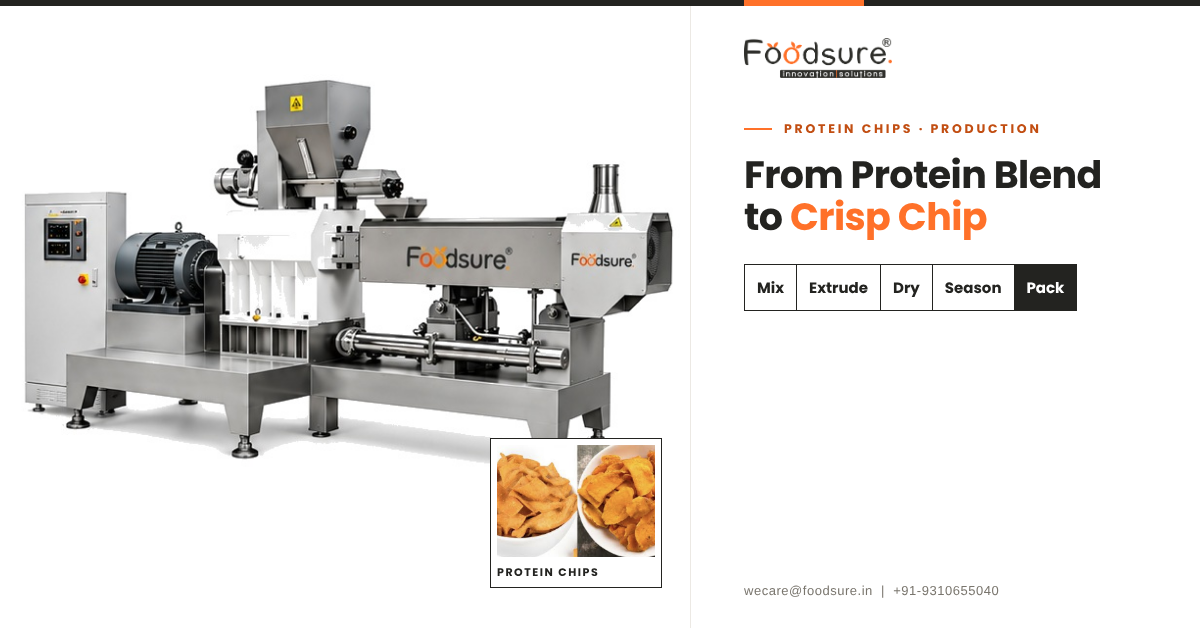
From Protein Blend to Crisp Chip | Mix Extrude Dry Season Pack | Foodsure Production Line
Which Ingredients Are Used in Commercial High Protein Chips?
Ingredient selection determines not only nutritional value but also processing behavior, product texture, shelf life, and production efficiency.
Below are the most commonly used ingredients in commercial manufacturing.
Protein Sources
The protein component forms the nutritional foundation of the product.
Common options include:
- Pea protein isolate
- Soy protein isolate
- Whey protein concentrate
- Milk protein concentrate
- Chickpea protein
- Lentil protein
- Rice protein
- Faba bean protein
Manufacturers often combine multiple protein sources to improve amino acid balance and eating quality.
Base Flours
These contribute structure and influence expansion during processing.
Popular choices include:
- Corn flour
- Rice flour
- Potato starch
- Tapioca starch
- Chickpea flour
- Oat flour
- Millet flour
Functional Ingredients
Commercial formulations frequently include ingredients that improve processing performance.
Examples include:
- Modified starches
- Natural fibers
- Resistant starch
- Emulsifiers
- Binding agents
- Texture improvers
Healthy Oils
Depending on the product positioning, manufacturers may use:
- Sunflower oil
- Rice bran oil
- Canola oil
- High oleic vegetable oils
Oil selection affects flavor, shelf life, oxidation stability, and nutritional profile. A shelf-life trial on fried crisps published in PubMed Central compared regular and high oleic sunflower oil under accelerated storage and tracked how quickly oxidation products built up in each.
Seasonings
Flavor remains one of the biggest purchase drivers, even in the health snack category.
Popular variants include:
- Barbecue
- Sour cream and onion
- Chili lime
- Cheese
- Black pepper
- Peri peri
- Masala
- Sea salt
- Garlic herb
Manufacturers increasingly develop region-specific flavors to suit local preferences across Sri Lanka, Bangladesh, and Nepal.
What Nutritional Goals Should Commercial Manufacturers Target?
Although nutritional targets vary by brand strategy, many successful products aim for a balance between protein, taste, and texture.
| Nutrient | Typical Target |
| Protein | 15–30% |
| Fat | 8–18% |
| Fiber | 5–10% |
| Moisture | Below 5% |
| Calories | Competitive with premium snack brands |
Actual values should always be validated through laboratory testing before commercial launch. Higher protein also makes the process harder. Engineers at Bühler North America, quoted in Baking Business, explain that more protein in the dough tends to reduce expansion, which can leave snacks dense, hard, or rubbery unless the extrusion conditions are reworked.
Planning Your Commercial Production Facility
Before investing in machinery, manufacturers should define their production objectives. Decisions made at this stage influence equipment selection, factory layout, operating costs, and future scalability.
Define Your Production Capacity
Common commercial capacities include:
- 50 kg/hour for pilot-scale production and new brands
- 100 kg/hour for growing regional manufacturers
- 200 kg/hour or more for established commercial operations and export-oriented businesses
Selecting the right capacity from the beginning helps avoid unnecessary investment while allowing room for future expansion. Foodsure Machines builds its lines around the customer’s product, target capacity, automation level, and factory layout, which makes it easier to size the line for where the business is heading, not just where it starts.
Choose the Right Product Positioning
Your formulation and production process should align with the market you plan to serve. Some manufacturers focus on affordable everyday snacks, while others develop premium, high-protein products for gyms, health stores, and modern retail chains.
Key positioning options include:
- Everyday protein snacks
- Sports nutrition products
- Children’s healthy snacks
- Vegan or plant-based chips
- Gluten-free formulations
- Export-quality premium snacks
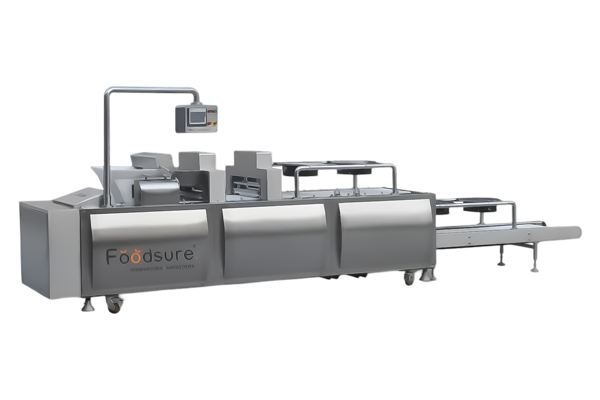
Many brands that begin with chips later add a second product for the same gym, health-store and modern retail customers. A protein bar machine is the most common next step, and it lets you reuse your protein ingredient suppliers and your brand positioning across both lines.
Consider Raw Material Availability
Reliable sourcing is essential for consistent production. Manufacturers in Sri Lanka, Bangladesh, and Nepal should evaluate the local availability and pricing of ingredients such as chickpea flour, pea protein, soy protein, oats, rice flour, and seasonings. Building relationships with dependable suppliers can reduce production disruptions and improve cost control. This matters most in Nepal, where Statista’s analysis says limited ingredient availability, thin infrastructure, and high production costs are holding back snack market growth, and that the country’s reliance on imports keeps snack prices relatively high compared with its neighbours.
Commercial High Protein Chips Manufacturing Process
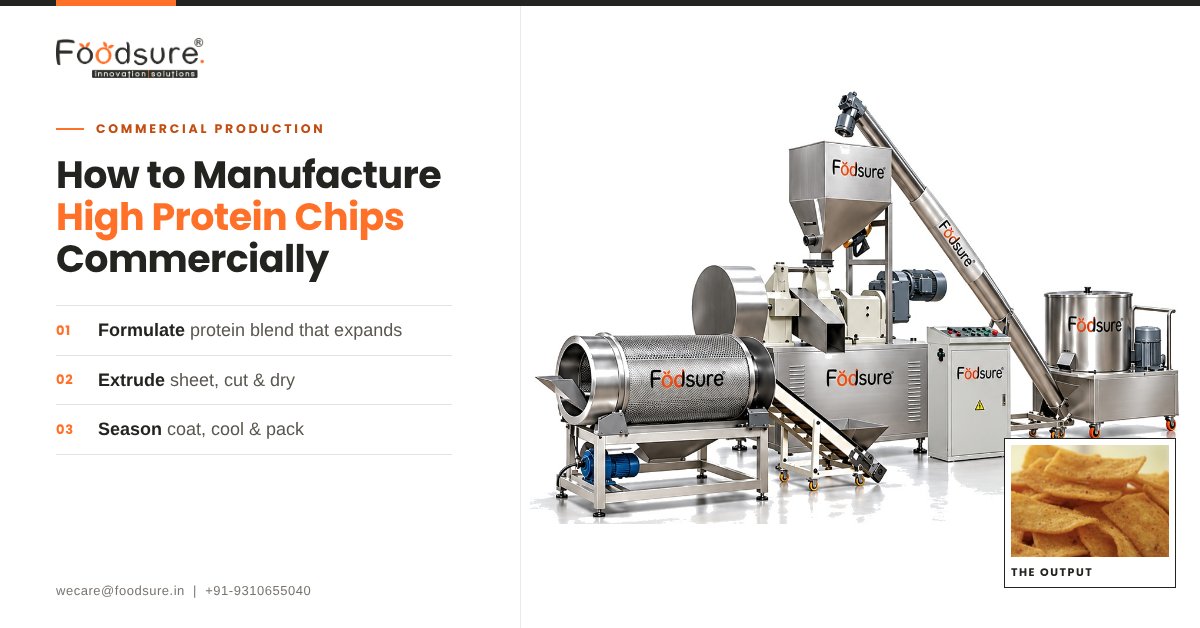
Once the formulation has been finalized, the next step is converting raw ingredients into a consistent, shelf-stable product. In commercial manufacturing, every stage affects texture, protein retention, expansion, flavor, and production efficiency.
A well-designed production line minimizes wastage, improves throughput, and ensures every batch meets the same quality standards.
High Protein Chips Manufacturing Process at a Glance
Raw Material Inspection
↓
Ingredient Weighing
↓
Dry Mixing
↓
Wet Mixing & Dough Preparation
↓
Extrusion
↓
Sheeting or Forming
↓
Cutting
↓
Baking or Frying
↓
Seasoning
↓
Cooling
↓
Quality Inspection
↓
Automatic Packaging
Step 1: Raw Material Inspection
Every successful production run begins with quality ingredients.
Before processing starts, incoming raw materials are inspected for:
- Moisture content
- Appearance and colour
- Foreign particles
- Protein specifications
- Expiry dates
- Packaging integrity
- Supplier compliance documentation
Commercial manufacturers typically establish approved supplier programs to maintain consistency across batches.
Why this step matters: Poor-quality ingredients cannot be corrected later in the production process. Early inspection reduces product recalls, wastage, and customer complaints.
Step 2: Ingredient Weighing
After approval, each ingredient is weighed according to the production formula.
Commercial recipes may include:
- Chickpea flour
- Pea protein isolate
- Soy protein isolate
- Rice flour
- Tapioca starch
- Oat flour
- Seasonings
- Salt
- Natural colours
- Functional fibres
- Vegetable oil
- Water
Automated weighing systems improve formulation accuracy and reduce manual errors during large-scale production.
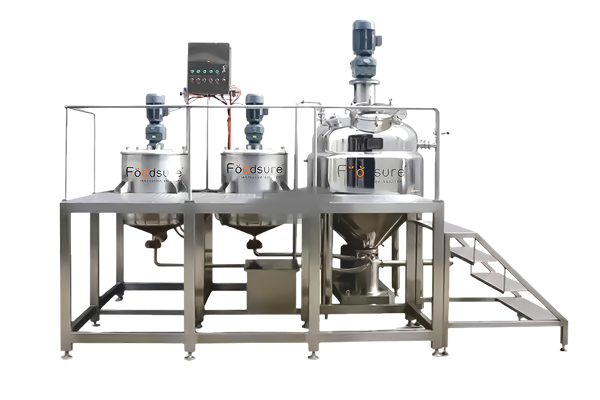
Step 3: Dry Mixing
The dry ingredients are transferred into an industrial ribbon blender or paddle mixer.
The objective is to distribute protein powders, starches, flours, fibres, and seasonings evenly before liquids are added.
An effective mixing cycle provides:
- Uniform colour
- Consistent protein distribution
- Stable dough behaviour
- Better product texture
Poor mixing often results in uneven expansion, inconsistent flavour, and breakage during processing.
Step 4: Wet Mixing and Dough Preparation
Water, oil, and other liquid ingredients are gradually introduced into the dry blend.
The dough must reach the correct:
- Moisture level
- Elasticity
- Density
- Temperature
These parameters directly influence extrusion performance.
Manufacturers usually monitor moisture closely because even small variations can affect chip expansion and crispness. The same University of Zagreb research on whey-enriched extruded corn products treated feed moisture and protein level as the two variables that most shape expansion ratio, density, and hardness.
Step 5: Extrusion
Extrusion is the core operation in commercial high protein chips manufacturing.
The prepared dough enters an industrial extruder where it is subjected to:
- Heat
- Pressure
- Mechanical shear
- Controlled residence time
As the material exits the die, pressure drops instantly, causing the product to expand and develop its characteristic texture.
Why extrusion is important: Extrusion combines several processing steps into one continuous operation. It helps improve production speed, product consistency, and texture while supporting high-volume manufacturing.
Common extrusion benefits include:
- Continuous production
- Better shape consistency
- Controlled expansion
- Reduced manual handling
- High production efficiency
High protein dough is less forgiving than a starch-based one. Equipment makers interviewed by Baking Business, including Heat and Control and Baker Perkins, say these recipes usually need different cook times, temperatures, and extrusion settings, and that shape definition is harder to hold. This is why it helps to work with a partner like Foodsure Machines, which designs customised lines around the product being made, so the extruder and downstream equipment are chosen to suit the formulation rather than the other way around.
Step 6: Sheeting or Forming
Depending on the product design, the extruded material may be:
- Sheeted into thin layers
- Formed directly into chip shapes
- Molded into specialty designs
Manufacturers can produce:
- Triangle chips
- Round chips
- Wavy chips
- Flat chips
- Ridged chips
- Custom branded shapes
Uniform thickness is essential because it ensures even cooking and consistent texture.
Step 7: Cutting
Rotary cutters or automated cutting systems divide the sheet into the desired dimensions.
Cutting accuracy influences:
- Product appearance
- Packaging efficiency
- Cooking consistency
- Waste generation
Modern cutting systems maintain precise dimensions even during continuous production.
Step 8: Baking or Frying
This stage develops the final texture, flavour, and colour.
Manufacturers generally choose one of two production methods depending on product positioning.
Option 1: Baked High Protein Chips
Baking offers several advantages:
- Lower oil content
- Health-focused positioning
- Better appeal to fitness-conscious consumers
- Reduced fat levels
Many premium brands now promote baked chips as a healthier alternative to conventional snacks.
Option 2: Fried High Protein Chips
Frying produces:
- Rich flavour
- Crisp texture
- Golden appearance
- Traditional mouthfeel
Oil temperature, frying duration, and filtration systems must be carefully controlled to maintain product quality.
Which process is better?
There is no universal answer.
Manufacturers targeting supermarkets often produce both baked and fried variants to meet different consumer preferences.
Step 9: Seasoning
Seasoning transforms a plain chip into a finished consumer product.
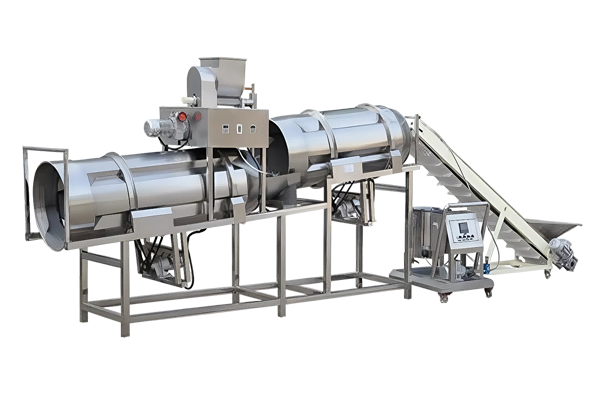
Automatic seasoning drums ensure even coating while minimizing ingredient waste.
The flavour blends you develop for chips don’t have to stop there. If you plan to expand into other snacks, a popcorn making machine can carry many of the same seasoning profiles, such as masala, peri peri or cheese, into a lower-cost product.
Popular flavour profiles include:
International Flavours
- Cheese
- Sour cream and onion
- Barbecue
- Salt and vinegar
- Black pepper
South Asian Flavours
- Masala
- Chilli garlic
- Peri peri
- Lemon chilli
- Spicy herb
- Chatpata seasoning
Manufacturers often develop region-specific flavour blends for consumers in Sri Lanka, Bangladesh, and Nepal.
Step 10: Cooling
Freshly cooked chips must cool before packaging.
Cooling helps:
- Stabilize texture
- Prevent condensation
- Maintain crispness
- Improve packaging quality
Industrial cooling conveyors gradually reduce product temperature without damaging the chips.
Step 11: Quality Inspection
Every production batch should undergo routine quality checks.
Typical inspection parameters include:
| Quality Parameter | Purpose |
| Protein content | Nutritional verification |
| Moisture | Shelf-life control |
| Oil content | Product consistency |
| Texture | Crispness evaluation |
| Colour | Batch uniformity |
| Taste | Consumer acceptance |
| Microbiology | Food safety |
| Package weight | Regulatory compliance |
Routine laboratory testing supports consistent product quality and helps manufacturers meet customer and regulatory expectations.
Step 12: Automatic Packaging
Packaging is more than just filling bags. It protects product quality, extends shelf life, and enhances shelf appeal.
Modern packaging systems can perform:
- Automatic weighing
- Bag forming
- Filling
- Nitrogen flushing
- Heat sealing
- Date coding
- Batch coding
Nitrogen flushing is commonly used to reduce oxidation and preserve product crispness during storage and transportation. A shelf-life study on fried crisps in PubMed Central found that flushing the pack with nitrogen slowed the rate of oxidation after frying, which is exactly what protects flavour and crunch over weeks on a shelf.
Machinery Required for Commercial High Protein Chips Manufacturing
The machinery configuration depends on production capacity, automation level, and product range. A typical commercial line includes the following equipment:
| Production Stage | Machine |
| Raw material handling | Storage bins and conveyors |
| Ingredient weighing | Digital weighing system |
| Mixing | Ribbon blender or paddle mixer |
| Dough preparation | Dough mixer |
| Forming | Twin-screw or single-screw extruder |
| Sheeting | Sheeting machine |
| Cutting | Rotary cutter |
| Baking | Continuous baking oven |
| Frying | Continuous fryer |
| Seasoning | Automatic seasoning drum |
| Cooling | Cooling conveyor |
| Packaging | Vertical Form Fill Seal (VFFS) machine |
Buying these machines from different suppliers often leads to mismatched speeds, awkward handovers between stages, and nobody accountable when the line underperforms. Foodsure Machines, which has been building food processing equipment from Noida since 2012, offers turnkey plants instead, that covers consulting, production line planning, customised machine design, engineering, quality testing, installation, operator training, and after-sales technical support, which is the full chain a new snack manufacturer needs.
If your plan centres on extruded chips, Foodsure Machines’ high protein snack machine is built to be configured around your formulation, target capacity and factory layout, so the extruder, forming and finishing equipment work as one line instead of separate purchases.
Food Safety Practices Every Manufacturer Should Follow
Commercial food production requires more than efficient machinery. Strong food safety systems are essential for maintaining product quality and meeting regulatory expectations.
Key practices include:
- Implement Good Manufacturing Practices (GMP)
- Maintain proper sanitation schedules
- Monitor Critical Control Points (CCPs) where applicable
- Control allergens through segregation and cleaning procedures
- Train production staff on hygiene protocols
- Conduct regular equipment maintenance and calibration
- Verify cleaning effectiveness through routine inspections
- Keep detailed production and traceability records
HACCP itself comes from the Codex Alimentarius Commission, a joint body of the FAO and WHO, and TÜV SÜD explains that ISO 22000 builds those principles into a wider food safety management system. FSSC 22000 goes a step further: it is built on ISO 22000 and recognised by the Global Food Safety Initiative, which makes it a common choice for manufacturers aiming at larger buyers.
Adopting recognized food safety standards can also strengthen customer confidence and support expansion into modern retail and export markets. Hygienic equipment design makes this easier to achieve, so it is worth asking any machinery supplier, Foodsure Machines included, how its lines support GMP and HACCP requirements.
Regulatory Considerations for Sri Lanka, Bangladesh, and Nepal
Food manufacturers should understand the regulatory framework in each target market before commercial production begins.
Sri Lanka
Manufacturers should comply with local food safety, labeling, and packaging regulations before supplying supermarkets or distributors. The rules have just changed. Sri Lanka published the Food (Labelling and Advertising) Regulations 2026 on 26 June 2026, and, as ChemLinked reports, they replaced the 2005 and 2022 rules and took effect on 1 July 2026. Health and nutrient-function claims now need prior written approval from the Chief Food Authority, so check how any protein claim on your pack is classified before printing. A six-month grace period for certain fortification approval provisions runs to 31 December 2026.
Important considerations include:
- Ingredient declarations
- Nutrition labeling
- Batch identification
- Shelf-life validation
- Food safety compliance
Bangladesh
Commercial snack manufacturers should ensure compliance with applicable food safety standards, product labeling requirements, and quality regulations before entering the market. The Packaged Food Labelling Regulations 2017 issued by the Bangladesh Food Safety Authority (BFSA) remain in force, but change is coming. BFSA released a draft 2026 replacement in January 2026 that adds mandatory front-of-pack warnings for products high in sugar, sodium, and saturated fat, and would apply six months after it is gazetted. As of mid-October 2026, Dhaka Tribune reports the draft is still with the Ministry of Food.
Areas of focus include:
- Product registration (where required)
- Nutritional information
- Manufacturing hygiene
- Traceability systems
- Packaging compliance
Nepal
Manufacturers supplying the Nepalese market should verify local requirements related to:
- Food labeling
- Ingredient approvals
- Manufacturing standards
- Product testing
- Distribution documentation
Nepal’s Food Hygiene and Quality Act, 2081 (2024), replaced the 57-year-old Food Act, according to this compliance summary. It requires label details in Nepali or English, requires an entry permit from the Department of Food Technology and Quality Control (DFTQC) before food is imported, and sets a penalty of NPR 1,00,000 for labelling violations. Confirm current details directly with the DFTQC before launch.
Working with local regulatory experts can simplify market entry and reduce approval delays.
Common Challenges in High Protein Chips Manufacturing
Commercial production comes with technical and operational challenges that should be addressed during product development.
| Challenge | Possible Solution |
| Uneven expansion | Optimize moisture levels and extrusion settings |
| Chips breaking during handling | Improve formulation and cutting accuracy |
| Excess oil absorption | Fine-tune frying conditions and de-oiling process |
| Inconsistent seasoning | Use automated seasoning equipment |
| Short shelf life | Improve packaging barrier properties and moisture control |
| Batch-to-batch variation | Standardize recipes and process parameters |
Addressing these issues early helps maintain consistent product quality and customer satisfaction. Many of them trace back to line design as much as the recipe, which is why the choice of equipment partner, whether Foodsure Machines or anyone else, deserves as much attention as the formulation.
Building a Future-Ready High Protein Chips Business
Consumer expectations are changing across Sri Lanka, Bangladesh, and Nepal. Buyers increasingly compare products based on protein content, ingredient quality, flavour, convenience, and value rather than price alone.
For manufacturers, this creates an opportunity to build differentiated brands through:
- Nutritionally balanced formulations
- Consistent product quality
- Efficient automated production
- Attractive packaging
- Strong food safety practices
- Continuous product innovation
Businesses that invest in scalable manufacturing systems today will be better positioned to serve modern retail, e-commerce, foodservice, and export markets in the years ahead.
Whether you’re launching a new health snack brand, expanding an existing food business, or exploring private-label manufacturing, investing in the right production strategy and scalable equipment can help you compete in a rapidly growing category. If you’re planning a high protein chips line, Foodsure Machines can help you map out capacity, equipment, and layout before you commit to a single machine.
Frequently Asked Questions
What are high protein chips made of?
High protein chips are typically manufactured using protein-rich ingredients such as pea protein, soy protein, chickpea flour, lentil flour, whey protein, oats, rice flour, and functional starches. These ingredients are blended into a dough, processed through an extrusion or sheeting system, cooked by baking or frying, seasoned, and packaged for retail sale.
How are high protein chips manufactured commercially?
Commercial manufacturing follows a structured production process:
- Raw material inspection
- Ingredient weighing
- Dry mixing
- Dough preparation
- Extrusion or sheeting
- Cutting and shaping
- Baking or frying
- Seasoning
- Cooling
- Quality inspection
- Metal detection
- Automated packaging
Each stage is carefully controlled to ensure consistent texture, protein content, and shelf stability.
Which protein is best for manufacturing protein chips?
There is no single “best” protein source. The ideal choice depends on your target market and product positioning.
Pea protein works well for plant-based premium snacks, while soy protein is the go-to for cost-effective large-scale production. Chickpea protein fits clean-label formulations, and whey protein is the standard choice for sports nutrition products. For allergen-friendly recipes, rice protein is a strong option, and lentil protein suits high-fibre regional products.
Many manufacturers combine multiple protein sources to improve nutritional value and texture.
Are baked protein chips healthier than fried protein chips?
Generally, baked protein chips contain less oil and fewer calories than fried alternatives. However, both formats can be part of a balanced product portfolio. The right option depends on consumer preferences, flavour expectations, and your brand’s positioning.
Can one production line manufacture multiple chip flavours?
Yes. Most commercial production lines can produce different flavours by changing the seasoning blend. Proper cleaning between flavour changes helps prevent cross-contamination and maintains product quality.
What production capacity should a new manufacturer choose?
The appropriate capacity depends on your expected demand and distribution strategy.
- 50 kg/hour: Pilot production, startups, and regional brands
- 100 kg/hour: Growing businesses supplying supermarkets and distributors
- 200 kg/hour or higher: Established manufacturers, private-label production, and export-oriented operations
Choosing a scalable production line allows future expansion without replacing the entire system. Foodsure Machines designs customised lines around your target capacity and layout, so you can plan for growth from the start.
What quality standards should manufacturers follow?
Commercial manufacturers should implement:
- Good Manufacturing Practices (GMP)
- Hazard Analysis and Critical Control Points (HACCP)
- ISO 22000 or FSSC 22000 food safety systems
- Regular laboratory testing
- Traceability and batch documentation
- Preventive maintenance programs
These practices improve product consistency and strengthen retailer and consumer confidence. HACCP originates with the Codex Alimentarius Commission, and ISO 22000 and the GFSI-recognised FSSC 22000 both build on it, as TÜV SÜD outlines.
Can high protein chips be exported?
Yes. Many manufacturers supply high protein chips to international markets. Export readiness depends on meeting destination-country food regulations, packaging standards, labeling requirements, and customer quality specifications.