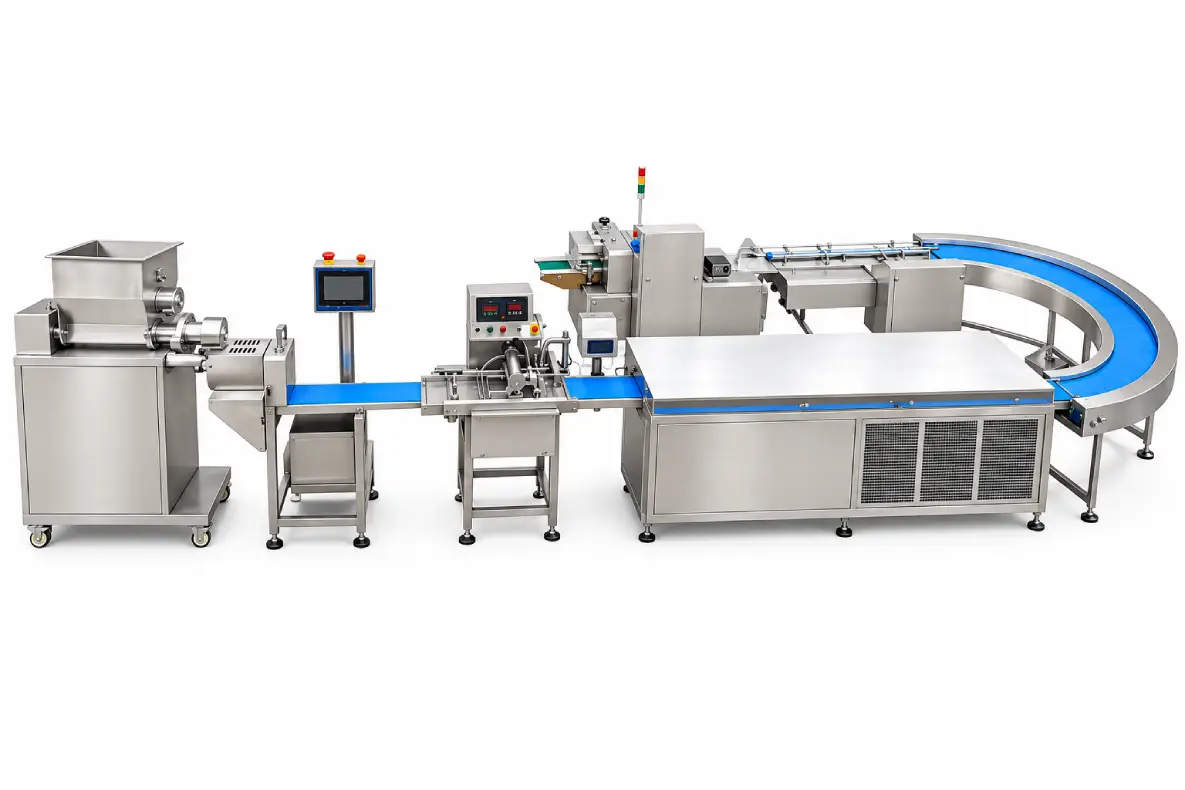
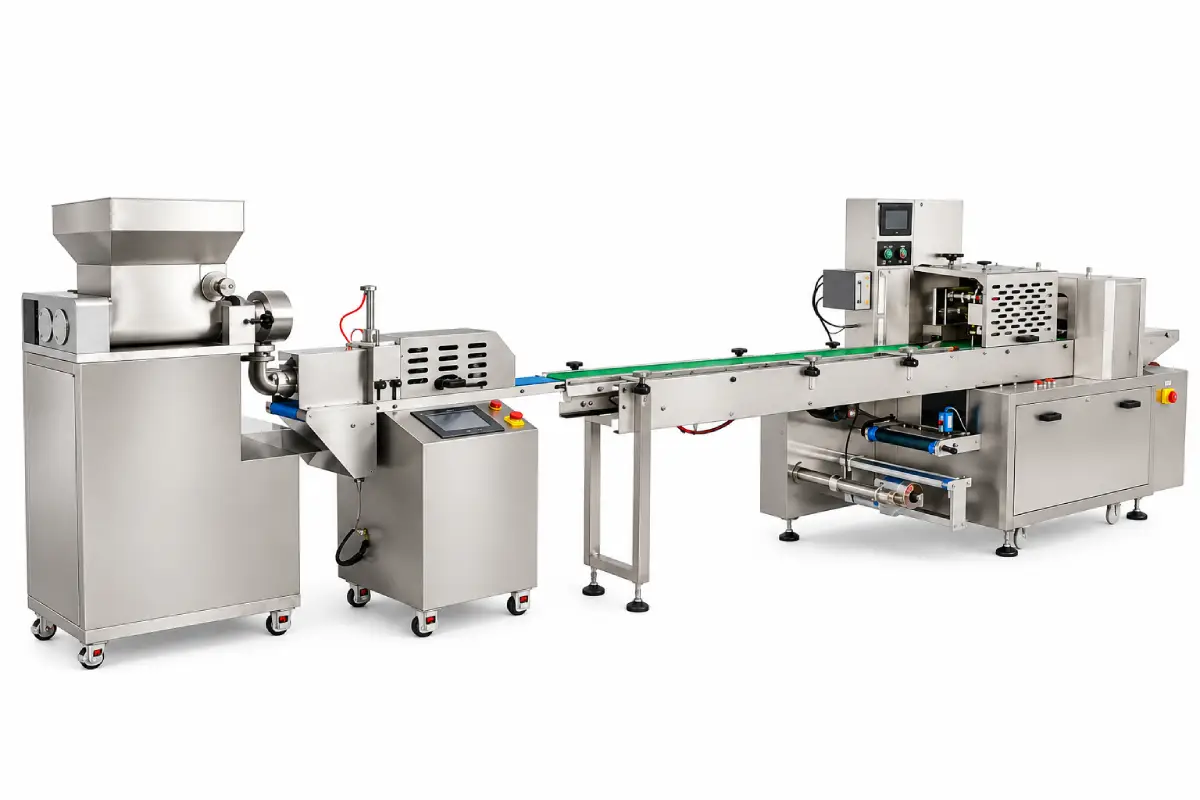
As an experienced protein bar machine manufacturer, we provide processing solutions that help Nepalese food businesses produce perfectly formed, weight-accurate protein bars with consistent quality and dependable output. Our full Protein Bar Machine range covers every capacity tier relevant to Nepal’s growing packaged-snacks and sports-nutrition category, from Kathmandu-based D2C brands to manufacturers supplying the wider Nepal India trade corridor.

Standard entry scale for brand growth
Standard entry scale for brand growth
Standard entry scale for brand growth
A home-grown D2C brand testing the Kathmandu Valley market has very different needs from a manufacturer planning to supply national retail chains or export across the open border into India. Putting the same-tiered machine in front of every buyer either creates bottlenecks the moment demand picks up, or locks up capital that a new brand simply doesn’t have yet. This is how we’ve structured our capacity tiers at Foodsure.
The 50 kg/hr machine suits new entrants, boutique health-food brands, and businesses testing the UAE or Saudi Arabian retail, DTC, and private-label markets before moving to larger commercial production.
Once monthly volumes outgrow manual control, or retail chains and distributors start asking for tighter weight and shape consistency, a 100 kg/hr fully automatic machine becomes the more sensible investment; it also opens the door to supplying beyond the Kathmandu Valley.
For manufacturers supplying national retail chains, planning cross-border supply into India, or running multi-SKU private label operations, anything below 200 kg/hr tends to become a production bottleneck within the first year of scale-up.
PRODUCTION WORKFLOW
| Key Selling Points | High Productivity | Control Type | Push Button |
| Heat Source | Electric | Special Feature | Large Capacity |
| Warranty | 1 Year | Dimension (L×W×H) | 2375 × 690 × 1630 mm (approx.) |
| Material | Food-Grade SS304 (Contact), SS302 (Non-contact) | Voltage | 415 V, 3 Phase, 50 Hz |
| Finished Food | Protein Bar, Energy Bar | Application | Food Processing Industry |
| Construction of Material (MOC) | Food-Grade SS304 (Contact Parts), SS302 (Non-contact Parts) | ||
PRODUCTION WORKFLOW
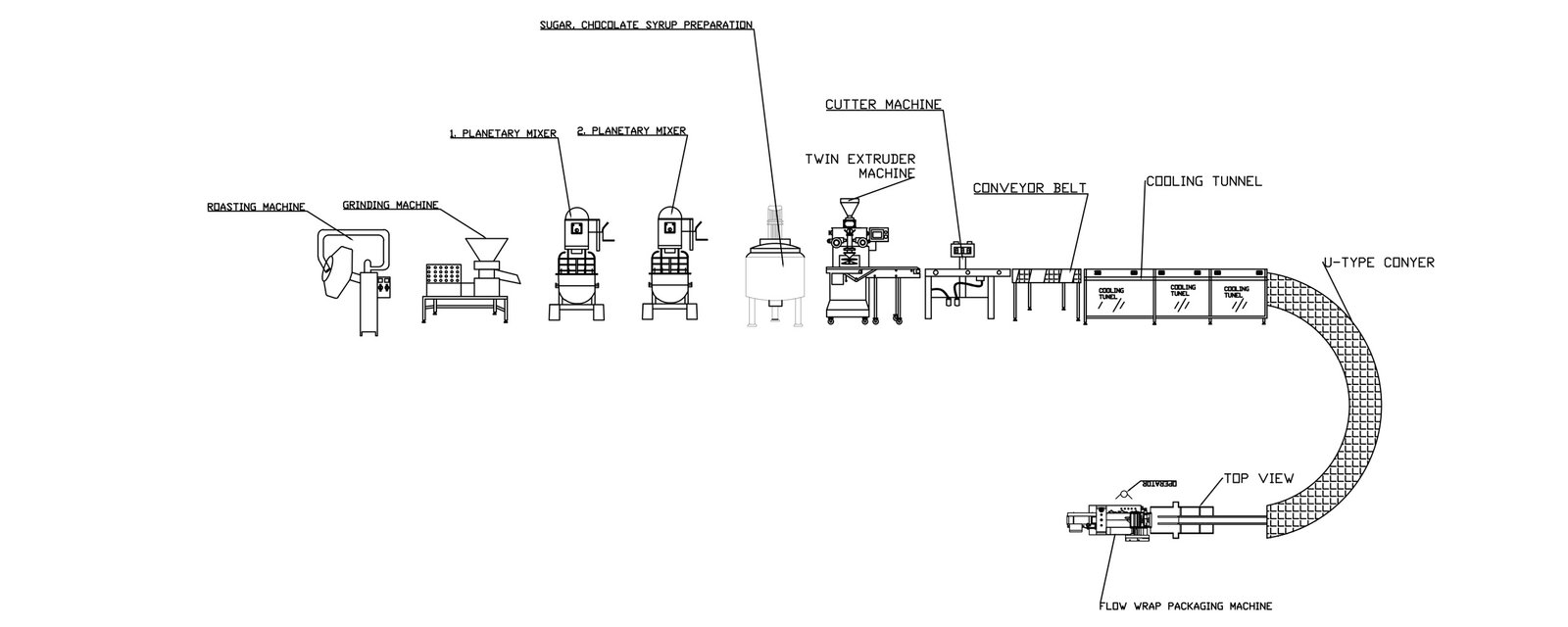
A protein bar production line is engineered to hold high-protein formulations together while preserving bar size, texture, and weight. Understanding this process helps buyers judge whether a given machine fits their factory.
Whey/soy/pea protein, nuts, oats, binders, and sweeteners are thoroughly mixed into a uniform dough. Even mixing ensures the protein content and texture stay consistent across the batch critical for a label claim like “20g protein per bar.”
The prepared dough is fed into the extrusion system, compressed, and formed into a continuous slab or rope of controlled thickness, setting the basic profile of the finished bars.
The extruded product is cut into bars of the required size and weight, with precision cutting reducing product wastage, an important cost factor when working with premium protein ingredients.
The freshly cut bars pass through a cooling tunnel to stabilise structure and reduce temperature before packaging, improving shelf handling.
Once cooled, bars are automatically flow-wrapped and packed into cartons for storage and distribution across Nepal or for export.
PRODUCTION WORKFLOW
Foodsure provides integrated food-processing solutions for businesses across different sectors, helping manufacturers establish efficient, hygienic, and scalable production facilities.
PRODUCTION WORKFLOW
Foodsure’s protein bar machine is built for manufacturers who need consistent production, hygienic processing, and easy capacity scaling. It supports controlled forming and cutting for better consistency across every batch.
PRODUCTION WORKFLOW
Plenty of names show up when you search for a protein bar machine manufacturer. The harder question is figuring out which ones actually build what they sell. At Foodsure, we understand what it takes to launch and scale a protein bar brand in Nepal, and here’s what we offer to make that easier.
Foodsure builds every machine at its own facility, not through outsourced vendors. Customisation around your product is handled directly by our engineering team.
Get installation guidance, commissioning support, operator training, and technical assistance for smooth production setup.
Foodsure’s machines are developed from years of working directly with commercial food manufacturers.
PRODUCTION WORKFLOW
| Capacity per Hour | Power per KW | Area Required (Sqft) | Size of Machine (L × W × H) | MOC SS 302 / SS 304 |
|---|---|---|---|---|
| 50 kg | 14–18 | 2000 | 35 × 12 × 7 | SS 304 |
| 100 kg | 30–35 | 5000 | 55 × 12 × 7 | SS 304 |
| 200 kg | 50–55 | 10000 | 100 × 12 × 7 | SS 304 |
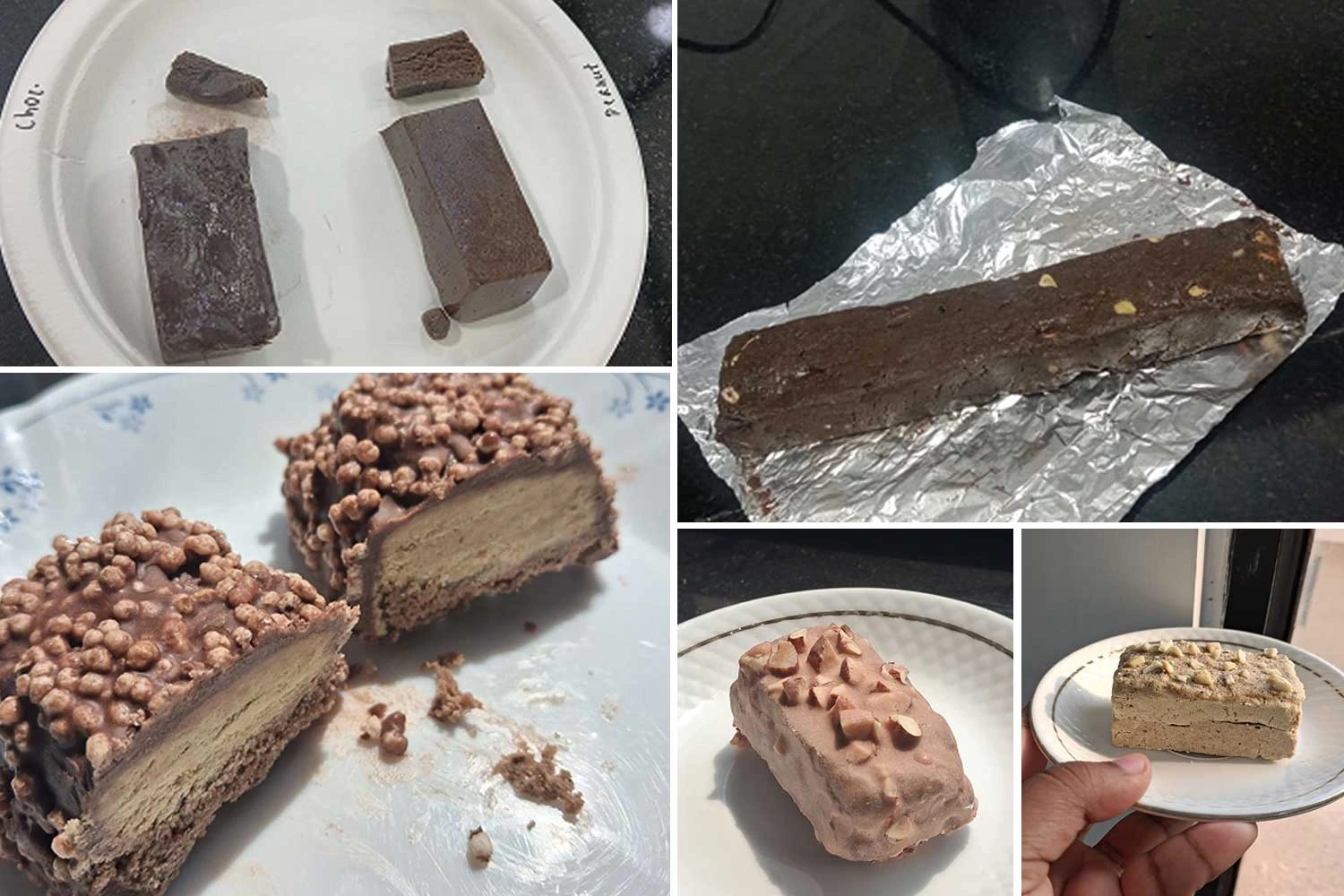
Watch our protein bar manufacturing machine form, cool, and cut bars with consistent weight and size in a real industrial setting, without pause or manual adjustment between batches.
PRODUCTION WORKFLOW

PRODUCTION WORKFLOW
Semi-automatic machines require manual involvement during phases such as loading, cutting, or conveyance, while fully automatic machines typically 200 kg/hr and above perform forming, cutting, conveying, and coating automatically through computerised controls. Fully automatic machines make multi-shift operation practical and hold tighter weight tolerances, which matters once you're supplying retail chains.
You can purchase from Foodsure, a trusted protein bar machine supplier serving manufacturers across Nepal. We offer installation guidance and after-sales support, and can advise on machine specification based on your target production volume. Contact us for a quotation customised to your needs.
A semi-automatic machine at 100 kg/hr is a realistic first step for most Nepalese manufacturers, enough to serve initial demand from Kathmandu Valley retail and D2C channels before committing further capital. Scaling to a fully automatic 200 kg/hr machine makes sense once your order pipeline and distribution reach justify the shift.
Food manufacturing in Nepal falls under the Department of Food Technology and Quality Control (DFTQC), operating under the Ministry of Agriculture and Livestock Development. Applications and renewals can now be filed online through the NeFFILS portal.
A full protein bar production line typically includes a mixing and blending unit, bar forming machine, cooling tunnel, enrobing unit, cutting and sizing station, individual wrapping machine, and carton packing line all configurable as a single integrated setup from Foodsure.
Yes. Rising demand for protein-forward and functional snacks in Nepal's urban retail and gym-going demographic, combined with Nepal's proximity to the much larger Indian protein-nutrition market, makes this a category with strong margin potential.