
It goes without saying that when you are processing makhana on a larger scale, this is one of the questions you ask yourself: do you continue to spend money hiring a workforce to manually sort out your makhana, or do you get yourself a makhana grading machine?The issue of makhana grading versus manual sorting is a significant one, because not only will it influence the quality of your product but also your labor costs, your packaging consistency, and the quantity of premium quality product you can sell. While manual sorting involves sorting of makhana according to its size, color and shape using human vision and hands, mechanical grading machines use sieves, sensors, vibratory sorters etc. for the purpose.
Here in this article, we take a look at both these grading options.
What Is Makhana Sorting, and Why Does It Matter?
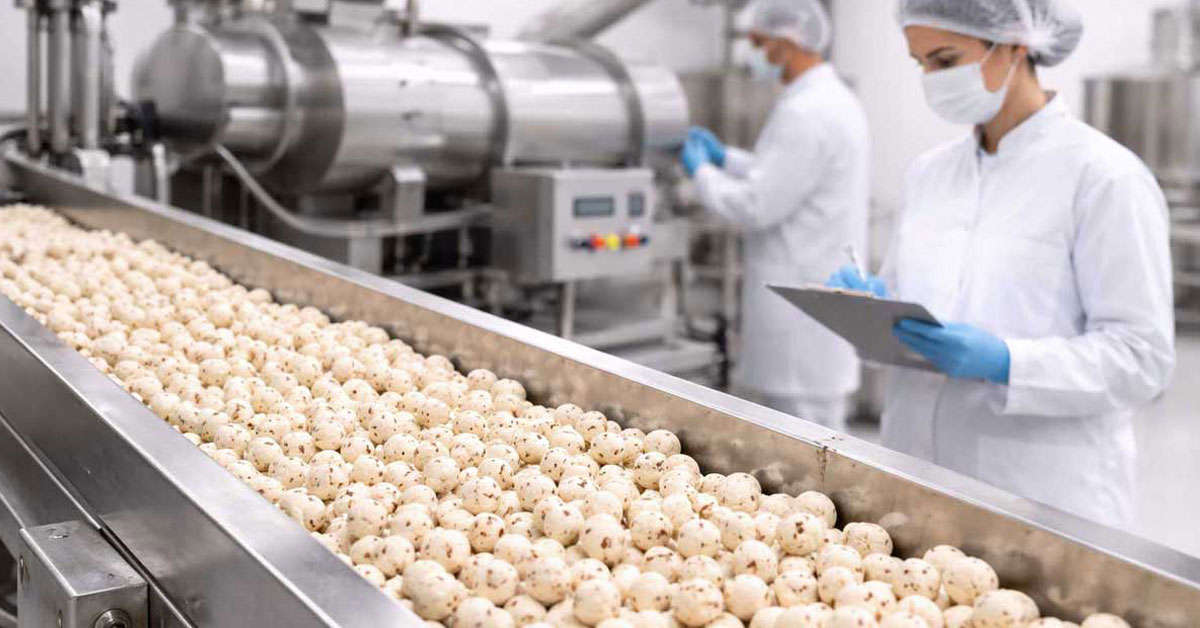
Makhana sorting refers to the classification of roasted and popped fox nuts (lotus seeds) according to their sizes and qualities. The need for sorting is essential because buyers – especially those buying the product for export purposes and for producing high-quality snacks – pay varied prices depending on the quality.
An average bag of raw popped makhana will have:
- Premium grade large and uniformly popped kernels
- Standard grade medium kernels
- Lower-grade small or broken kernels (these can be sold as makhana powder or bhujia mix)
- Rejected unpopped or burnt seeds
Not sorting will compel one to sell everything at a lower price. This is the very essence of grading.
Makhana Sorting Methods: The Two Broad Categories
The following are two methods of grading makhana:
- Manual grading – this involves visual inspection of the makhana and grading by hand, which is done using trays, sieves, or screens.
- Automatic grading – this involves use of a makhana grading machine that sorts the seeds either by size or even color through rotating drums or vibrating sieves.
Small home-based or cottage industries still use manual methods whereas large scale processing plants have adopted the automatic method of grading.
Manual Makhana Sorting: How It Works
Manual makhana sorting is as simple as its name suggests – a group of workers sit at a table, or utilize a set of graduated sieves, and sort the popped makhana by hand according to their own criteria.
- Manual sorting is a very intensive activity where workers manually sort makhana using sieves and visual analysis into 4-6 grades, processing about 15-25 kg per worker per day.
- Common Manual Sorting Process
- Popped makhana is placed onto a table or tray
- Workers manually separate large and small grains using nested sieves of increasingly smaller mesh
- Burnt kernels, broken pieces, and foreign particles are picked out manually
- Sorted batches are measured and packed
Benefits of Manual Sorting
- Minimal initial capital outlay – no machine cost required
- Can be easily used for non-standard batch sizes
- Workers can identify finer defects (discoloration, smell, texture) than basic mechanical sieves
- Easy to implement without technical knowledge
Drawbacks of Manual Sorting
- Inconsistent productivity – fatigue impairs quality towards the end of a shift
- Lower productivity results in lower capacity
- Continuous labor costs will accumulate month-by-month, whereas the machine is bought once
- More difficult to maintain consistent grading criteria across various workers or shifts
- Scale-up requires additional workers, not additional hours
Based on industry estimates regularly cited by makhana processors, the manual sorting process can account for a large proportion of overall processing labor costs due to its high degree of intensity after roasting.
Automated Makhana Grading: How It Works
Automatic grading of popped makhana uses the grading machine which in many cases use multi-decks vibratory/rotary drum grader to grade the popped makhana according to the size of the kernels in a single passage of the machine, processing hundreds of kilograms of the material per hour with no human effort.
Common Process
- The popped makhana is fed into the hopper of the grading machine
- The vibrating/rotating decks with the mesh grade the kernels depending upon the size as they pass through
- Kernels of different sizes are collected from the different outlets
- Process is managed by a small crew who take the final checkups
Advantages of Automatic Grading
- High output capacity of a single machine as compared to that of the large crew
- Grading process is done consistently, irrespective of the shift, fatigue of the labor or time of the day
- Makes the company independent of the seasonal/migrant labor force
- Frees the labor force for more productive activities like quality check & packaging
- Ensures consistency of the batches which is very essential for branding/export packaging
Disadvantages of Automatic Grading
- Higher initial investment compared to that of the manual set up
- Requires periodic maintenance along with mesh/sieve replacement at times
- Useful only for grading by size/color, for smell or any other defect – requires an extra manual step
- Requires electrical supply & some space for installation
Makhana Grading vs Manual Sorting: Side-by-Side Comparison
Why Automation Pays Off: The Real Economics
The honest answer to “does an automated makhana grading machine pay off” depends on your volume. Below a certain scale, manual sorting can still be the cheaper option. Above it, automation almost always wins.
When Manual Sorting Still Makes Sense
- You’re handling small volumes, generally under 50–100 kg per day
- You’re trying out the market without investing in expensive machinery
- Labor in your area is cheap and dependable
- You’re marketing mainly unsorted or single-grade products locally
When Automated Grading Becomes Worth It
- You’re dealing with several quintals of makhana every day
- You’re sending your products to supermarkets, exporters, or retail channels, where consistency in grades is absolutely critical
- Worker availability is patchy, particularly during peak harvesting season
- You’re looking to cut down your reliance on worker-based quality variation and increase the premium grades you produce
A typical scenario with processors who increase their capacity: switching to a grading machine usually becomes a worthwhile investment when your monthly quantity surpasses the point at which the cost of manually sorting the goods would have become higher than the monthly cost of the machine itself. The breakeven point varies by location-specific wages and machine prices, and so it makes sense to calculate yours first.
Common Mistakes Processors Make When Choosing a Sorting Method
- Purchasing a grading machine before the volume necessitates it, as having an unused grading machine is a waste of money.
- Using manual sorting for too long without transitioning — some companies keep spending on more costly labor without considering the cost-effectiveness of using a machine.
- Neglecting the maintenance process — sieves and mesh decks deteriorate and must be periodically replaced in order to ensure the accurate grading process.
- Failing to educate employees about the grading machine — even the automatic machine must have its own control procedure in case of blockages or other issues.
- Operating the grading process independently — grading will be most effective if you integrate it with your makhana production and packaging lines.
Best Practices for a Smooth Transition to Automated Grading
- You should begin by recording your cost of manual sorting in terms of Rs/kg for at least one month — you must know how much is the actual cost.
- You must select capacity of the grading machine which is close to the average quantity per day in case of peak season.
- There must be provision of quality checking manually after grading machine due to texture and odour based defects which cannot be checked by the machine.
- At least two people should be trained as operators in each shift.
- Output from grading machine should be checked on weekly basis during first few months.
How Grading Fits Into the Bigger Makhana Processing Line
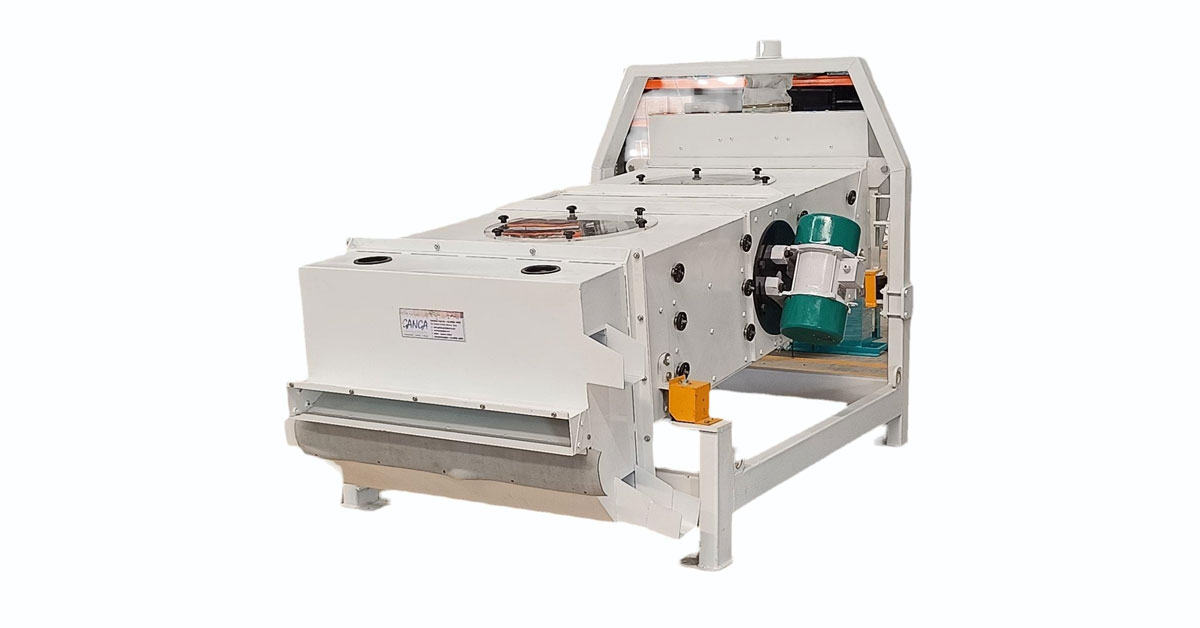
However, grading does not occur on its own. This process takes place between popping/roasting and packaging, so it might be worthwhile considering your entire processing line rather than sorting alone.
When you decide to develop or upgrade your processing unit, you should consider the structure of your makhana production machinery first because popping quality will determine the quantity of sorting needed further down the line. Likewise, many processors opt to grade together with a snack roasting and coating machine and go immediately from grading to flavoring or coating.
If you are interested in the bigger picture, our article about the makhana processing unit installation and our article about makhana roasting machine selection contain information about previous and following stages of processing. Also, you may want to check out our article about makhana packaging options for graded and ungraded product.
Key Takeaways
- Manual makhana sorting may work fine for low volumes, but it is neither scalable nor cost-effective when the volumes increase.
- Machine grading provides much better efficiency and far more consistent grade quality in every batch.
- Your break-even point of changing to machine grading will depend on the volumes and local labor rates.
- Using both machines for grading and some manual inspection for quality control may be the best solution for you.
- Grading should be considered together with popping and roasting equipment..
Conclusion
In truth, the question of whether to go for automated makhana grading or not is one of scale. Local businesses can certainly continue with manual sorting for now. However, once you start dealing with significant quantities per day, or if you are targeting markets that require standardized sorting, then the automated makhana machine becomes a worthwhile investment from a labor, speed, and output perspective. The best way to go about it is to crunch the numbers first and then make the decision.
Have a Question? Let’s Connect
Need expert guidance on food processing machines, production setup, or process optimization? Our team is ready to help you choose the right solution for your business.
FAQs
What is the main distinction between makhana grading and sorting?
Grading involves classification of makhana by quality and size into definite grades; sorting is a more general process of removal of defective items and organization of the entire batch.
Is manual makhana sorting profitable for small enterprises?
Yes, it can be still profitable for small amounts produced daily as investments into machinery are unjustified on this scale.
Why is sorting performed by a makhana grading machine more accurate than manual sorting?
It relies on the use of standardized sizes of meshes and vibration/rotation of the batch which eliminates the influence of operator fatigue on the sorting process.
On average, how different is the cost of manual sorting from the cost of automated makhana grading?
The former type has low initial costs but high ongoing costs due to labor; the latter type requires higher initial expenses but results in lower costs per kilogram.
Can a makhana grading machine be used instead of manual quality control?
No, as machines are good at selecting items by size and shape only; however, a manual examination for texture, smell, and color is necessary.
How many kg of makhana can be processed by an automated grading machine per hour?
An average commercial makhana grading machine processes several hundred kilograms per hour.
When should a makhana processing unit start using automated grading instead of manual sorting?
This should happen when the daily production becomes high enough for ongoing labor costs to exceed the monthly cost of a machine.




