
The production of tomato ketchup is highly dependent on efficient processing machinery. A simple mechanical problem can lead to disruption in production, wastage of products, poor quality of the output, and eventually lower profit margins. Whether it is a small processing plant or an entire automated processing plant, knowledge of tomato ketchup machine problems is very important.Ketchup manufacturing processes are very efficient in today’s world. However, continuous processing poses various problems such as wear and tear of machinery, changes in temperature, pressure, and buildup of products, among others. These problems may lead to unnecessary downtimes, increased cost of maintenance, and poor-quality products.
This blog outlines the frequent Tomato Ketchup machine troubleshooting problems, their root causes, solutions, and preventive maintenance steps that will enable manufacturers to optimize the efficiency of the equipment.
Why Machine Maintenance Is Critical
Regular maintenance of a tomato ketchup making machine is one of the most important factors affecting production efficiency. Proper machine care not only reduces unexpected breakdowns but also ensures consistent product quality, extends equipment life, and improves overall plant performance.
Properly maintained equipment makes it possible for manufacturers to:
- Avoid unplanned downtime
- Increase production efficiency
- Decrease maintenance costs
- Increase equipment life
- Maintain consistency of products
- Ensure food safety compliance
Preventive maintenance is cheaper than Tomato Ketchup machine repair.
Common Tomato Ketchup Machine Problems
| Machine Problem | Common Cause | Production Impact |
|---|---|---|
| Pump Cavitation | Air entry or restricted product flow. | Reduced pumping efficiency and interrupted production. |
| Product Burning | Uneven heating or overheating during cooking. | Poor product quality, flavour changes, and material loss. |
| Pulper Blockage | Seeds, skins, or pulp accumulation. | Reduced processing capacity and production delays. |
| Poor Filling Accuracy | Incorrect filling system calibration. | Product wastage and inconsistent fill volumes. |
| Temperature Fluctuation | Faulty heating or temperature control system. | Inconsistent ketchup quality and unstable production. |
Troubleshooting Common Tomato Ketchup Machine Problems
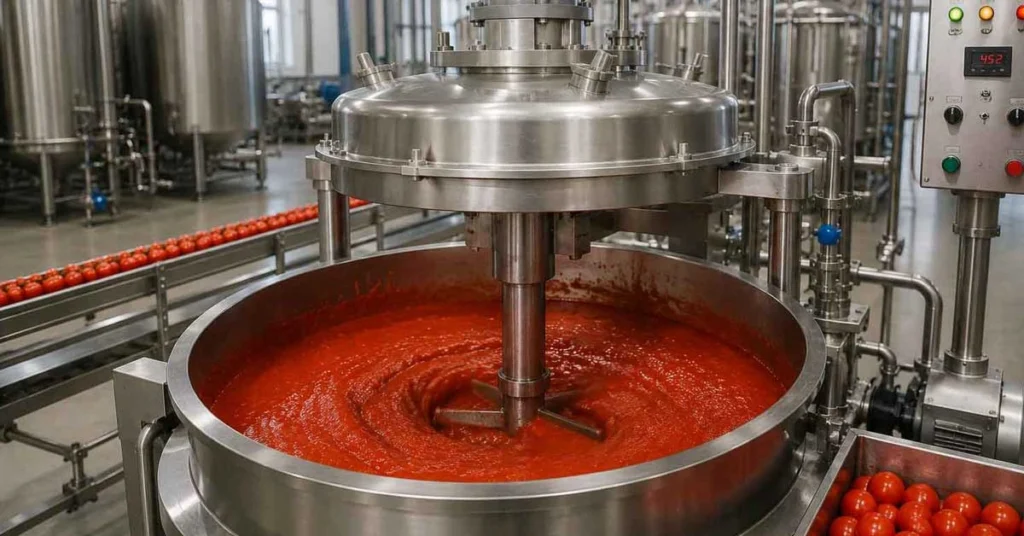
Problems with machinery can arise during various processes in the manufacturing of ketchup and can affect efficiency, quality, and productivity. It is important to determine the source of the problem and provide an appropriate solution to reduce downtime.
1. Pump Cavitation
Cavitation of the pump is one of the most frequent issues in tomato ketchup machines. This happens due to low suction pressure, air leaks in pipes, blockage of inlet filters, or wrong pump choice. Manufacturers should solve this problem by ensuring that there is enough suction pressure, no air leaks, cleaning filters, and the right pumps for ketchup viscosity.
2. Product Burning Inside the Cooking Kettle
Product burning results from ketchup being overheated or unevenly heated while cooking. Factors that may lead to such an incident include poor agitation, steam pressure that is too high, prolonged exposure to heat, and scaling of the steam jacket. Proper cooking temperature, proper agitation, and regular cleaning of the steam jacket will ensure no burning takes place.
3. Pulper Blockage
The problem of pulper blockage arises due to the accumulation of skins, seeds, and fibers of tomatoes in the process of continuous production. In addition, the wear and tear of screens and improper feeding may decrease the efficiency of the process.
4. Poor Filling Accuracy
Filling inaccuracy is usually caused by machine calibration error, faulty filling nozzles, the presence of air bubbles in the filling machine, or the variability of the ketchup thickness. Calibration of machines and nozzle examination will help to lower filling inaccuracies and prevent loss of goods.
5. Temperature Fluctuation During Processing
Temperature changes can have an impact on the quality of ketchup, such as its texture and flavor. Problems in sensors, changes in steam pressure, poor insulation, or problems in the control valve are some of the most common factors that cause temperature change.
Tomato Ketchup Machine Troubleshooting Workflow
A systematic troubleshooting process helps manufacturers identify equipment issues quickly and minimize production downtime.
Following a structured troubleshooting workflow improves Tomato Ketchup Machine Maintenance while reducing the need for frequent emergency repairs.
Best Practices to Prevent Machine Problems
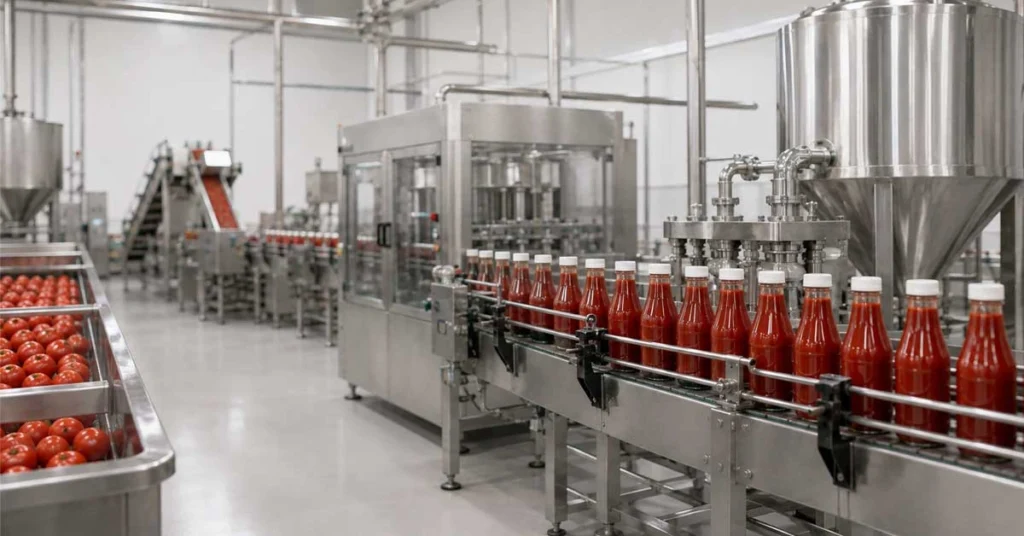
Most equipment problems may be prevented through preventive maintenance and inspection. Rather than react to a problem when it happens, manufacturers should take a proactive maintenance strategy to ensure smooth operations.
The following maintenance strategies are among those recommended:
- Inspection of machines before each shift of production.
- Adhering to maintenance schedules recommended by the manufacturers.
- Cleaning of processing machinery after each batch.
- Replacement of old parts before they break down.
- Operator training in machine handling.
- Recording of maintenance information.
Preventive maintenance significantly improves Tomato Ketchup Processing Efficiency while reducing repair costs and unexpected downtime.
Preventive Maintenance Checklist
Regular Maintenance of Tomato Ketchup Machines helps in minimizing any breakdown of the machine and improves the performance and longevity of the machine.
Improving performance of the machine:
- Clean equipment after every production batch.
- Inspect pumps, pipelines, and valves regularly.
- Monitor steam pressure and temperature controls.
- Lubricate moving parts as recommended.
- Clean pulper screens and filters frequently.
- Calibrate filling machines periodically.
Doing all this will help improve the performance of the machine.
How Foodsure Supports Tomato Ketchup Manufacturers
Foodsure provides complete technical support for manufacturers looking to improve the performance and reliability of their tomato ketchup making machine. Our experts assist with machine selection, installation, commissioning, troubleshooting, and preventive maintenance to ensure efficient and uninterrupted production.
Manufacturers can also check out our Tomato Ketchup production line that will allow them to manufacture ketchup effectively.If you want to know more about our company, please visit our About Us page or feel free to contact us.
Conclusion
Recognizing the possible problems that arise in a tomato ketchup machine and being able to address them is important for ensuring efficient operations and consistency in product quality. Problems like pump cavitation, pulper jamming, product burning, poor filling accuracy, and temperature variations can affect the efficiency of operations in the case of non-addressing. It is therefore through adherence to Tomato Ketchup Machine troubleshooting and maintenance that manufacturing companies can ensure increased efficiency and longevity of their machines.
Frequently Asked Questions
What are the typical tomato ketchup machine failures?
Typical tomato ketchup machine failures are pump cavitation, pulper jamming, product burning, filling inaccuracies, and temperature variations during production.
How do you prevent pump cavitation?
Pump cavitation can be prevented by maintaining proper suction pressure, preventing air leaks, cleaning inlet screens, and using high-viscosity pumps.
Why does preventive maintenance play a vital role in ketchup dispensers?
Routine Tomato Ketchup Machine Maintenance ensures that breakdowns are avoided, improves machine effectiveness, increases the life of the equipment, and guarantees quality production.
How frequently should tomato ketchup machines be serviced?
Tomato ketchup machines should be checked daily, cleaned and lubricated weekly, calibrated monthly, and undergo preventive servicing quarterly to ensure maximum effectiveness of the machine.
Does Foodsure offer technical assistance on tomato ketchup production machinery?
Yes. Foodsure offers technical assistance to tomato ketchup producers by offering machine selection, installation, commissioning, and preventive maintenance advice.




