Making delicious and nutrient-rich protein chips that appeal to the growing demand for healthy snacks to replace conventional potato chips is what the Protein Chips Manufacturing Steps enables. For all contemporary manufacturers, high output, food safety, a high degree of process efficiency, and consistently excellent product quality are paramount. Raw material selection, dough preparation, chip forming, cooking/baking, seasoning, and packaging are all essential steps in the commercial manufacture of protein chips.
To produce chips of uniform texture, flavor, and nutritional value, all steps require custom-made machinery.
To lower product waste, increase efficiency, and achieve consistently good results, knowing the whole Protein Chips Manufacturing Steps is important to all food manufacturers. Read this guide for a step-by-step walkthrough of the whole protein chip production method, as well as the machinery, steps, and quality controls necessary for commercial manufacturing. This article explains what the process entails, what kinds of machinery are used, and how the key quality checkpoints function in large-scale production, whether you are establishing your own company or updating current lines.
What Are Protein Chips?
High protein snacks with the objective of providing an alternative to usual potato chips, healthy and savory in flavor, have gained a lot of recognition from many health enthusiasts, athletes, and bodybuilders. Protein chips extrusion line provide the snacks that many athletes look for for they increase the protein in the snack with some amount of carbs and very low fat.
High protein snacks made with several plant based and milk proteins are generally preferred by manufacturers. These may include protein sources like:
- Whey protein
- Pea protein
- Soy protein
- Chickpea flour
- Lentil flour
- Rice protein
- Oat flour
Adding these makes for a healthier snack that gives it a crunchy and palatable flavor.
Step-by-Step Protein Chips Manufacturing Steps
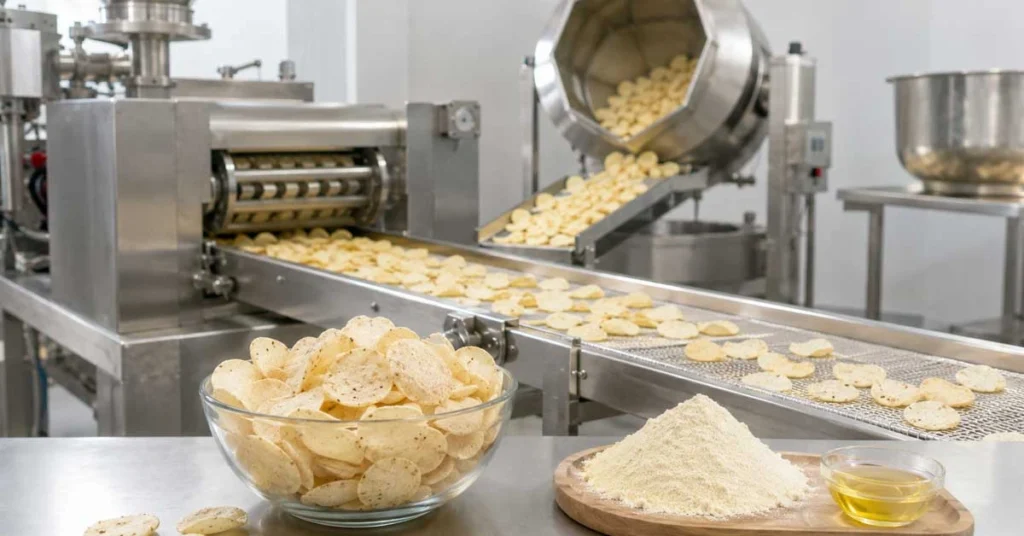
Step 1: Selecting the Ingredients –
Quality products start with quality raw materials. This is particularly important in any efficient protein chips making process .
Essential Ingredients to Consider:
- Protein Sources –
(whey, soy, pea, or chickpea proteins). They define the protein value of the protein chips. Better quality protein also improves the texture and performance of the final product.
- Starches & Flours –
(potato starch, tapioca starch, rice flour, or oat flour). They affect dough structure and help in making chips crispier. Starch & Flour are essential for better processing performance.
- Seasonings –
(salt, herbs, spices, cheese powders, or flavor blends). Seasonings provide flavor to the final product. They need to be evenly distributed in the batch to maintain product flavor consistency.
- Binders –
(natural ingredients that help in holding dough together and improving dough stability). Binders are useful in better forming and avoiding breakage.
Step 2: Measuring the Ingredients
Consistency in each batch of protein chips making process is paramount. Precision in ingredient weighing during production processes contributes significantly to achieving that level of consistency.
Why is Accurate Weighing Necessary?
- Provides consistent nutritional values –
With the right ingredient ratio, manufacturers meet the required product standards for every single batch.
- Prevents errors in formulation –
A well-optimized extrusion stage also supports effective high protein chips recipe development, ensuring the final product performs consistently during large-scale manufacturing.
Planning to Start or Expand Your Food Processing Business?
Get expert guidance from Foodsure Machines for machine selection, turnkey plant setup, installation, and production planning before you invest.→ Book a Free Consultation
Accurate weighing eliminates product rejection rates during the quality check.
- Increases productivity –
When formulations are already in standard measures, the production process planning is also simplified for high scale production.
Step 3: Mixing the Ingredients –
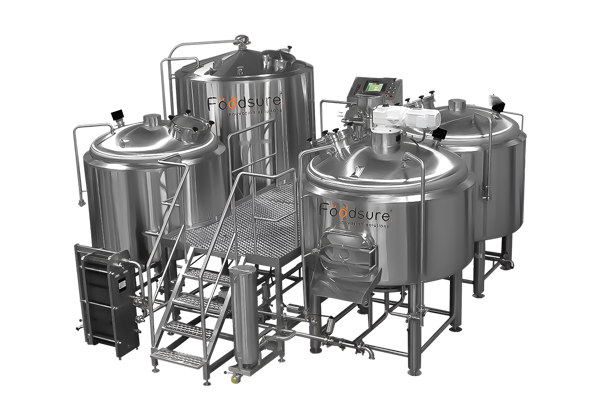
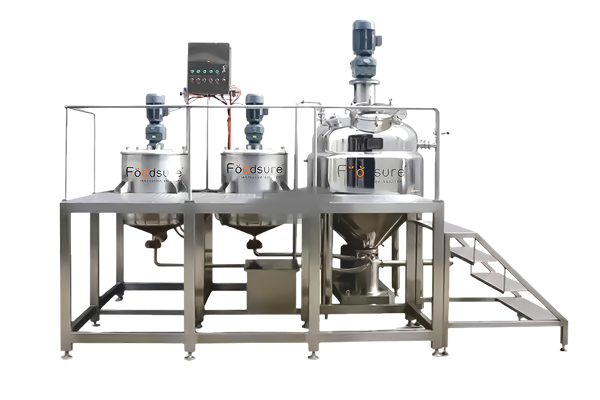
Once measured, all dry and liquid ingredients are put together in an industrial mixer and processed to form a homogenous dough.
Advantages of Good Mixing:
- Evenly distributed ingredients –
No localized concentrations of protein in the dough ensures the chips have uniform nutritional value and texture.
- Improves the dough’s consistency –
Well-mixed dough can be efficiently processed through sheeting or extrusion equipment, preventing delays in the manufacturing process.
- Guarantees consistent final products –
The uniformity of the dough translates into chip products with consistent appearance, thickness, and cooking performance.
Step 4: Dough Resting
The made dough is then left to rest prior to shaping.
Advantages of Dough Resting
- Improves dough stability.
Leaving at rest allows humidity to spread evenly throughout the mixture, making processing more uniform.
- Improves machinability.
Stable dough goes smoothly under sheeting or extrusion machinery with fewer processing hurdles.
- Reduces product defects
Appropriate resting reduces the cracking, uneven thickness, and chip breakage amidst the manufacturing.
Step 5: Sheet Formation or Extrusion
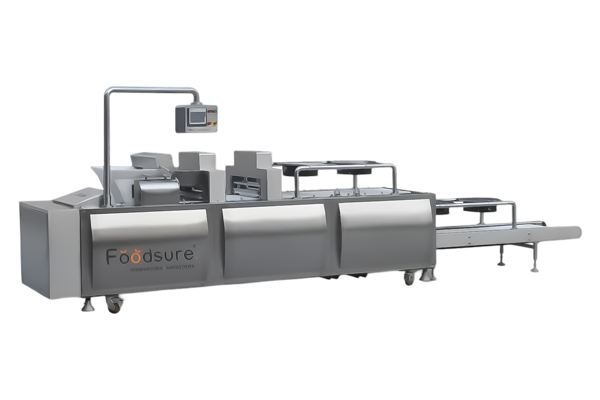
Depending on the item design, the dough is sheeted or extruded into the wanted chip shape.
Essential Factors
- Uniform thickness.
Consistent sheet thickness ensures even cooking and the same texture across every production assembly.
- Precise cutting.
Precise cutting equipment produces chips with uniform dimensions while decreasing the material wastage.
- High production efficiency.
Automatic forming machinery increases the production speed while keeping the item quality standard and consistency.
Step 6: Baking or Frying
This stage makes the chip’s crisp texture and final look.
Key Process Parameters
- Temperature Adjustment.
Adjusting the appropriate cooking temperature saves burning while producing a crisp and alluring texture.
- Cooking time.
Right cooking duration ensures the humidity extraction without affecting the nutritional grade or the item flavor.
- Oil management.
When frying is used, clean properly filtered oil maintains the product quality and expands the machine output.
Flow Chart: Protein Chips Making Process
| Production Stage | Description |
|---|---|
| Raw Material Preparation | High-quality protein ingredients, starches, seasonings, and binders are carefully selected, inspected, and accurately weighed to ensure consistent product quality before blending. |
| Dough Making & Chip Forming | Ingredients are uniformly mixed into a consistent dough, then sheeted, cut, or extruded into protein chips with uniform size and shape for commercial production. |
| Cooking, Seasoning & Packaging | Protein chips are baked or fried, cooled, evenly seasoned, quality-inspected, and automatically packaged to maintain freshness, product safety, and shelf life. |
Utilising the right equipment prominently contributes to more efficient operation in all protein chips manufacturing processes and assures a quality item every time. Also, automatic machines can also aid lower labor cost, as well as support in attaining uniform commercial production.
Step 7: Cooling the Chips
Thereafter baking or frying, the chips are then sent to a cooling conveyor to decrease their temperature prior to seasoning and wrapping. Appropriate cooling averts humidity build-up and saves the crisp texture made during cooking.
Advantages of Proper Cooling –
- Keeps The Product Crispiness
Controlled cooling eliminates ample heat while averting the condensation on the chip surface. This assists preserve the wanted crunch and expands the product shelf life.
- Enhances The Seasoning Adhesion
Chips cooled to the appropriate temperature allow seasoning powders to adhere evenly. Uniform seasoning enhances the product look and provides uniform flavour in each assembly.
- Assists Efficient Packaging
Cooling averts heat from being trapped within the package after sealing. This reduces the humidity formation and assists maintain the product refreshness during storage.
Step 8: Seasoning Application
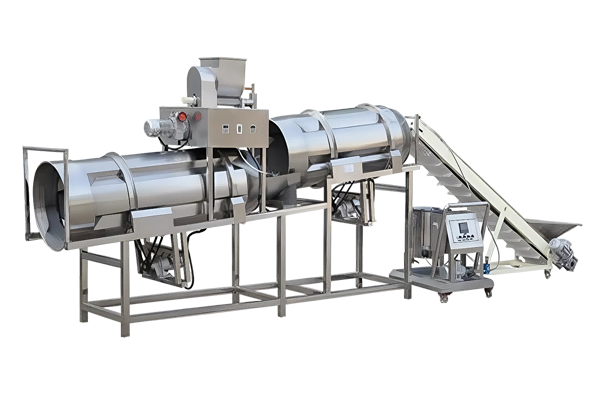
The cooled chips enter a seasoning drum where spices, herbs, cheese powders, or other flavouring raw materials are evenly coated. This step is a crucial element of the protein chips production process because it explains the final taste and consumer appeal.
Key Considerations –
- Uniform Coating
Automatic seasoning machines spread flavours evenly across every chip. This assures the uniform taste and decreases the seasoning wastage during manufacturing.
- Controlled Ingredient Addition
Precise seasoning dosage keeps the product uniformity while preventing excessive salt or flavour concentrations. Precise control also assists producers accomplish nutritional objectives.
- Numerous Flavour Options
Modern seasoning systems allow manufacturers to switch amidst numerous recipes with minimum downtime. This improves the production pliability and supports a wider product range.
Step 9: Quality Inspection
Quality checks are then performed through the Protein Chips Production Process to assure each batch is able to be wrapped into the item being made by the industry.
Quality Checks –
- Physical inspection
The chips are inspected to confirm consistent size, thickness, texture, and product colour. When the wrapping is uniform in its look, customers find it more alluring, thereby boosting the brand trust.
- Nutritional verification
The content level of proteins, moisture, and constituent elements is tested and evaluated to validate that the protein chips measure up to all product requirements after the protein chips extrusion line
- Routine checks
The company should check the product daily for the risk of any contamination and similarly should ensure the hygienic aspect of the processing of the protein chips is not being compromised in any way.
Step 10 – Packaging And Storage
Packaging is the last step of the protein chips production process to keep the products fresh while being delivered to retailers and stores.
Packaging advantages
- Extends shelf life
Airtight packages are designed to preserve the products from moisture, oxygen, and other environmental contaminations so as to increase the shelf-life and crispy quality for the chips.
- Preserves product quality
Rigid packaging material helps to decrease damage and breakage when products are being transported, packed or shipped out of factories, as well as it also guarantees that the product stays fresh until used by consumers.
- Enhances brand visibility
Quality packaging improves brand identity in the markets and provides space for essential information such as nutrition facts, ingredients lists and any other relevant product details to fulfill regulatory labeling and marketing purposes.
Flow Chart: Complete Protein Chips Production Process
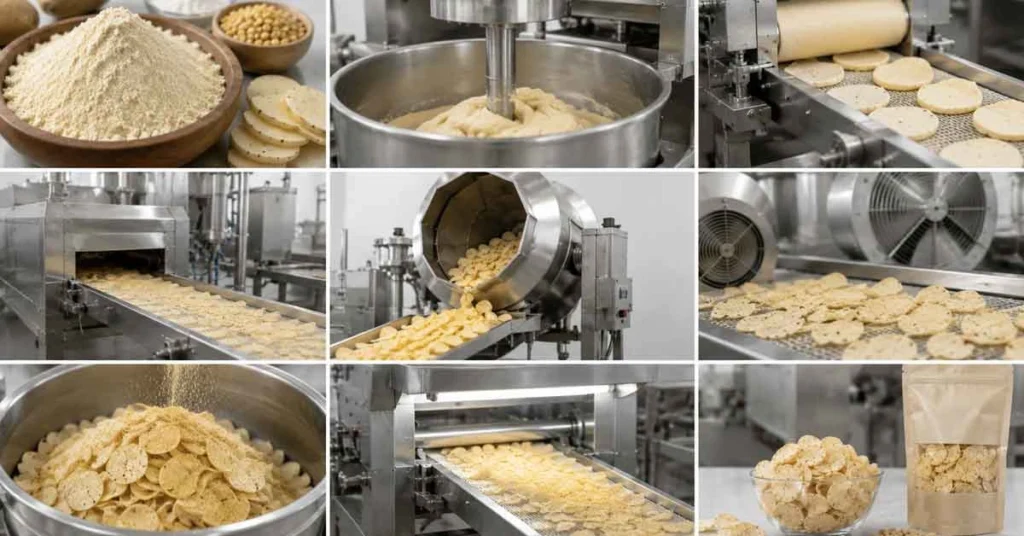
The flow chart includes the preparation of raw ingredients, manufacturing, and finished product, all the way to packaging, and following the step can reduce production efficiency, the reliability of the goods and market performance.
Common Production Challenges and Solutions
| Challenge | Solution |
|---|---|
| Uneven Chip Thickness | Use precision sheeting or a protein chips extrusion line to produce chips with uniform dimensions and consistent cooking performance. |
| Poor Crispiness | Maintain proper moisture levels and accurately control baking or frying temperatures to achieve the desired crisp texture. |
| Uneven Seasoning | Install an automated seasoning system to ensure even flavor distribution while reducing ingredient wastage. |
| Product Breakage | Optimize the dough formulation and use gentle conveying systems to minimize product damage during processing and packaging. |
| Short Shelf Life | Use high-quality moisture- and oxygen-barrier packaging with proper sealing to extend product shelf life. |
These enhancements support manufacturers in enhancing their protein chips making machine production processes and minimizing waste while reducing losses. The continuous control also guarantees the improved product quality as well as customer delight.
Why To Select Foodsure Machines ?
Foodsure Machines a professional food processing equipment manufacturer which delivers turnkey food production solutions for Snacks, Bakery, Confectionery, Sauces, Peanut Butter, Fruits and Vegetables processing , packaging machines, and highly automated Protein Snacks Machine manufacturing systems. Foodsure Machines, an established and reputed Protein Snack Machinery Manufacturer delivers a full spectrum of services ranging from machine design, plant layout, installation & commissioning, operator training, preventive maintenance, automation upgradation, spare part availability, and a well-backed after sales & service support to help companies maximize their production efficiency, uphold consistent product quality, and secure a sustainable growth with food safety assured.
The company provides complete turn-key protein snack factory solutions from A-Z, including the detailed planning, design and installation of the entire production facility, integration of utilities, process engineering, quality control & food safety guidance, optimization of manufacturing operations, technical consultation for process improvements, and guidance on scaling production capacities. The company supports clients through the entire product lifecycle, from initial product concept to commercial scale production, and offers tailored and scalable, food-safe and cost-efficient manufacturing solutions for a wide array of food industries.
Conclusion
The Protein Chips Manufacturing Process demands accuracy in ingredient preparation, careful execution of the cooking procedures, effectiveness in the overall process management and quality in the packaging, as this ultimately represents the quality of the end protein snack. This careful attention to the protein snacks process details, paired with the right machines, will boost the productivity of the company, guarantee high quality products and successfully cater to the increasing market of nutritious and healthy snack options.
Have a Question? Let’s Connect
Need expert guidance on food processing machines, production setup, or process optimization? Our team is ready to help you choose the right solution for your business.
FAQs
What is the Protein Chips Manufacturing Process?
The Protein Chips Manufacturing Process consists of a sequence of operations that include ingredient choosing, mixing, dough developing, making, baking or frying, cooling, flavoring, sorting out and also packaging for industrial-scale production.
Which healthy proteins are used in healthy protein chips?
Many healthy proteins are included in protein chips, the particular choice depending upon the wanted nutrient profile and the solution of the item, consisting of, for instance, healthy protein from whey, peas, soy, chickpeas, rice, as well as lentils.
Are healthy protein chips baked or fried?
Depending on the desired structure, nourishment and product solution, and the favored customer taste, protein chips can be manufactured either by frying or by baking.
What sort of tools are required for healthy protein chips manufacture?
Generally, commercial manufacturing calls for equipment such as mixers, ovens (either cooking or frying), sheeters or extruders, coolers, flavorings, and packaging equipment.
Could Foodsure Makers give us the entire production line of healthy protein chips?
Yes, Foodsure Makers offer total protein snacks manufacturing facility installation and individual manufacturing lines according to client requirements, plus specialized design solutions, installation, setup, personnel training and technical support for long-term production.