
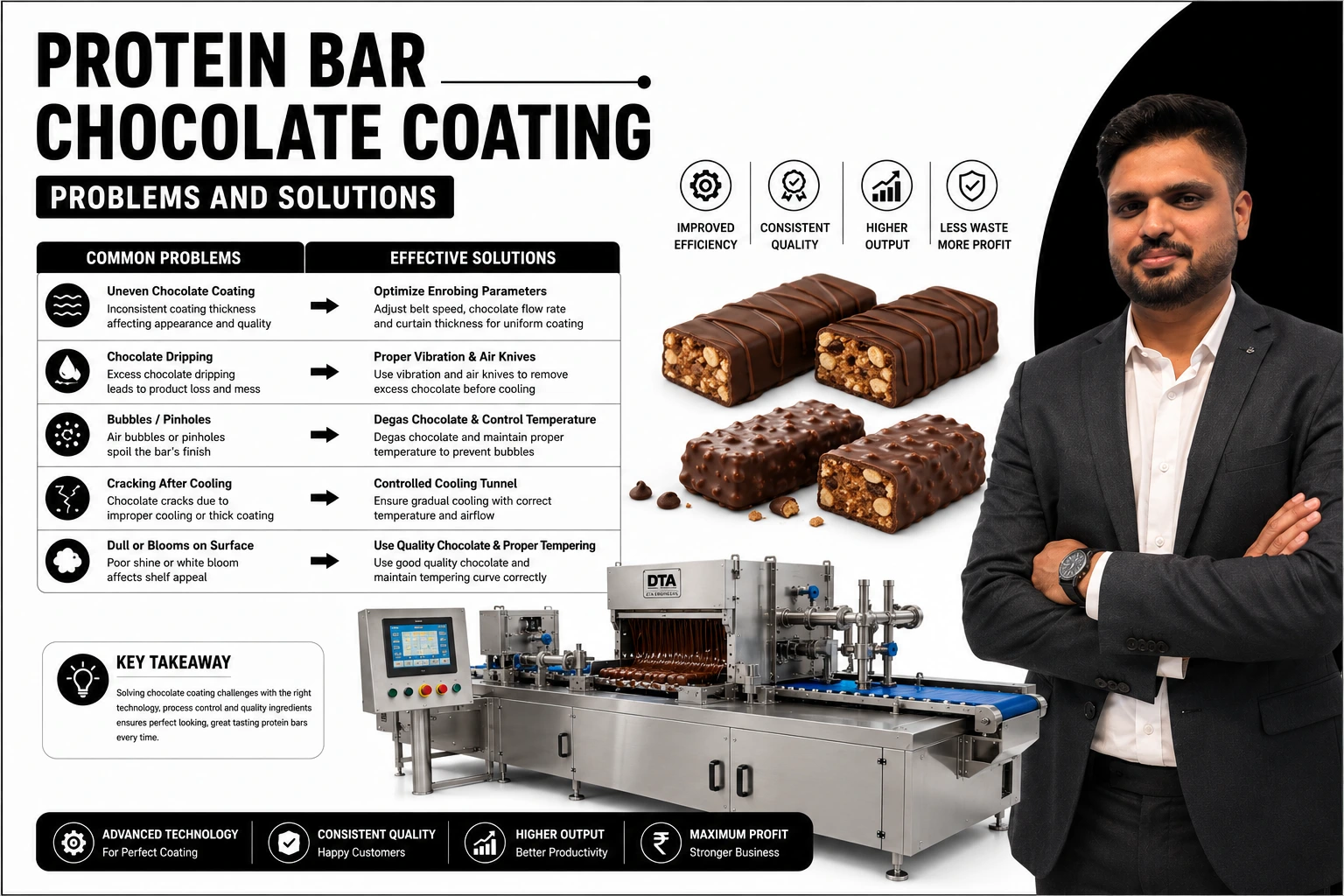
Your Protein bar may have perfect formulation, perfect nutritional values and a perfect packaging design, but if the chocolate coating is unsatisfactory then consumers will immediately be aware. Protein Bar Chocolate Coating Problems can significantly affect product quality and consumer satisfaction.
Consumer complaints most commonly seen with protein bars are related to:
- Uneven chocolate coating
- Cracking chocolate
- White bloom formation
- Product sticking
- Poor appearance
- Chocolate peeling
Typically this is a problem with process, machinery, formulation or cooling.
Foodsure Machines helps brands all over the world to troubleshoot their protein bar chocolate coating problems during commercial production and during scale up.
Below we identify the common Protein Bar chocolate coating problems and their practical solutions.
Read more :- chocolate enrobing machine
Why Chocolate Coating Is Important
Appearance has a major influence on the consumer.
A smooth and shiny chocolate coated protein bar will promote:
- Better shelf appeal
- A premium look to the product
- More consumer confidence in the product
- Consistent purchase
The converse of this is the opposite effect and even a technically perfect bar with poor appearance is unlikely to be a success.
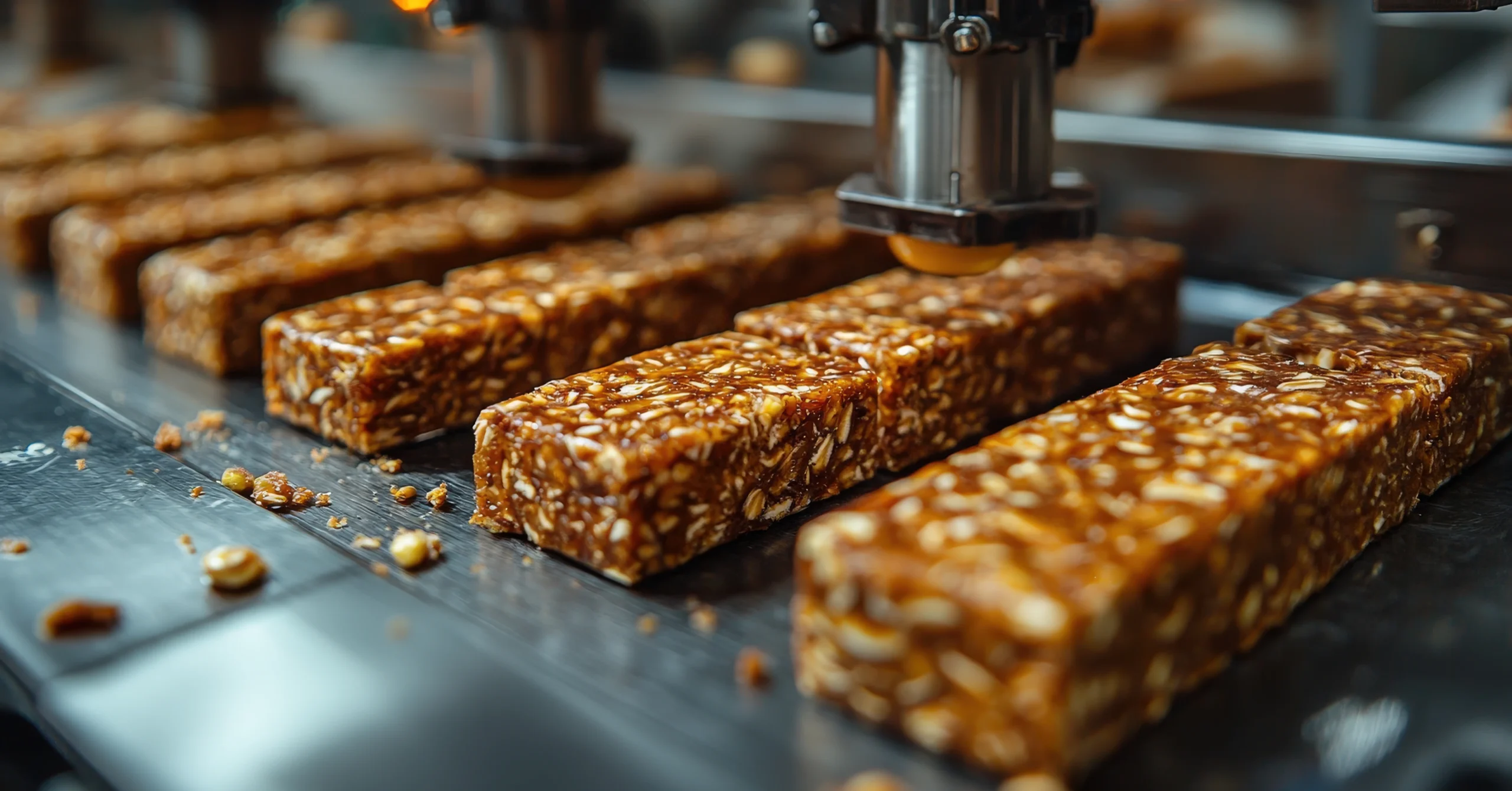
Flow Chart : Protein Bar Chocolate Coating Process
It is important to control each step correctly.
Any problem on any stage can influence the quality of the final product.
Problem 1: Irregular Chocolate Coverage
Signs and symptoms
- Thick coating on one side
- Missing areas or spots
- Inconsistent looks
Potential Problems
- Inappropriate chocolate thickness / viscosity
- Incorrect enrober adjustments
- Uneven conveyor movement
- Improper chocolate flow
Solutions
- Consistent chocolate viscosity
- Enrobing curtain adjustment to consistent appearance
- Conveyor speed calibration
- Maintain optimal temperature for chocolate
- Correct adjustment of air blower settings
Protein Bar Enrobing Problems often originate from poor equipment calibration.
It is suggested by Foodsure Machines to perform periodic checks of the coating weight during production.
Read More :- chocolate coating machine suppliers
Problem 2: Chocolate Cracking
Signs and symptoms
- Surface cracks
- Side cracks
- Fragmented chocolate layer
Potential Problems
- Protein bar too cold when chocolate is applied
- Too fast cooling period
- Coating layer too thick
- Improper tempering
Solutions
- Protein Bar temperature must be stable when chocolate is applied
- Control cooling tunnel conditions
- Optimize the coating thickness
- Enhance the tempering of chocolate
- Protein Bar and chocolate expansion rates must be comparable.
Problem 3: Fat Bloom
Signs and symptoms
- White/Grey coating
- Dim color
- Decreased market value
Potential Problems
- Poor chocolate tempering
- Temperature variations
- Migration of fat within the protein bar
Solutions
- Properly temper the chocolate
- Stable storage condition for the product
- Create barrier layer
- Better formula construction
Chocolate Bloom on Protein Bars is one of the leading causes of product rejection.
Fat bloom is the most prevalent cause for rejection of the product.
Problem 4: Sugar Bloom
Signs and symptoms
- White powdery surface
- Rough appearance
Potential Problems
- Excess humidity
- Moisture condensation
- Improper storage
Solutions
- Control humidity
- Improve packaging
- Maintain stable warehouse conditions
Never put chocolate into a fast heating oven or into a refrigerator to kill stair temperature.
Chocolate Coating Solutions can help reduce bloom-related quality issues.
Problem 5: Chocolate Peeling From Protein Bar
Signs and symptoms
- Chocolate layer separates
- Coating falls off
Potential Problems
- Oily surface
- Poor adhesion
- Incorrect cooling sequence
Solutions
- Control oil migration
- Improve surface preparation
- Optimize enrobing temperature
- Review Protein Bar formulation
This issue is one of several common chocolate coating defects affecting protein bars.
Problem 6: Excess Chocolate Usage
Signs and symptoms
- High coating cost
- Thick chocolate layer
Potential Problems
- Incorrect air blower settings
- Excess curtain flow
- Improper vibration control
Solutions
- Optimize blower pressure
- Adjust chocolate flow rate
- Improve vibration settings
- Monitor coating weight regularly
Minimize chocolate intake and you’ll notice a large improvement in your bottom line.
Fixing Protein Bar Enrobing Problems can lower chocolate consumption and production costs.
Problem 7: Sticky Chocolate Surface
Signs and symptoms
- Chocolate remains soft
- Products stick together
- Packaging issues
Potential Problems
- Incomplete cooling
- Poor tempering
- High ambient temperature
Solutions
- Improve cooling tunnel performance
- Verify tempering parameters
- Maintain warehouse temperature
The product reaching the end of the cooling tunnel should be correctly cooled by the time it reaches the packaging area. Many Chocolate Coating Solutions focus on optimizing cooling and tempering conditions.
Problem 8: Chocolate Tail Formation
Signs and symptoms
- Long chocolate tails
- Poor appearance
- Messy product finish
Potential Problems
- Incorrect enrober settings
- Excess chocolate flow
- Improper blower adjustment
Solutions
- Adjust chocolate curtain
- Optimize blower system
- Improve vibration settings
These visual imperfections are classified as Chocolate Coating Defects .
Chocolate tails is a frequent phenomenon during commissioning of the machine.
Foodsure Machines Recommended Coating Line
For the commercial Protein Bar production:
Processing Section
- Protein Bar Forming Machine
- Cooling Tunnel
Coating Section
- Chocolate Tempering Unit
- Chocolate Enrobing Machine
- Air blower System
- Vibrating Section
Packaging Section
- Flow Wrap Machine
- Nitrogen Flushing system
- Metal detector
The entire line improves the consistency of the final product and reduces losses in the production stage.
Mistakes In Consumer Psychology Commonly Seen In The Market
Most brands would concentrate a lot on the nutritional aspect. Consumers on the other hand, concentrate very much on the appearance of the product.
The general psychology from consumer point of view would be:
- Glossy Coating = High Quality
- Even coating = High Manufacturing quality
- Clean coating = Fresh product
This is why the quality of the chocolate coating has a direct effect on purchase behavior.
A visually appealing Protein bar would normally have a higher rate of trial and repeat purchase.
Conclusion
The quality of chocolate coating is one of the most important processes in the Protein Bar manufacturing. Even the smallest variance in process can have significant impact on:
- Appearance
- Shelf Life
- Customer Satisfaction
- Cost of Production
A solution to the majority of the problems lies in the formulation, settings of machines, tempering control and cooling process.
Foodsure Machinery Will Provide Any Assistance To Protein Bar Brands With:
- Protein bar formulation
- Chocolate coating process optimization
- Chocolate enrobing machine selection
- Production line setup
- Contract manufacturing services
- Scaling up support
Frequently Asked Questions
Why does the chocolate crack on the Protein Bars?
Possible reasons can be improper tempering, quick cooling or difference in temperatures between bar and chocolate.
What causes white patches on the chocolate coated Protein Bar?
Generally, it’s fat bloom or sugar bloom. In many cases, the issue is Chocolate Bloom on Protein Bars.
Why does the chocolate coating get too thick?
Likely, it’s the wrong viscosity of chocolate, too much of chocolate flow or improper settings of the blower.
Why does the chocolate peel from the Protein Bars?
Possible reason is the oil migration, lack of adhesion or formulation related problems.
What is the most ideal machine for Protein Bar coating?
A complete coating line will include: Chocolate Tempering unit, chocolate enrobing machine, air blower, vibrating section, and cooling tunnel.
How to reduce chocolate wastage?
Optimize coating thickness, blower settings, vibration controller and coating weight check.




