The large-scale manufacturing of energy bars is dependent on many factors besides high-quality ingredients; there needs to be a system designed that ensures each part of the production process, from the handling of the raw materials to the final packaging, is done with controlled precision, at the right rate, and in the right order. The demand by consumers for functional snack foods is ever-increasing, and the manufacturer must keep up with quality assurance and food safety standards as well as throughput at large-scale production.
The energy bar manufacturing workflow should be well defined for producers of energy bars planning the operation, specifying equipment, or designing a manufacturing facility. The workflow will ensure that no bottlenecks occur in production, that ingredients are not wasted, and that each energy bar maintains a specific weight, nutritional composition, and consistency.
This guide takes the reader from the beginning to the end of the industrial production of the energy bar through ingredient mixing to forming, coating, chilling, and final packaging. Each step of the operation and machinery used at each step is illustrated, along with the complete production process, in a flow diagram format for ease of use by manufacturers.
Understanding the Energy Bar Manufacturing Workflow
The energy bar production line is meticulously developed so that the raw ingredients can be converted into stable food products. This industrial energy bar process primarily guarantees product uniformity, food safety, and efficient operations by translating the ingredient handling into a finished product packaging process.
- Ingredient prep and mixing: Precise formulation and accurate combination of the liquid and dry ingredients to form a homogenous dough.
- Extrusion and forming: Highly technical equipment is used to accurately form bars of the required length and volume.
- Cooling and setting: The bars are cooled efficiently at accurate temperatures to ensure rigidity.
- Cutting and slitting: The automatic energy bar machine ensures consistency of the bars’ length and breadth.
- Secondary packaging: Final flow wrap for protection of the bar for maximum shelf life and hygiene.
Complete Flow Chart of Energy Bar Manufacturing Workflow
Operational excellence can be systematically targeted through a well-defined energy bar manufacturing workflow throughout each step of energy bar production. This flow chart can enable manufacturers, through visualisation, to understand the flow of material and critical control points through the entire operation, starting from raw materials to final dispatch.
This would help ensure product consistency, compliance with food safety standards, and increased throughput and enable real-time monitoring to ensure downtime and wastage are kept at a minimum with optimum quality.
- Raw Material Inspection: Ensuring the quality of ingredients and proper storage.
- Preparation & Mixing: Blending of basic components and binders evenly.
- Forming & Cooling: Accurately shaping the slab into the shape required, followed by stabilisation.
- Cutting & Coating: Portioning and optionally enrobing the bar precisely.
- Packaging & Quality: Ensuring proper sealing and thorough inspection before final shipment.
Raw Material Preparation and Ingredient Handling
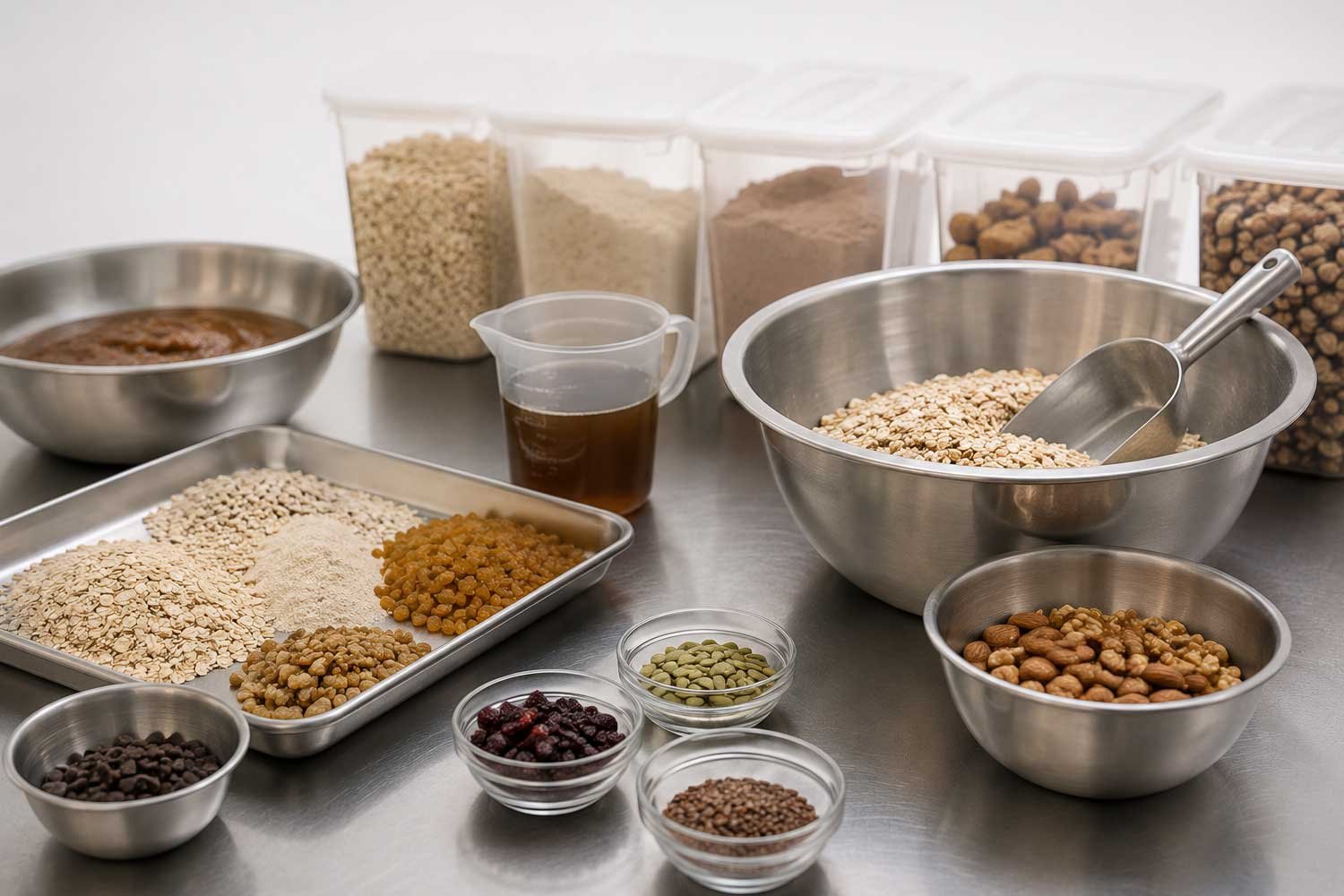
Consistent bars can only be manufactured if ingredients are handled accurately in raw material preparation. The nutritional value and text consistency can be preserved since the very first step. The stage involves an initial, detailed inspection of raw ingredients for quality. After quality check, there’s an accurate weighing and batching process that follows strict formulation specifications.
Finally, a pre-process that prepares grains, nuts, and binders in their ideal form before entering the mixing chamber.
- Standardisation: Strict protocols during the ingredient handling stage preserve a consistent product quality every time.
- Prevention of Contamination: A thorough inspection using industrial sieves and screening systems removes contaminants at the initial stage.
- Precision Control: Using pre-calibrated weighing systems and a syrup tank with temperature control allows for precise flavour and texture.
- High Throughput: Pre-processing makes subsequent stages efficient by removing potential bottlenecks and enabling maximum capacity for mixing and forming processes.
Mixing and Blending in Industrial Bar Processes
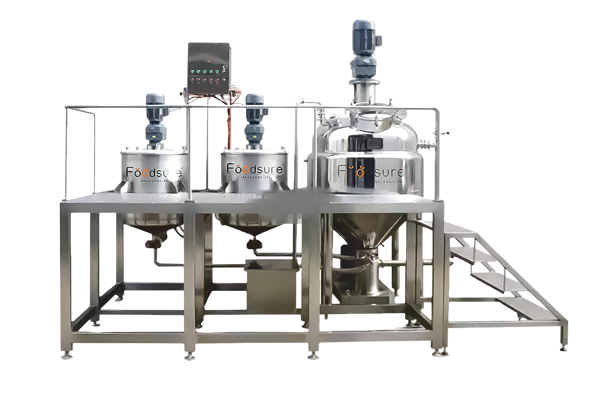
The energy bar production process at this plant places a significant amount of emphasis on controlling temperature. With the aid of speciality equipment, the viscosity of the syrup used can be stabilised to ensure optimum binder utilisation. Whether utilising a ribbon blender machine to incorporate a mixture under low shear and a high output, a sigma mixer, which has superior abilities to mix high-viscosity doughs, or a jacketed mixer to ensure a specific temperature is reached and maintained, it all ultimately needs to result in a completely uniform mixture.
Accurate mixing is essential in the complete energy bar manufacturing workflow of the product:
- Texture: Depending on the shear being applied (low vs. high), it determines what ‘bite’ or ‘density’ of the final product will be realised.
- Binding: Proper incorporation of the syrup will bind the mixture so that the bar holds shape, is not brittle, and is not sticky.
- Shelf life: Uniform distribution ensures that one section will not spoil before the others are affected.
- Product consistency: Eliminating batch-to-batch variation will ensure every bar meets the specifications established by the brand, nutritionally, as well as in quality.
Semi-Automatic vs Fully Automatic Energy Bar Plant
The shift between semi-automatic and fully automatic energy bar machine depends entirely on managing expenditure against a consistent industrial level. Semi-automatic systems can allow for easy changeovers, while fully automated systems have greater accuracy of consistent weight, texture, and quality across a large volume.
Semi-automatic advantages:
- Affordability: Initial investment, so suitable for initial market entry.
- Flexibility: Easier to change over between recipes and bar sizes.
- Scalability: It can be added to over time to accommodate demand
Fully Automatic Advantages:
- Mass production: It is built for continuous, high-volume industrial output
- Labour saving: Removes human error and cost through the entire production process
- Consistent quality: Exact ingredient weight and control in every single unit.
Packaging and Quality Control in Energy Bar Plant
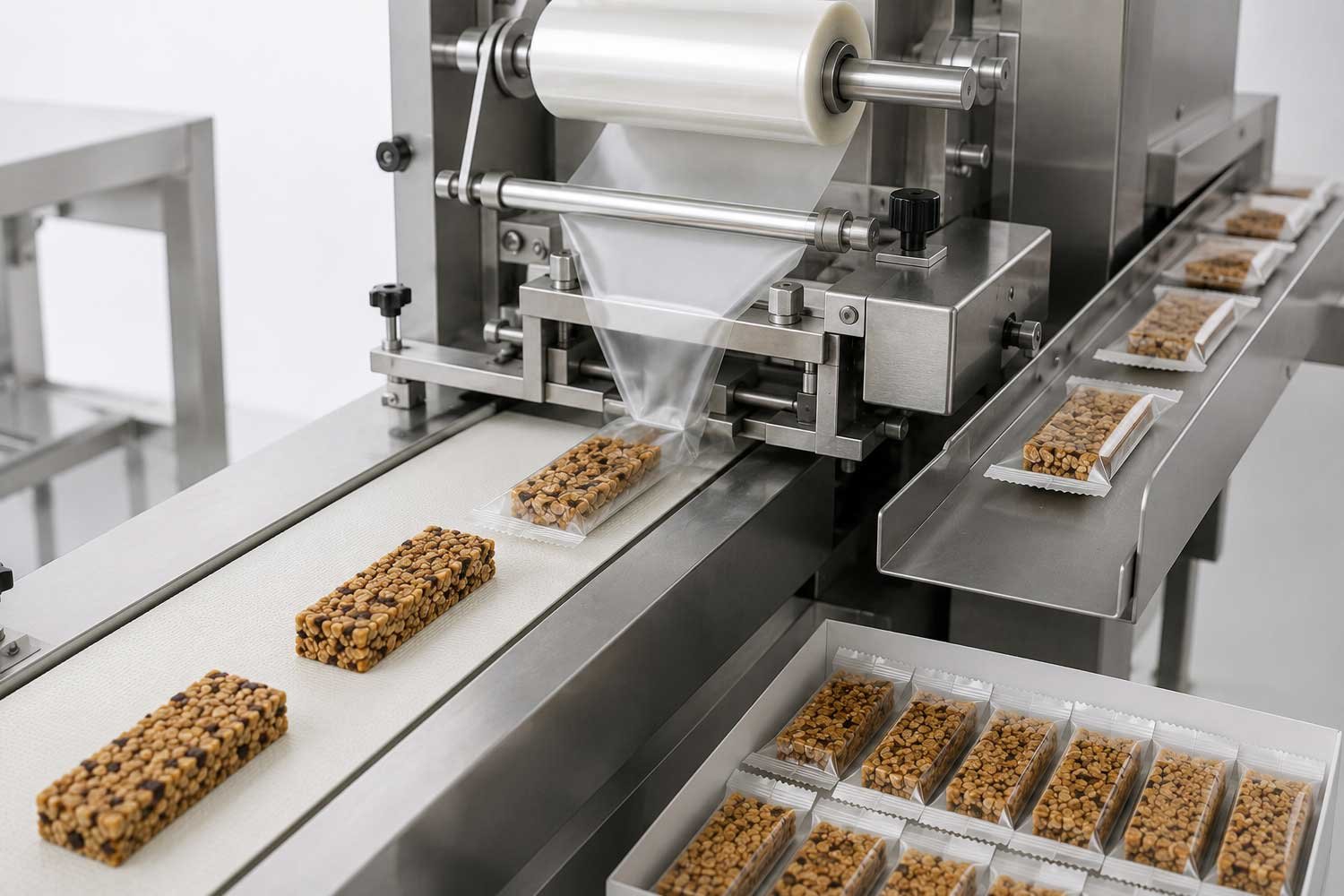
The final step in the process of the energy bar manufacturing workflow is one of the most important for ensuring that the finished product makes it to the end consumer in an optimal condition. When producing energy bars in a professional setting, it is the packaging that ensures their contents retain their nutritional value and that the brand image is protected.
Packaging Workflow
- Flow wrapping: The energy bar is individually sealed within a moisture- and air-tight plastic wrapper.
- Coding: Vital batch and expiration dates are marked on each product using a laser or inkjet printing process.
- Nitrogen flushing: Oxygen is replaced with nitrogen gas. This process prolongs the shelf life of the energy bar and protects against oxidative spoilage.
- Cartoning: A mechanical process that neatly and efficiently boxes individual energy bars for transit.
QC Checks
- Weight: Precise measuring devices known as “check weighers” are employed for accurate and consistent unit weights
- Metal detection: Units of energy bars pass through a detector that is sensitive enough to pinpoint foreign metals.
- Moisture: The moisture content of each individual energy bar is precisely controlled in order to prevent it from becoming unstable, soft, or exhibiting other undesirable texture changes.
- Seal testing: This step is critical for the mentioned reasons to make sure the package is hermetically sealed and the food does not spoil due to premature oxygen exposure.
Machines
- Flow wrapper: High-speed, automated machines designed for wrapping products efficiently.
- Metal detector: An electronic quality control system that checks for harmful metals.
- Checkweigher: An electronic sorting machine that checks for an exact weight.
Conclusion
A well-thought-out energy bar manufacturing process ensures consistent products, increased production speeds, and the maintenance of hygiene throughout the entire manufacturing process. Each section of the production line, from the mixing of ingredients to forming the bars to the cooling process and cutting to the final packaging phase, carries significant weight in a successful energy bar manufacturing workflow and sustained success.
At Foodsure Machines, we are committed to reliable, scalable solutions to current snack food manufacturing needs. Our energy bar production lines cater to various productions. scales while maintaining a high degree of accuracy and automation, a strict focus on food safety, and helping producers create effective processing lines that maintain consistency.
Energy bar manufacturing workflow
Energy bar manufacturing workflow Machine setup support in India.
FAQ
How does the step-by-step energy bar production process work?
The operations carried out involve the mixing of ingredients, slab making, cooling, cutting, coating, and final packaging.
Why is a cooling tunnel important in an energy bar plant?
A cooling tunnel can maintain shape and improve the stability of texture and aid in precise cutting.
Which stage is most critical in the industrial bar process?
Mixing of ingredients is paramount, as it has the greatest influence on texture, binding, and consistency.
Can the energy bar manufacturing workflow be customised?
Yes, production line setup is subject to modification based on the type of product, scale of production, and degree of automation.
What helps improve efficiency in bar machine production stages?
The operations are more efficient if batches are correctly mixed, machines are well-synchronised, and the temperature is controlled with good use of automation.