
For mayonnaise producers, the desire to create a long-lasting, effective mayonnaise is dependent on proper knowledge of emulsion chemistry, how each ingredient functions in the emulsion, and advanced mayonnaise preservation techniques. Due to mayonnaise’s thermodynamic instability as an oil-in-water emulsion, mayonnaise shelf life improvement is highly prone to oxidative degradation, microbial growth, and emulsion destabilisation, which creates significant supply chain challenges related to product quality.
The successful control of the most critical parameters, such as pH, use of antioxidants and antimicrobial agents, and controlled packaging conditions, will dictate the long-term viability of mayonnaise as a food product. This manual will provide a comprehensive, science-based method for manufacturers that wish to extend the stability of their mayonnaise products to provide the highest level of food safety, sensory quality, and commercial performance in the marketplace.
Why Shelf Life Matters in Mayonnaise Production
Commercial mayonnaise shelf life solutions manufacturers rely on shelf-life stability as a fundamental part of their production process. The nature of mayonnaise, being an oil-in-water emulsion, is chemically vulnerable; therefore, the success of mayonnaise production is largely dependent on avoiding coalescing (phase separation) and oxidative rancidity (degradation due to exposure to oxygen).
By optimally managing mayonnaise shelf life improvement, manufacturers can increase production capability because they ensure that the mayonnaise will hold its structural and flavour integrity throughout the rigours of the global supply chain.
The benefits of managing mayonnaise shelf life improvement include the following:3
- Microbiological safety: The use of high-quality preservatives and acidity regulators helps inhibit the growth of foodborne pathogens and spoilage yeasts.
- Stabilisation of emulsions: The use of xanthan gum or other stabilisers, and egg yolk as an emulsifier helps keep the oil and water from separating over the shelf life of the product.
- Economic success: By extending the “best before” date of a product, manufacturers can minimise costly returns caused by expired products, reduce waste at factories, and increase efficiencies, allowing for bulk shipment.
- Brand consistency: This means that consumers will experience the same creamy texture and consistent tangy flavour profile whether the jar was manufactured one day ago or six months ago.
- Market access: The longer the base product remains stable, the more it increases the export ability to hot climates or other areas with less developed refrigeration infrastructure.
Factors Affecting Mayonnaise Shelf Life Improvement
Multifaceted parameters are critical to ensuring mayonnaise’s durability and quality. Mayonnaise contains fat and water, making it inherently unstable; minor environmental changes can cause it to spoil or lose its structural integrity.
Critical Factors for Mayonnaise Stability
Chemical Barriers: pH Management
- Acidity: The primary means of microbiological control is ensuring the pH of mayonnaise is maintained at or below 4.0-3.6.
- Choice of Acid: Use vinegars (essence or concentrated) or citric acid (3-5%) or lemon juice (3 -5%) as a means of ensuring that pathogens cannot survive in this environment.
Ingredient Integrity:
- Oxidative Stability: Using only the highest-quality edible oils will protect the product from developing “off” flavours from rancidity.
- Functional Bases: The use of pasteurised (FDA-approved) eggs and food-grade emulsifiers will ensure that the chemical interactions between the oil and water are maintained.
Mechanical Stability of Emulsions:
- High Shear Mixing: During production, the use of industrial mixers to create uniform, microscopic-sized oil droplets will assist in preventing clumping (coalescing) of the oil.
- Droplet Distribution: Maintaining uniform droplet sizes will prevent the oil from separating and rising to the top, or creaming.
Environmental Barriers: Storage and Hygiene
- Sanitary Processing: Employing Clean-in-Place (CIP) systems will prevent the introduction of microbial contamination to the produced product during the processing phase.
- Temperature Control: Properly controlling the temperature will prevent heat from accelerating the chemical oxidation process and the breaking of the physical bonds of the emulsion from occurring.
Read More: How to Start a Mayonnaise Manufacturing Business
How to Increase Shelf Life of Mayonnaise
The method used to extend the shelf life of mayonnaise includes a biochemical barrier, mechanical means, and advanced packaging technologies that work together to extend its shelf life from 6 to 12 months by addressing all potential failures (microbial, physical, or chemical) that may occur at any stage of the manufacturing process.
Biochemical Barrier: Acidification
- pH Management: An acidity level between 3.6 and 4.0 creates an environment where most foodborne pathogens will not survive for very long due to low pH.
- Acid Selection: By using vinegar (acetic acid) or lemon juice (citric acid) as the acid, you are also providing natural preserving characteristics while providing that specific tangy flavour.
Microbial Control: Ingredient Treatment
- Pasteurisation: Pasteurised liquid eggs or egg powder eliminates the risk of salmonella and reduces the initial microbial load.
- Water Activity (a_w): By controlling the amount of salt and sugar, you will bind the available water (thereby making it unavailable for any microbial activity).
Physical Integrity: Emulsion Stability
- High-Shear Homogenization: High-pressure mixing reduces oil droplets into microscopic, uniform sizes and prevents them from merging and creating an oil-water layer.
- Hydrocolloid Addition: Using stabilisers like xanthan gum or hydroxypropyl methylcellulose (HPMC) will provide increased viscosity (thickness) to the water phase of the mayonnaise, therefore physically locking the oil droplets in place.
Oxidative Protection: Packaging & Packing
- Atmospheric Control: Nitrogen in the jar displaces air in the headspace, eliminating the risk of rancidity in the oil.
- Airtight Seal: Induction sealing and using either high-barrier plastic or glass containers create an airtight container, providing a final barrier to exposure from environmental oxygen/moisture.
Methods to Extend Mayonnaise Shelf Life in Industrial Production
To produce industrial mayonnaise that is stable, safe, and visually appealing over long periods of time, property engineering can be used when transitioning from small-scale mixing to commercial production via high-precision or closed-loop systems that limit the detrimental effects of oxidation and microbial activity.
Automated PLC-Controlled Systems
- Precision Dosing: Accurate methods that automatically measure and dispense acidity regulators and preservatives will help ensure that pH remains at its lowest possible point.
- Reducing Contamination: Lessening the involvement of people’s hands in handling raw materials will significantly lower the risk of introducing bacteria into the mayonnaise manufacturing process from external sources.
High-Shear Emulsification
- Mechanical Stability: High-energy mixers break down the oil into particles below 1 micron in size. During transportation and storage, such as in jars, emulsified mayonnaise will not experience separation through physical breakdown of the emulsifying agent (syneresis).
- Uniformity: A consistently narrower range of particle sizes results in every jar manufactured having the same mechanical integrity, minimising the likelihood of oil separating from the emulsion.
Vacuum Processing Technology
- Oxygen Extraction: The mixing process occurs under vacuum and results in the removal of microbubbles of trapped air from the emulsion; the removal of oxygen dramatically reduces the development of rancidity in the oil.
- Improved Density: Mayonnaise produced via vacuum mixing will have a higher density and appear glossier, which is often seen by consumers as an indication of freshness.
Common Signs of Mayonnaise Spoilage and Shelf Life Deterioration
You can only determine mayonnaise spoilage by constantly monitoring the emulsion’s physical stability and the chemical integrity of its constituents. When the equilibrium created by balancing the oil with water and acid is disturbed, there are visually evident and sensorily observed changes to indicate that it is no longer safe for human consumption.
Examples of signs of spoiled mayonnaise:
- Oil Separation: A clear, separate layer of oil that is evident on the top and sides of the jar indicates that the mayonnaise has broken. Temperature variations or failure of the ingredients to be properly homogenised are typical causes of oil separation.
- Colour Discolouration: In comparison to the normal creamy white/blond beige colour of mayonnaise, any product that has turned to a dark yellow or has a translucent or brownish surface from oxidation is indicative of spoilage.
- Rancid or Sour Odour: As the vegetable oils oxidise, they produce an unpleasant, acrid aroma, which is akin to the smell of wet cardboard and dried paint and indicative of fat decomposition.
- Texture Changes: If the mayonnaise has become lumpy or watery or exhibits a “frizzy” consistency, there is a high likelihood that microbial fermentation or physical collapse of structure has occurred.
- Visible Mould Growth: The appearance of any fuzzy spots or dark flecks of growth on the mayonnaise or the inner surface of the jar is indicative of contamination and signifies immediate disposal of the product.
Best Industrial Approach for Mayonnaise Shelf Life Improvement
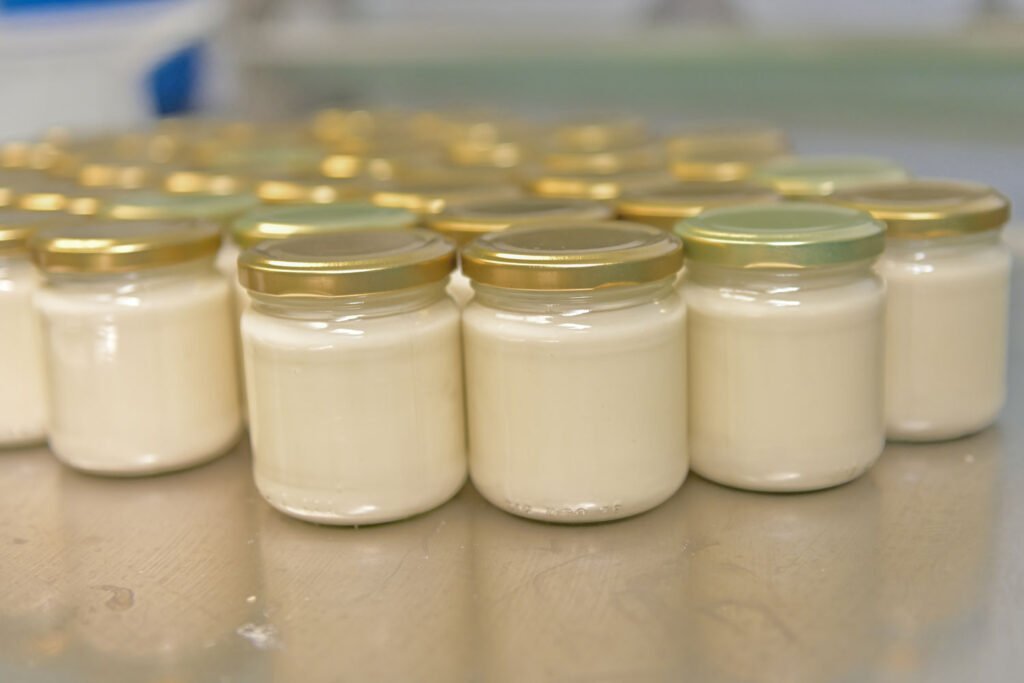
Making a mayonnaise product that has a long shelf life and is ready for retail sale requires an overall strategy for how that mayonnaise will be made. The best way to achieve this goal is to use more than one method for preserving the mayonnaise. This can be done by combining mechanical precision and biochemical barriers in the manufacturing process, which helps create a stable product from the time it leaves the factory until it is consumed by the end user.
Integrated Production Standards
- Mechanical Precision: A mayonnaise making machine with high-performance mechanicals and high-shear emulsification produces mayonnaise that has a small, uniform particle size. This produces a physical bond between the oil and the other emulsifiers, preventing the oil from separating during the shipping of the mayonnaise over long distances.
- Oxidative Protection: Many of today’s mayonnaise machines also incorporate vacuum mixing and nitrogen flushing as part of their production systems. The removal of oxygen from the mayonnaise batch during the mixing stage is critical to preventing rancidity and evaporation of flavour. These problems primarily occur when high levels of oxygen expose oil-based condiments.
- Hygienic Control: Using automatic mayonnaise machines for filling containers with pasteurised ingredients and high-barrier packaging significantly reduces the risk of contamination from microbial agents. Using precise pH control (maintaining pH levels between 3.6-4.0) with the aforementioned systems results in mayonnaise products that can be safely exported and have the ability to be distributed on a large scale.
Conclusion
Proper formulation, hygienic manufacturing, controlled blending, and advanced packaging will enhance the mayonnaise shelf life improvement products. Knowing all the different components that impact how long a commercially made mayonnaise product will be shelf-stable allows for reduced spoilage of the product and stable texture retention of the product, as well as increasing the safety of the mayonnaise product.
At Foodsure Machines, we are focused on providing you with dependable processing systems that enable you to implement present-day techniques of preserving mayonnaise and efficiently manufacture your products. By providing you with the latest technology available, such as our high-quality mixers, vacuum emulsifiers, and automatic mayonnaise processing equipment, you will be able to implement successful methods of extending the shelf-life of your mayonnaise product while ensuring constant and consistent product quality.
Mayonnaise Shelf Life Improvement
Mayonnaise shelf life improvement depends on stable emulsification, proper preservation methods
FAQ
What is the best method for mayonnaise shelf life improvement?
The use of proper emulsification along with hygienic processing techniques and advanced preservation methods provides a significant benefit to your product’s stability and overall shelf life.
How to increase shelf life of mayonnaise in commercial production?
Manufacturers use controlled pH, vacuum mixing, stabilisers, and airtight packaging as effective ways to extend the shelf life of mayonnaise.
What are the main factors affecting mayonnaise shelf life?
Several factors negatively impact the shelf life of mayonnaise, including temperature, ingredient quality, emulsion stability, oxygen exposure, and hygiene.
Which methods to extend mayonnaise shelf life are commonly used in factories?
Common methods used to help increase the shelf life of mayonnaise include high-shear mixer technology, nitrogen flushing, pasteurisation, and maintaining a cold chain storage environment.
Why are commercial mayonnaise shelf life solutions important for food manufacturers?
Shelf-life solutions utilised for commercial mayonnaise can help to eliminate food spoilage, provide consistent product quality, and allow for long-distance distribution.




