Fox nut and gorgon nut are other names given to Makhana, which has become an important aquatic crop in India due to the existence of ponds and wetlands that favor its cultivation. The rise in demand for processed makhana and flavored products has made makhana farming in India more interesting.
Different from traditional field crops, makhana is grown in water and needs certain climatic, soil, and pond conditions to grow. It is essential to know how cultivation, harvesting, drying, grading, and processing after harvesting are done.
What Is Makhana Farming?
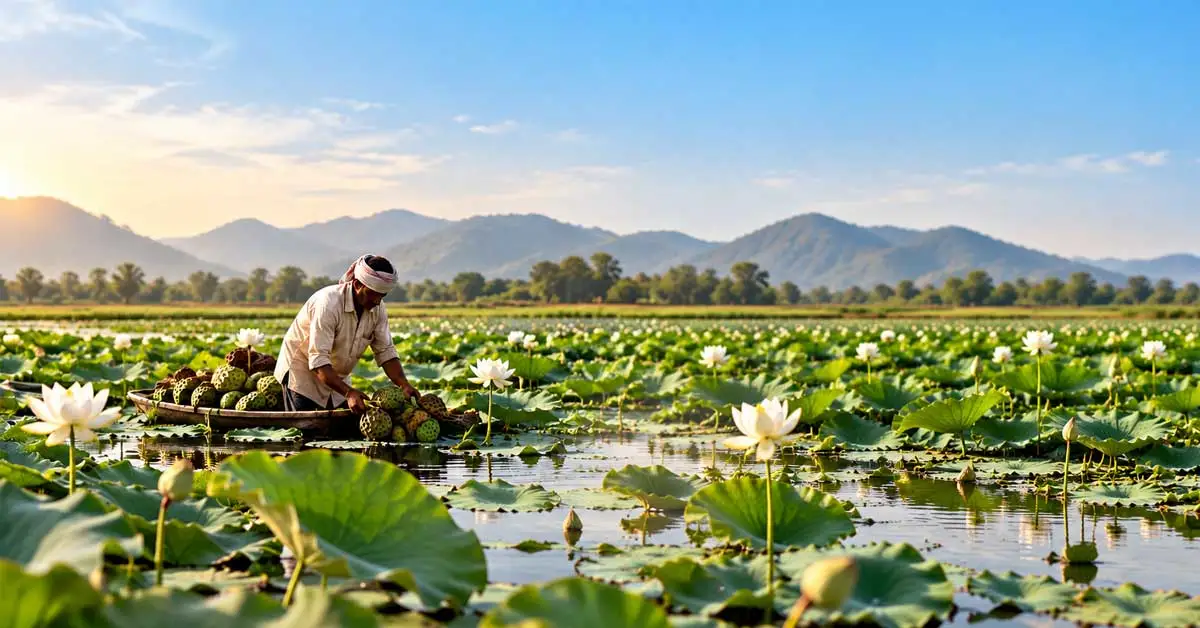
Makhana farming in India refers to the cultivation of the makhana plant, scientifically known as Euryale ferox. It is an aquatic crop that grows in ponds, wetlands, and other suitable water bodies.
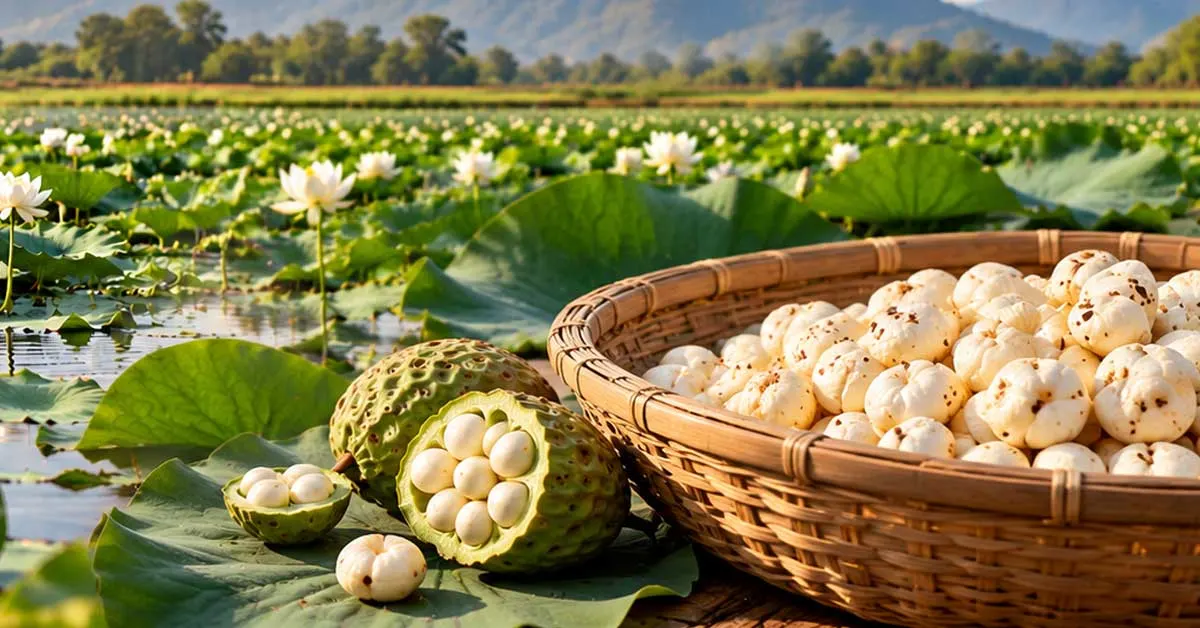
The plant grows rounded, thorny leaves that float on the surface of the water. Its seeds are harvested when ripe to get the edible kernels of makhana.
Among the key producers of makhana is India, where the crop is predominantly grown in Bihar, among other areas in eastern and northern India. Makhana was traditionally farmed from ponds; however, there have been efforts to organize the planting process.
Why Makhana Cultivation Is Important in India
As makhana has gained popularity as both a snack and ingredient, there has been an increased interest in organised farming. The farmers can provide raw makhana to the processing companies as well as the traders.
Some important factors driving interest in makhana cultivation in India include:
- Increasing consumer demand for healthy snack options
- Growing popularity of roasted and flavoured makhana
- Expansion of packaged food markets
- Scope for value addition after harvesting
- Suitability of the crop for specific pond-based agricultural regions
The cultivation sector is also closely connected with processing. Better post-harvest handling and modern machinery can help convert raw seeds into commercially valuable products.
Suitable Conditions for Makhana Cultivation
Makhana needs an appropriate aquatic medium for proper growth. Water is one of the most important components, as the plant is grown in ponds or waterlogged conditions.
Water and Pond Conditions
A suitable pond should have sufficient water throughout the cultivation cycle. Water depth, cleanliness, and overall pond condition can influence plant growth.
Before cultivation, farmers generally need to assess:
- Water availability
- Pond depth and condition
- Soil characteristics
- Water quality
- Drainage and accessibility
- Availability of labour
Climate
Makhana thrives in a warm and humid climate. Sunlight and appropriate temperatures are important for the growth of plants and production of seeds.
Since the weather conditions may vary greatly from one place to another, the selection of areas for growing Makhana should depend on local agricultural conditions.
Makhana Cultivation Process
The makhana cultivation process involves several stages, from preparing the cultivation area to harvesting mature seeds. Each stage requires appropriate management to maintain crop health and maximise usable seed output.
1. Pond Preparation
Before introducing the seeds into the soil, the area needs to be prepared. The farmers should ensure that the pond is in good water condition and that no excess weeds are growing in it.
Preparing the cultivation area makes it easier to cultivate the crops. The preparation of the pond can include adjusting the water level and other elements that might hinder cultivation.
2. Seed Selection and Sowing
Good quality seeds are crucial in developing a good crop. The selected seeds are placed in the water body that has been prepared according to local practices.
Quality of seeds may affect germination and growth of plants. Hence, farmers should consider the origin, maturity, and quality of the seeds they use in farming.
3. Germination and Plant Growth
Following planting, the seeds germinate, and development begins underwater. With growth, the leaves will eventually make their way to the surface.
The plant grows large floating leaves and goes on to flower and form fruiting structures. The correct water conditions must be met at this stage.
4. Flowering and Seed Formation
Makhana plants have flowers in their life cycle. After getting pollinated, seed-producing parts form underneath the water.
These seeds develop in the seed-producing parts, and finally, the seeds are ready for harvest. Observing the crop will help in deciding the right harvesting stage.
5. Harvesting
Harvesting is one of the more labour-intensive stages of fox nut farming. Mature seeds are collected from the water after they separate from the plant structures.
Traditional harvesting can require workers to enter ponds and manually collect the seeds. The collected material is then cleaned and prepared for further processing.
The labour requirement at this stage is an important consideration when planning commercial cultivation.
6. Cleaning and Drying
Cleaning of the seeds is essential after harvesting to get rid of foreign materials. Drying is also essential because proper moisture control will facilitate storage and processing.
The post-harvest process plays a very big role in determining the quality of the end product. It can affect the storage and processing process in many ways.
7. Grading and Processing
After cleaning and drying the raw seeds, they can then be sorted based on their sizes and quality.
Commercial makhana production may involve several stages, including:
- Seed cleaning
- Drying
- Grading
- Roasting or popping
- Separation
- Flavouring
- Packaging
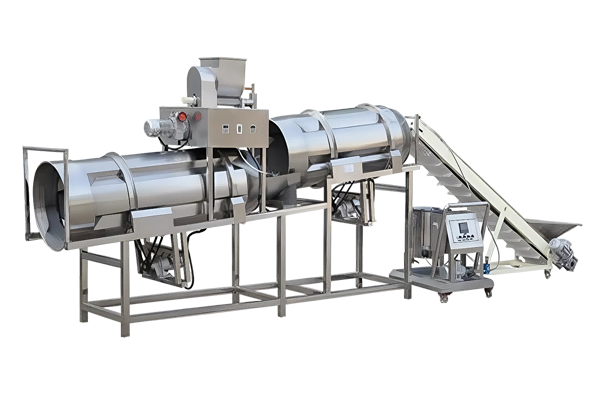
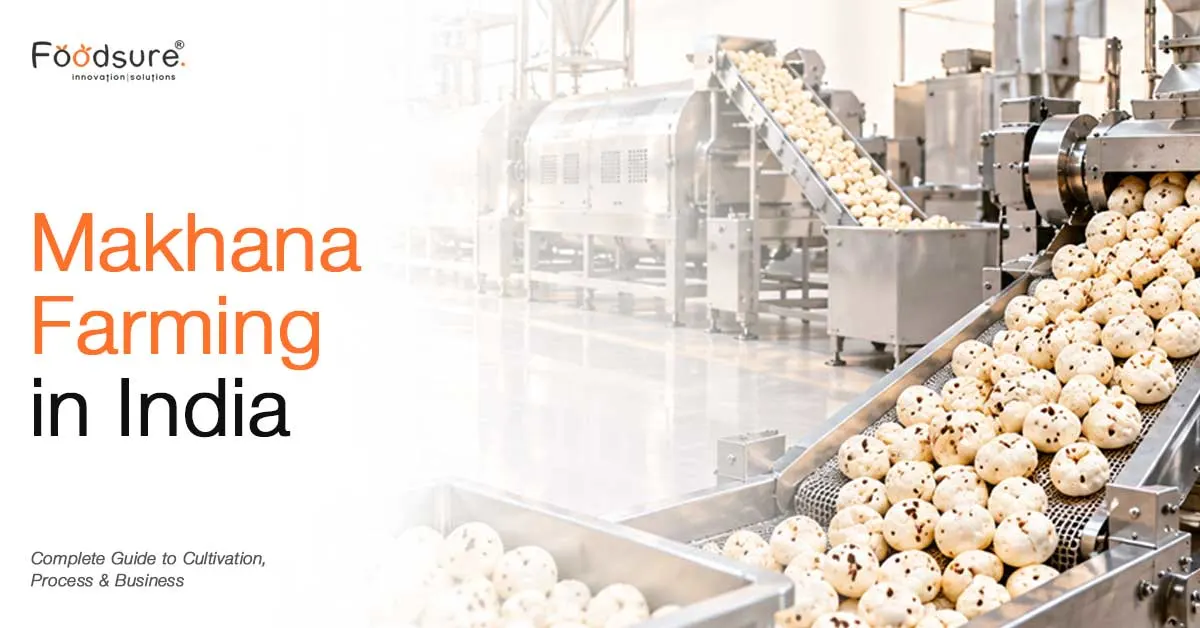
Modern processing equipment can help businesses handle larger volumes while improving consistency and reducing manual intervention.
Traditional vs Commercial Makhana Farming
| Factor | Traditional Approach | Commercial Approach |
|---|---|---|
| Cultivation | Pond-based and largely manual | Organised pond cultivation |
| Labour | High manual involvement | Greater process planning |
| Harvesting | Primarily manual | Improved handling practices |
| Processing | Traditional methods | Dedicated processing machinery |
| Grading | Manual sorting | Mechanical grading options |
| Packaging | Basic/manual | Automated or semi-automated options |
| Scalability | Limited | Better suited to larger volumes |
The difference becomes particularly important when farmers or businesses move from raw cultivation to value-added makhana production.
Role of Machinery in Makhana Farming
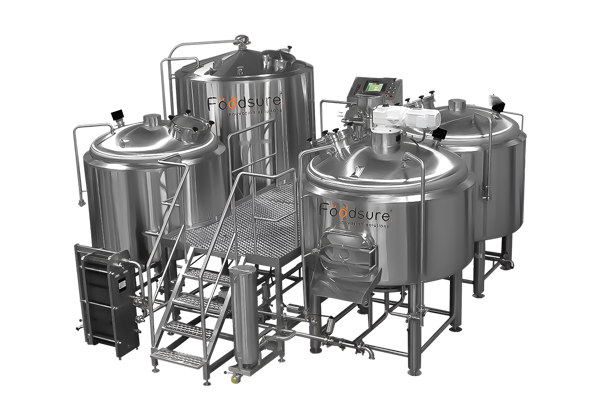
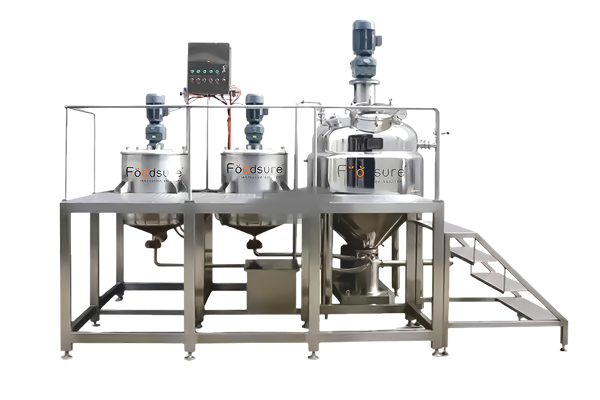
While cultivation continues to be highly dependent on water sources and good agricultural practices, machinery becomes more important once harvesting is done.
For instance, businesses engaged in processing would need machines for activities like cleaning, grading, roasting, adding flavors, and packaging.
Businesses planning to expand beyond raw seed sales can also study the makhana farming market size to understand market demand, processing opportunities, and potential areas for value addition.
Challenges in Makhana Cultivation
Although makhana has significant commercial potential, farmers can face several challenges.
High Labour Requirement
Conventional methods of growing and harvesting crops may involve significant manpower, especially for seed harvesting.
Water Management
Because makhana is an aquatic crop, water availability and pond conditions are critical throughout cultivation.
Weather Variations
Changes in rainfall, temperature, and water conditions can affect crop growth and harvesting operations.
Post-Harvest Handling
Poor cleaning, drying, storage, or transportation practices can reduce raw material quality.
Limited Mechanisation
Some of the operations in farming and harvesting still require a lot of labour, making it difficult to scale up.
Solving this problem will need proper farm management, infrastructure, harvesting, and availability of appropriate processing facilities.
Opportunities for Makhana Farmers and Businesses
The commercial opportunity does not end with cultivation. Farmers and entrepreneurs can explore different stages of the makhana value chain.
These may include:
- Production of raw makhana seeds
- Seeds collection and marketing
- Cleaning and sorting
- Roasting
- Tasting
- Packaged makhana
- Private label snacks production
- Supplying in bulk to food producers
This creates opportunities for businesses to move from primary agricultural production towards value-added food processing.
How to Improve Makhana Farming Efficiency
Farmers and businesses can focus on several areas to improve overall efficiency:
- Select the right ponds for crop planting.
- Use quality and healthy seeds.
- Maintain proper water conditions.
- Monitor the growth process of plants through the cultivation period.
- Harvesting of crops should be done depending on the maturity of the seeds.
- Improve cleaning and drying after harvesting.
- Grading and processing machines can be installed commercially wherever applicable.
For businesses moving into commercial processing, working with a reliable makhana machine seller in India can help identify suitable equipment for cleaning, grading, roasting, flavouring, or packaging requirements.
Future Scope of Makhana Farming in India
The future development of makhana farming in India will be closely linked to that of the makhana value chain as a whole. The increased demand for on-the-go snack foods has made this possible, not just for producers but also for processors, distributors, exporters, and packaged food companies.
Quality, standardized processing, better preservation, and more up-to-date machinery could assist in establishing a stronger link between farming and commercial food production.
Farmers could improve the cultivation process and subsequent activities while businesses could create extra value through processing, branding, flavoring, and packaging.
Conclusion
Makhana farming in India is an important form of aquaculture that has potential in both production and food processing. From pond preparation to seed sowing, harvesting, drying, grading, and processing, all these processes have an impact on the quality of the end product.
Knowledge about the makhana cultivation process can help the farmers cultivate it in a better way, while better post-harvest management and advanced machinery can help in commercialization.
As demand for makhana-based snacks and value-added products continues to develop, the connection between makhana cultivation in India, processing, and organised food manufacturing is likely to become increasingly important.
Have a Question? Let’s Connect
Need expert guidance on food processing machines, production setup, or process optimization? Our team is ready to help you choose the right solution for your business.
Frequently Asked Questions
Where is makhana mainly cultivated in India?
Makhana is particularly associated with Bihar and other regions of eastern and northern India where suitable ponds and climatic conditions are available.
Is makhana grown in fields or water?
Makhana is primarily an aquatic crop and is traditionally cultivated in ponds, wetlands, and suitable water bodies rather than conventional dry agricultural fields.
What is the makhana cultivation process?
The makhana cultivation process generally includes pond preparation, seed sowing, germination, plant growth, flowering, seed formation, harvesting, cleaning, drying, and further processing.
What are the main challenges in fox nut farming?
Major challenges can include high labour requirements, water management, environmental variations, harvesting difficulties, and post-harvest handling.
Can makhana cultivation be connected with commercial processing?
Yes. Makhana, after its cultivation and harvesting, can be cleaned, dried, graded, roasted, flavoured, and packed. This opens up avenues for adding value to food production.