
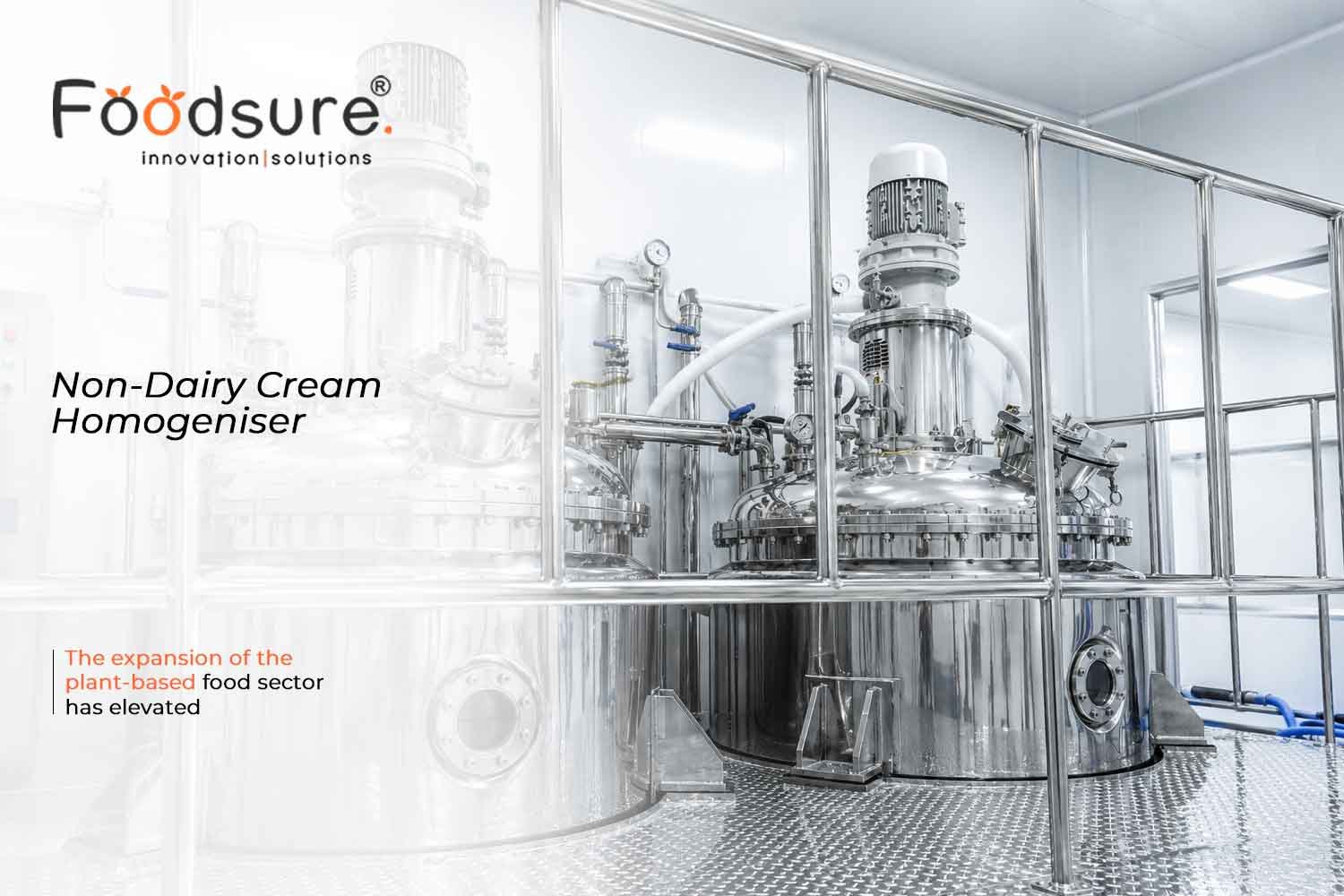
The expansion of the plant-based food sector has elevated the technical standards required in dairy-free cream manufacturing. An industrial non-dairy cream homogeniser machine enables producers to consistently achieve those standards by creating stable emulsions, reducing fat particle size, and ensuring uniform ingredient distribution throughout the product. The industrial-grade equipment produces coconut cream, vegan whipped toppings and dairy-free beverage emulsions while meeting commercial buyers’ and end consumers’ requirements for texture, shelf stability, and visual consistency.
The blog will explain the operation of high-pressure homogeniser for cream processing while demonstrating the necessity of homogenization for plant-based cream production and showing the main advantages of commercial cream homogenisers and the reasons food manufacturers need advanced processing equipment for industrial dairy-free cream production.
Why Homogenization Matters in Non-Dairy Cream Production
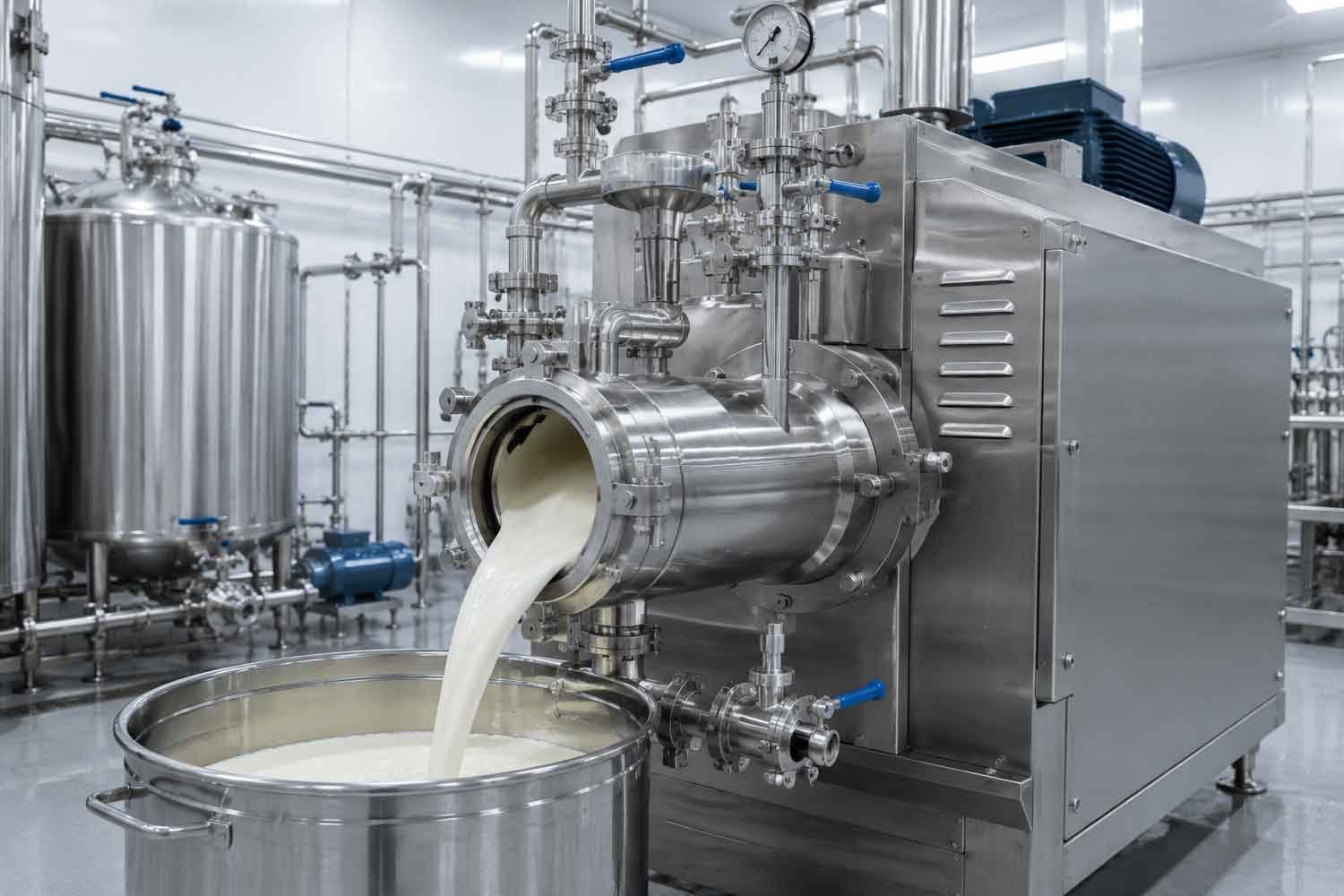
The production process of plant-based creams requires homogenization to function as the essential link that transforms separate components into a durable, high-quality product. The mechanical process demonstrates its necessity because non-dairy products experience oil separation and develop a grainy texture, which affects their ability to whip. This combination of faults makes the product unattractive to consumers who prefer a dairy-like experience.
A high-pressure homogeniser for cream uses intense pressure to break fat globules into microscopic particles. The machine produces a fine stable emulsion through its particle size reduction process, which keeps fats and liquids evenly distributed throughout the mixture.
Key Benefits of Proper Homogenization:
- Smooth and Creamy Texture: Creates a smooth, creamy texture with a long-lasting consistency stable in viscosity.
- Improved Stability: Provides greater consistency from batch to batch and a prolonged shelf life.
- Functional Characteristics: Guarantees that cream performs reliably when preparing food and in commercial usage when whipping cream.
For manufacturers, successfully targeting your level of homogenization is not just a cosmetic issue; it is also key to being efficient in production and keeping your consumers happy in a highly competitive vegan market.
How a Non-Dairy Cream Homogeniser Machine Works
To create a quality “non-dairy cream,” the process of mechanical and thermal homogenization takes place in a specific, sequential order. Here are the steps:
-
Step 1: Formulation/Ingredient Mixing
The first step of the process takes place in a high-shear mixing tank, where the water is heated and combined with the vegetable fat, plant proteins, stabilisers, and emulsifiers to create a coarse emulsion—i.e., a point at which the ingredients are mixed but not yet fully combined at the molecular level.
-
Step 2: Pre-Heating
In this step, the mixture passes through a heat exchanger to reach a specified temperature (which is generally between 60°C-75°C). This proper heat will reduce the viscosity of the fat, making it easier to break it down at high pressure.
-
Step 3: High-Pressure Homogenization (Core Stage)
In this phase, the previously heated liquid will be forced through an adjustable gap in the homogenising valve at high pressure.
- Micronising – There is extreme turbulence and shear forces applied to the fat particles to reduce their size to < 1 micron.
- Uniformity – The reduction of the fat particles creates new, smaller fat droplets that allow the emulsifier and proteins to effectively coat the newly created fat droplets; consequently, they will not lump together or float to the surface separately from the other materials in the mix.
-
Step 4: Emulsion Stabilisation
Many industrial operations use a second homogenization process, which works at reduced pressure. The “polishing” process disintegrates any clusters that formed right after the first stage because it creates the most stable and smooth texture possible.
-
Step 5: Cooling and Rapid Chill
The process of cooling begins immediately after the cream undergoes homogenization. The process of rapid cooling establishes the emulsion together with the fat crystals, which serve as the foundation for the cream to achieve its final whipping abilities and thickness.
-
Step 6: Aseptic Storage or Packaging
The team moves the stable end product into storage tanks or packaging systems. The cream maintains its stability during transportation because the particles exist as microscopically uniform particles, which enable extended shelf life without separation.
Also Read: Best Non-Dairy Whipped Cream Plant 2026 | High Output & Quality
Benefits of Using a Commercial Cream Homogeniser Machine
Manufacturers who want to increase their production capacity while delivering high-quality products should consider investing in commercial cream homogeniser machines. The competitive plant-based market requires products to maintain their physical stability because this property determines whether consumers will continue to buy the product.
Key Advantages for Industrial Production:
Texture and Consistency:
- Consistency: This ensures every batch is the same, with a smooth texture, which is very important in coffee creams as well as bakery fillings.
- Professional Look: This removes the “grainy behaviour” of the plant protein, allowing for a real dairy look when used in food products.
Improved Stability and Shelf Life:
- Emulsion Stability: Allows for shipment over long distances as well as export without degradation of the product by preventing the separation of oils and water.
- Separation Reduction: High-pressure processing assists the emulsifiers in creating a cohesive, stabilised cream for many months.
Increased Performance for Whipping:
- Aeration: Increased ability to hold air, creating more volume of cream within the whip and better stability of foam for whipped toppings.
- Consistency: Bakers and chefs will be able to consistently depend upon the same whipping times and level of stiffness that only homogenised cream will provide.
Operational and Profitability Improvements:
- Reduction of waste: The machine is able to produce cream that is required without using poor emulsifying properties or the separation of ingredients.
- Automation: Newer industrial processes essentially create a continuous flow of product, reducing labour costs and increasing production per hour.
The manufacturers use advanced non-dairy cream processing equipment to create a connection between homemade plant milks and professional-grade functional ingredients.
Also Read: Dairy And Non-Dairy Whipping Cream | 7 Best Healthier Choice
Why Food Manufacturers Are Upgrading to Modern Non-Dairy Cream Homogeniser
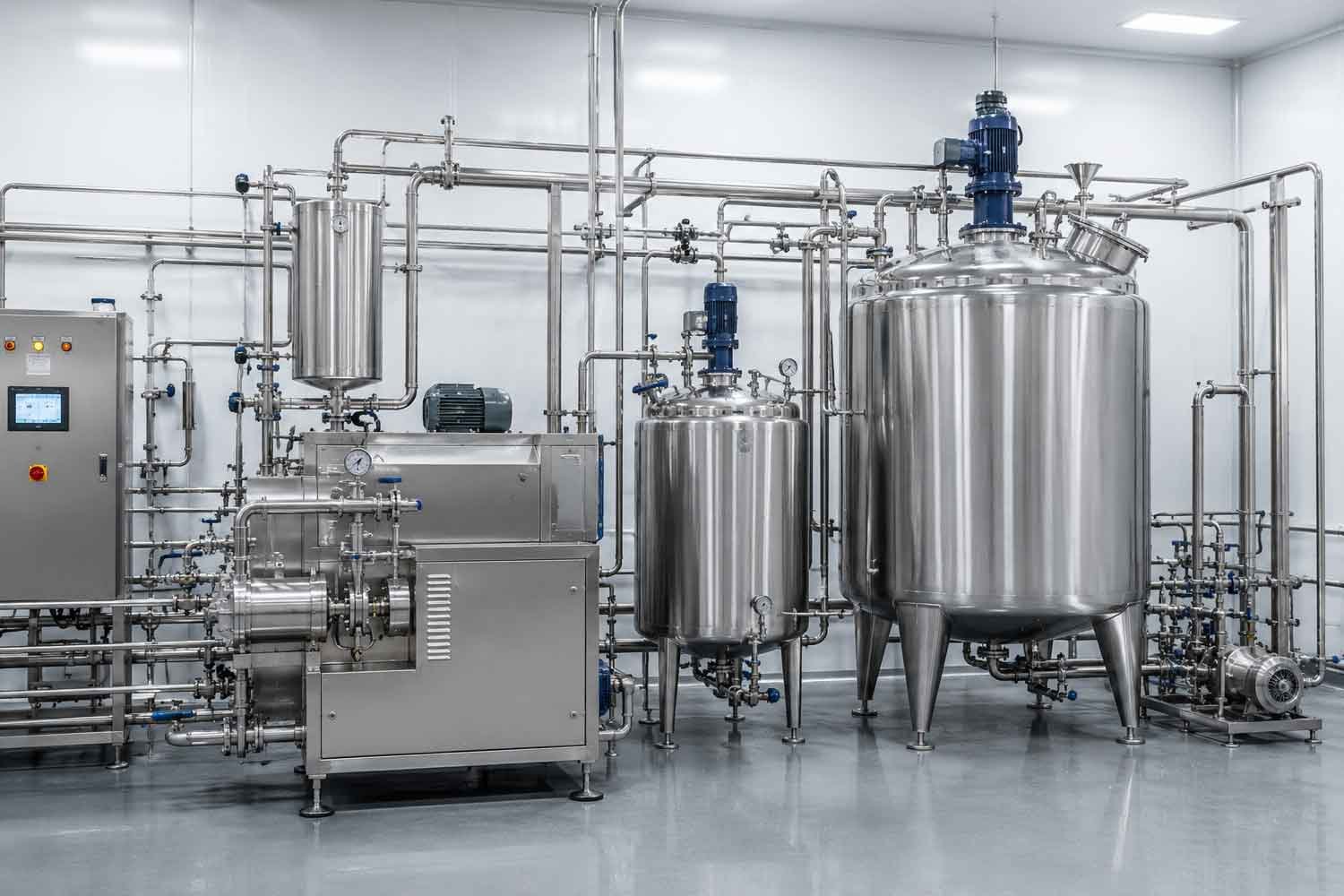
The liquid homogeniser machine food industry changes so quickly that it requires current standards of modern homogenization systems. Consumer demand for dairy-identical products has grown, which leads to the replacement of standard mixing techniques that create product separation problems with specialised engineering solutions.
Why Manufacturers Are Upgrading
-
Meeting Premium Consumer Standards
- Advanced Emulsification: Advanced equipment produces such finely dispersed particles of fat that they have a creamy texture, eliminating the chalky sensation that many early vegan foods produced.
- Functional Consistency: Updated technology produces products that will not separate from creamers when poured into hot coffee or when whipped in commercial baking applications.
- Scalability and Operation
- Automation and Precision: Current homogenizers have PLC controls and can easily adjust to pressures precisely and batch-to-batch consistently.
- Continuous Flow: Systems that now produce continuously, versus batching, provide a total daily throughput of product beyond that of a batch system.
- Compliance & Hygiene
- Sanitary Design: Equipment is manufactured with food-grade stainless steel and is designed specifically for Clean In Place (CIP) processing, therefore reducing the possibility of contamination and providing faster turnarounds of product between production runs.
- Regulatory Compliance: Modern equipment makes it easier to comply with the strict standards of the worldwide food supply chain and is critical to brands wishing to market internationally.
- Economic Sustainability
- Minimising Waste: By eliminating the need for reworking batches due to poor emulsion created in prior production runs, manufacturers have reduced the amount of wasted finished product created by either off-spec ingredients or reworked/manufactured finished goods.
- Energy Efficient: With improvements to motor and valve construction, current motors enable manufacturers to impart higher shear than previously achieved with reduced electrical consumption when compared to older industrial equipment.
For any growing brand, advanced dairy-free processing equipment now functions as an essential requirement, which enables them to safeguard their market position while achieving successful product development.
Conclusion
At Foodsure Machines, we understand that a high-performance industrial non-dairy cream homogeniser plays an essential role in present-day plant-based food production facilities. The commercial success of non-dairy cream products depends on advanced homogenization technology, which enhances both the texture and whipping quality while providing better shelf stability and production efficiency.
We design and manufacture reliable commercial cream homogeniser machine systems that help food businesses produce stable, smooth, and premium-quality products at an industrial scale. Our processing solutions produce consistent results while operating hygienically and enabling our clients to manufacture vegan whipped cream bakery fillings, dessert toppings, and plant-based beverages.
As consumer demand for plant-based foods continues to rise, we develop advanced liquid homogeniser machine food industry solutions that help modern food manufacturers achieve better operational efficiency while maintaining stable emulsification and long-term production reliability.
Launch Your Whipping Cream Brand
Complete setup & production support in India.
FAQ
What does a non-dairy cream homogeniser do in food processing?
A non-dairy cream homogeniser creates stable emulsions through its ability to distribute fat particles evenly throughout dairy-free cream products.
Why is a non-dairy cream homogeniser machine important for commercial production?
The non-dairy cream homogeniser machine enhances texture consistency and product stability while it boosts efficiency in large-scale production processes.
How does an industrial non-dairy cream homogeniser increase shelf life?
The industrial non-dairy cream homogeniser system prevents ingredient separation while it keeps consistent product uniformity throughout storage.
Which industries use vegan cream homogeniser machine systems?
The vegan cream homogeniser machine serves various food industries, which include baking, dessert, beverage, and plant-based food production.
What are the advantages of dairy-free cream processing equipment?
The current dairy-free cream processing equipment and commercial cream homogeniser machine systems enhance hygiene standards and emulsification performance and support ongoing industrial production processes.




