
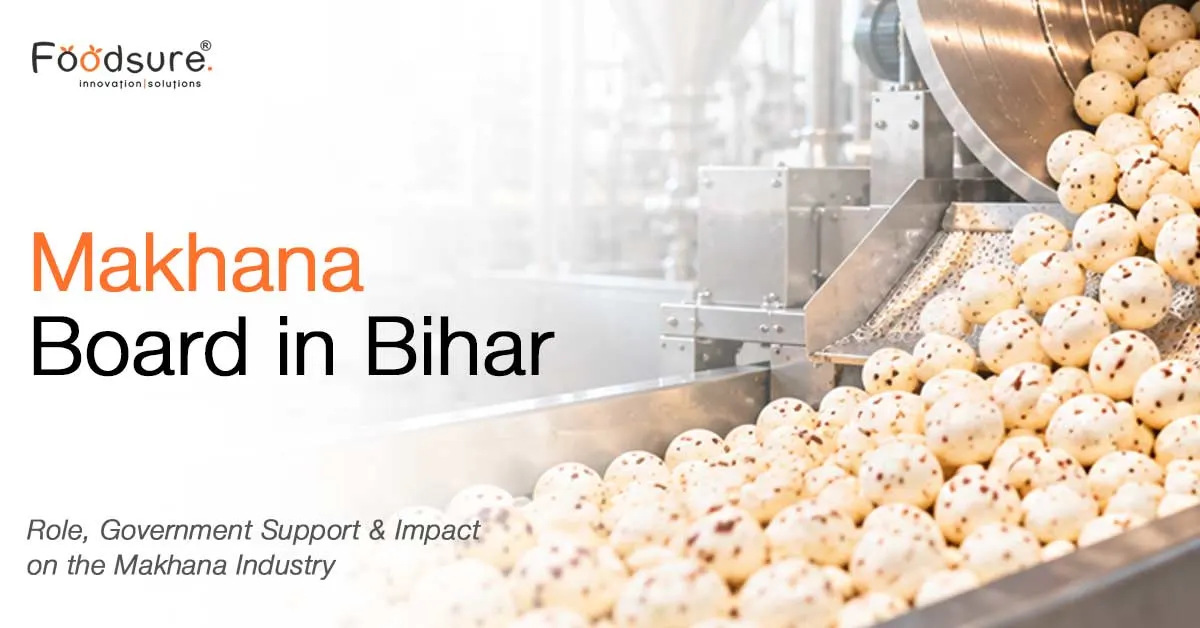
Makhana has gained importance within the Indian food processing and agriculture value chain, especially in the state of Bihar. With increasing emphasis on processing, value addition, branding, packing, and export, organized support to the industry has become necessary.
The setting up of the Makhana Board in Bihar has meant that there is an institution that is geared towards helping the various aspects of the makhana value chain. The Makhana Board does not just deal with cultivation but also with processing, post-harvest handling, research, marketing, and exports.
What Is the Makhana Board in Bihar?
According to the Press Information Bureau (PIB), the National Makhana Board was constituted in Bihar on 14 September 2025. Its stated objective is to promote the production, processing, value addition, marketing, and export promotion of makhana.
The Board operates under the administrative control of the Department of Agriculture & Farmers Welfare, Ministry of Agriculture & Farmers Welfare.
Consequently, the Board is applicable to several aspects of the makhana industry, right from the farming process, harvesting stage, through to processing.
Why Was the Makhana Board Established?
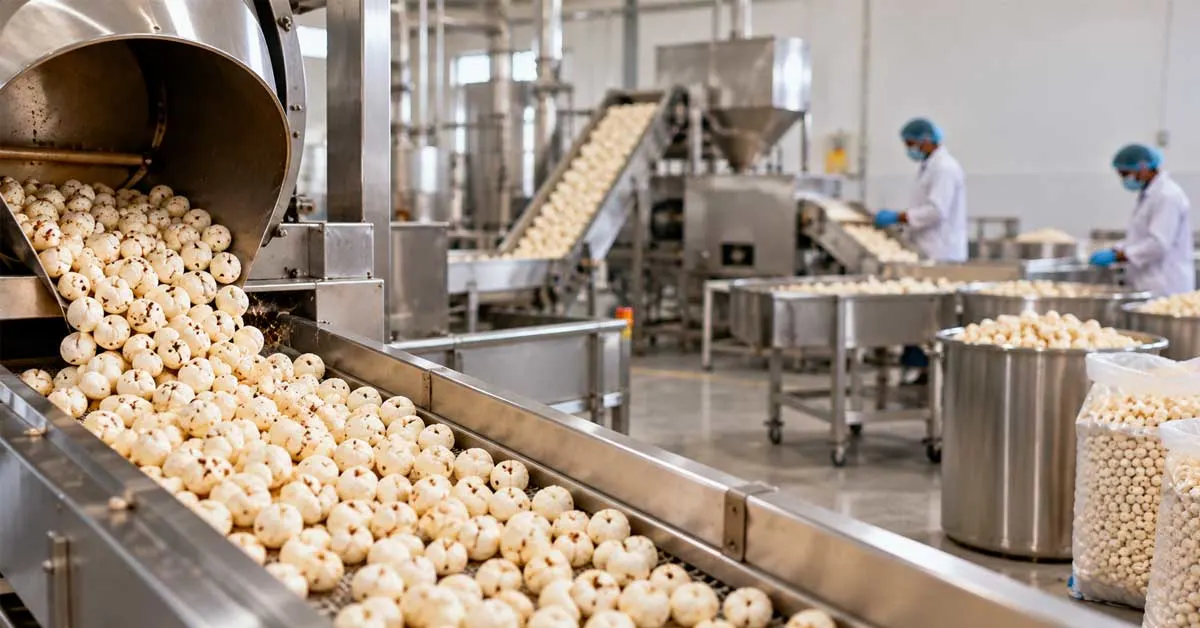
The Union Budget 2025-26 has highlighted that a Makhana Board is to be set up in the state of Bihar to enhance production, processing, value addition, and marketing of makhana.
As per the official Union Budget document, those engaged in these activities were to be organized in the form of Farmer Producer Organizations (FPOs). The board would support the people in this regard through training and government schemes.
This approach covers the wider value chain rather than focusing only on cultivation. For businesses, processors, and other stakeholders, this makes processing and value addition important areas to watch as the sector develops.
Government Support for Makhana
As per the Ministry of Agriculture & Farmers Welfare via the Press Information Bureau, the Centrally Sponsored Scheme for the development of Makhana has been cleared with the allocation of Rs.476.03 crore on 14th September, 2025.
The official release states that the scheme supports areas including:
- Production and productivity enhancement
- Post-harvest management
- Processing and value addition
- Research and development
- Export promotion
- Market and brand development
- Extension activities
- Capacity building
This is especially important in relation to firms that want to go beyond natural or processed makhana and engage in activities such as roasting, grading, flavoring, packaging, and other value addition processes.
Bihar’s Role in the Makhana Industry
According to the Second Advance Estimates for 2025–26 cited by PIB, Bihar recorded 60,000 MT of makhana production in 2025–26, with an average productivity of 2.00 MT per hectare.
The same official release identifies Katihar, Purnia, Madhubani, Darbhanga, Saharsa, Supaul, Araria, Madhepura, and Sitamarhi among the major producing districts.
The concentration of production in Bihar makes the state particularly important for the development of organised makhana processing and value-added food businesses.
Focus on Processing and Value Addition
One of the important aspects of the Bihar makhana industry is the move from primary agricultural production towards organised processing and value addition.
Makhana can undergo several stages after harvesting and primary handling, including cleaning, drying, popping, grading, roasting, flavouring, and packaging. Commercial processors can use specialised machinery at different stages depending on their product and production requirements.
According to a December 2025 PIB release covering the first meeting of the National Makhana Board, the Board highlighted the need to strengthen infrastructure for grading, drying, popping, and packaging, along with research, processing technology, value addition, branding, market linkages, and export readiness.
For processors, this focus highlights the importance of suitable equipment and organised production systems as the industry develops.
How Can the Board Impact Makhana Processing Businesses?
The duties of the Board go far beyond helping farmers. As per the report by PIB, the government scheme comprises processing, value addition, market and branding, research, exports, and capacity building.
For commercial businesses, these areas can be relevant when planning a makhana processing unit in Bihar.
A processing setup may include equipment for:
- Cleaning and sorting
- Drying
- Grading
- Roasting
- Flavouring and coating
- Packaging
The specific equipment needed is determined by the product to be processed, its production capacity, degree of automation, and processing stages.
It follows that businesses should evaluate their production needs before choosing either the equipment or the whole processing line.
Research and Technology Development
Research and technology development are also part of the government’s stated support framework.
As per PIB, the ICAR-National Research Centre for Makhana at Darbhanga works in research and development of technology, capacity building, and extension in respect of production, productivity, processing, value addition, and marketing.
The news release dated December 2025 from PIB further says that the National Makhana Board deliberated on technology development for cultivation and processing and infrastructure for grading, drying, popping, and packing.
This focus on technology is relevant for processors looking to improve consistency, hygiene, handling, and production efficiency through appropriate machinery.
Makhana Making Machine and Commercial Production
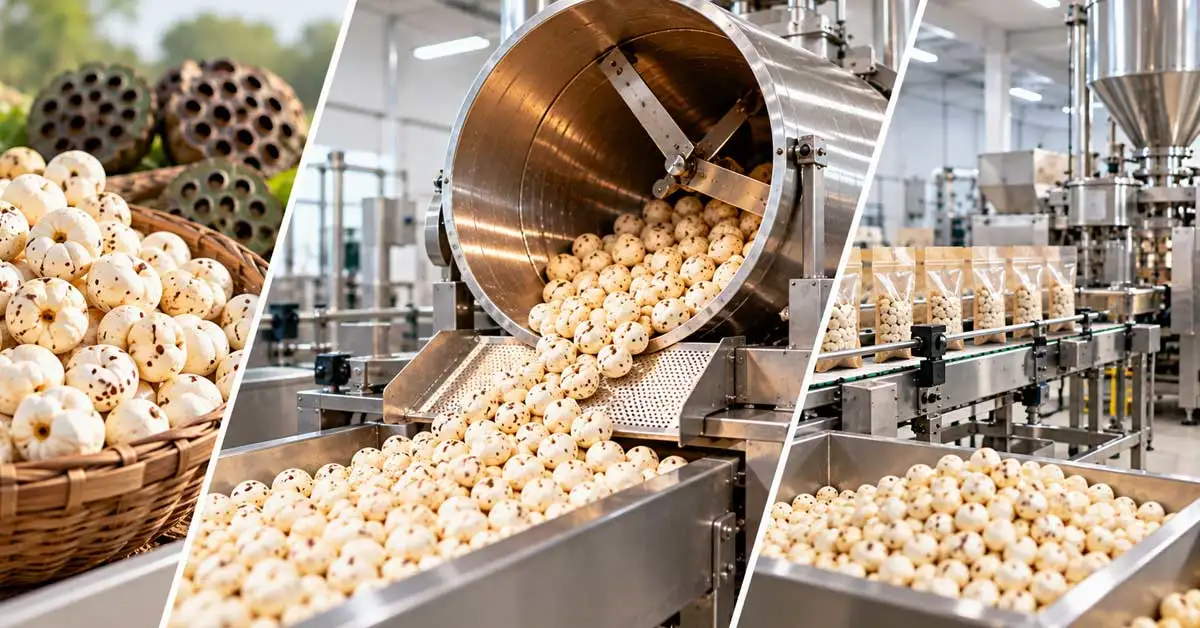
As the industry matures, machines can serve a key role in industrial processing. The term makhana making machine refers generally to machines that help in the processing of makhana, depending on the specific setup of the machines.
For a commercial facility, machinery selection should be based on factors such as:
- Required production capacity
- Type of makhana product
- Processing stages
- Available floor space
- Automation requirements
- Material-contact construction
- Cleaning and maintenance requirements
- Packaging format
A complete processing setup does not necessarily require every machine. Businesses can select equipment according to their current production requirements and expand the line as operations grow.
Government Support and Future Opportunities
The official framework of the government clearly shows that efforts are being made at various stages of the value chain and not just production alone.
The Central Sector Scheme includes production, post-production, processing, value addition, research, branding, marketing, exports, and capacity building, as stated by the Ministry of Agriculture & Farmers Welfare.
This provides a wider scope for the business enterprises engaged in processing and value-added makhana. But the business enterprises need to confirm their eligibility for the government scheme from the concerned authorities.
What Should Makhana Businesses Consider?
The development of the makhana board in Bihar does not remove the need for businesses to independently evaluate their machinery, production process, quality requirements, and market strategy.
Before establishing or expanding a processing unit, businesses should consider:
- Production Capacity: Determine the required output prior to choosing machinery.
- Processing Steps: Determine whether the business requires cleaning, grading, roasting, flavoring, or packing machines.
- Product Mix: Value added products may have different processing requirements.
- Automation Level: Determine at what stage manual, semi-automatic, or automatic operations are needed.
- Hygiene and Material: Determine the food contact construction and cleaning requirement.
- Future Expansion: Choose an arrangement that will be able to handle future production capacity.
Conclusion
The creation of the Makhana Board in Bihar has led to an institution dedicated towards the development of the makhana industry. The National Makhana Board as per the PIB release is involved in production, processing, value addition, marketing, exports, research, capacity building, and post-harvest development.
Another feature that is included in the scheme by the government for development of Makhana is processing and value addition, while the first meeting of the board focused on infrastructure needs including grading, drying, popping, and packaging.
For processors and entrepreneurs, these developments make organised processing and suitable machinery important considerations when planning a makhana processing unit in Bihar. Businesses should continue to verify current government schemes, eligibility conditions, and financial support directly through official government sources before making investment decisions.
Have a Question? Let’s Connect
Need expert guidance on food processing machines, production setup, or process optimization? Our team is ready to help you choose the right solution for your business.
Frequently Asked Questions
What is the Makhana Board in Bihar?
A National Makhana Board was constituted in Bihar on 14 September 2025 for the promotion of production, processing, value addition, marketing, and export of makhana, according to PIB.
What areas does the Makhana Board support?
As per the Ministry of Agriculture & Farmers Welfare, the scheme comprises activities like production, productivity enhancement, post harvest, processing, value addition, research, export, branding, marketing, extension, and capacity building.
What is the Central Sector Scheme for Development of Makhana?
According to PIB, the scheme was approved with an outlay of ₹476.03 crore to support the development of the makhana sector.
Does the Makhana Board focus only on farmers?
No. According to official information, the program includes areas other than production such as processing, value addition, research, branding, marketing, export development, and capacity building.
Where can businesses verify information about government support for makhana?
Businesses should refer to official Ministry of Agriculture & Farmers Welfare and PIB releases for the latest information, eligibility requirements, scheme guidelines, and approved support.




