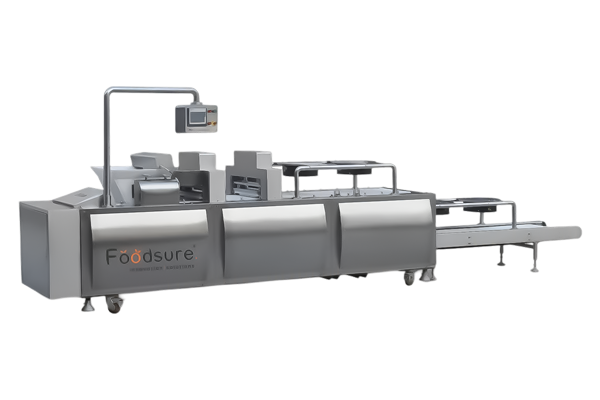
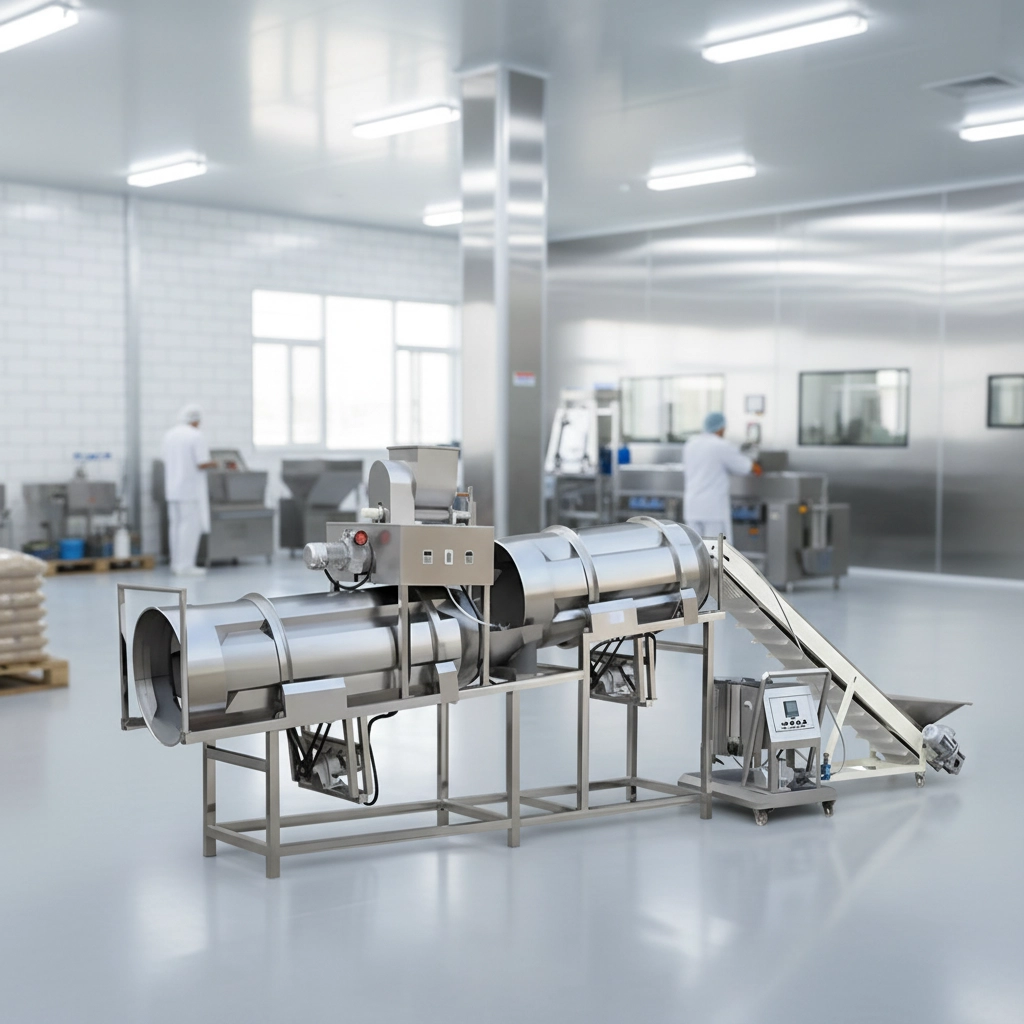
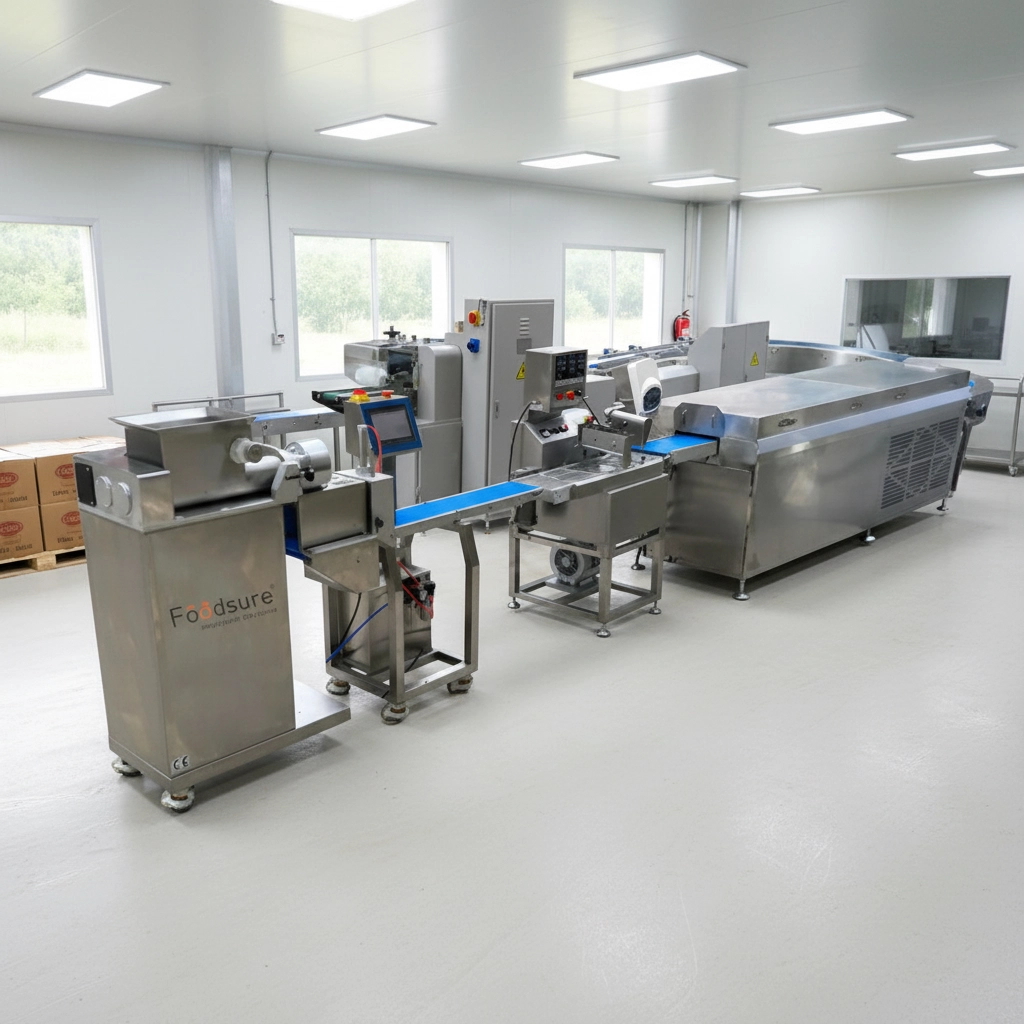
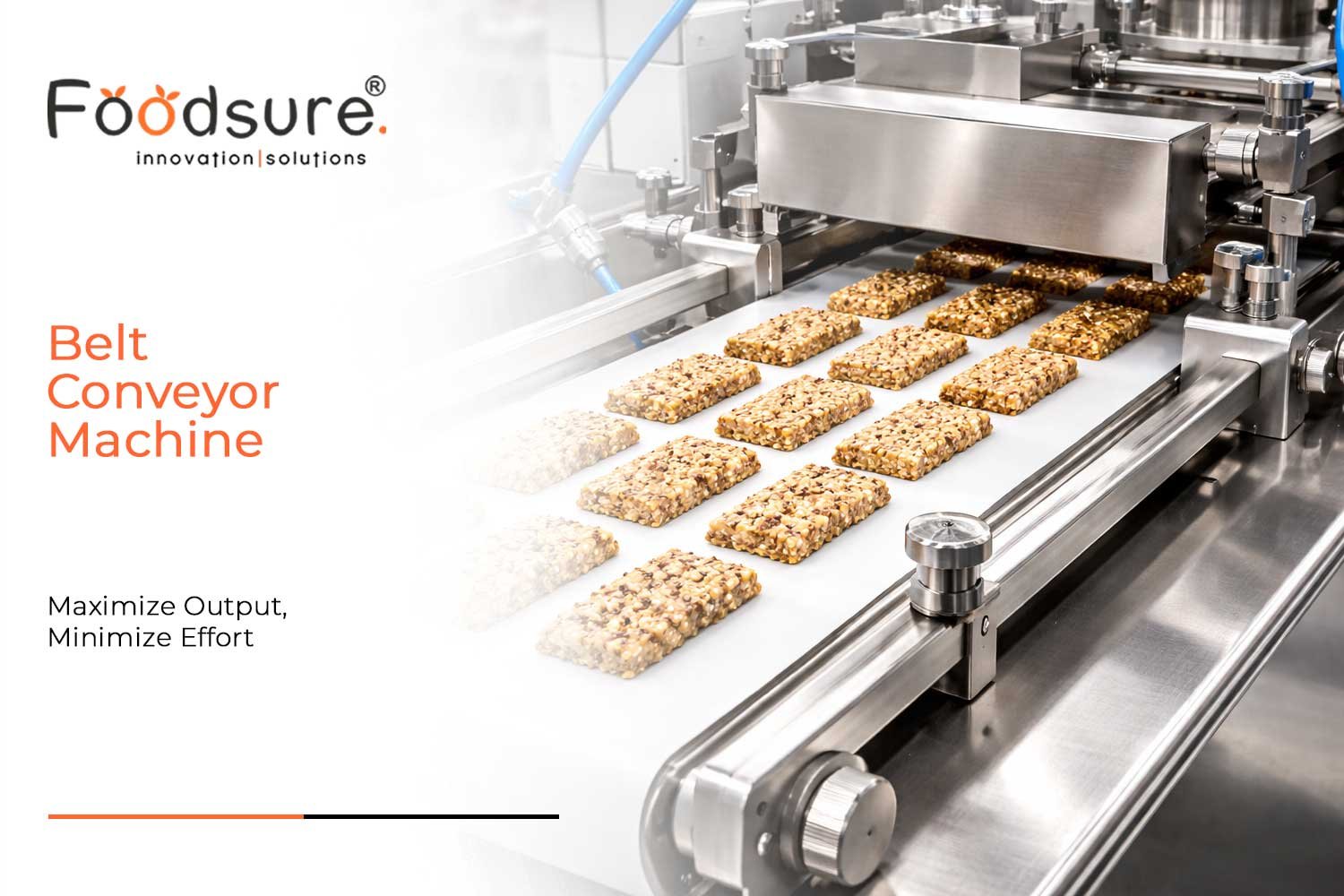
Your belt conveyor machine is losing efficiency and increasing operation costs due to misalignment, improper tensioning, and inconsistent maintenance practices. Although these problems aren’t identified most of the time, they eventually have major impacts on system stability and output. There is a structured, useful way to improve this blog’s performance. It covers key topics such as system fundamentals, key setup parameters, best practices for daily operations, common failure points with tested solutions, and maintenance strategies to extend equipment lifespan. It also discusses high-return changes that make processes more efficient, reduce downtime, and ensure steady production.
Industrial Belt Conveyor Machine Working Principle & Throughput Optimization
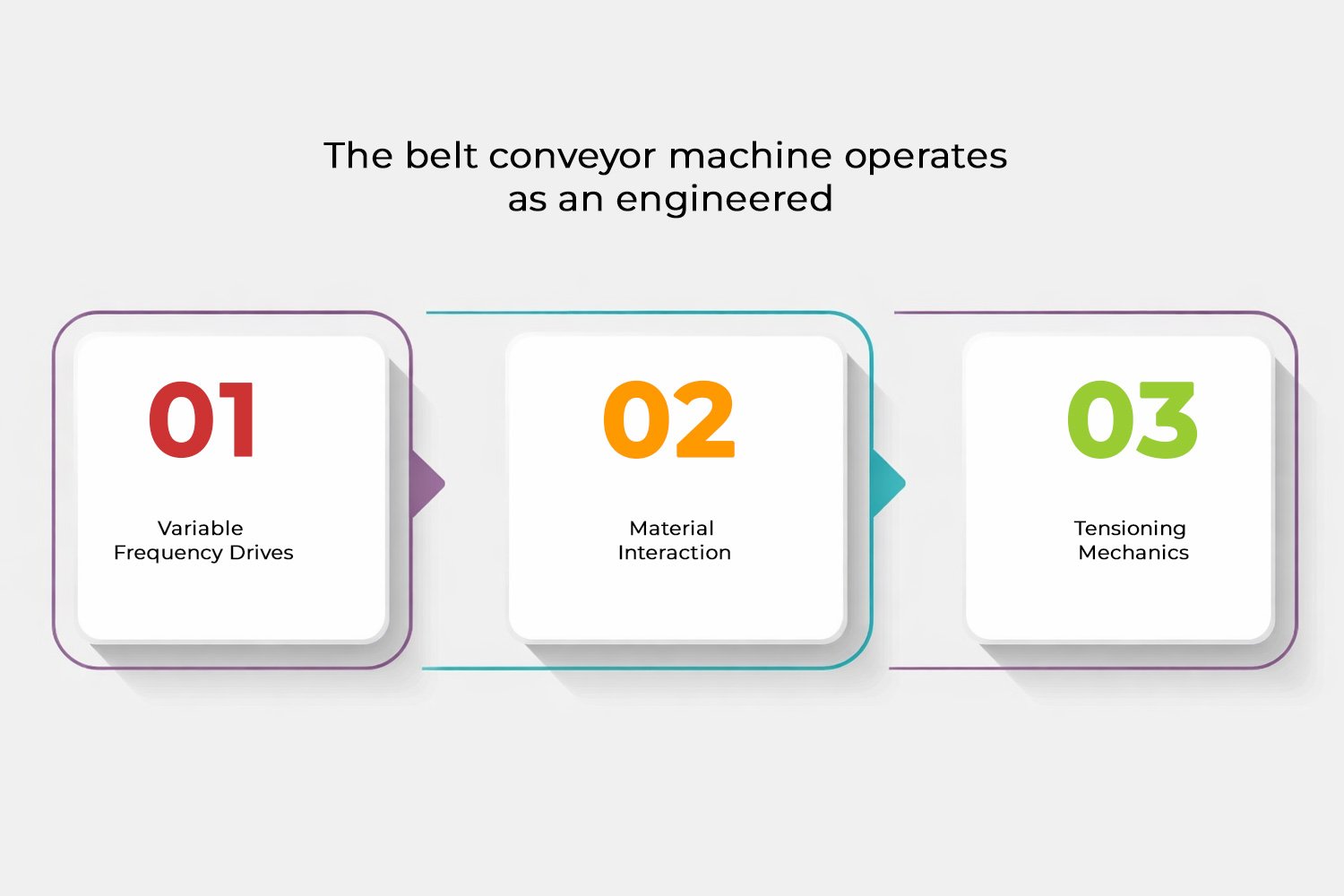
The belt conveyor machine operates as an engineered throughput system that controls both production speed and material handling capacity. The system uses a closed-loop belt that motorized pulleys drive and which idlers support to achieve automatic product handling while maintaining precise dosing and reducing Total Cost of Ownership (TCO) across industrial operations.
Core Industrial Dynamics
- Variable Frequency Drives (VFD): The system uses advanced technology to control belt speed, which eliminates both overflow and bottlenecking problems
- Material Interaction: Engineers use the product’s angle of repose to create specific belt textures and incline angles that will prevent slippage.
- Tensioning Mechanics: The system uses automated take-up units to control belt tracking because these units prevent downtime, which results from thermal expansion and load-based stretching.
Advanced Performance Engineering in a Belt Conveyor Machine for Manufacturing
The industrial belt conveyor machine achieves its highest return on investment and equipment lifespan through its two fundamental components are dynamic load distribution and VFD synchronization. Monitoring specific energy consumption, which measures energy usage in kilowatt-hours per ton of output, enables organizations to identify hidden operational inefficiencies in their energy-efficient belt conveyor systems.
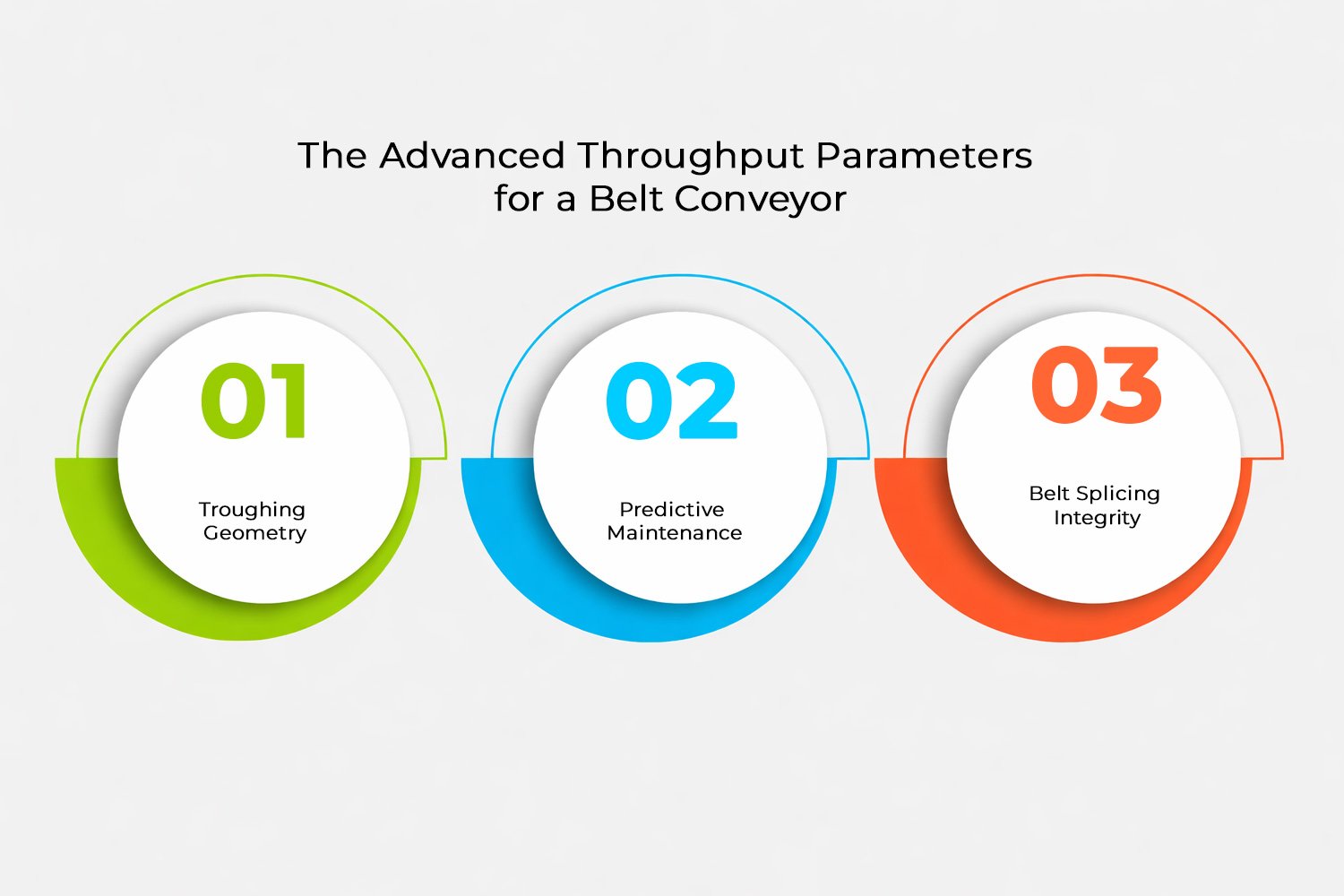
The Advanced Throughput Parameters for a Belt Conveyor System enable organizations to optimize manufacturing operations.
- Troughing Geometry: The continuous belt conveyor system for bulk material handling achieves optimal performance through 3-roll idler sets, which operate between 35°-45°C angles to increase cross-sectional load capacity without requiring additional space.
- Predictive Maintenance: Thermal imaging technology detects early heat anomalies in gearboxes and motor bearings, which helps maintain automated belt conveyor machine reliability while minimizing unplanned downtime.
- Belt Splicing Integrity: The regular inspection of vulcanized and mechanical joints ensures that tensile strength remains intact, which enables heavy-duty belt conveyor machines to operate at maximum capacity during extreme load situations.
Automated Belt Conveyor Machine Problems & Quick Fix Strategies
- Belt drifting to one side: Due to misaligned idlers or uneven loading, stop the problem by ensuring that the loading is in the centre and proper alignment of idlers.
- Motor overheating: This is caused by overloading or inappropriate tension; check the amperage and keep the load within the best range to avoid failures.
- Material spillage at transfer points: This results in waste; consider skirting and controlled feed systems.
- Uneven wear of belts: On the side of the rollers or the pulleys; this happens due to roller and pulley problems; frequent checkups save untimely wear.
- Frequent failure of splices (Tension): Refers to the fact that tension is not balanced, and proper splicing methods should be used to ensure that the splice will last.
Modular Belt Conveyor for Hygienic Applications: Maintenance & Cleaning Guide
- The structured maintenance schedule provides continuous operational performance, which eliminates unplanned system downtime for industrial belt conveyor systems.
- The daily checks, which include visual inspection and belt tracking, enable early detection of minor problems.
- The weekly cleaning tasks and idler inspection work together to keep materials moving efficiently through the belt conveyor system, which handles material transportation.
- The monthly process of lubrication and splice inspection improves both component durability and system operational dependability.
- The organization uses quarterly audits to verify process compliance while increasing operational productivity.
Industrial Belt Conveyor Machine ROI: Output, Cost & Efficiency Impact
- The industrial belt conveyor system achieves optimal performance because it maintains constant material movement while preventing any interruptions during the transfer process.
- Through better line synchronization, the process achieves output gains between 20-40% because it decreases idle time.
- The organization saves costs through two major factors, which include 50-70% less manual handling, reduced product damage, and lower downtime.
Performance & ROI Impact Table
| Metric Category | Key Impact | Business Outcome |
|---|---|---|
| Output Gains | 20–40% higher throughput | Increased production capacity |
| Operational Efficiency | Reduced idle time | Better line utilization |
| Labor Cost | 50–70% reduction | Lower operational expenses |
| Downtime | Fewer breakdowns | Stable production flow |
| Product Handling | Reduced damage | Improved product quality |
| ROI Timeline | 6–12 months | Faster investment recovery |
| Long-Term Value | Scalable operations | Sustained profitability |
Conclusion
A well-optimized belt conveyor system is essential for maximizing output and reducing operational costs. Our team at Foodsure Machines creates solutions that fit your production requirements while delivering both efficient performance and dependable operation and extended return on investment. Foodsure Machines systems design approach focuses on creating solutions that decrease operational requirements and produce higher production rates while enabling your manufacturing processes to grow.
FAQ
What is a belt conveyor machine guide for maximizing output and minimizing downtime in industrial production lines?
It describes the process of maximizing the setup, operation, and maintenance to increase efficiency and minimize downtime.
How does a belt conveyor machine improve output in industrial production lines?
It also maintains a continuous supply of material, minimizes idle time, and maximizes output (up to 40).
What factors affect the performance of a belt conveyor machine in production lines?
The most important variables are tension in the belts, alignment, distribution of loads, and speed control.
How can I reduce downtime using a belt conveyor machine in manufacturing?
Through prevention maintenance, proper alignment and real-time monitoring of system performance.
What is the ROI of using a belt conveyor machine in industrial operations?
A majority of the systems provide ROI in 6-12 months by means of saving labor and efficiency in production.