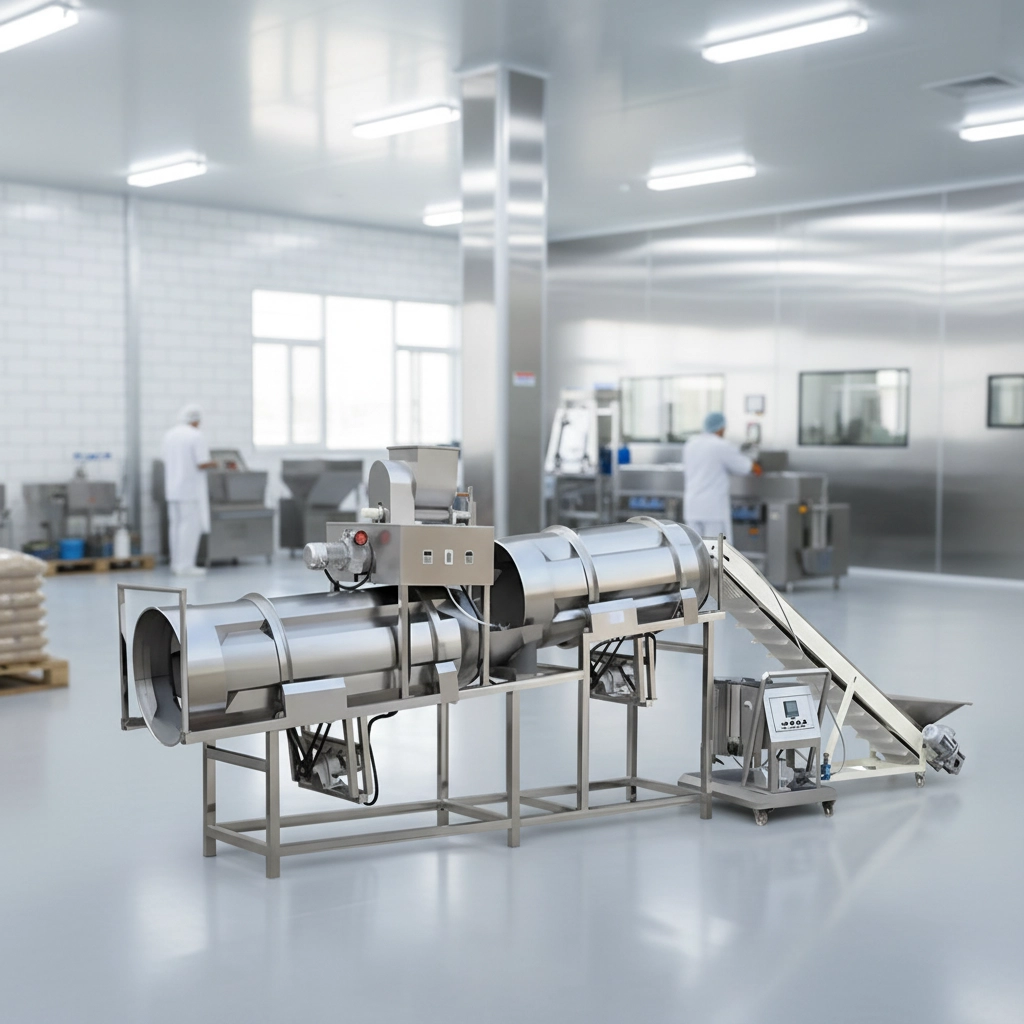
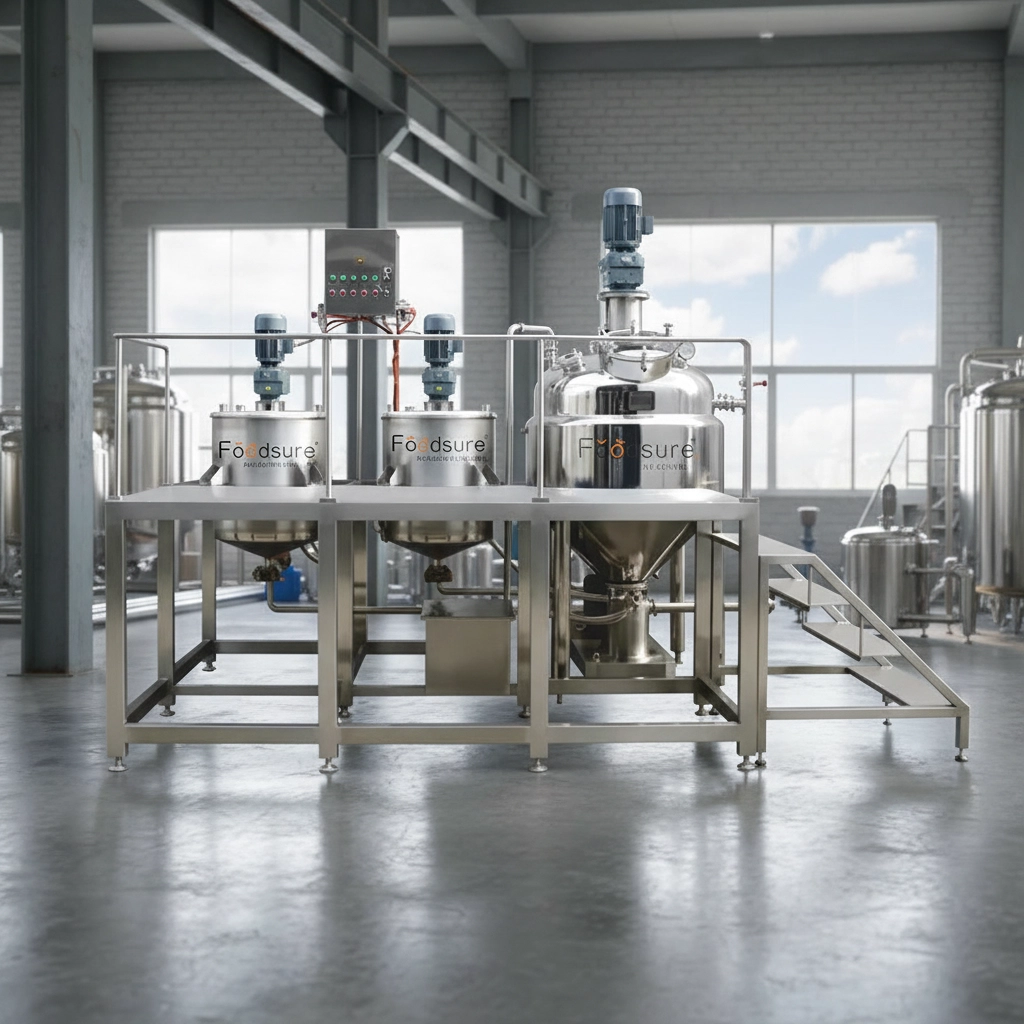
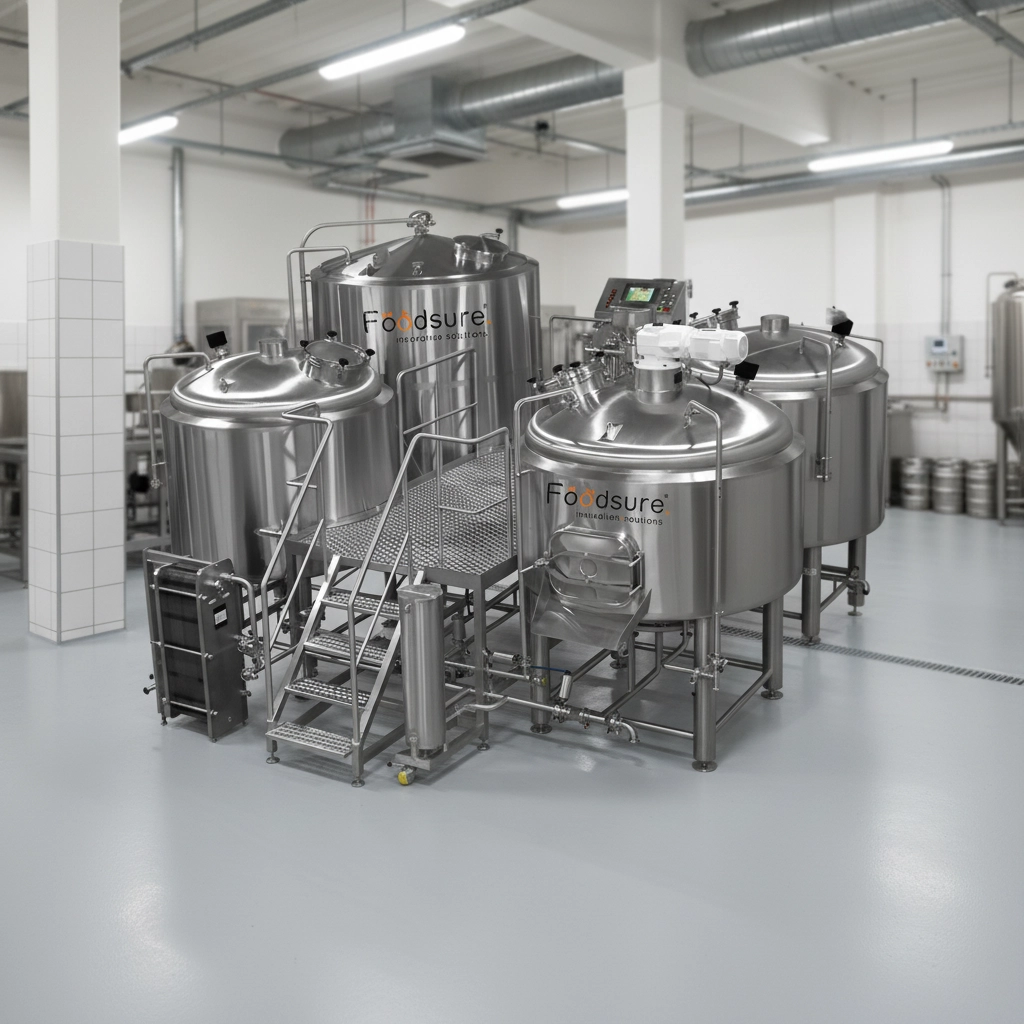
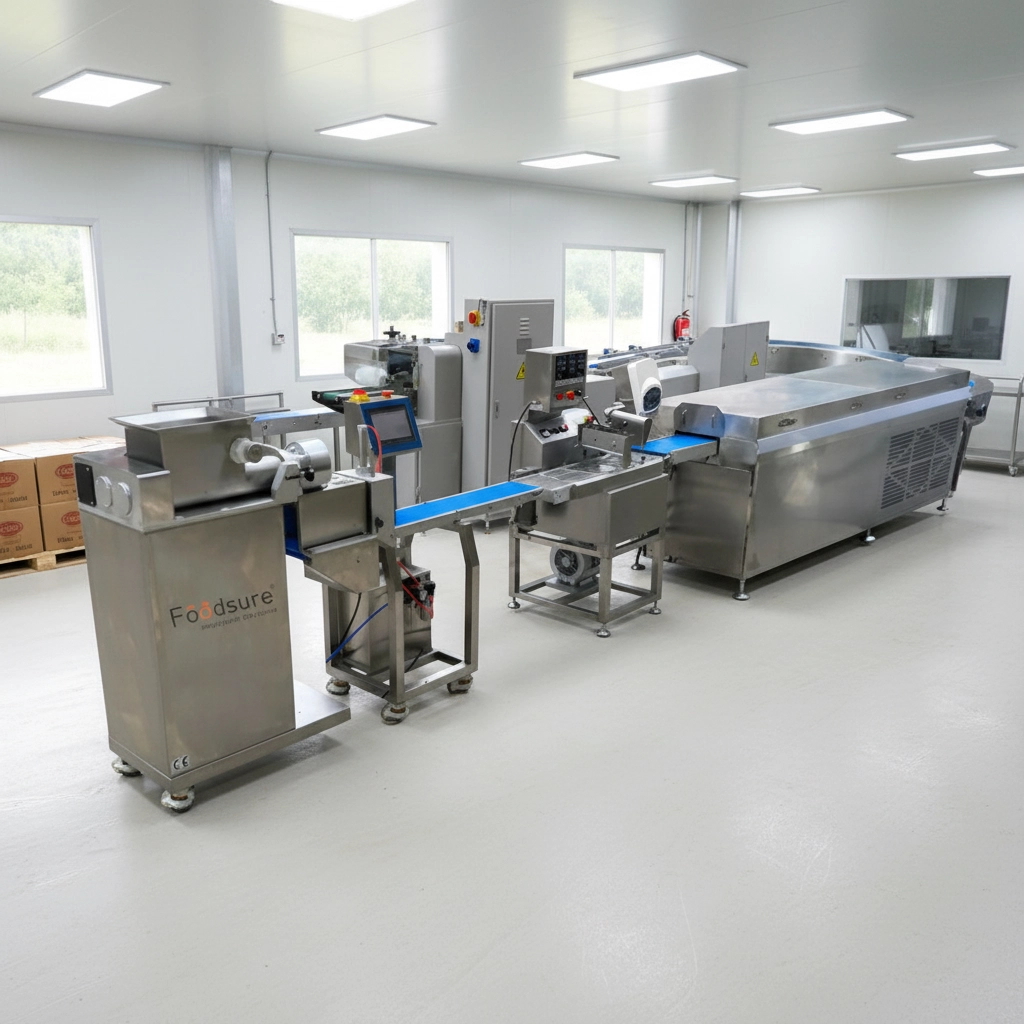
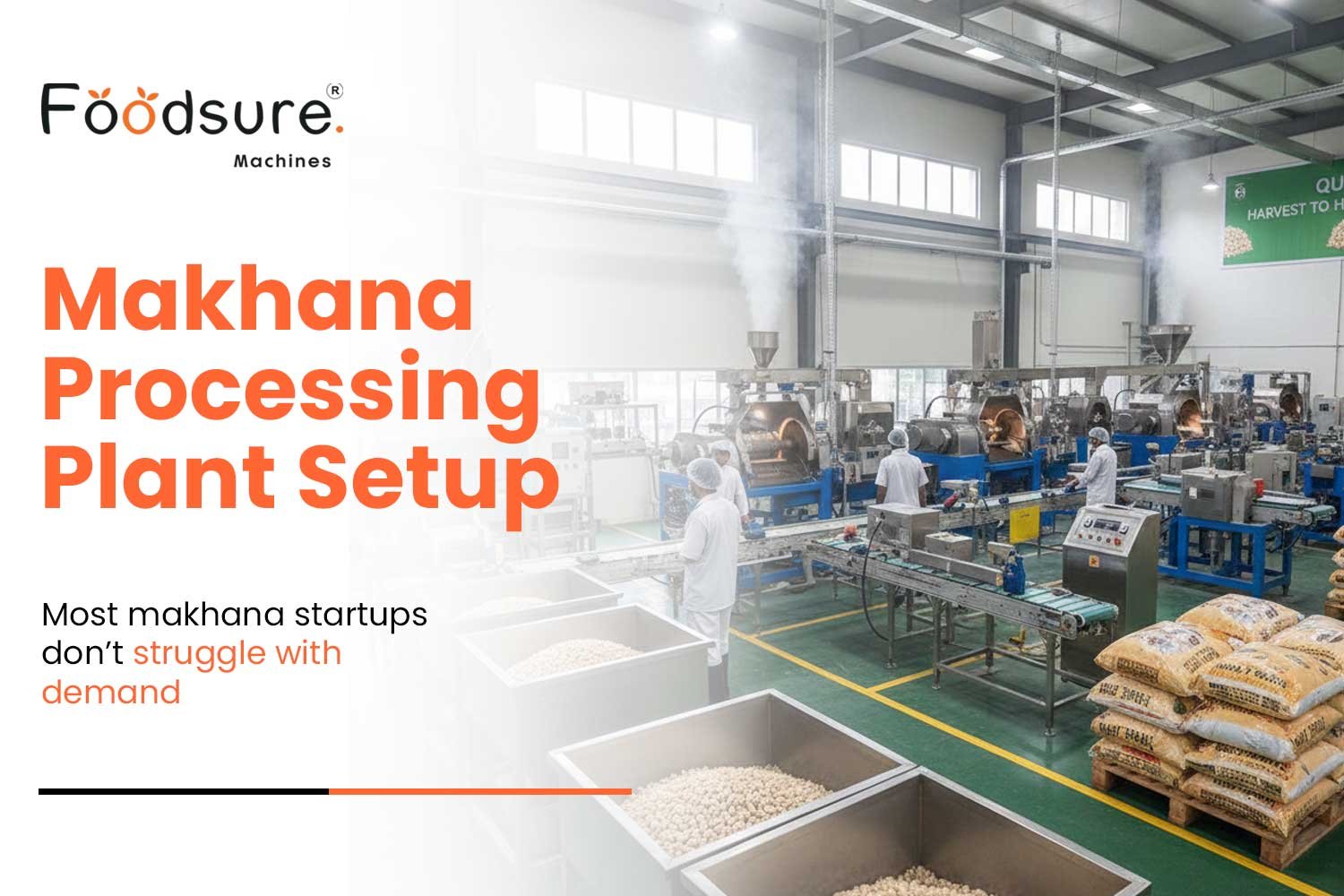
Most makhana startups don’t struggle with demand; they struggle with managing their supply chain. As orders rise, nearly every growing unit faces the batch vs continuous dilemma during its makhana processing plant setup. This blog follows a real startup journey through that decision, based on what actually unfolded on the factory floor.
Where the Makhana Business Began: Manual Processing & Early Challenges
During the early stage of its operation, the startup had a makhana processing plant setup that included simple roasting drums and manual grading tables with a batch system. The raw makhana was procured locally in small batches and handled by a team of semi-trained staff. The majority of the decisions were made based on the operator’s judgment rather than control systems.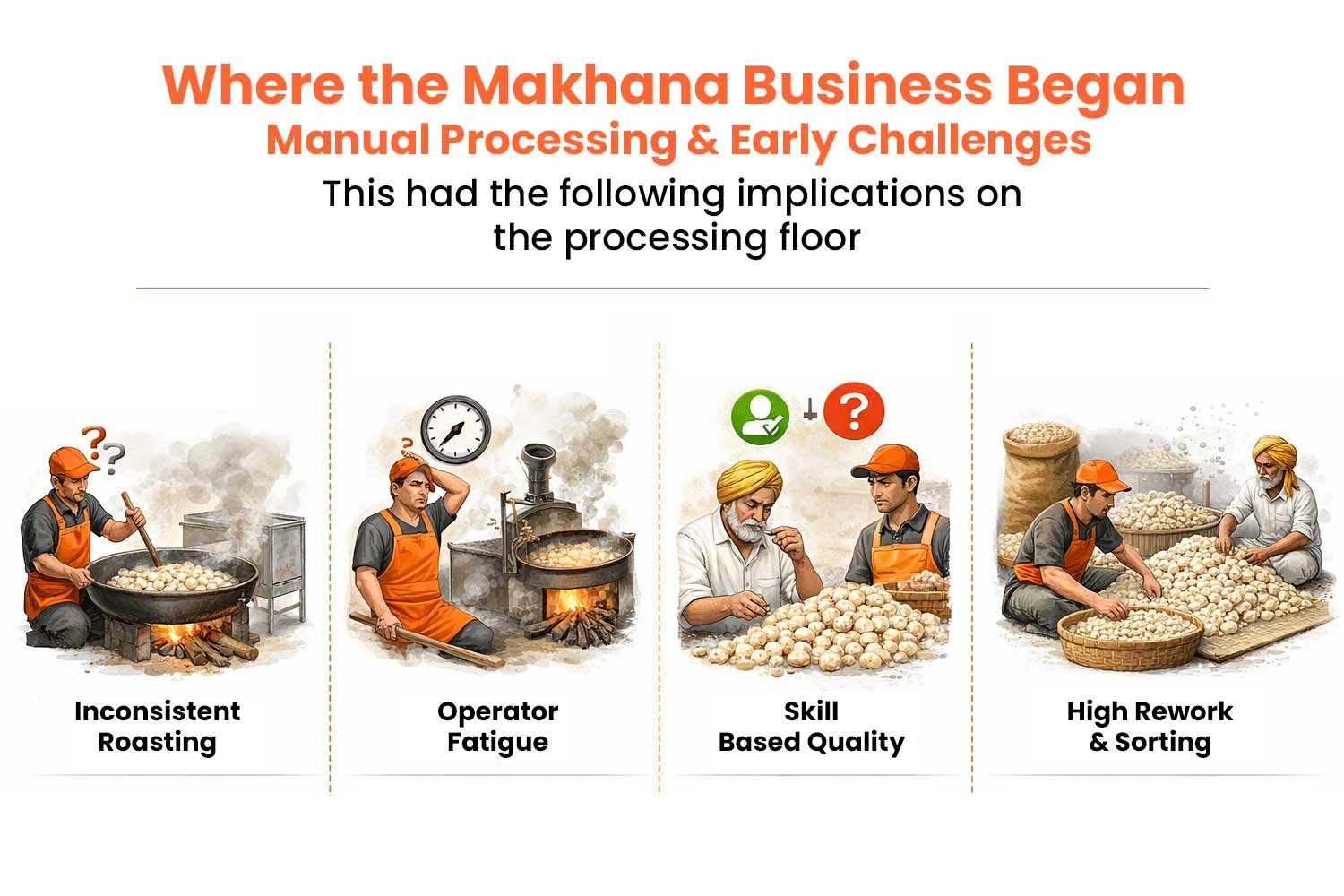
This had the following implications on the processing floor:
- The roasting time for each batch varied, resulting in products with different textures and colours.
- Long procedures for roasting made the operator tired, and sometimes timing was missed.
- The quality of the product depended on the skill of the operator who was handling the makhana making machine.
- Rework and sorting were at their highest levels during the days of peak production.
The processing of the startup’s makhana still seemed flexible at this phase, until scaling revealed that human-led batch processing was indeed the factor that limited repeatability and output control.
Why Batch Processing Made Sense for Early Makhana Processing Machine for Startups
Initially, batch processing seemed like the most suitable method and safer processing option for a startup like this. It allowed for the setup of a semi-automatic roasting and grading machine with lower investment and without the risk of costly continuous lines. It was possible to control the batches more easily, and operators could monitor the roasting process, water content, and texture.
Watch now: Makhana Processing Machine: Grader → Roaster → Flavor → N₂ Packing (50–200 kg/hr)
Reasons why batch processing was the first go-to:
- Allowed beginner workers to learn progressively.
- Ensured cash flow by manufacturing only according to local demand.
- Concentration on minor, regional orders while conducting quality tests on the product.
How Growth Exposed the Limits of Batch Makhana Processing for Startups
As orders grew, problems that were invisible at first started surfacing. Long hours on each batch wore operators down, resulting in slower overall output.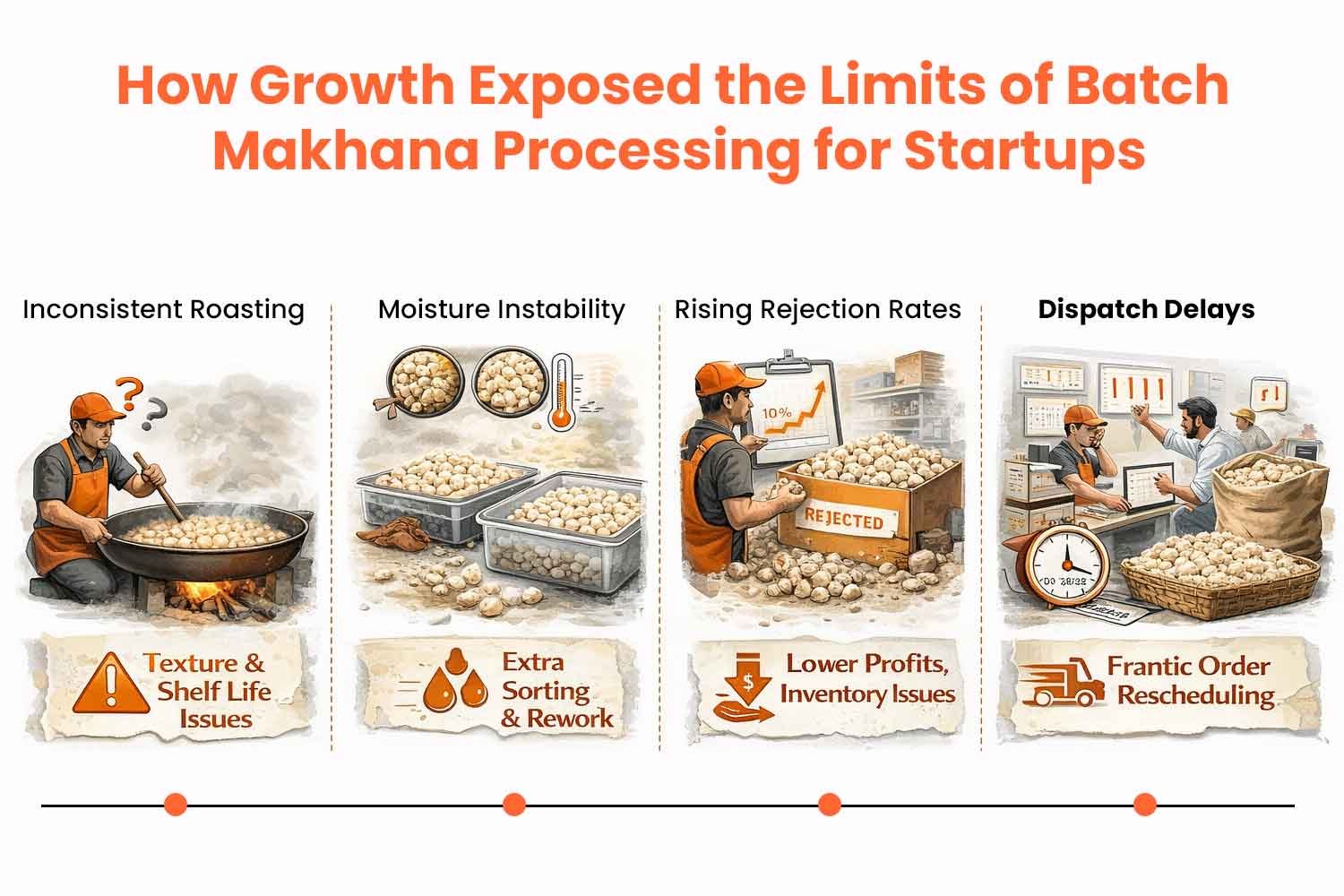
- Roasting consistency became a serious issue. Some batches came out slightly under-roasted, others over-roasted, which hurt texture and shortened shelf life.
- Moisture levels fluctuated, too. Some batches were too dry, others slightly damp. That added extra sorting and rework, slowing the process further.
- Rejection rates, usually 5–10%, started climbing. The result: lower profits and headaches in inventory planning.
- The team found itself in a situation during the peak season where dispatch timelines had to be revised, and order prioritization was implemented.
The key points taken from the initial batch of problems:
- Scaling human-dependent setups for batch processing is a struggle.
- Minor process variations will become more apparent at higher volumes.
- Consistent output and quality control will be difficult without automation.
The Turning Point: Scaling Challenges in Makhana Processing for Startups
After months of adjustments, the founder came to the conclusion that the main problems were not due to human error but rather inherent in the batch system itself. The scaling of operations revealed limitations that could not be addressed with minor adjustments.
Crucial turning-point revelations for makhana processing scalability:
- Uninterrupted batch adjustments could not completely remedy the problems of output or continuity.
- Small deviations in quality were amplified with the increase in order sizes.
- The number of man-hours worked rose, and fatigue set in, but the production gains were not proportionate.
- The process logic, rather than the operators, became the main limiting factor.
- The crucial query evolved from “How can we overcome the limitation of batch processing?” to “Is batch the right system for growth?”
The fact was that the startup had made its first serious attempt at discovering production systems that are capable of scaling and are also consistently designed for the long term.
Getting Process Clarity: How Foodsure Machines Helped Streamline Makhana Processing Plant Setup
At this point, the founder turned to Foodsure Machines for advice on scaling production while maintaining quality.
Here is what we proposed as part of the consultation service:
- Finding the bottlenecks in the roasting, grading, and packaging stages.
- Maintaining an analysis of throughput in relation to operator workload, thereby spotting fatigue.
- Keeping a close watch on moisture levels from one batch to another to identify risks of variability.
- Calculating inefficiencies through assessment of rework and rejection percentages.
- We noted that the only result of increasing the size of the batch system is an increase in labour demand and inconsistency. The operators can cope, but the human-dependent processes will struggle to deal with the higher volumes in a reliable manner.
The main recommendation was:
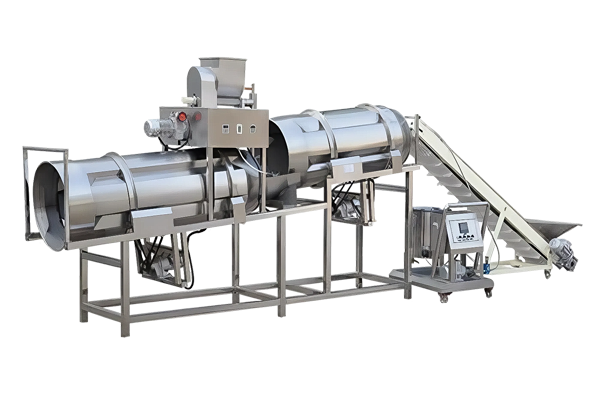
- To make a switch to a modular continuous makhana processing plant setup, which would allow the synchronization of multiple stages running at once.
- A production that is predictable in amount and quality, requiring less manual intervention, and with a reduction in rework
- The option of scaling up by simply adding more modules instead of conducting an overload of a single batch process.
- The company, by prioritizing continuity over batch adjustments, could still rely on us for the production of reliable, growth-ready products.
Read more: ROI Makhana Processing Machine For Village Units
Operational Impact: How the Continuous Makhana Processing Line Transformed Production
The transition to a continuous makhana processing plant setup had an immediate and noticeable impact on the operation.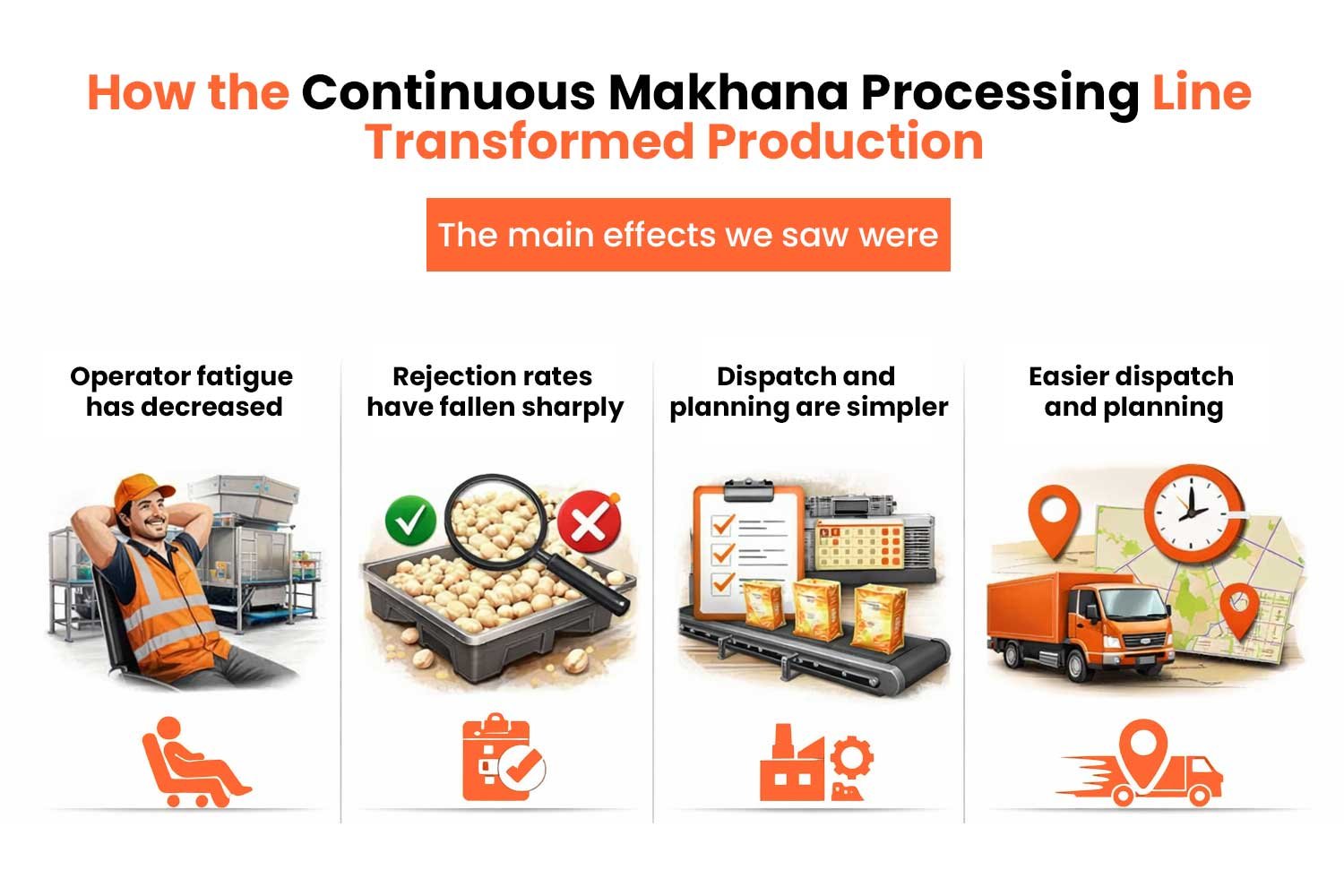
The main effects we saw were:
- Operator fatigue has decreased: key steps are now automated, allowing the team to focus on monitoring rather than constantly adjusting manually.
- Rejection rates have fallen sharply: Fewer defective products mean better overall yield and less wasted effort.
- Dispatch and planning are simpler: Predictable throughput makes scheduling shipments and meeting peak demand straightforward.
- Easier dispatch and planning: the predictable throughput made it easy to schedule shipments and meet peak demand.
| Metric | Batch Setup | Continuous Line |
| Output/hour | Lower | Higher & stable |
| Labour | High | Reduced |
| Rejection | 10–15% | 3–5% |
| Consistency | Variable | Stable |
Conclusion
Makhana processing plant setup scaling means not only industrial makhana machines but also processes, so restructuring processes is key to scaling. This is the way to go. At Foodsure Machines, we are proud to help both young and emerging companies, as well as established ones, create continuous lines that can easily accommodate increased labour. At the same time, the product remains consistent, and growth is predictable. Your operation would be the one that works with our assistance, taking the easier and smarter path instead of the harder and less smart one.
FAQ
What capacity should I start with?
Begin with the smallest capacity. An output of 50–100 kg per hour is adequate to learn the workflow, maintain quality, and control production without straining your team.
Which machines are absolutely necessary?
A roaster, grader, extruder, and packing machine are essential. Other machines are optional and can be added later.
Should I go batch or continuous?
If unsure, choose batch processing. Continuous lines make sense only when orders are stable and volumes are rising.
How much space will I need?
Around 500–800 sq. ft. is sufficient for machines, storage, and safe movement without bottlenecks.
What’s the investment range?
Plan ₹5–10 lakh depending on machinery level and plant size. Cheap machines lead to failures and rework later.
Do I need highly skilled workers?
Not initially. Semi-trained operators can manage the process. A well-designed machine matters more than experience early on.
Which quality checks matter most?
Moisture, texture, color, and grading consistency. Ignoring any of these leads to rework and profit loss.
Do I need automation right away?
Not at the beginning. Start manually, then adopt automation when volume and consistency requirements increase.
Can I process raw makhana from farms directly?
Yes — but only after proper cleaning and drying. Skipping this step causes failed batches.
How long does setup usually take?
Typically 2–3 months, including installation, workflow planning, and operator training.
What kind of ROI should I expect?
Around 6–12 months, assuming stable operations and consistent quality.
Where should I source machines?
Prefer trusted suppliers or certified local manufacturers. Cheap and untested machines cost more in the long run.