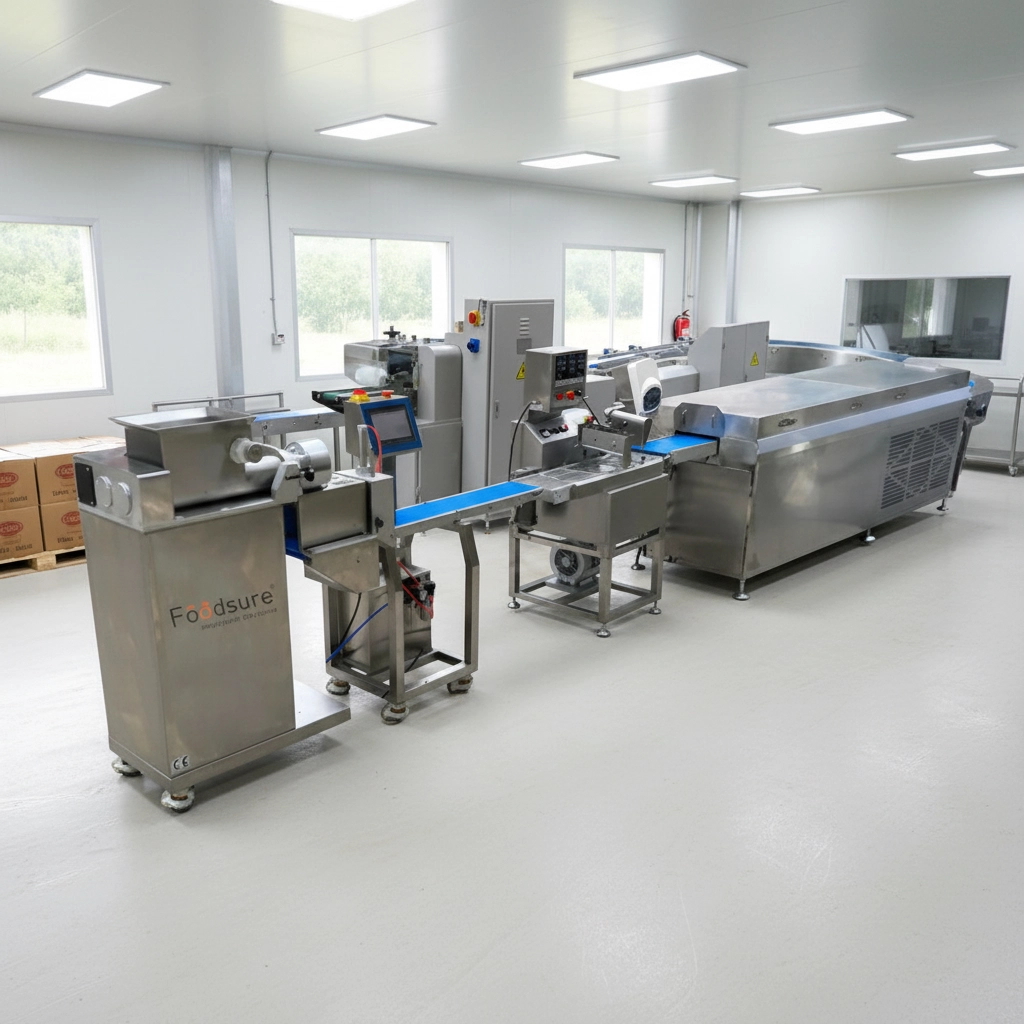

The protein and nutrition bar market is experiencing rapid growth in India, but small manufacturers face the same challenges of inconsistent quality, slow production, and wasted efforts. That can all change with a protein bar forming machine. A Protein Bar Forming Machine alleviates, if not fully solves, all of these issues. These machines create a streamlined production process that is faster, cleaner, and far more consistent. This article will outline all of the different types of machines, what the actual workflow looks like, what actual benefits you can expect from automation, and what your return on investment could look like. By the end of this article, you will understand exactly what you should be looking at when evaluating machines to purchase.
Which Protein Bar Forming Machine Suits Your Production Needs
When considering options for increasing your production, it helps to know the types available. They include the following:
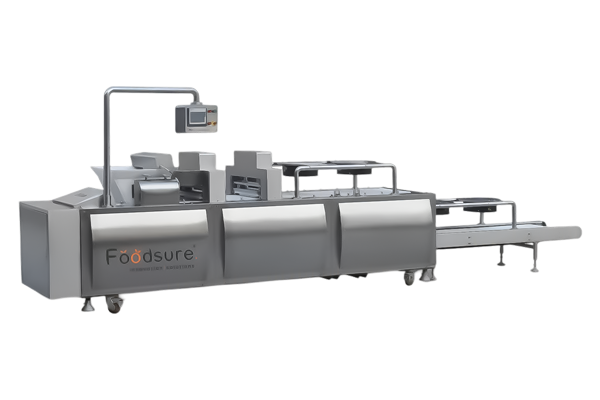
Semi-Automatic Protein Bar Machine
- Semi-automatic is more suited for a smaller volume of production (around 50 to 200 kg/day).
- Requires less upfront capital than a fully automatic protein bar machine.
- It requires some manual handling since you’ll need to load the raw ingredients into the machine and then package your bars by hand, which will still have some level of human involvement.
- An excellent option for a bar that will be produced in small volumes and a variety of flavors.
Fully Automatic Protein Bar Machine
- Produces high volume production (around 200 to 500 kg/day).
- Produces a bar that is a uniform shape, weight, and quality each time.
- Less labor is needed in comparison to the semi-automatic machine to run the assembly line, and less risk of non-hygiene-compliant conditions.
- The best option for a manufacturer who wants to grow production and doesn’t want to sacrifice quality.
How a Protein Bar Forming Machine Transforms Your Workflow
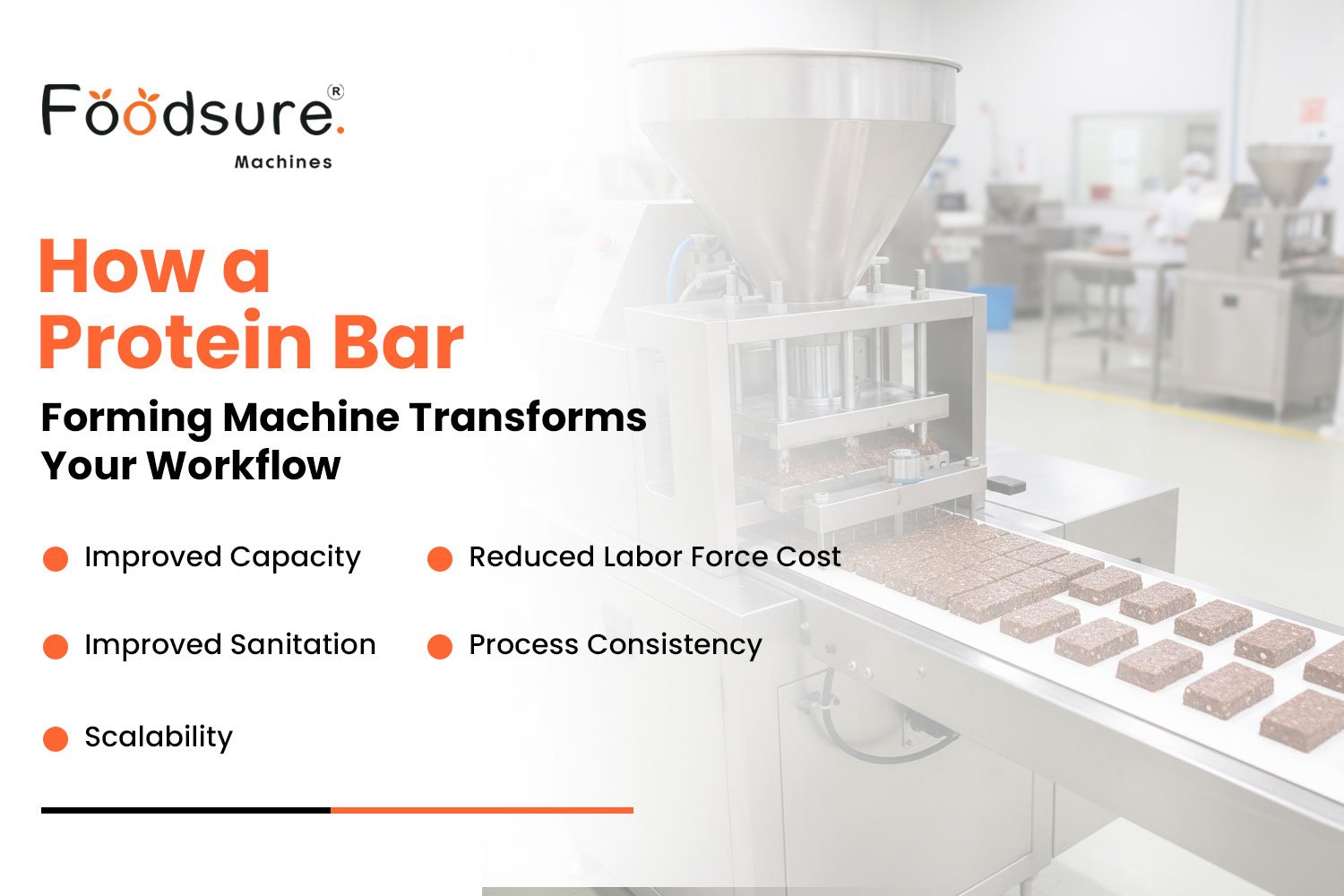
Automation transforms small-scale manufacturing operations into organized and dependable businesses. Here is what it does for you:
- Improved Capacity: Whether fully automatic protein bar manufacturing or semi-automatic protein bar manufacturing, both produce many more bars in a short period of time, without sacrificing quality.
- Reduced Labor Force Cost: If a process has little human interaction, then the use of skilled labor is eliminated, and the manufacturing cost is less expensive.
- Improved Sanitation and Compliance: Automated machines are designed, tested, and packed to consistently maintain a clean and hygienic state every time the bars are manufactured or processed.
- Process Consistency: Consistency in shape, size, and weight of the bar increases your efficiency every time you pack with your pre-set packaging, and the product has a defined professional presentation.
- Scalability: A fully functioning protein bar manufacturing line will allow the customer to scale production, no matter the demand, with a larger run of greater production without skilled labor; it just happens to be easy.
Read more: How To Start A Protein Bar Business Step By Step
ROI and Cost Benefits of a Protein Bar Forming Machine
Protein Bar Production – Key Aspects
| Aspect | Details / Explanation |
|---|---|
| Machine Cost | Semi-Automatic: ₹4–6 lakh Fully Automatic: ₹10–18 lakh (depending on capacity and features) |
| Labor Savings | Automation reduces manual work by 40–50%, lowering recurring labor costs |
| Reduced Wastage | Consistent bar size, shape, and weight reduce ingredient wastage by 10–15% |
| Production Capacity | Semi-Automatic: 50–200 kg/day Fully Automatic: 200–500 kg/day |
| Faster Revenue Generation | Higher output allows manufacturers to meet growing demand and increase sales |
| Estimated ROI | Semi-Automatic: 12–18 months Fully Automatic: 10–14 months |
| Scalability | Fully automatic protein bar production lines allow smooth expansion without additional machine costs |
Finding a Reliable Supplier for Your Protein Bar Forming Machine
Here’s the thing: not all suppliers are the same, and picking the right one can save you a lot of trouble. Start with machine reliability and warranty. You want equipment that works without constant issues and comes with a clear warranty so you’re not left paying for fixes.
- Then, check their after-sales service and maintenance support. Machines can run into problems. A supplier who responds quickly and provides parts or guidance keeps your production moving.
- Next, think about customization. Your production needs might not match someone else’s setup. A supplier who can adjust machines to fit your ingredients, batch sizes, or workflow makes life much easier.
- Finally, look at pricing transparency. No hidden charges, no surprises. Everything, from installation to optional features, should be spelled out up front.
Conclusion
We build protein bar forming machines that small manufacturers can actually rely on. Foodsure Machines deliver consistent results, whether you choose semi-automatic or fully automatic models. We handle installation, training, and support ourselves, so you’re never left guessing. That’s why so many startups and nutrition brands trust us. Get a quote or demo from Foodsure Machines today.
Contact us: +919870533566, +918826313121
Whatsapp now: +919870533566
Email now: wecare@foodsure.in
FAQ
Q1 How do I start my own protein bar business?
Start small. Get a good protein bar forming machine, choose quality ingredients, and get your basic FSSAI license. Once you find what sells, you can grow step by step.
Q2. How much can a protein bar forming machine produce in a day?
A semi-automatic setup can make around 50–80 kg a day. A full automatic line can easily cross 500 kg if you have a steady demand.
Q3. What types of protein bar forming machines are there?
Mainly two. Semi-automatic machines suit small units or test batches. Fully automatic ones are for higher output and longer runs.
Q4. How can I start a protein bar company in India?
Get the right licenses, plan your recipes, and buy a forming machine that matches your capacity and budget. You can start small and scale up fast.
Q5. Do protein bar machines need any approval?
Yes. Your setup should meet FSSAI hygiene and food safety standards so you can sell confidently in the market.