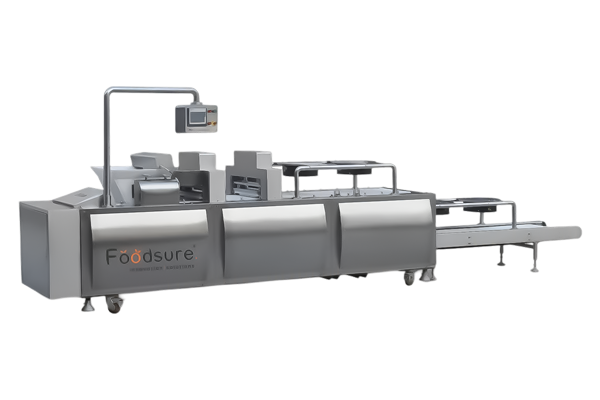
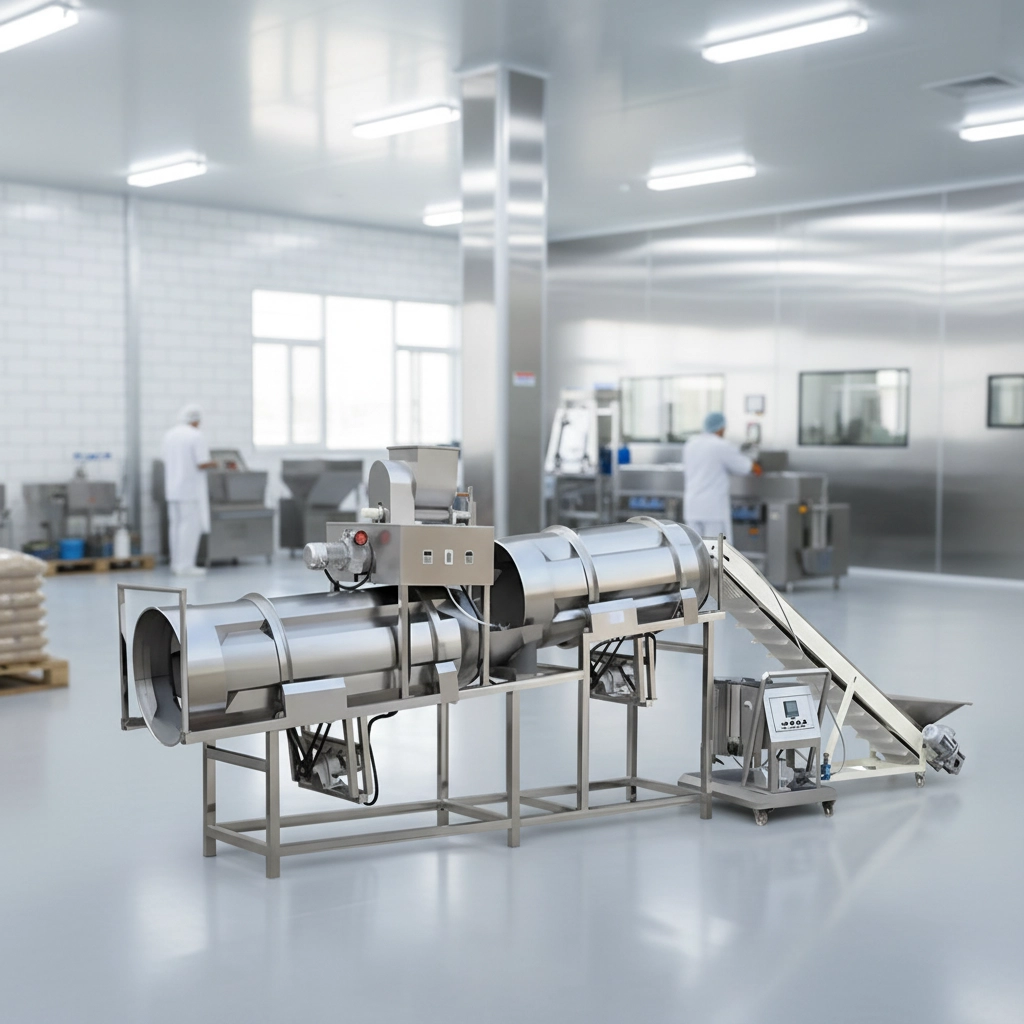
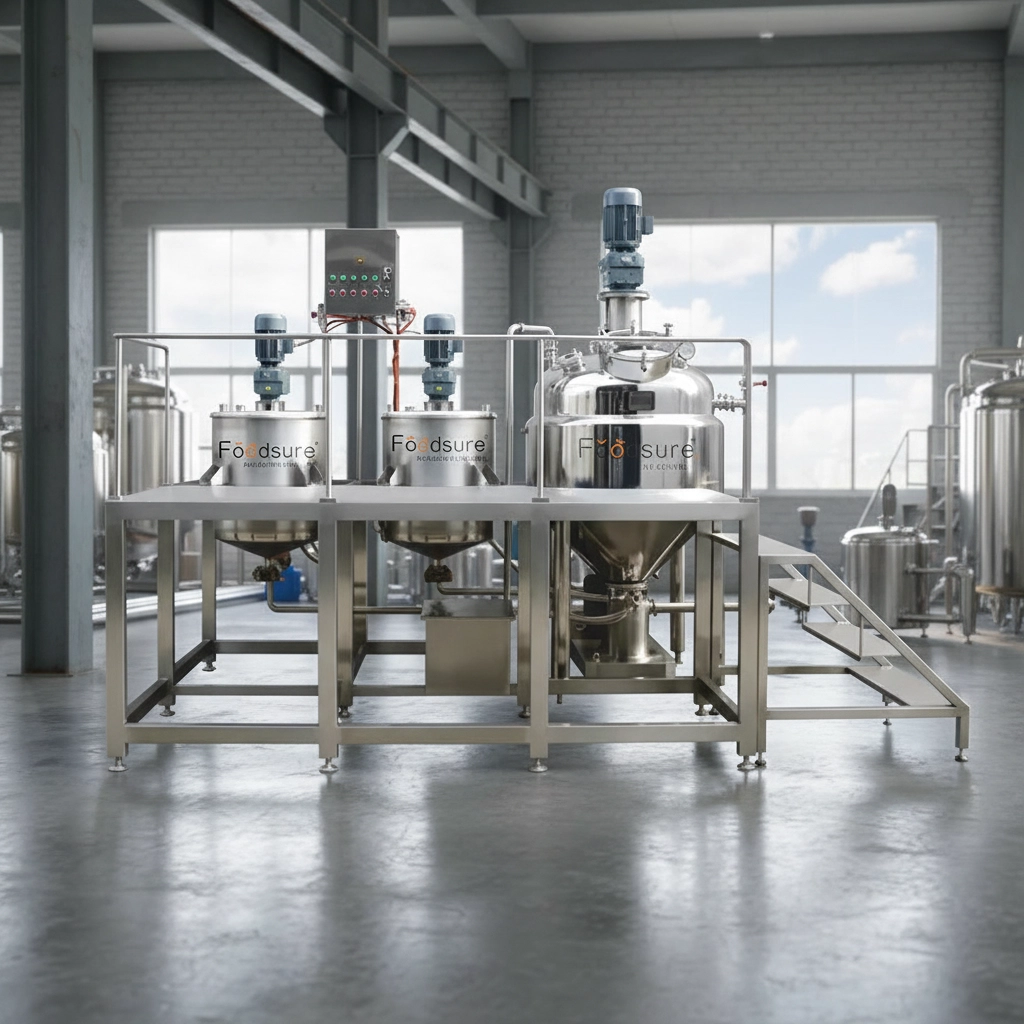
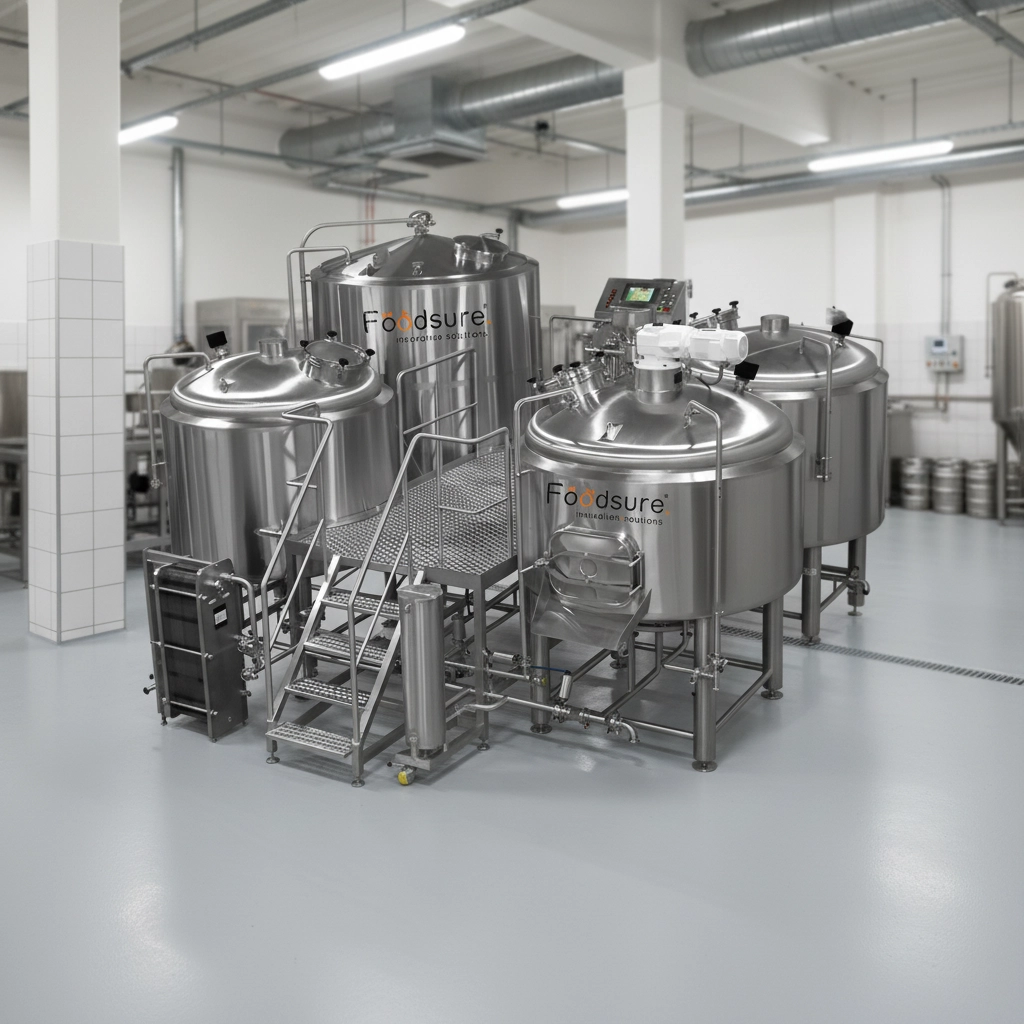
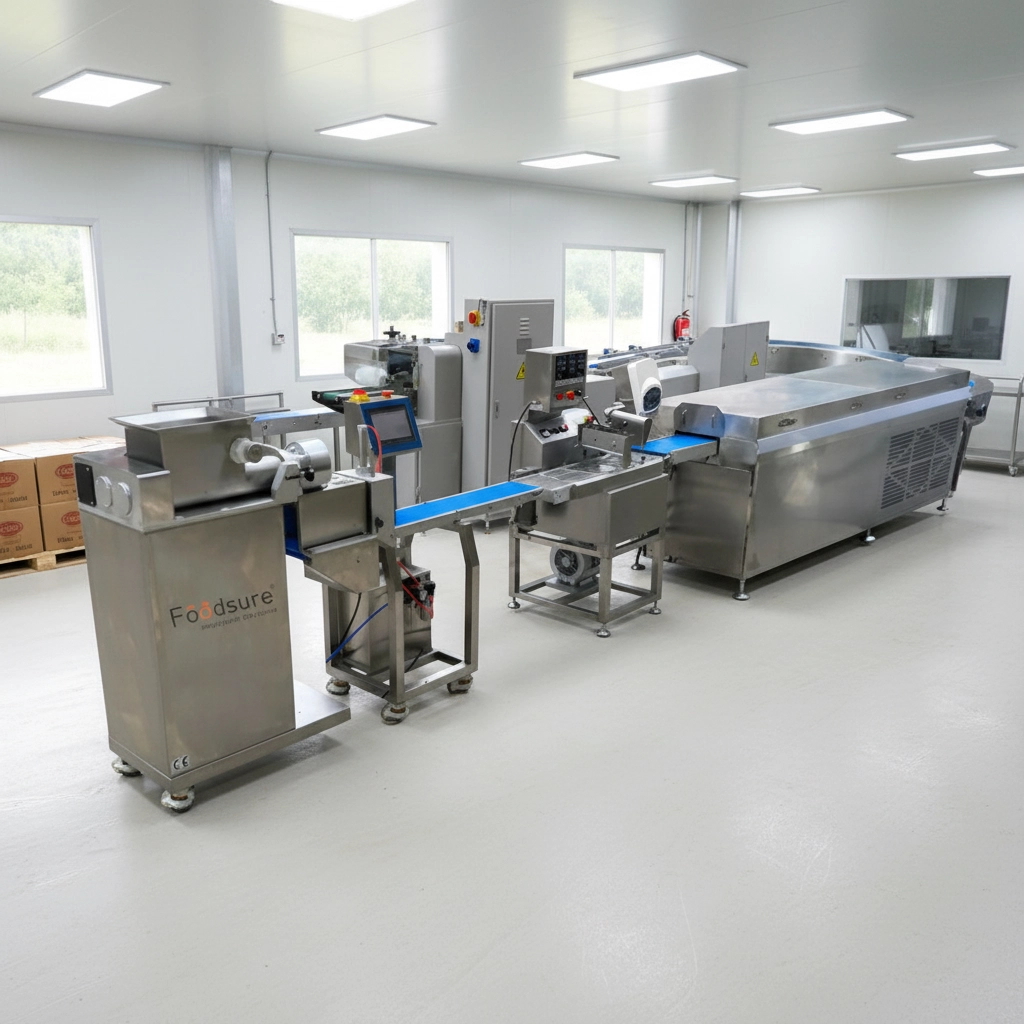
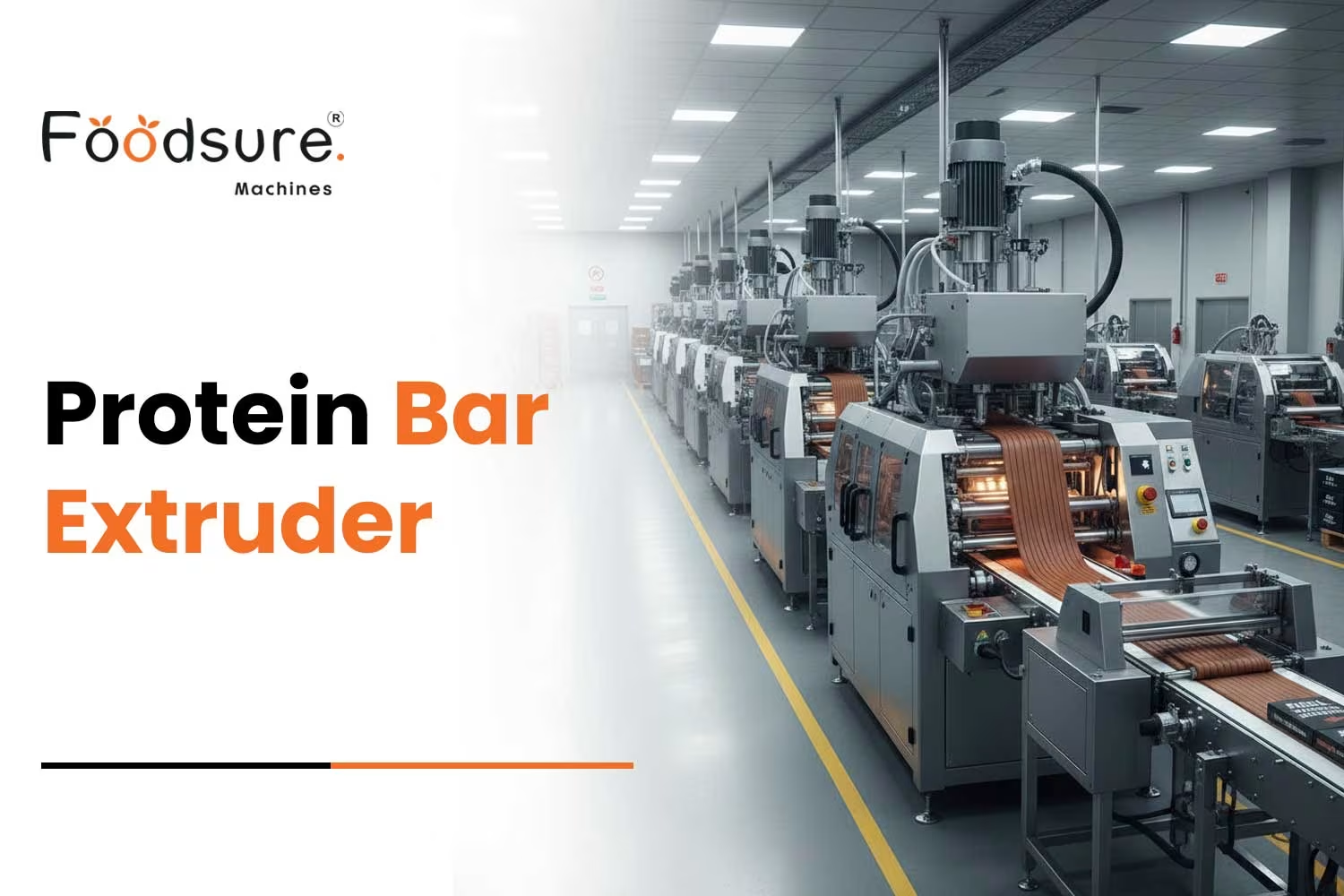
If you are manufacturing protein bars in India, choosing the wrong extruder machine can silently drain your profits through inconsistent bar weight, frequent downtime, recipe limitations, and high labor dependency. A protein bar extruder machine is not just production equipment, it is the backbone of scalable, hygienic, and profitable protein bar manufacturing.
This 2026 buyer-focused guide is designed for startup founders, D2C brands, MSMEs, and large food manufacturers. It will help you select the right Protein Bar Extruder Machine in India based on recipe type, output capacity, automation level, budget, and return on investment (ROI), so you can invest with clarity and confidence.
How a Protein Bar Extruder Works
A protein bar extruder machine shapes mixed protein dough into uniform, continuous bars with consistent weight, size, and texture. It replaces manual molding and cutting, enabling manufacturers to achieve:
- Higher production speed
- Consistent nutritional values per bar
- Lower manpower dependency
- Better hygiene and food safety compliance
Step-by-Step Working Process
- Feeding – Prepared dough is loaded into the hopper
- Transport & Compression – Screw augers or roller systems move dough forward
- Extrusion & Shaping – Dough passes through a die to form bars
- Conveying – Extruded bars move via conveyor belt
- Cutting – Guillotine or servo-controlled cutters portion bars uniformly
This continuous process ensures high throughput with minimal variation, even for complex recipes.
Which Protein Bar Extruder Machine In India Is Right for Your Business?
Choosing the right protein bar extrusion depends on your stage of business, recipe complexity, and growth plans. The table below helps you quickly identify the most suitable extruder type.
| Business Stage | Ideal Capacity | Recommended Extruder Type | Automation Level | Typical Use Case |
|---|---|---|---|---|
| Startup / Cloud Kitchen | 50–150 kg/hr | Single-screw extruder / Compact | Manual / Semi-auto | Market testing, pilot batches, D2C launch |
| MSME / Growing Brand | 200–500 kg/hr | Twin screw extruder / Roller | PLC + Servo cutting | Multi-SKU production, consistent scaling |
| Large Manufacturer | 500+ kg/hr | Multi-row extrusion | Fully automated line | High-volume, continuous production |
For MSMEs & Growing D2C Brands
- Capacity: 200–500 kg/hour
- Twin screw extruder
- Servo-controlled cutting
- PLC recipe memory
Best for: Multi-flavor SKUs, export readiness, consistent scaling
For Large-Scale Manufacturers
- Capacity: 500+ kg/hour
- Multi-row extrusion
- Fully automated integrated line
- Cooling tunnel, enrobing & flow-wrap integration
Best for: National brands, contract manufacturing, private labels
Top Features and Advantages of Protein Bar Extruder
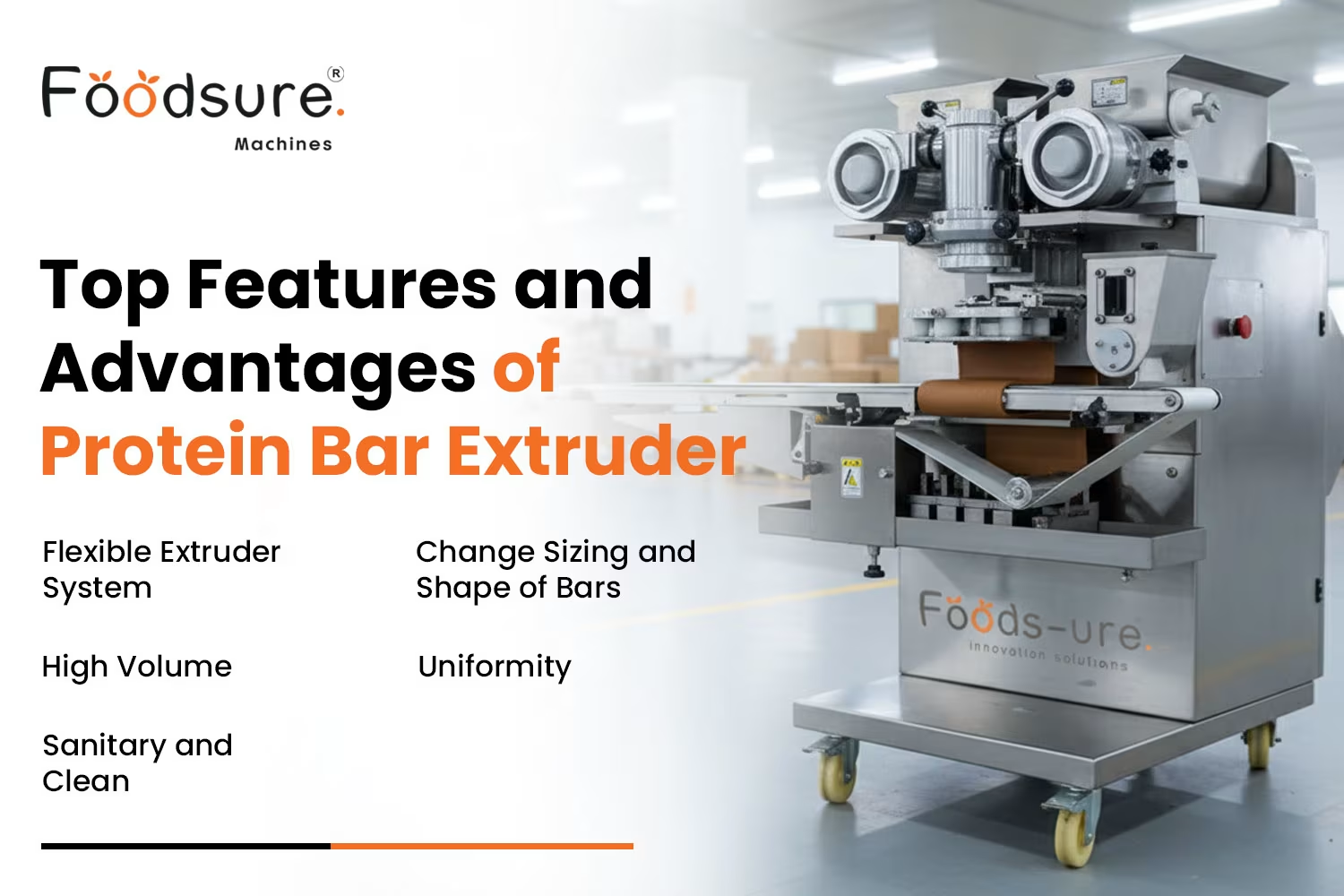
- Flexible Extrusion Capability: Handles sticky, thick, and high-inclusion recipes such as nut butters, date pastes, seeds, and granola without breakage.
- Consistent Bar Size & Nutrition: Every bar has the same weight, dimensions, and nutrient value, ensuring label compliance and customer trust.
- High Production Output: Continuous operation enables production of hundreds of kilos per hour, drastically reducing per-bar cost.
- Quick Shape & Size Changeover: Interchangeable dies allow fast switching between rectangular, round, layered, or bite-sized bars.
- Hygienic & Easy to Clean: Food-grade SUS 304 stainless steel, smooth finishes, and quick-disassembly parts support CIP and food safety audits.
Ready to See Which Protein Bar Extruder Fits Your Production Needs? Discover the machine that matches your recipe, output, and budget. Request Your Free Quote.
Latest Innovations in Protein Bar Extruder Technology
The global protein bar market size reached USD 3.8 Billion in 2024. Looking forward, IMARC Group expects the market to reach USD 5.7 Billion by 2033, exhibiting a growth rate (CAGR) of 4.8% during 2026-2033. Modern-day extruders are designed to assist in challenging recipes with better performance efficiencies:
| Feature / Innovation | Description / Benefit |
|---|---|
| Advanced Extrusion Systems | Twin & Multi-Screw Designs for dense, plant-based formulations Low-compression zones protect large nut and seed inclusions |
| Temperature-Controlled Barrels | Thermoregulated jackets prevent premature setting Maintains dough temperature below 35°C for texture integrity |
| Precision Automation | PLC + HMI touchscreen controls Servo-synced cutters for precise weight control Recipe memory for rapid SKU changeovers |
| Fully Integrated Production Lines | Can be integrated with: – Automatic feeders – Cooling tunnels – Chocolate or yogurt enrobers – Flow-wrap packaging machines |
How Protein Bar Extruders Handle 2026 New Bar Trends
By 2025, clean-label and plant-based nutrition bar extruders machine will need to be state-of-the-art. Plant-based/Whole food doughs require specialized screws with high shear sections and higher torque motors to accommodate dense and drier products (e.g., date or nut pastes) and avoid excessive friction and product sticking. High-Inclusion Bars need to be extruded with low compression to avoid breaking large nut/seed particulates down. Modern Protein bar production line setup demands flexibility:
- Plant-based & clean-label bars require high-torque motors and specialized screw geometry.
- High-inclusion bars need gentle extrusion to avoid ingredient breakage.
- Keto & low-carb SKUs demand fast recipe switching.
A modern Protein bar extruder for startups should support die changeovers under 15 minutes and PLC-based recipe recall to maintain maximum line utilization and ROI.
Read More: Protein Bar Market Trends 2025: Where Consumer Demand Meets Machine Innovation
Protein Bar Extruder Setup and Essential Parts
A Protein bar production line setup is an essential piece of equipment in an overall system:
- Mixing Equipment: This piece will carry out all of the necessary conditions to mix all of the ingredients well.
- Feeding Hopper: This device continuously feeds the dough into the extruder.
- Extruder: A single or twin screws will compress and shape the mixture after the mixing process.
- Die/Nozzle: This controls the width of the bar and the design of the cross-section of the bar
- Conveyor/Belt: Drives the shaped dough forward to the cutting equipment.
- Cutting Equipment: A guillotine cutter or Rolodex-type servo cutter will slice the bar consistently for a defined length/weight and maintain consistency for each cut.
- Control Systems: PLC touchscreen to control speed, temperature, and pressures, and recipe memory.
Types of Extruders:
- Single-Screw: Simple, cheap, and limited mixing functionality
- Twin-Screw: Much more mixing functionality for more complex formulation.
- Multi-Row: Designed for producing a lot of bars at once for higher production quantities.
Protein Bar Extruder Specifications and Utility Requirements
| Parameter | Recommended Range / Value | Why It Matters for Your Business |
|---|---|---|
| Screw Torque | 200–500 Nm | Prevents stalling with dense, sticky, high-protein doughs |
| Hopper Volume | Maintain >25% fill level | Ensures smooth dough flow and avoids air pockets |
| Compression Ratio | 1.5:1 – 2:1 | Reduces heat generation and ingredient sticking |
| Power Requirement | 15–30 kW (400V, 3-phase) | Supports continuous production up to 500 kg/hr |
| Output Capacity | Up to 500 kg/hr | Determines scalability and cost per bar |
| Air Requirement | 6–8 bar, 100–200 L/min | Required for pneumatic cutters and packaging |
| Barrel Temperature | <35°C | Maintains texture and prevents premature setting |
| Cooling Tunnel | 4–10°C | Stabilizes bar shape before enrobing or packing |
Protein Bar Extruder Food Safety and Compliance Guidelines
A Protein bar extruder for startups must meet strict food safety norms:
- EHEDG & 3-A hygienic design (<0.8 μm Ra finish).
- HACCP-based allergen control zones.
- CIP-ready construction for fast sanitation.
- CE & cGMP compliance for global trade.
These standards reduce contamination risk and ensure audit readiness.
Protein Bar Production Overview: Output, Layout, Manpower, and Cost
| Section | Details | Output / % |
| Extruder Type | Benchtop | 20–40 bars/min (1,200–2,400 bars/hr) |
| Single-Row Industrial | 60–120 bars/min (3,600–7,200 bars/hr) | |
| Multi-Row | 150–360 bars/min (9,000–21,600 bars/hr) | |
| Plant Layout | Ingredient Prep, Mixing, Extrusion & Cutting, Finishing, Packaging | 5,000 bars/hr |
| Manpower | Line Operator:1, Mixer/Prep:1–2, Packaging:1, QA/QC:1 (shared) | Total: 4–5 |
| Cost per Bar | Raw Material | 55–70% |
| Packaging | 10–15% | |
| Conversion/Overhead | 15–35% |
Why Protein Bar Manufacturers Choose Foodsure Machines
- Proven expertise in food extrusion systems.
- Foodsure Machines are designed specifically for Indian recipes & conditions.
- Custom-built solutions based on capacity and formulation.
- Reliable after-sales support & spare availability.
- Seamless integration with existing production lines.
Our focus is not just machines, it is long-term production efficiency and ROI.
Request Your Free Quote Fast
Please reach out to us anytime via phone or email.
FAQ
What is a protein bar extruder machine?
A protein bar extruder machine shapes protein dough into uniform bars with consistent size and weight
Who should use a protein bar extruder?
Startups, D2C brands, MSMEs, and large manufacturers use it to scale efficiently
Can the extruder handle sticky or nut-heavy recipes?
Yes, modern machines process sticky, high-protein, and nut-rich mixes smoothly
What capacity protein bar extruder do startups need?
Startups usually begin with 50–150 kg/hr for test batches and early sales. Request a quote for small-scale options.
How does an extruder improve bar consistency?
It controls weight, shape, and texture for every bar, improving quality and labeling accuracy.
Can I change bar shapes and sizes easily?
Yes, interchangeable dies and adjustable cutters allow quick customization.
Does a protein bar extruder reduce labor costs?
Automation cuts manual molding and cutting, lowering labor dependency.
Is cleaning and maintenance complicated?
No, food-grade stainless steel parts allow quick cleaning and easy maintenance.
What machines are needed along with the extruder?
A mixer, cooling tunnel, cutter, and packaging unit complete the line. Contact us for a full line layout plan.
How do I choose the right protein bar extruder machine in India?
Selection depends on recipe, output, automation level, and future growth.