Snacks that promote good health have led to more manufacturers entering the bar market segment, including cereals and granola bars, as well as high-protein bars. The problem is universal; it involves maintaining consistency in size, shape, and quality despite changes in the formula, batch sizes, and consumer demands.
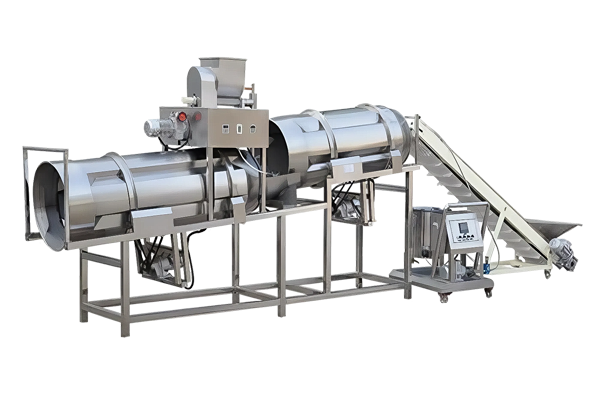
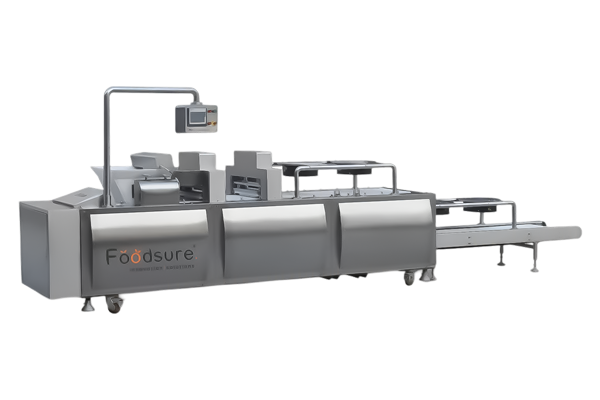
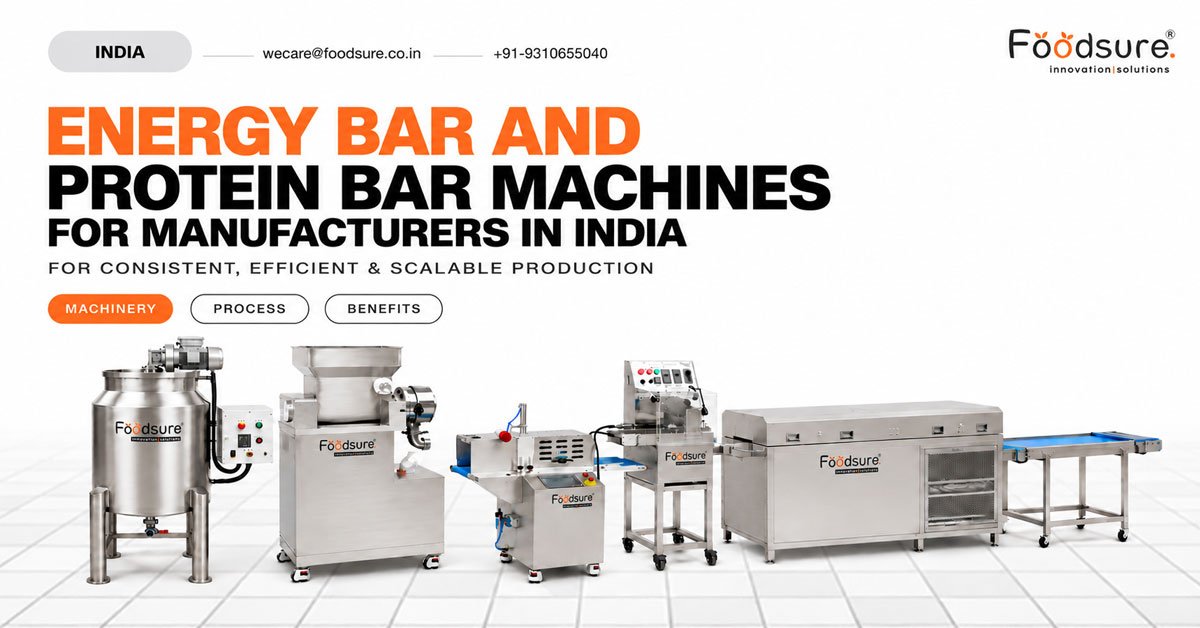
Energy bar machines and protein bar machines handle mixing, extrusion, cutting, and coating automatically. This means that you will not be bothered much by the manual processes. You will select energy bar and protein bar machines depending on your capacity requirements and automation levels required.
Why Are Businesses in India Investing in Energy Bar and Protein Bar Machines?
Because equipment choice directly affects cost, performance, product consistency and reliability.
Guaranteed quality. Machines ensure that all bars produced from mixtures have consistent bar sizes. This guarantees that you achieve the desired nutritional and quality levels.
Increased production capability. The speed at which the machine produces your bars is as important as the cost of the machine. Automated systems will meet your demands faster than manual methods.
Improved control of process. The mixing, extruding, and cutting processes happen in the same order. The protein bar machine involves high-pressure extruders and weight control system for thick mixtures.
Reduced reliance on manual labor. Automated mixing, extrusion, cutting, and coating reduces the need for repeated labor. This way, your labor force will concentrate on the quality of products.
Flexible scalability. Start with the energy bar machines for smaller scale productions and then shift to protein bar machines with increased volume and exporting requirements.
Key Features to Look for in Energy Bar and Protein Bar Machines
The right features depend on your recipe, so match the machine to what you actually plan to make.
Precision and control. For protein bars, choose cutters that ensure precise weight control. This is done to maintain the weight of each bar.
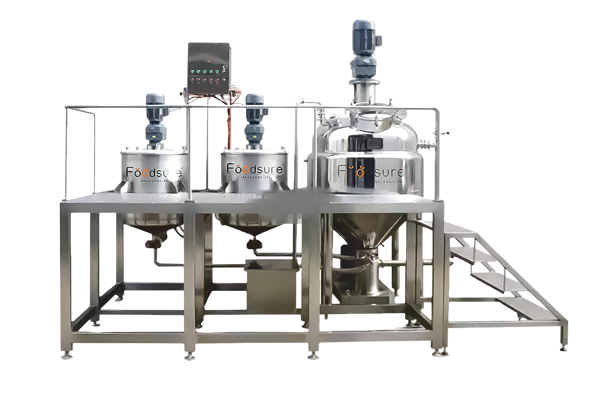
Mixing that prevents clumping. Protein powders, whey and soy, are quite sticky and heavy. Specialized mixers are made to prevent clumping and provide smooth mixing.
Capacity that matches your requirements. Energy bar machines are ideal for smaller operations. On the other hand, protein bar machines can be used in mass production. First, you should define your batch size.
Cooling and shape retention. Cooling tunnels prevent dropping of bars and this is especially required when working with dense protein recipes.
User-friendly operation. Energy bar machines are easy to install and operate. It is important to select equipment that can be easily managed by your staff.
Flexibility and scalability of machines. Equipment that works with various recipes and batch sizes allow testing new flavors without buying new machinery for each of them. Additional accessories, such as coating units, cooling tunnels and automatic cutters, help to add premium shapes to your products.
How Does an Energy Bar and Protein Bar Machine Work?
The process varies slightly by model and recipe, but these are the main stages.
Mixing. Mixing is done for oats, nuts, and syrups to make them into an even mixture. When manufacturing protein bars, a powerful mixer is needed to manage thick protein powders.
Extrusion. Extrusion involves pushing the mixture through as rolls or slabs. Protein bars require high-pressure extruders to press out the mixture.
Cutting. Cutting involves slicing the slab into bar sizes. In making protein bars, cutting must be precise enough to maintain the right weight.
Coating (optional). Coating chocolate or yogurt can be included when necessary for your product. Protein bars will require high levels of accuracy in coating.
Cooling and packaging. Bars go through cooling and packaging processes. Cooling helps protein bars to maintain their form during the packaging process.
How to Match Machine Type and Capacity to Your Production
Choosing the right tier saves you from overspending or outgrowing your line too soon. Look at your recipe type, batch size, factory space, budget and how fast you plan to scale. Remember that protein bar machines cost more because of stronger mixers and more sophisticated cooling systems.
| Production Scale | Suitable For | Key Consideration |
|---|---|---|
| Small to medium (energy bar machine) | Startups and small factories making cereal, granola or fruit-based bars | Easy to install and operate, with lower entry cost and no costly customization. |
| Flexible mixed runs (energy bar line with extras) | Growing brands testing new flavors and batch sizes | Add coating units, cooling tunnels or automated cutters as your range expands. |
| Large scale (protein bar machine) | Large manufacturers and exporters making high-protein bars | Higher upfront cost, but stronger mixers, high-pressure extruders and precise cutters give consistency at speed. |
Biggest Challenges and Solutions for Bar Production in India
Most manufacturers hit the same four problems when picking and running bar machines.
Choosing based on cost rather than fit
Many consumers compare specs and costs but fail to consider how much time the machine will be operational and the formula it is required to process. The result is a machine-product mismatch.
Solution
Think of your production objectives and the requirements of your product. Determine which machine suits your recipe, batch volume and growth strategy and not the most economical machine.
Thick protein formulas
The protein powder including whey and soy makes the mix thick and difficult to mix. Inefficient machinery results in clumping of the mix and inability to extrude it.
Solution
Utilize protein bar machines with mixers that resist clumping and high-pressure extrusion systems and cooling tunnels.
Limited flexibility in recipes
Due to changes in customer demands, it becomes necessary to test out new flavors. With the use of a rigid machine, you will be forced to purchase a whole new line for each new product.
Solution–
Purchase flexible machinery that will allow you to change recipes and batch sizes. Optional accessories such as coating machines and automated cutters will help.
Coating cracks and inconsistent coatings
It is difficult to coat protein bars in comparison to light bars. Inaccurate coating results in cracks and uneven coating layers.
Solution–
Make sure to use coating machines with proper controls and cooling tunnels.
Benefits of Using Advanced Energy Bar and Protein Bar Machines
The right machine pays off in quality, flexibility and long-term growth.
- Uniform bars: mixes are formed into uniform sizes and weights.
- Versatility: can manage various recipes and batches without compromising quality.
- Affordable startup: energy bar production equipment is affordable for medium to small setups.
- Export capability: protein bar manufacturing equipment ensures the efficiency needed by big producers.
- Sophisticated finishes: with coating machines, cooling tunnels, and cutters.
How to Choose the Best Energy Bar and Protein Bar Machine in India?
Buying equipment is more about fit than price, so the best machine is the one that matches your product.
- Energy bars and/or protein bars
- Flexible runs or high specialization volume
- Batch size currently produced
- Speed of future scale-up
- High pressure extruder mandatory
- Cooling setup space requirements
- Formulation adaptation required?
- Local production/export
- Installation and service support
Why Choose Foodsure Machines for Energy Bar and Protein Bar Machines?
We have more than 13 years of experience assisting our clients to grow their business using better food machinery. We have machines to manufacture energy bars and protein bars, thus giving you the opportunity to start small and scale up as your business grows.
Our machines are user-friendly and dependable.
Start your bar production with Foodsure Machines — Enquire now!
FAQs
How is an energy bar making machine different from a protein bar machine?
The former can handle thin and light mixes, while the latter can work with thick protein-enriched mixes.
Is it possible for the same machine to make energy bars and protein bars?
Yes, but customization of machines will be necessary in such a case. However, most manufacturers have separate lines for each category.
Is it a good idea to start with an energy bar machine?
Yes, it is cost-effective, versatile and easy to use for beginners.
What are the components of an energy bar making line?
It includes mixing, extruding, cutting, coating (optional), then cooling and packaging of bars. Extruding and cutting machines will form the bars.
What is the cost of an automatic energy bar machine in India?
The cost of a small-sized machine is lower; whereas, customized or larger machines are expensive. Provide your formula and output capacity for an accurate quotation.
Why is it that factories go for customization of protein bars?
Customized machines give full control over the texture and consistency of the bars.