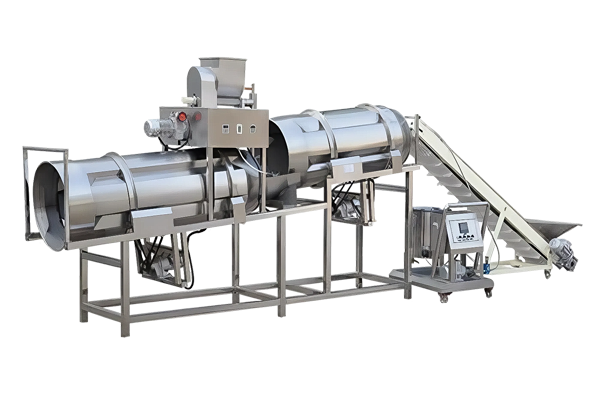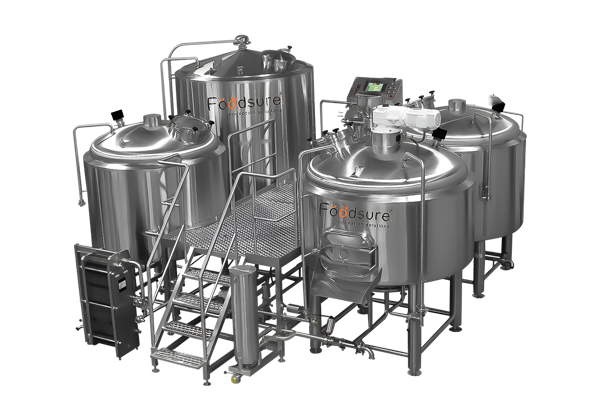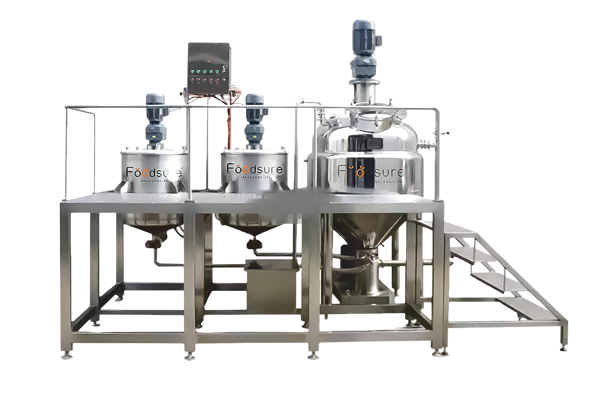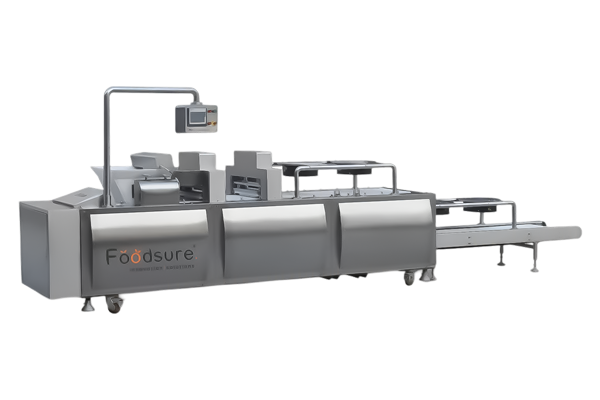
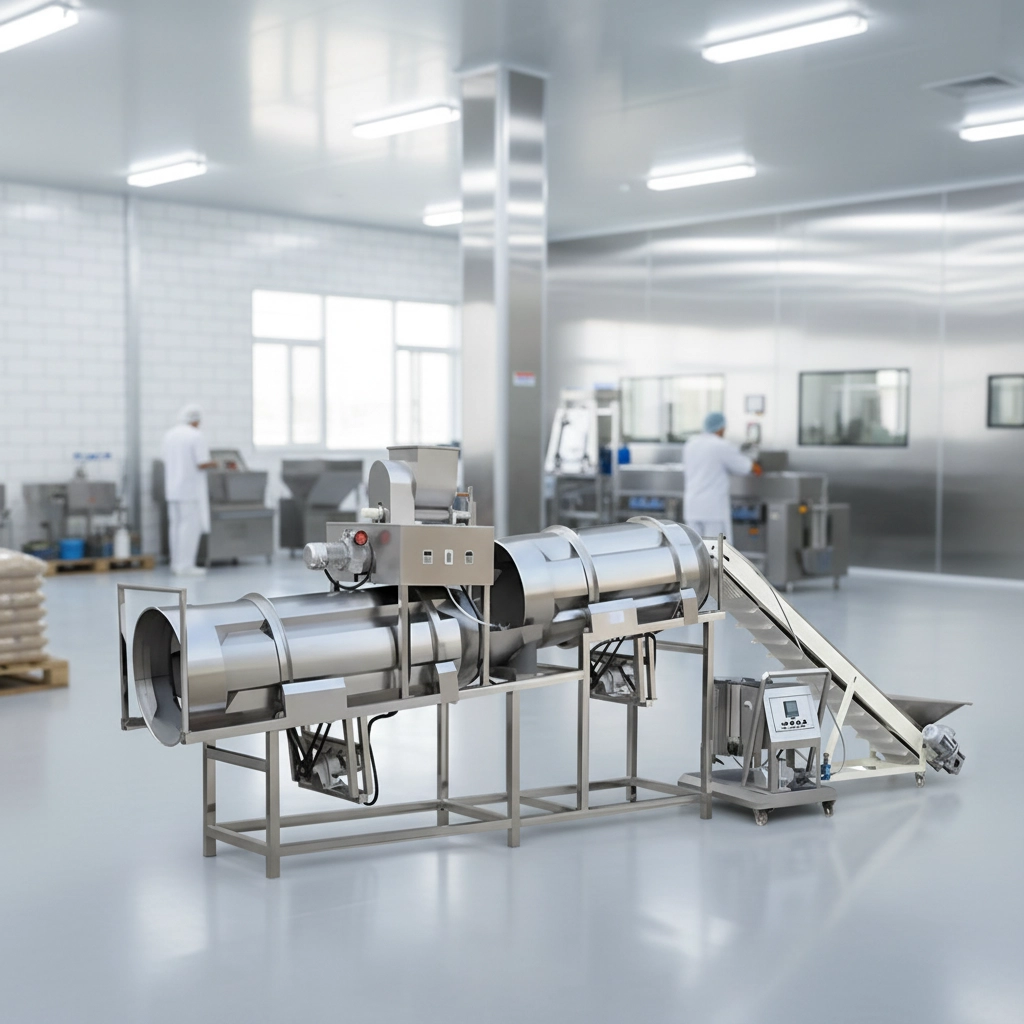
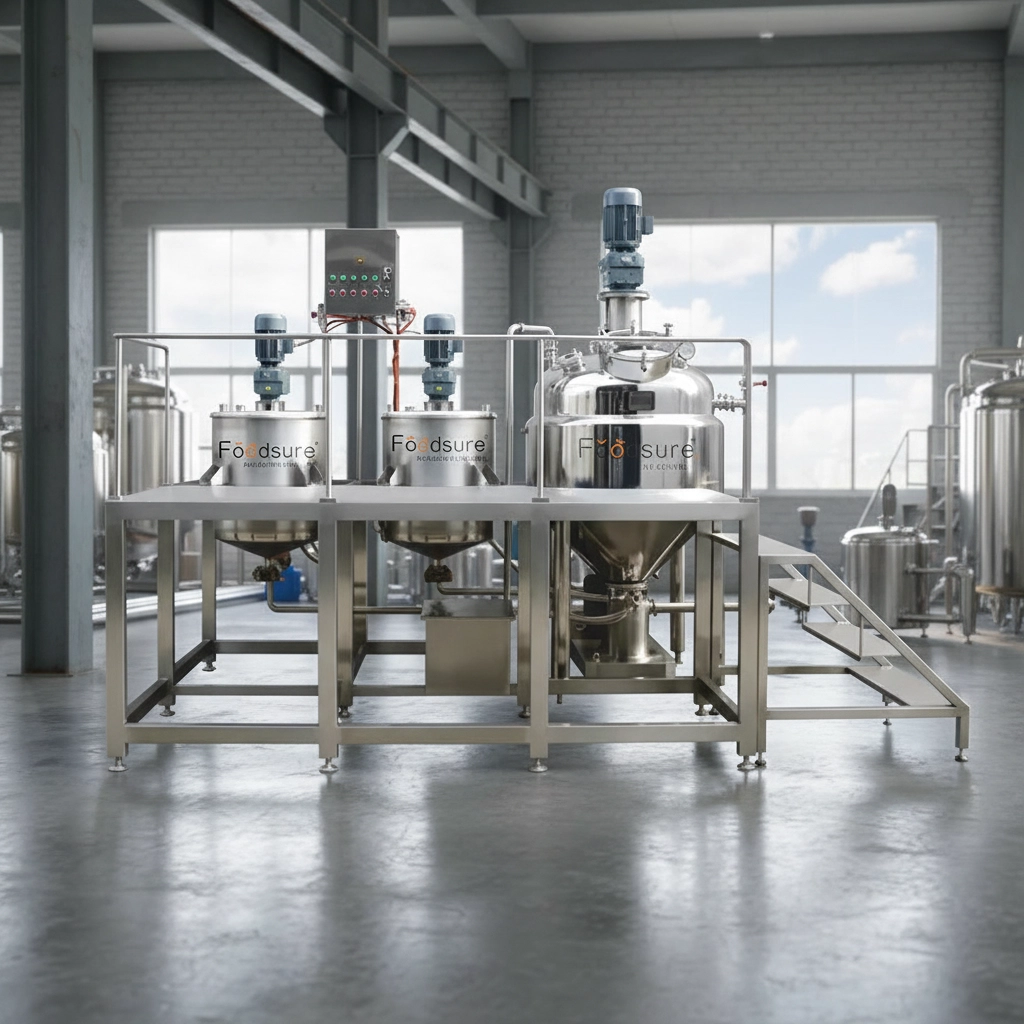
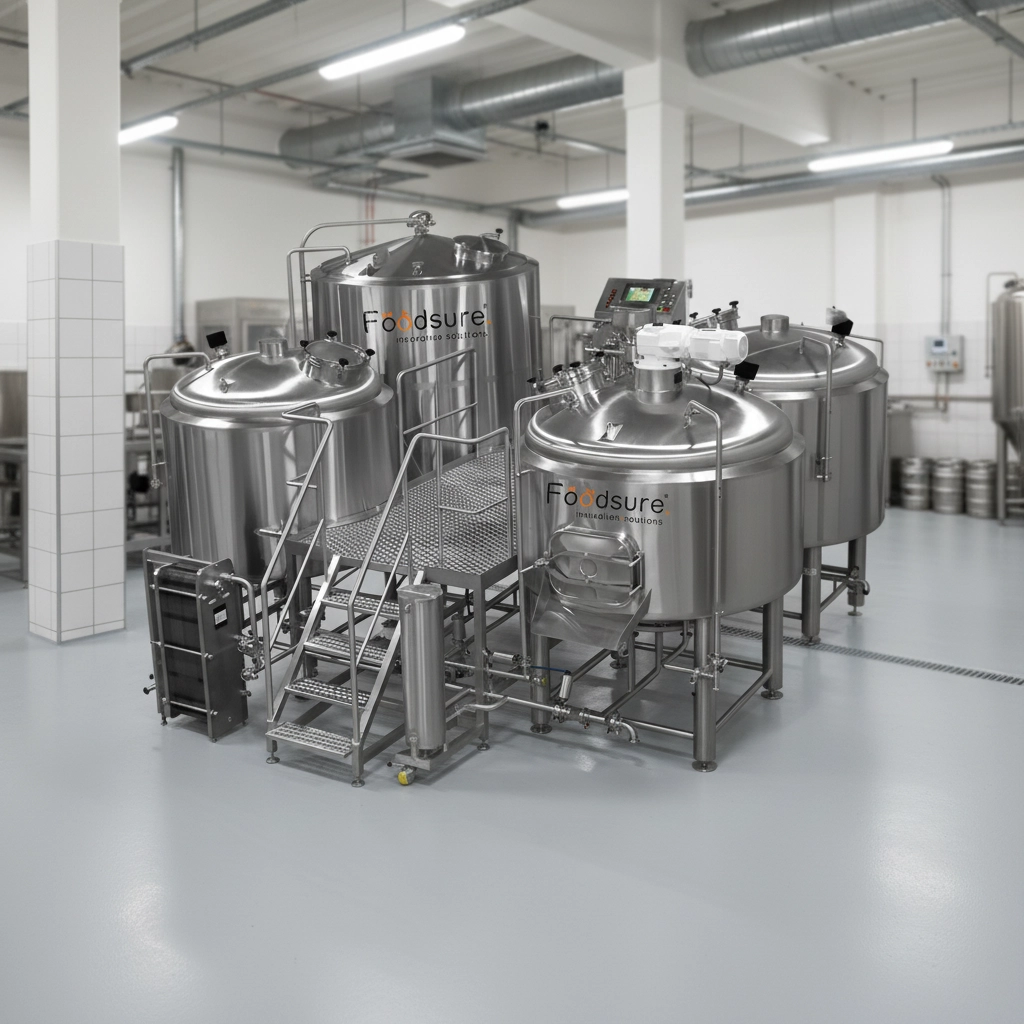
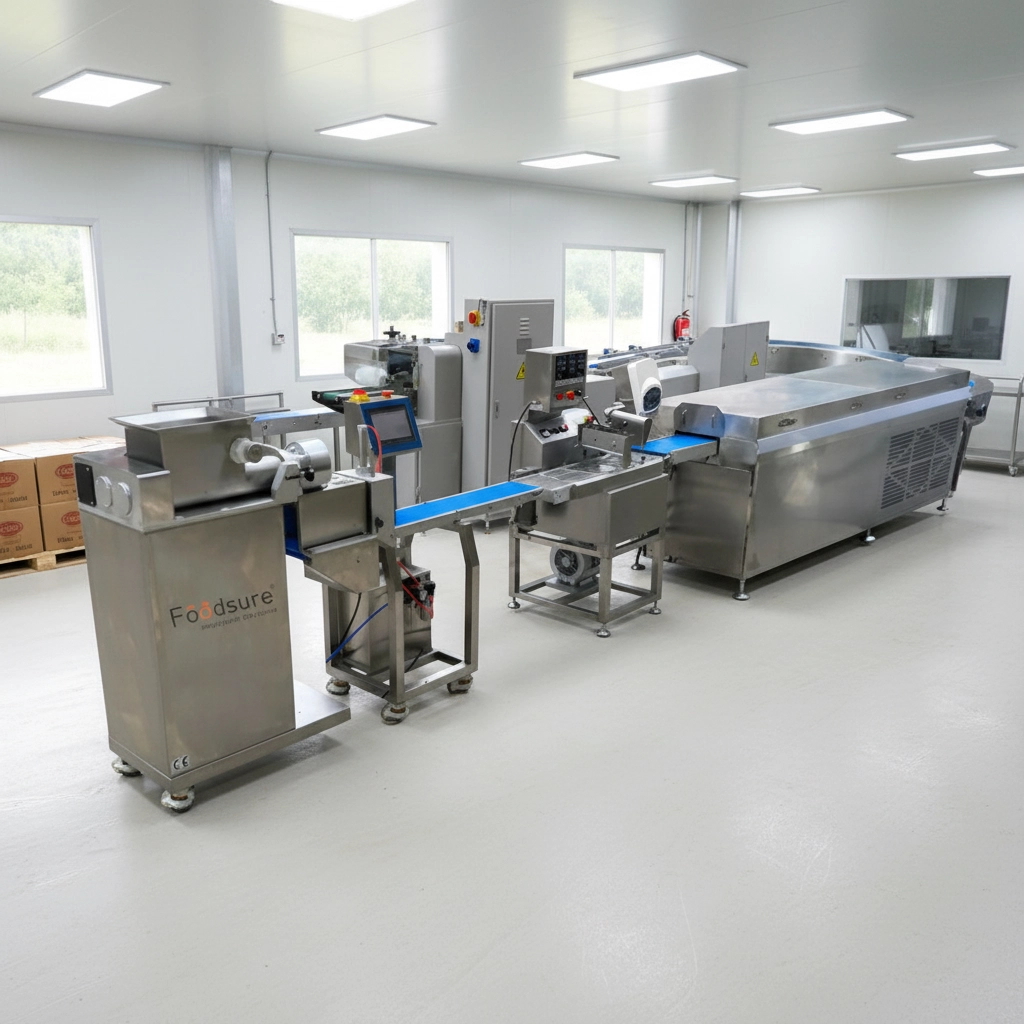
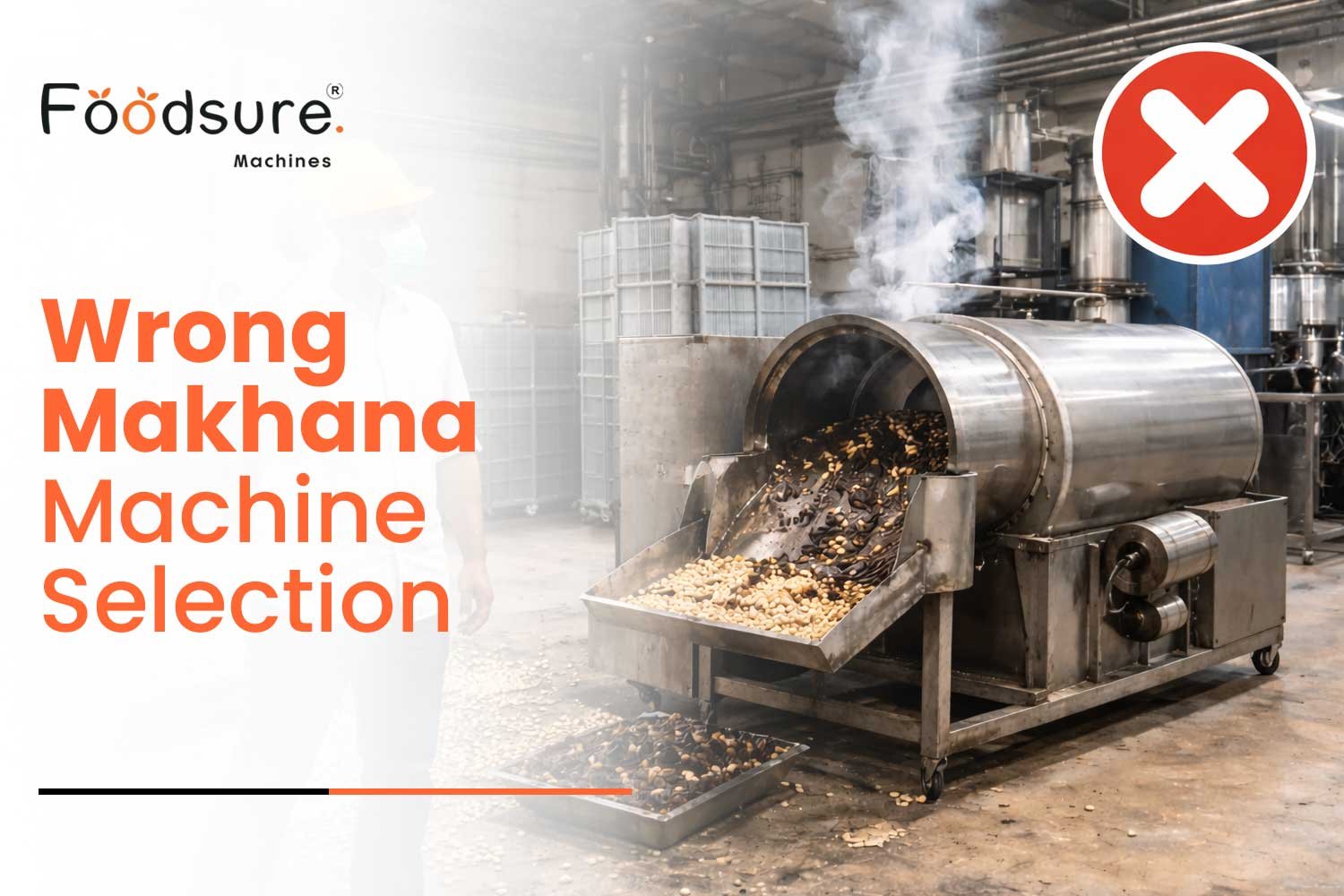
Bihar dominates India’s makhana production processing startups that appears as low-risk. Yet this case study shows how a first-time entrepreneur with good intentions failed within 14 months due to the wrong makhana machine selection, despite demand, capital, and market access.
Startup Failure Snapshot
- Total machinery investment: ₹52 Lakhs
- Actual machine utilization: 35–40% (idle capacity)
- Monthly operating cost: ₹6.5–7 Lakhs
- Average monthly revenue: ₹5–5.5 Lakhs
- Monthly loss: ~₹1.5 Lakhs (negative cash flow)
- Core operational issue: Severe process mismatch between machines
- Buyer impact: Inconsistent quality, rejected batches, pricing pressure
- Shutdown timeline: Business closed within 14 months
Mistake #1: Wrong Makhana Machine Capacity for a Makhana startup failure reasons
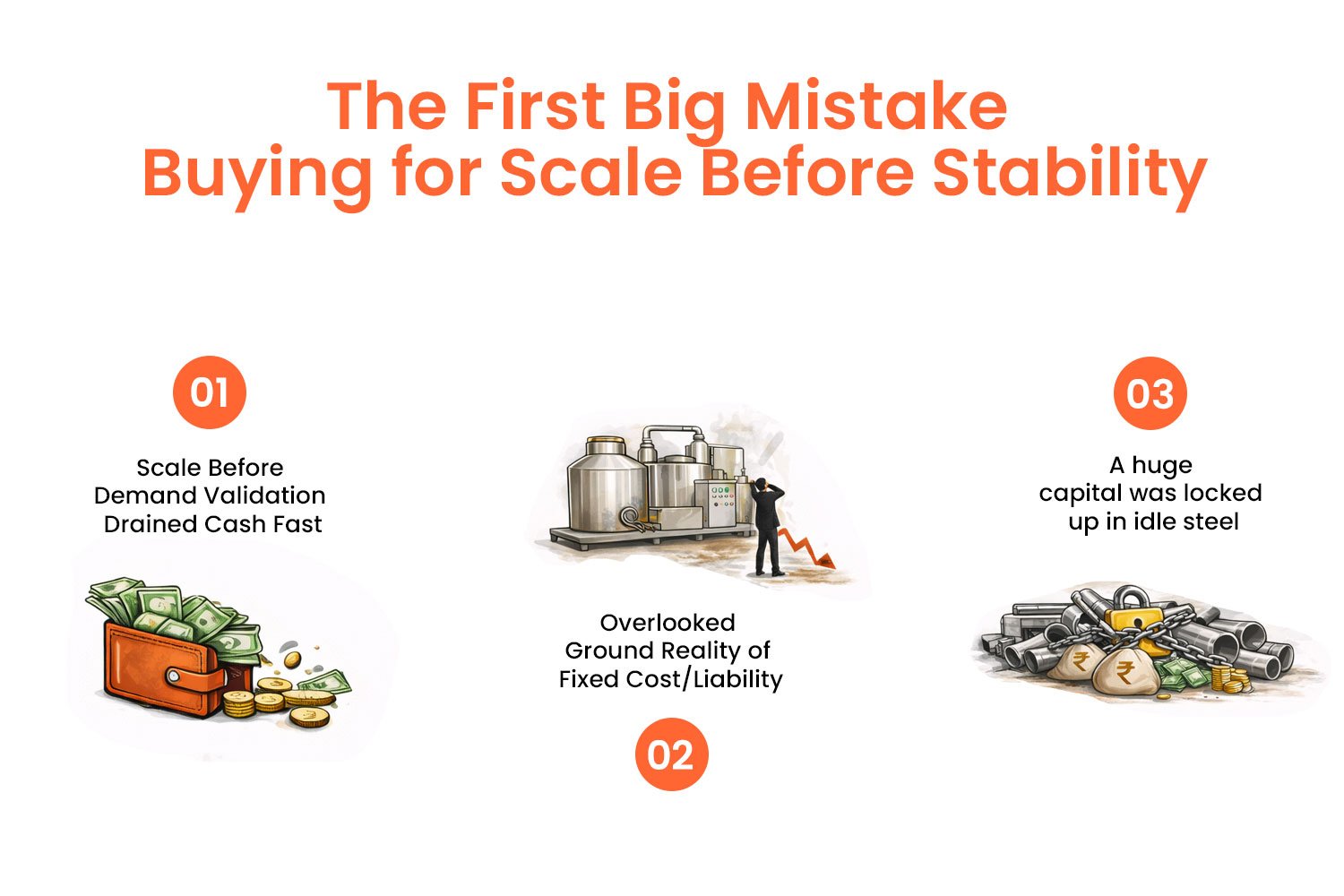
- Scale Before Demand Validation – Drained Cash Fast: The problem faced by the firm is about potential demand which doesn’t match its production capability. With production rates at only 300-350 kg/day, equipment operating at much greater capacities was running at no more than 40% efficiency. Where the operating cost is most affected.
- Overlooked Ground Reality of Fixed Cost/Liability: Large-capacity roofed makhana roasters, full-size graders, and coating units held the start-up hostage to large power consumption, sophisticated labour, and regular maintenance costs that don’t scale down with increased sales.
- A huge capital was locked up in idle steel: Rs 52 lakhs were invested in machinery alone, while product validation, distributor testing, and working capital remained underfunded. The plant looked investible, but without any demand, it was burning cash with every passing minute.
Mistake #2: Buying Makhana Machines That Didn’t Work Together
Makhana making machines were purchased from three different suppliers, each optimized for a different workflow.
- Unconnected Machines Caused Hidden Bottlenecks: Each supplier had optimised their machine separately, and there was no continuous processing in the makhana lines. There was an overflow in the roasting capacity, and the grading lines were not able to handle it, causing an accumulation of hot products.
- The Timing of Any Process Was Never Always: Makhana needs controlled cooling before it can be seasoned. The waiting intervals between the roasting and seasoning stages led to some portions having uneven oil distributions, as well as some areas that were uncoated.
- Manual Intervention Increased Losses: For the high-capacity makhana machine to be balanced, there was additional work, resulting in cracked shells, dust, and a combination of different lots. It posed challenges in terms of delay, as well as taste, considering the reduction in sales resulting from customers rejecting lots.
Also read: High-Capacity Vs Small-Scale Makhana Machines: Best Choice 2025
Mistake #3: Over-Automation Without Skill Readiness
- Automation Arrived Before Operator Maturity: The industrial makhana roasting machine was very capable, but the people were not ready. The local operators did not have hands-on knowledge to understand concepts like heat curves or residence time, or ratios of seasoning in the roasted makhana.
- Absence of SOPs = Absence of Repeatabilit: Without recorded preferences, each shift was basically an experiment. This is because each shift was using temperatures and speed, which worked one day but caused issues the next.
- Downtime Became the New Normal: These incorrect adjustments led to alarm signals, belt jams, and sensor problems. Because there were no in-house knowledge assets available that could handle these issues independently, the company had to employ outside experts even for the simplest issues, increasing the cost of maintaining these machines.
Mistake #4: No ROI Mapping Before Purchase
What Was Missing
- No break-even point was calculated.
- A machine-wise ROI estimate was also missing. There was no clarity on fixed vs variable costs.
Numbers That Hurt
| Financial Metric | Actual Figures | Impact on Business |
| Monthly Operating Cost | ₹6.5–7 lakhs | High fixed expenses regardless of production volume |
| Monthly Revenue (Average) | ₹5–5.5 lakhs | Revenue failed to cover basic operating costs |
| Net Cash Flow | Negative from Month 3 | Continuous cash burn started early |
| Break-even Status | Not achieved | The unit never reached a sustainable operating point |
The Breaking Point: When Buyers Started Pulling Back
- Quality Drift Caused Buyer Pushback
Inconsistent roasting and visible size variation made batches unreliable. Buyers noticed colour mismatch, uneven crunch, and broken kernels issues that directly influence shelf appeal and customer loyalty.
- Commercial Pressure Came After Quality Issues
Rejected consignments resulted in the startup to a defensive pricing mode. Buyers requested discounts, longer credit periods, and more tightly controlled QC clauses, which further reduced the margins.
- Once Trust Was Lost, It Didn’t Come Back
Food buyers put more value on predictability than promises. When confidence dipped, buyers reduced their orders quietly, then stopped.
By Month 14, the unit closed down completely due to no stable off-take and mounting losses.
Post-Failure Audit: What an Expert Review Revealed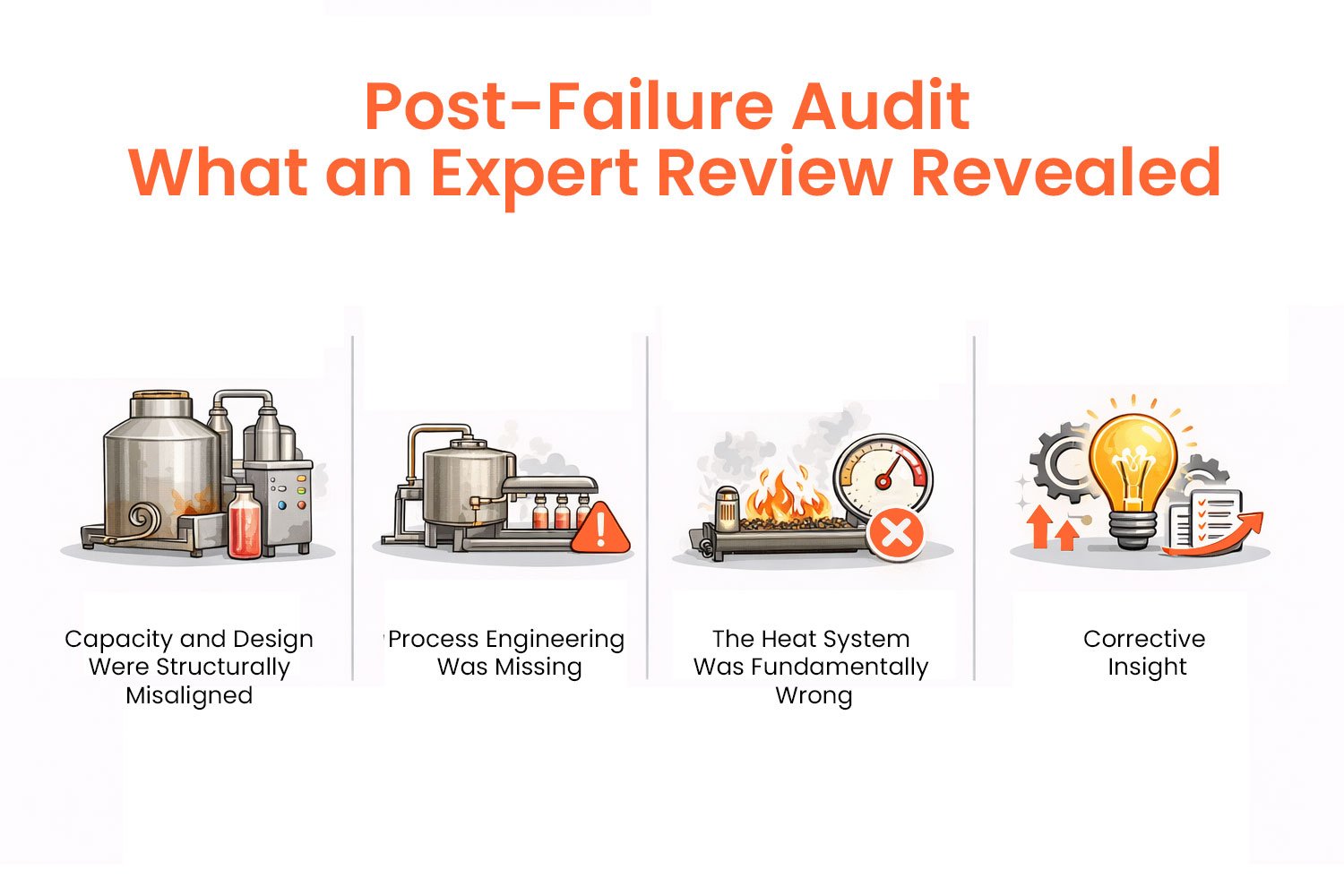
- Capacity and Design Were Structurally Misaligned
The audit revealed 35-40% of the capacity was not utilized, which is strong evidence that the sizing of the equipment was more influenced by the ambitions rather than the actual demand. The makhana extrusion machine was powerful, but at the same time, economically inefficient at low utilisation.
- Process Engineering Was Missing
Inappropriate sequencing resulted in the repeated handling of the material and increased the waiting time. Automation, at this stage, added to the complexity without increasing the throughput.
- The Heat System Was Fundamentally Wrong.
The burner and heat controls were not adjusted to the local makhana moisture and shell thickness, which resulted in roasting inconsistency.
- Corrective Insight:
A modular pilot – first setup would have made it possible to do the tuning, scaling, and cash stability before the expansion.
How Foodsure Machines Helped Prevent This Mistake for Other Startups
After inspecting numerous failed and struggling makhana units, we at Foodsure Machines identified a repeating pattern of overinvestment, Makhana machine buying mistakes, and capacity choice that did not correspond to the real stage of the business. That is precisely the point where our approach differs.
- We do not just jump to the sales of an energy-efficient makhana roasting machine. Instead, we study expected sales volume, buyer type, and seasonality. Our objective is straightforward are ensure that the machine makes money before it expands.
- Bihar makhana is quite different from the rest of the regions. We select our roasting, heating, and grading systems based on grain size variation, moisture levels, and breakage sensitivity. We make the operations simple for the first-time teams.
- The installation of clear SOPs, stable controls, and easy maintenance helps in lessening the dependence on external technicians. We calculate return on investment before we do the installation.
Also read: Top Energy-Efficient Makhana Roasting Machine | Save 40% Energy
Key Lessons for New Makhana Startups
- Bigger machines don’t mean bigger profits.
- Capacity should follow demand.
- One integrated supplier is far more effective than multiple mismatched vendors.
- Automation without skill is just a money drain.
- Return on investment planning is essential.
They fail because:
The machine was not suitable for the stage of business. If you are setting up a makhana unit, particularly the first one, consider machine selection as a financial decision rather than a technical one.
How to Choose the RIGHT Makhana Machine (Startup-Safe Approach)
- The initial operating capacity must remain between 150 and 250 kilograms per day until your business establishes regular customers which will enable you to manage your operating expenses and employee costs and working capital needs.
- Your business should choose one supplier who will provide complete roasting and grading and seasoning equipment to ensure that all systems function smoothly without producing any delays.
- The ROI needs to be established through production and pricing projections for the next 12 to 18 months because maximum production capacity should not be used as the basis for this calculation.
- The company should start its operations by using manual and semi-automatic machines which provide simpler operation and maintenance and adjustment capabilities to support early learning activities.
- The organization should begin its scaling process after achieving operational stability which includes maintaining product quality and establishing operator competency and building predictable customer ordering patterns.
Conclusion
This case illustrates that makhana startups collapse because of the Wrong Makhana Machine selection rather than a lack of demand. At Foodsure Machines, our focus is on stage, right, ROI, driven installations. We facilitate a transition where machines become growth enablers, cash flow preservers, and then scaling happens only when the business is mature enough.
FAQ – Wrong Makhana Machine Selection
What is wrong makhana machine selection?
The wrong selection of makhana machines occurs when the actual production capacity of your business does not match the machine’s available capacity and its automation features and its operational workflow.
What are common mistakes when buying a makhana roasting machine?
People oversize the roaster, ignore fuel efficiency, and skip checking how well batch control actually works. The roaster gets oversized by people who skip checking the machine’s fuel efficiency and its actual batch control performance.
How does wrong machine selection cause losses in a makhana factory?
The company faces operational challenges through its continuous high operational capacity and excessive permanent expenses and its inconsistent product delivery which results in reduced profit margins.
What are the biggest makhana machine buying mistakes startups make?
They obtain for prospective demand at the expense of their immediate requirements and also tend to ignore the short-term effect.
Why are makhana startup failure reasons often linked to machinery?
Excessively complex or mismatched machines can quietly add to costs and reduce manufacturing stability.
Can wrong makhana machine selection affect product quality?
Yes. Machines which are not properly matched together create problems because they produce uneven roasting results and they cause more equipment failures while their seasoning process becomes unpredictable.
How do common mistakes when buying a makhana roasting machine impact cash flow?
The operating costs increase at a rapid pace, but the company produces only minimal output. The gap between the two elements causes cash flow to become negative from the beginning.
Are makhana machine buying mistakes more risky for first-time entrepreneurs?
Yes, it becomes even more difficult to manage and more expensive to run a big or automated system when you do not have experience in the process.
How can startups avoid wrong makhana machine selection?
It is advised to start up small with the operations integrated and scale up only after quality and demand are stabilised.
Why is planning important to prevent makhana startup failure reasons related to machines?
Through effective planning, businesses can determine the appropriate machine size and team skill requirement,s which will lead to positive financial outcomes before their planned growth.