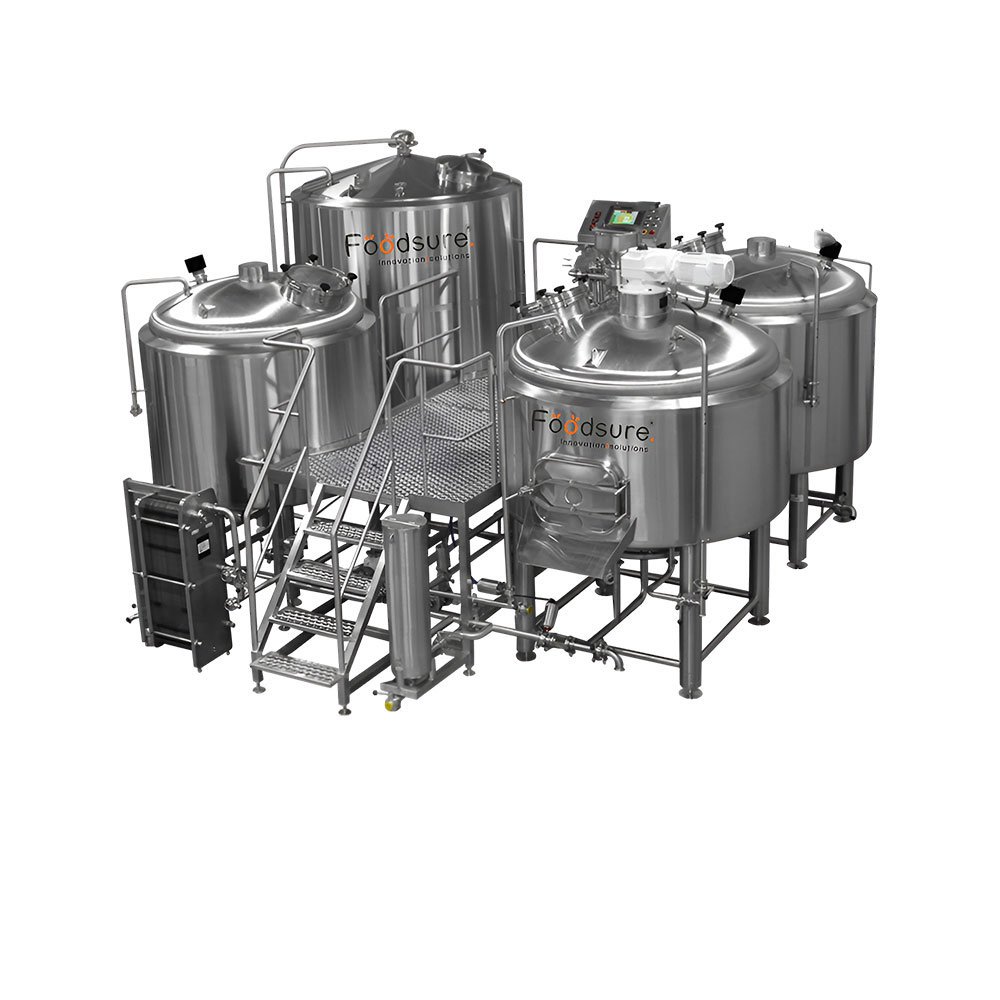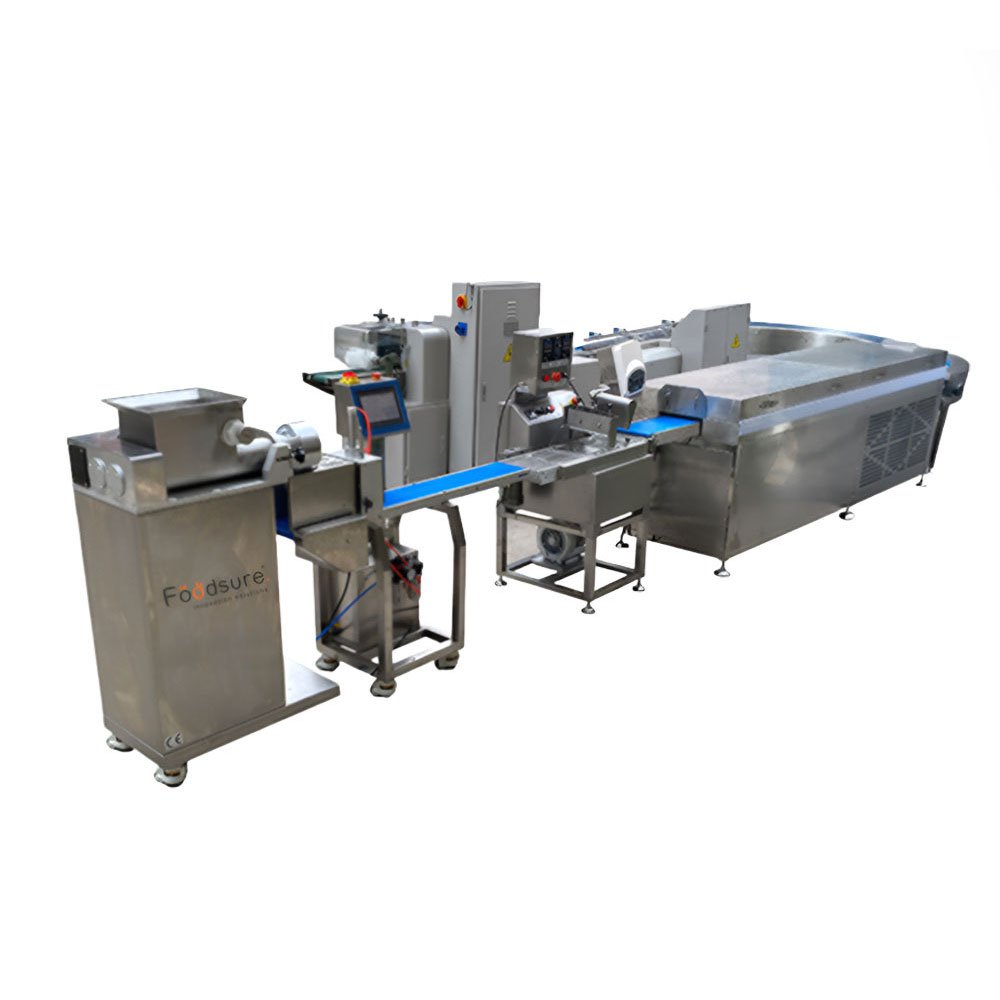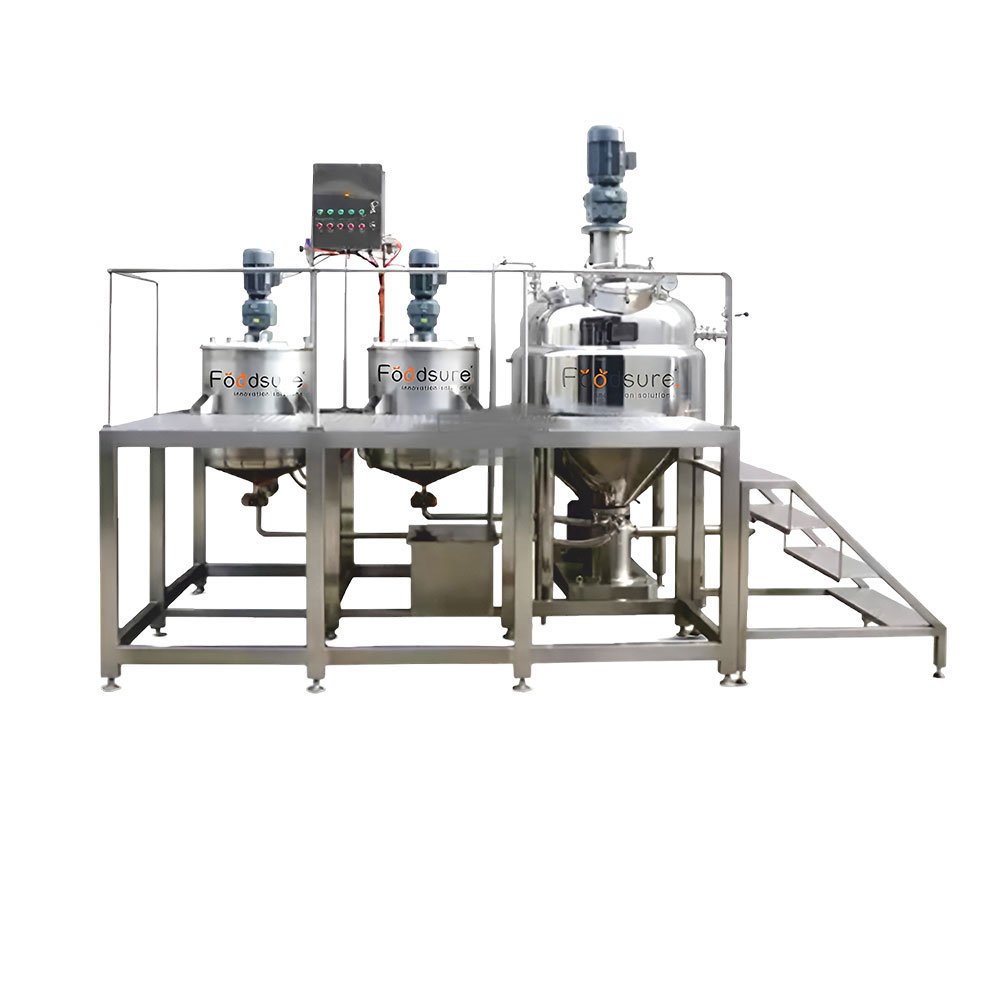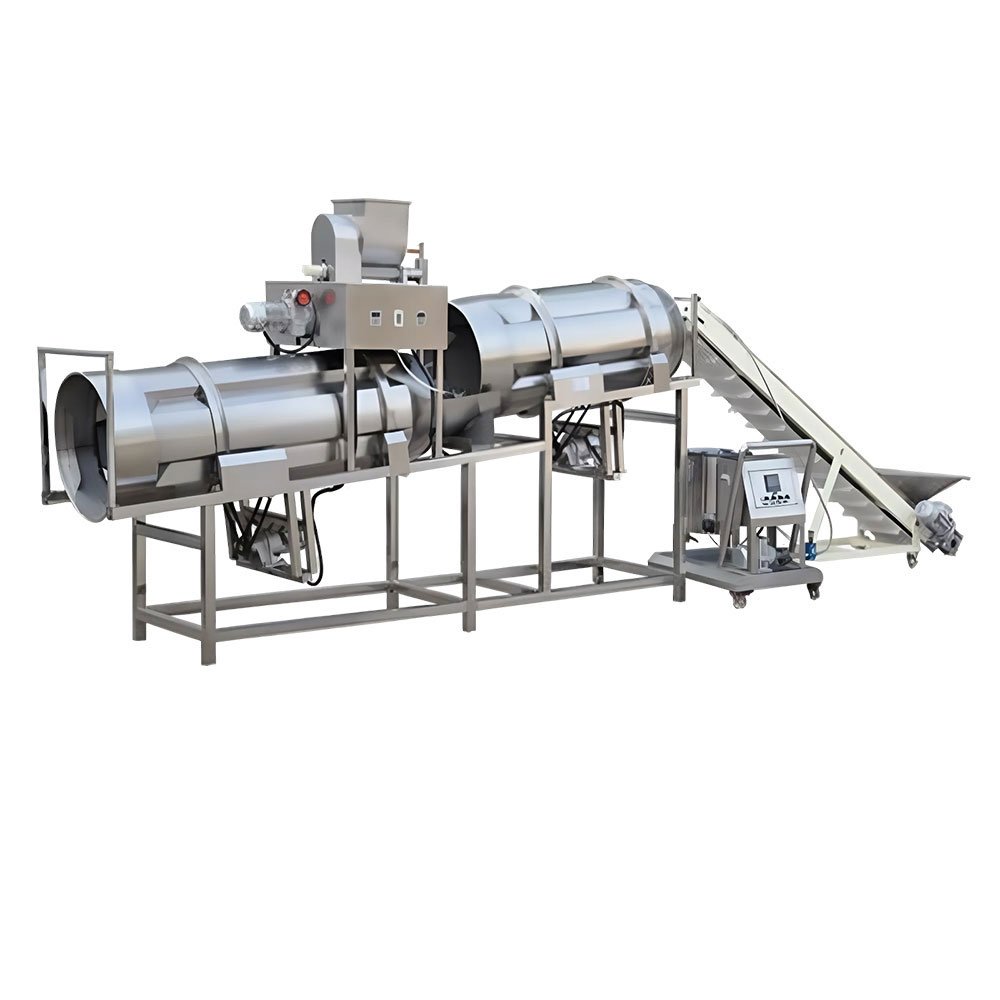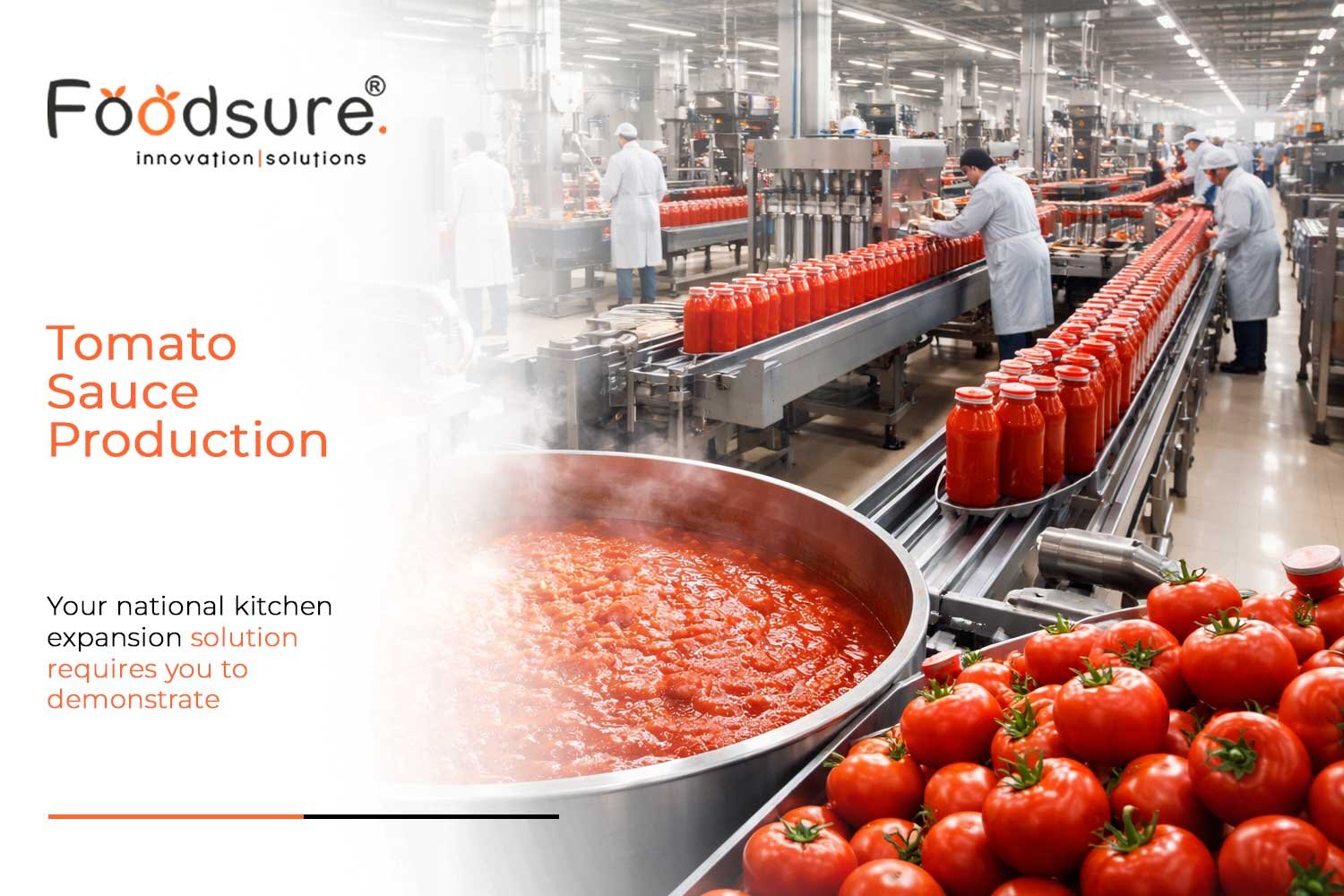
Tomato ketchup manufacturing is changing; automation and artificial intelligence(AI) are improving the production process in terms of efficiency, uniformity, and accuracy. Intelligent systems now handle the process of mixing, cooking, quality tests and packaging, with minimum human input.
This blog will explore how AI-based technologies are transforming the future of contemporary tomato ketchup manufacturing factories, compliance with food safety standards, minimising wastage and improving productivity.
The Consistency Crisis in Tomato Ketchup Manufacturing: Why Manual Batching Fails at Scale
The testing process is characterised by two issues that are brought about by manual errors, which may encompass software quality and excessive budgetary expenses not anticipated. When using the human-eye-monitoring process, automatic tomato ketchup manufacturing machine are necessary to calculate the range of the Brix to acid ratios of 15:1- 25:1 that allows stability on the shelf and permits the ideal tangy-sweet profile.
The Yield Killer: Manual open-kettle boiling is the cause of the Yield Killer since it results in uncontrolled evaporation at the heating interface, scorching it. That causes it to deplete the lycopene (the red pigment) and forces it to be disposed of in batches at significant expense.
The Precision Solution: Automated inline refractometers and pH probes are equipped with real-time digital feedback, and thus ensure that all bottles hit the required 25-33% total soluble solids (TSS) without the need to use fuel or time to estimate the decrease.
How AI and Automation Are Transforming Tomato Ketchup Manufacturing on the Factory Floor
Technology integration would also see businesses equip employees with skills that would enable them to monitor the quality of the products within the day.
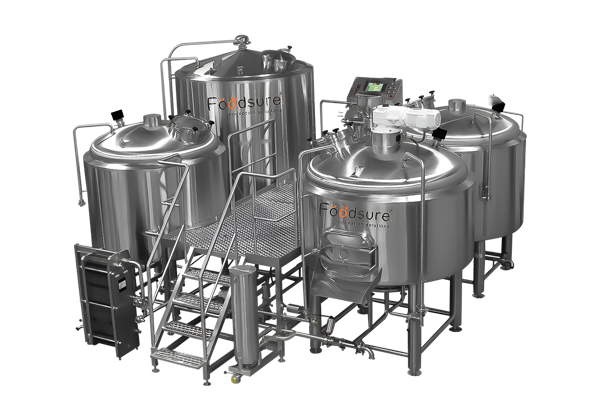
Smart Thermal Processing:
- Thermal Sensors run on AI can already identify Hot Break and Cold Break with 0.1°C precision.
- The tomato ketchup machine is used to identify the ideal time when the tomato pulp is at the stage of maximum enzymatic breakdown, through which the maximum colour can be preserved without the burning of lycopene.
Automated Vacuum Evaporators:
The open-air boiled flavour is destroyed. Vacuum evaporation is applied in modern Tomato Ketchup Manufacturing.
Internal pressure is managed by automation that helps the ketchup to thicken within the temperature range between 60°C-70°C. The process preserves the fresh tomato taste and bright red colour that the customers desire.
High-Speed Filling and Capping:
The bottling line is a limited operation of the rural start-up.
Automated tomato ketchup machine filler involves filling bottles with no-bottle no-fill sensors to avoid the waste, and ultrasonic level-checkers to fill all the bottles up to a milligram.
Read more: Best Tomato Sauce Manufacturing Machines In India | Increase Production By 50%
The ROI of Automation in Tomato Ketchup Manufacturing for FPOs and Rural Startups
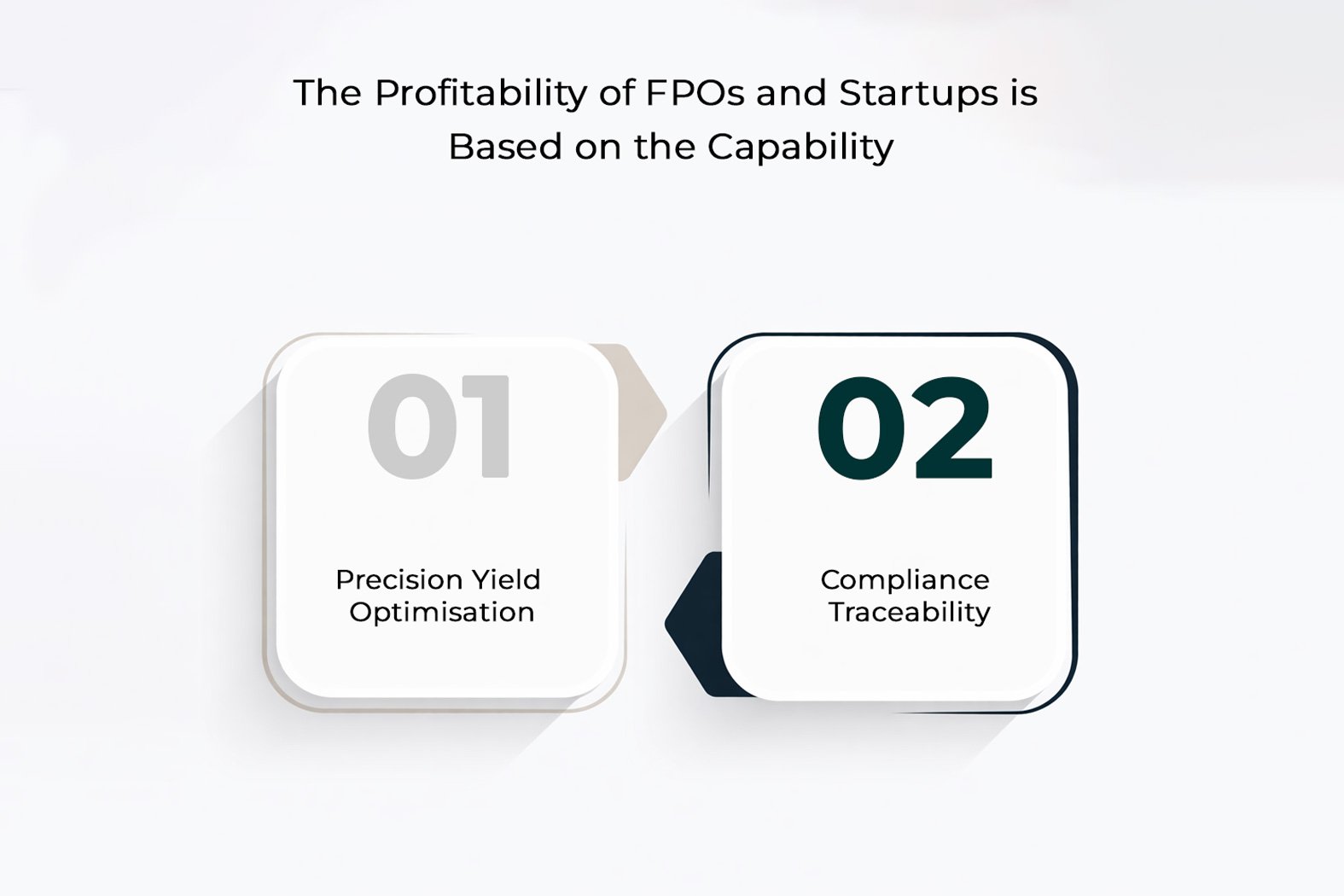
The profitability of FPOs and startups is based on the capability to recuperate the profit margins that had been lost, and not the rate of operation. This method of manual processing does not take into account the so-called hidden cost, which is caused by over-concentration on products and thermal damage, as it leads to the loss of products prior to the product going to the vat.
Tomato ketchup manufacturing is changing; automation and artificial intelligence(AI) are improving the production process in terms of efficiency, uniformity, and accuracy. Intelligent systems now handle the process of mixing, cooking, quality tests and packaging, with minimum human input.
This blog will explore how AI-based technologies are transforming the future of contemporary tomato ketchup manufacturing factories, compliance with food safety standards, minimising wastage and improving productivity.
The Consistency Crisis in Tomato Ketchup Manufacturing: Why Manual Batching Fails at Scale
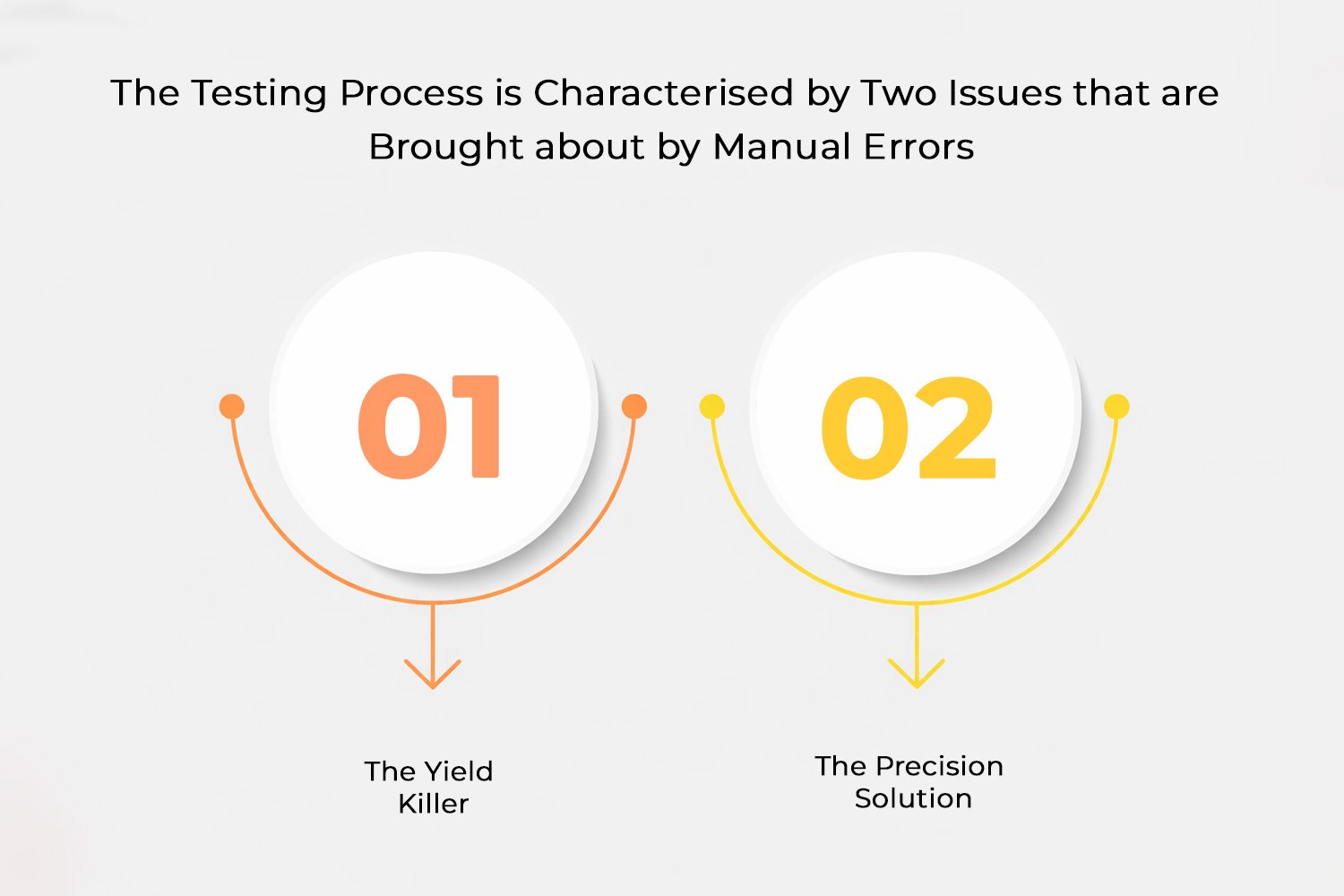
The testing process is characterised by two issues that are brought about by manual errors, which may encompass software quality and excessive budgetary expenses not anticipated. When using the human-eye-monitoring process, automatic tomato ketchup manufacturing machine are necessary to calculate the range of the Brix to acid ratios of 15:1- 25:1 that allows stability on the shelf and permits the ideal tangy-sweet profile.
The Yield Killer: Manual open-kettle boiling is the cause of the Yield Killer since it results in uncontrolled evaporation at the heating interface, scorching it. That causes it to deplete the lycopene (the red pigment) and forces it to be disposed of in batches at significant expense.
The Precision Solution: Automated inline refractometers and pH probes are equipped with real-time digital feedback, and thus ensure that all bottles hit the required 25-33% total soluble solids (TSS) without the need to use fuel or time to estimate the decrease.
How AI and Automation Are Transforming Tomato Ketchup Manufacturing on the Factory Floor
Technology integration would also see businesses equip employees with skills that would enable them to monitor the quality of the products within the day.
Smart Thermal Processing:
- Thermal Sensors run on AI can already identify Hot Break and Cold Break with 0.1°C precision.
- The tomato ketchup machine is used to identify the ideal time when the tomato pulp is at the stage of maximum enzymatic breakdown, through which the maximum colour can be preserved without the burning of lycopene.
Automated Vacuum Evaporators:
The open-air boiled flavour is destroyed. Vacuum evaporation is applied in modern Tomato Ketchup Manufacturing.
Internal pressure is managed by automation that helps the ketchup to thicken within the temperature range between 60°C-70°C. The process preserves the fresh tomato taste and bright red colour that the customers desire.
High-Speed Filling and Capping:
The bottling line is a limited operation of the rural start-up.
Automated tomato ketchup machine filler involves filling bottles with no-bottle no-fill sensors to avoid the waste, and ultrasonic level-checkers to fill all the bottles up to a milligram.
The ROI of Automation in Tomato Ketchup Manufacturing for FPOs and Rural Startups
The profitability of FPOs and startups is based on the capability to recuperate the profit margins that had been lost, and not the rate of operation. This method of manual processing does not take into account the so-called hidden cost, which is caused by over-concentration on products and thermal damage, as it leads to the loss of products prior to the product going to the vat.
| Feature/Metric | Manual Processing | AI-Automated Processing | Impact on ROI |
|---|---|---|---|
| Initial Investment | Low (₹1.5L – ₹3L) | Mid-High (₹15L – ₹25L) | Higher entry barrier but faster recovery. |
| Labor Requirement | 8–12 Workers | 2–3 Skilled Operators | 75% reduction in monthly salary overhead. |
| Product Yield | 80–85% (High Waste) | 98%+ (Minimal Waste) | Saves ₹50,000/month in raw material loss. |
| Energy Costs | High (Open Boiling) | Low (Vacuum Evaporation) | 25% saving on fuel/electricity per batch. |
| Batch Turnaround | 1–2 Days | 4–6 Hours | Increases production capacity by 4x. |
| Payback Period | 24+ Months | 12–18 Months | Automated plants hit break-even faster. |
Precision Yield Optimisation: PID (Proportional-Integral-Derivative) controllers provide more accurate control over temperature change by adjusting the feed rate of steam or fuel by removing the temperature overshoot, which allows them to reduce the steam/fuel costs by 20% with preventing the natural sugars from turning into caramel.
Compliance Traceability: AI-associated systems will automatically document data on pH and TSS (Total Soluble Solids) with regard to each batch. This computer-based audit trail uses this as a gold pass, and thus the company would be able to get high-margin export contracts and pass through ISO 22000/HACCP audits without the sites of physical documentation.
Conclusion
The re-definition of efficiency, quality control and scalability via AI and automation is facing the production of tomato ketchup. Modern systems are less wasteful and provide more consistency with the control of the controlled temperature during automated filling. Foodsure Machines offers a better, more reliable automation to help FPOs and companies in rural startups develop competitive and future-oriented ketchup production plants.
Upgrade Your Tomato Ketchup Production with AI & Fully Automated Systems
Discover how AI-driven automation improves consistency, reduces errors, optimizes batch control, and increases manufacturing efficiency.
FAQ
What is required to set up a commercial tomato ketchup processing plant?
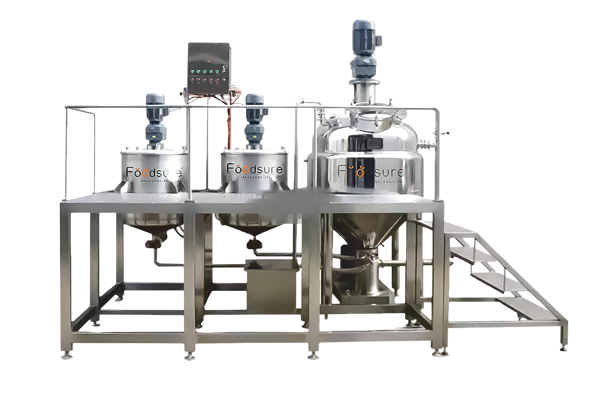
A tomato ketchup processing plant will need a pulping plant, steam kettles or vacuum evaporator, and a tomato ketchup machine with automatic controls.
How does a tomato ketchup manufacturing machine improve consistency?
A tomato ketchup production machine maintains a regulated temperature, Brix ratio and pH of tomato ketchup production to achieve homogenous quality.
What is the fully automatic tomato ketchup processing plant setup cost?
The cost of a full automatic tomato ketchup processing plant set up will depend on the capacity, the degree of automation, and the integration with an automated tomato ketchup machine filler.
Why are automated tomato ketchup machine filler systems preferred in factories?
Automated tomato ketchup machine fillers minimise spillage and ensure proper filling of bottles, as well as improve efficiency in production.
How do tomato ketchup manufacturing factories reduce wastage?
The factories that engage in tomato ketchup production cut down on wastage through vacuum evasion, intelligent sensors, and artificial intelligence process checking.
Precision Yield Optimisation: PID (Proportional-Integral-Derivative) controllers provide more accurate control over temperature change by adjusting the feed rate of steam or fuel by removing the temperature overshoot, which allows them to reduce the steam/fuel costs by 20% with preventing the natural sugars from turning into caramel.
Compliance Traceability: AI-associated systems will automatically document data on pH and TSS (Total Soluble Solids) with regard to each batch. This computer-based audit trail uses this as a gold pass, and thus the company would be able to get high-margin export contracts and pass through ISO 22000/HACCP audits without the sites of physical documentation.