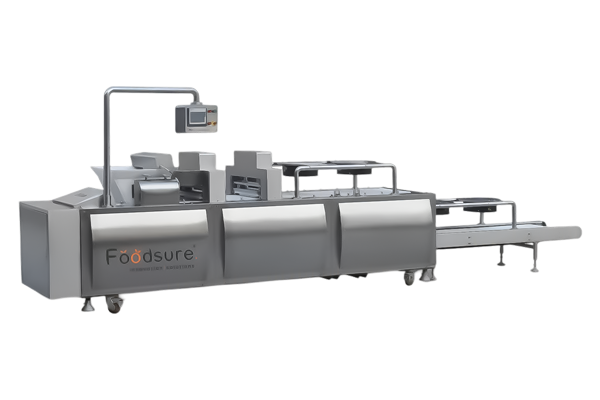
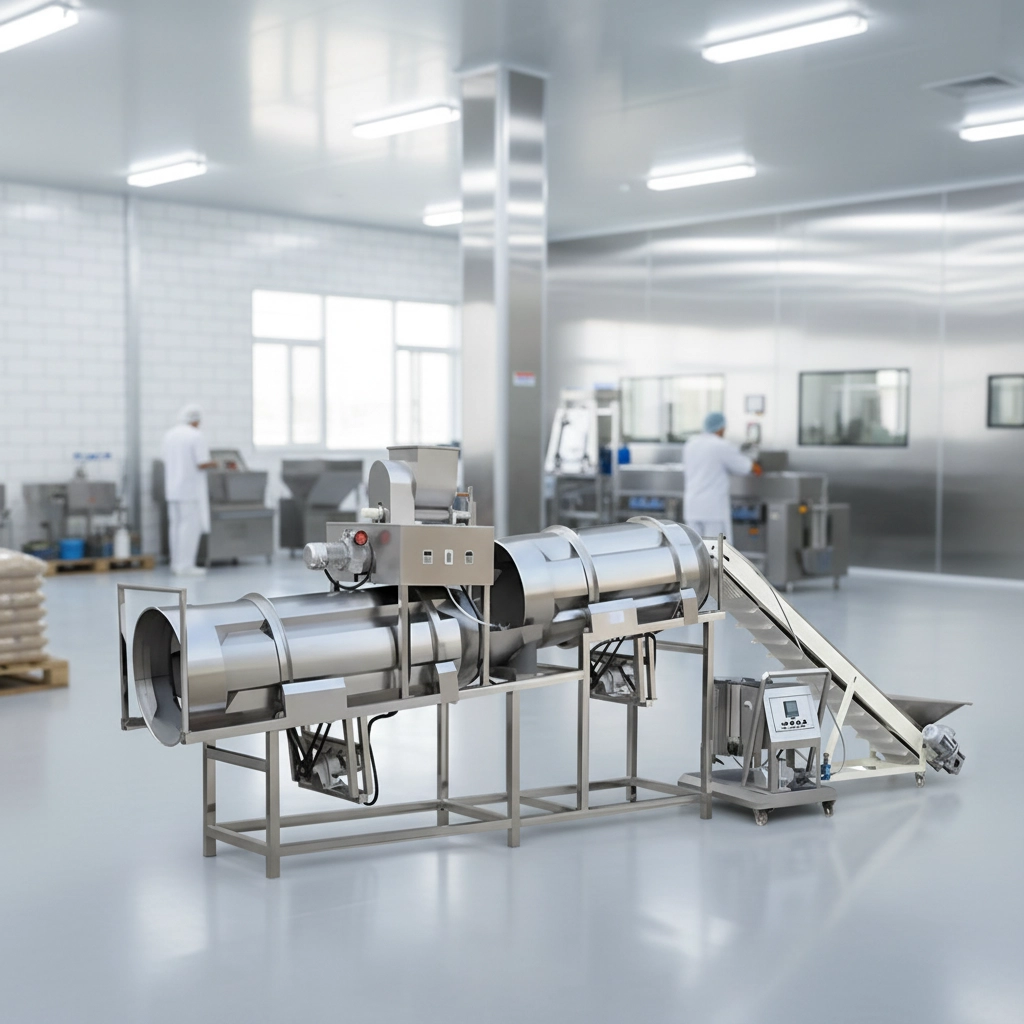
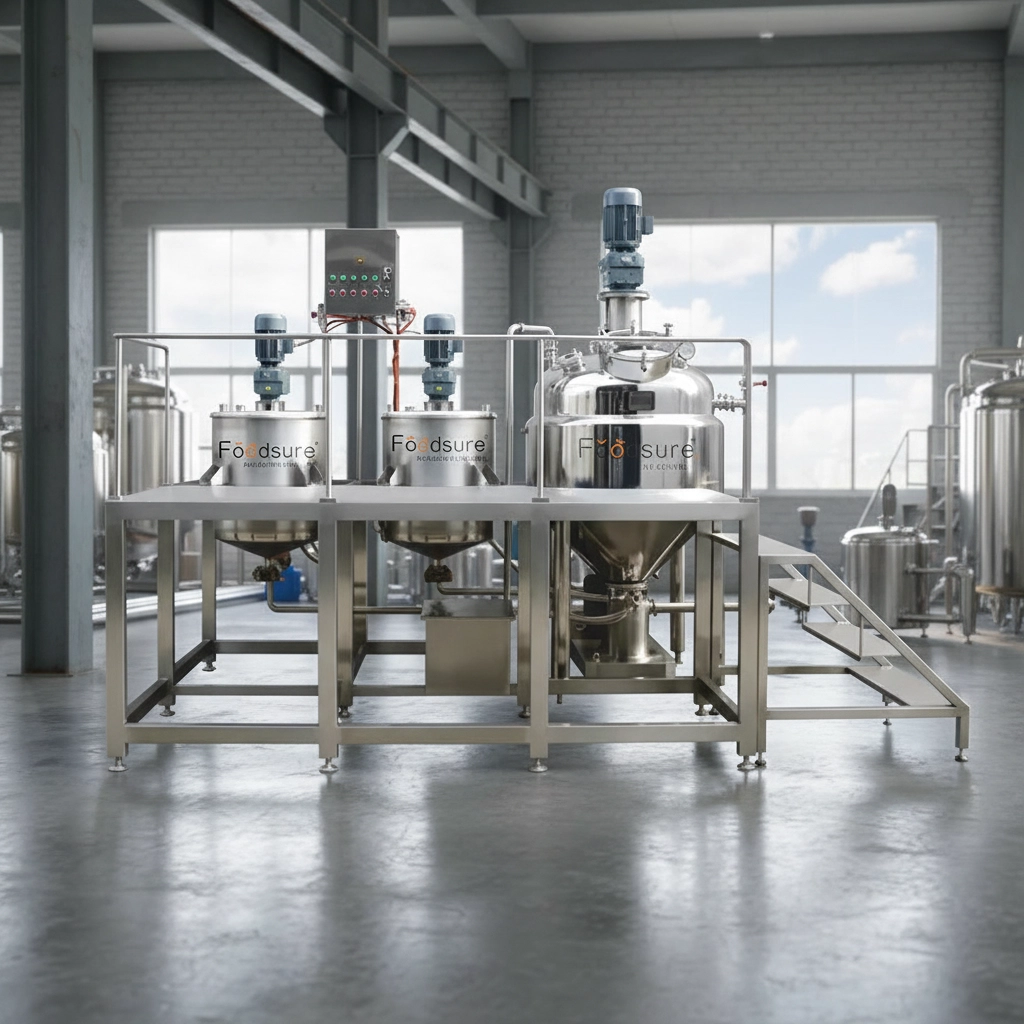
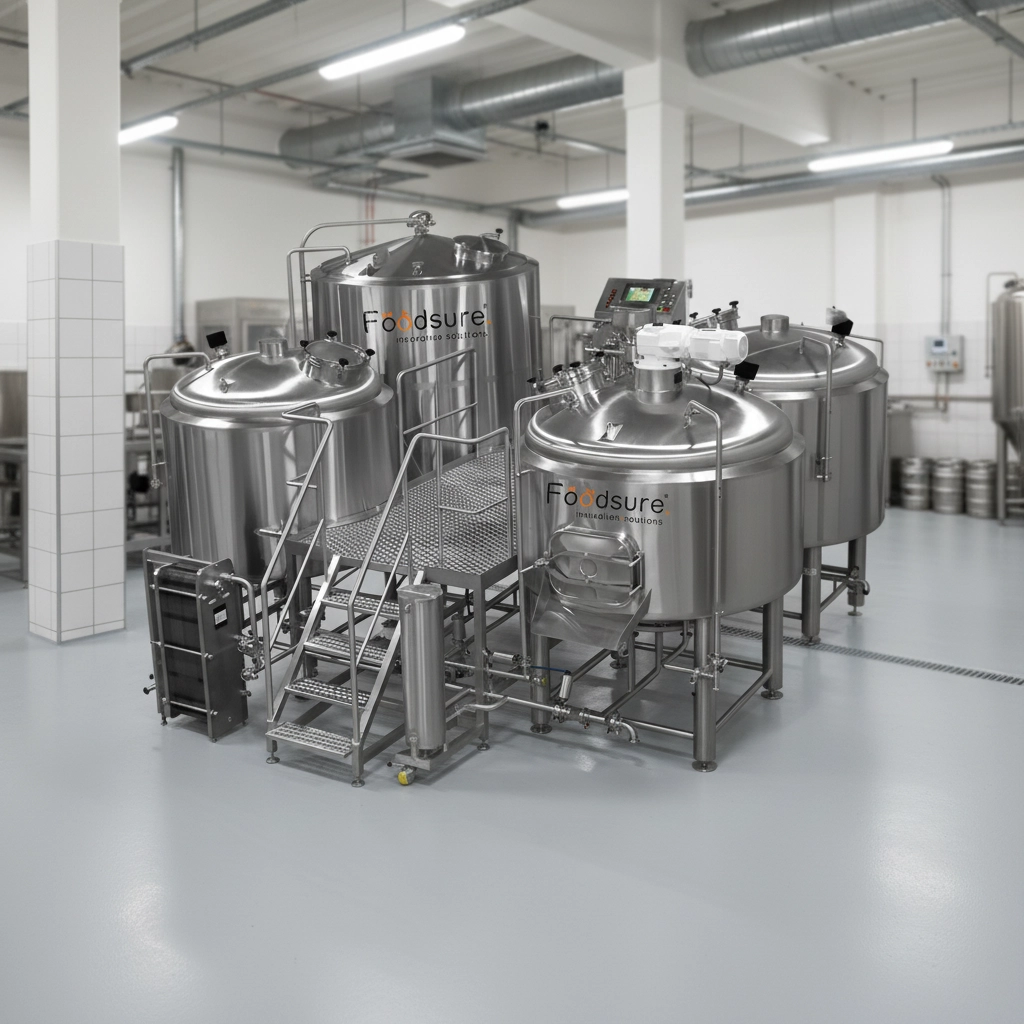
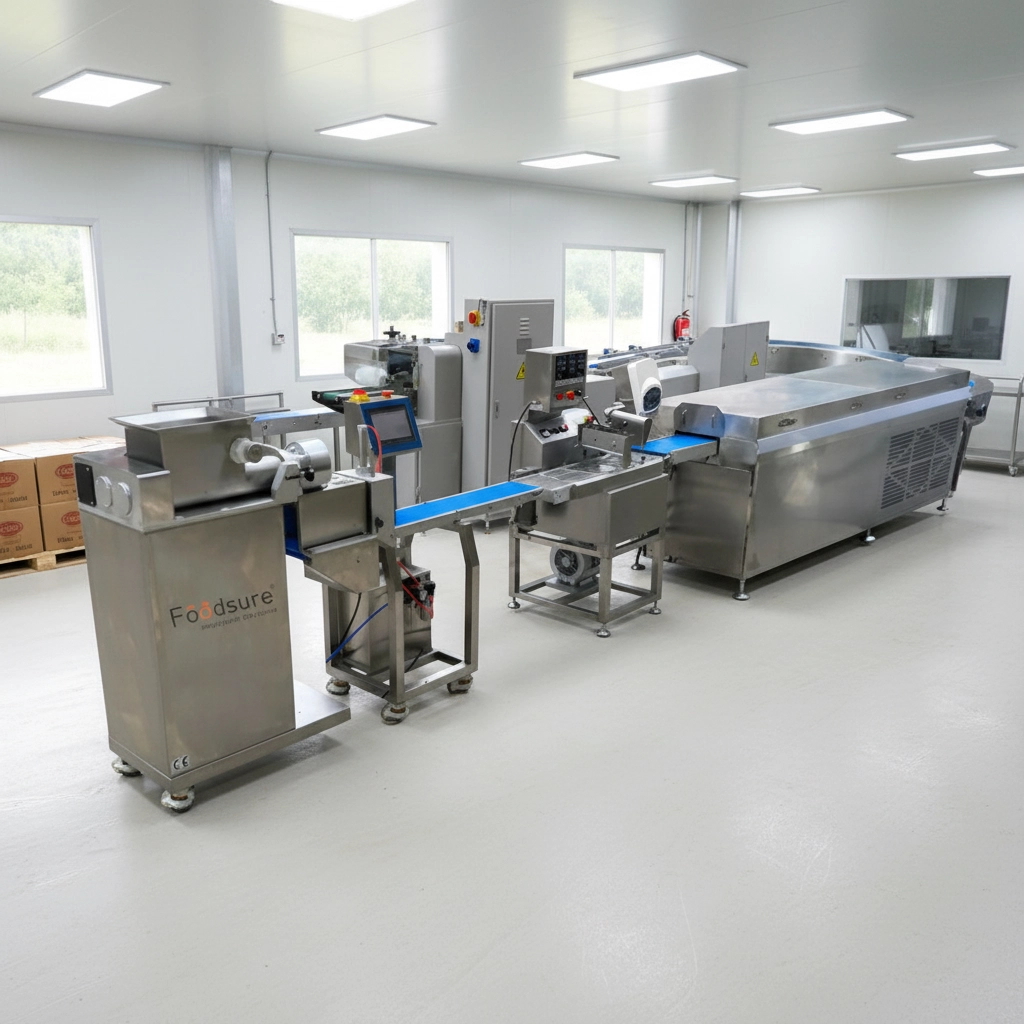
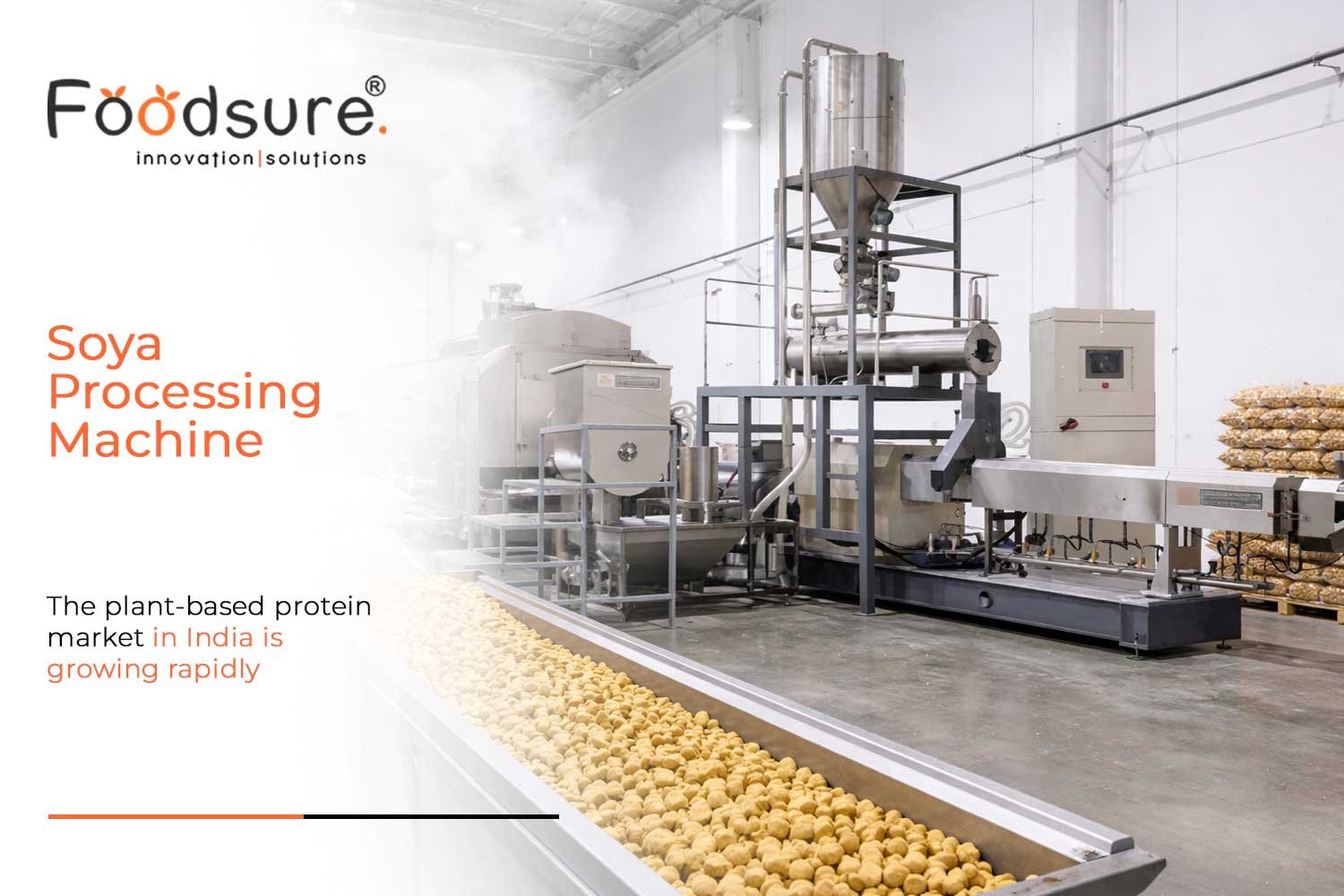
The plant-based protein market in India is expanding rapidly, with soya chunks emerging as a primary source of protein. Establishing a successful production facility requires more than simply purchasing a soya processing machine, as businesses must choose equipment that aligns with their production needs, financial resources, and product development plans.
This blog provides comprehensive, practical details on the most effective machines, including installation costs and a verified factory design spanning soybean processing, TVP production, and product storage. The proper setup of soy processing systems enables businesses to design both their small production sites and their complete manufacturing plants, reducing costly mistakes, maximising financial returns, and ensuring smooth operational transitions from design to production.
Top 5 Soya Processing Machines Required for Soya Nugget Machine Setup
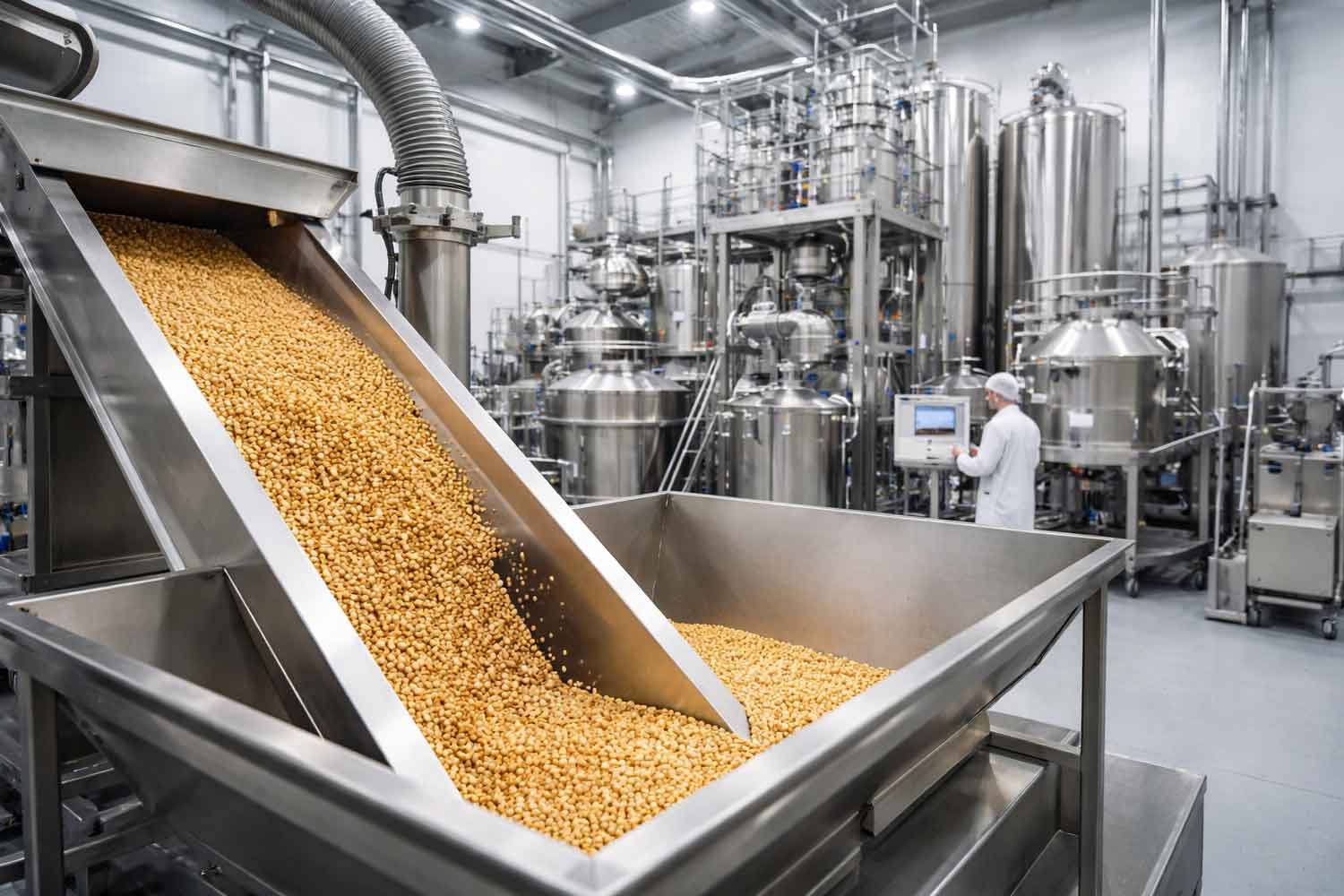
1. High-Efficiency Soybean Dehulling System
- Function: Mechanical extraction of the outer husk in order to obtain the protein-rich cotyledon.
- Aspiration Control: Uses high-speed air to separate the light hulls and heavy meats.
- Effects on Quality: It is necessary to reduce the fiber level to achieve a protein profile of 50% or more.
- Machine Protection: This eliminates silica and dust from marking up the costly interior surfaces of the extruder.
2. Primary Flaking Conditioning Mill
- Function: Conditions and flakes soybean cotyledons to prepare them for oil extraction or direct downstream processing.
- Roll Gap Precision: This has a flake thickness of 0.2-0.3mm to ensure constant heat penetration.
- Thermal Conditioning: Heats the flakes to 60-70°C in order to plasticize the proteins.
- Structural Integrity: Ensures flakes remain intact and do not generate fine dust that clogs downstream filters.
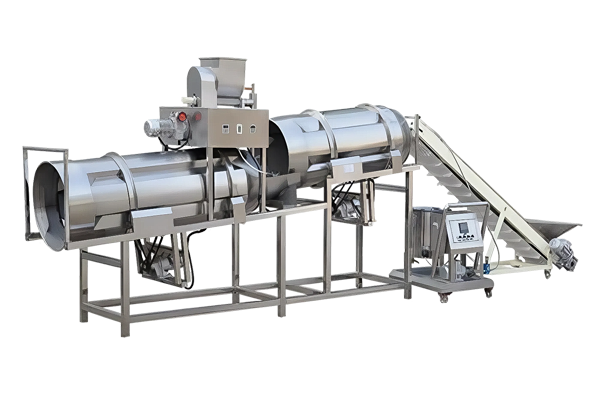
3. Twin-Screw Extruder (TVP Machine)
- Primary Function: Texturising and cooking soy protein under high pressure.
- Shear Management: Co-rotating screws generate frictional heat that cooks the protein evenly throughout the barrel.
- Structural Behaviour Control: Adjusting screw RPM controls the stretch and chewiness of the final product.
- Die-Head Versatility: Nuggets, minced granules, and chunks may be changed quickly.
4. Zoned Mesh-Belt Dryer
- Long-term Stabilisation: The product is stabilised for long-term storage.
- Moisture Migration: It involves a process called slow-dry, which removes water from the inside to the outside without breaking the product.
- FSSAI Compliance: Aimed at a final moisture content of 8-10% to avoid the growth of microbes.
- Energy Recovery: New models in 2026 can recirculate hot air, saving up to 20% on fuel.
5. Multi-Head Weighing/ Packaging Unit.
- Primary Function: Final bagging of the product and weight accuracy.
- Dosing Accuracy: The 10-14 heads are then used to ensure that each 1kg pack is accurate to within +/- 1g.
- Modified Atmosphere: Fills the bag with Nitrogen to extend shelf life to 12 months.
- Branding Integration: High-speed sealing with the ability to fit with multi-layer laminated pouches in the premium market.
End-to-End Soya Chunk Production Process with TVP Extrusion and Drying Systems
- Cleaning & Dehulling: With raw soybeans, which undergo treatment through three machines. The process results in decreased fibre content while protecting the soya processing machine from damage.
- Flaking & Defatting: Beans are rolled into thin flakes of 0.25-0.3 millimetres. The extraction process produces defatted soy flour containing 48-52% protein. The protein content of the material provides stability for extrusion processing and results in greater output.
- Extrusion (TVP Machine): It uses high shear and temperatures between 130-160°C to denature proteins and form fibrous structures, which create specific texture attributes. The process creates both density and water absorption properties.
- Drying & Cooling: The process starts with a moisture content of approximately 25%, which designers use zoned drying methods to decrease moisture content until it reaches 8-10%, which prevents both cracking and microbial growth.
- Packaging: The system uses multi-head weighers, which operate in conjunction with nitrogen flushing to provide accurate filling results while controlling oxidation and extending the product’s shelf life.
Industrial Soya Processing Machines Cost Breakdown for Soya Chunk Plants
| Machine | Function | Capacity | Price Range (₹ Lakh) | Priority |
|---|---|---|---|---|
| Cleaning & Dehulling | Raw prep | 500–5,000 kg/hr | 2–8 | Must |
| Flaking & Defatting | Protein extraction | 100–2,000 kg/hr | 5–30 | Industrial |
| Extruder (TVP) | Core production | 50–2,000 kg/hr | 8–60 | Must |
| Dryer & Cooler | Moisture control | Paired | 3–25 | Must |
| Packaging Machine | Final output | 200–3,000 packs/hr | 2–20 | Recommended |
Soya Chunk Manufacturing Plant Setup Options for Startups to Industrial Units
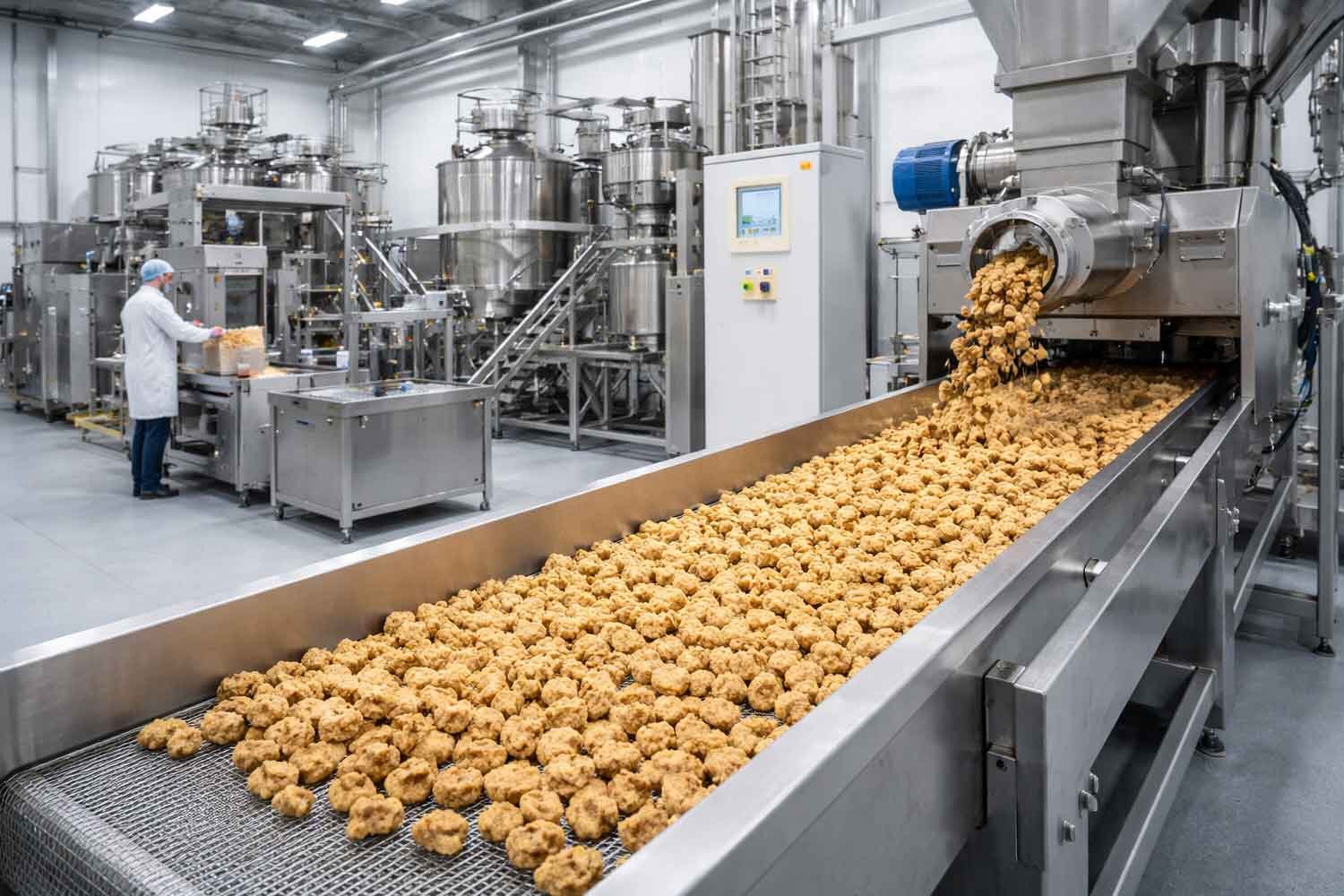
Small-Scale (Fast Entry Model)
- Machines: Extruder + Dryer + Packaging.
- Strategy: Buy defatted soy flour, which eliminates the need for any further upstream processing units and simplifies the process at the outset.
- Capacity: 150–400 kg/day
- Investment Range: lowest of all setups; it is best suited to startups and rural units.
- Operational Advantage: Rapid installation, low manpower, and rapid production launch.
- ROI: This is attained in 12-24 months because the prices are lower and retail demand is stable.
Mid-Scale (B2B Supply Model)
- Machines: Cleaning + Extruder + Dryer + Packaging.
- Strategy: The partial integration provides a chance to have increased control over the quality and cost of the raw materials.
- Capacity: 400–1,000 kg/day
- Margin Benefit: A decrease in dependence on external suppliers of flour enhances profitability.
- Market Target: Bulk distribution to wholesalers, caterers and food brands.
- Stability: Long-term contracts are supported by the consistent quality of output.
Industrial (Full Integration Model)
- Machines: Complete Line
- Strategy: Complete backward integration to processing of soy beans to final packaging.
- Capacity: 1–5 ton/day+.
- Profit Potential: Two sources of revenue (soy oil and TVP products).
- Scalability: It is appropriate for exporting and large-scale distribution of FMCG.
- Competitive Edge: Ultimate quality, cost, and brand position control.
Conclusion
The selection of a proper soya processing machine determines your product quality and cost-effectiveness, as well as your ability to generate profits over time. At Foodsure Machines, we provide complete, high-performance solutions tailored to your scale and budget. Contact us today to buy soya processing machine in India and build a reliable, profit-driven production line.
Planning a Complete Soya Processing Setup?
Get expert guidance on selecting the right combination of machines for efficient soya processing, optimal capacity, and maximum profitability.
FAQ
How to start a soya chunk manufacturing business in India?
The process begins with a TVP extruder, dryer and packaging unit, which needs to include all upstream processes to maintain expenses.
What is the cost of a soya chunk making machine in India?
The basic setup requires between ₹10-₹15 Lakh, which can reach over ₹60 Lakh for its industrial production lines.
What is TVP, and how is it made?
Defatted soy flour undergoes high-temperature and high-pressure extrusion to produce TVP, textured vegetable protein.
How much capacity does a soya chunk machine have?
The system delivers processing capabilities that extend from 50-200kg/hr based on machine dimensions and design options.
What is the profit margin in soya nugget manufacturing?
Profit margins typically range from 15-30%, which depends on business scale, raw material sources, and sales distribution methods.