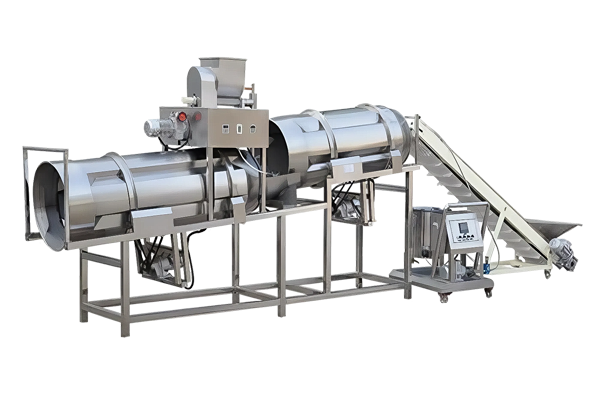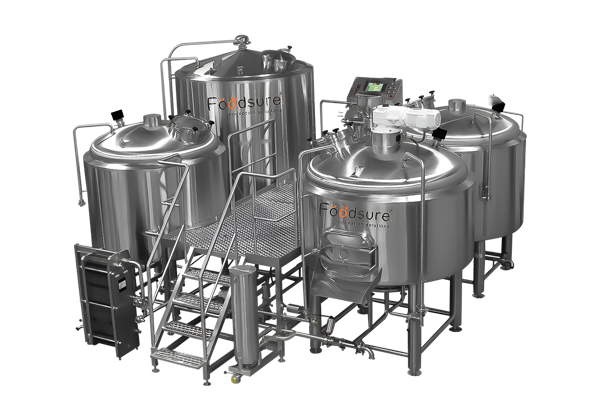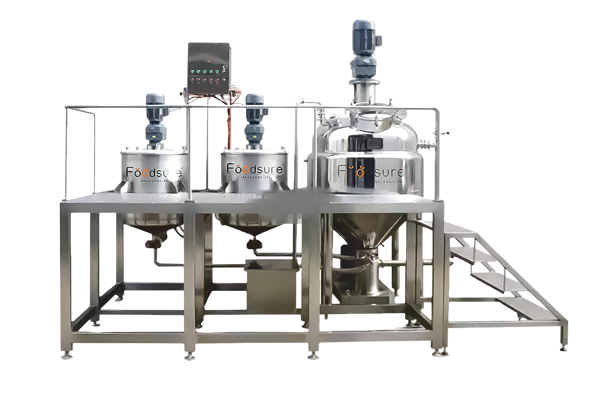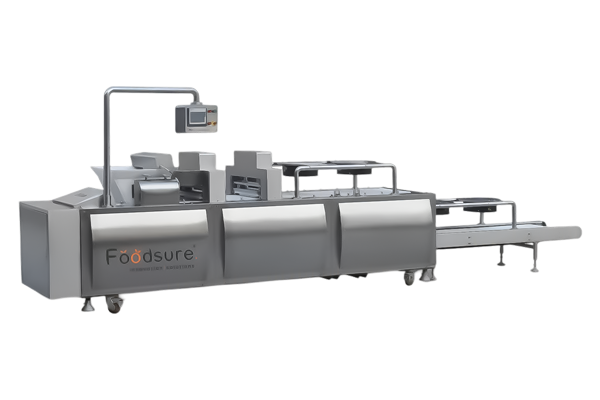
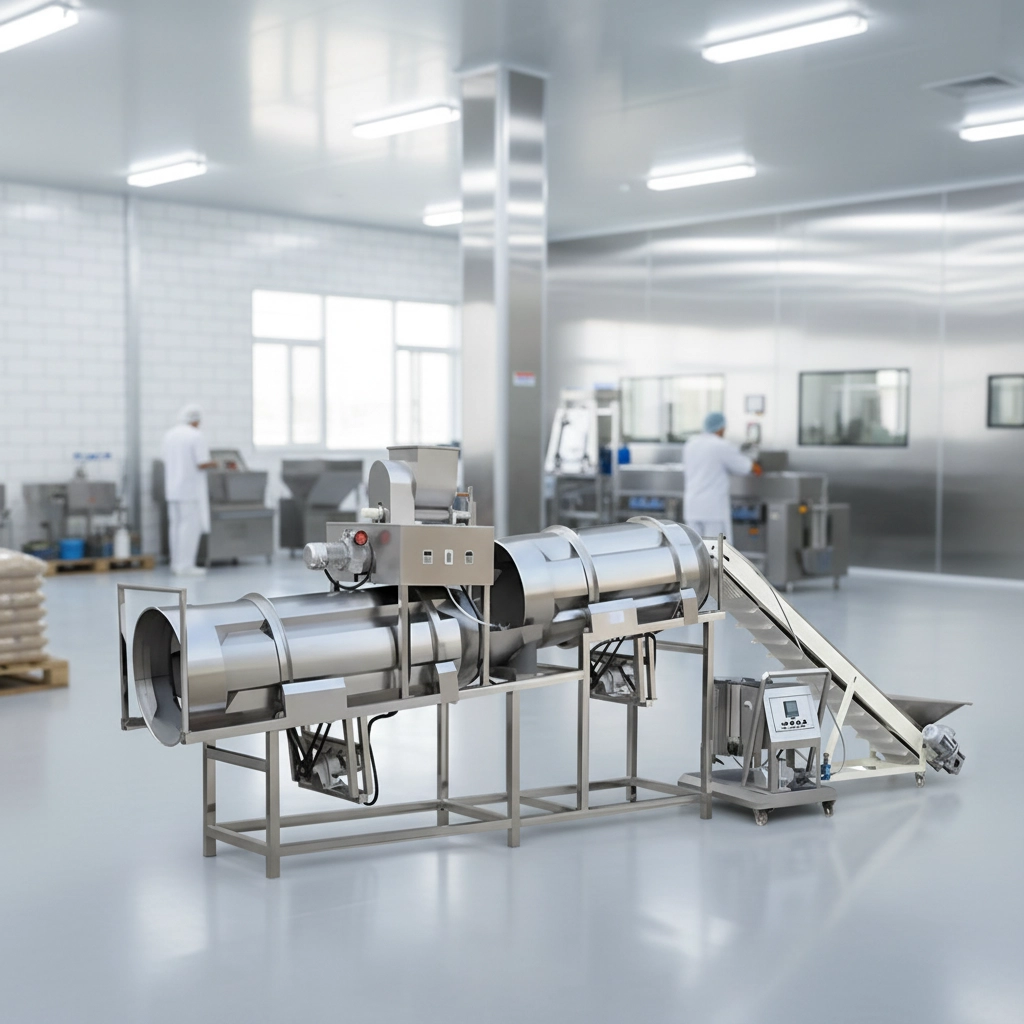
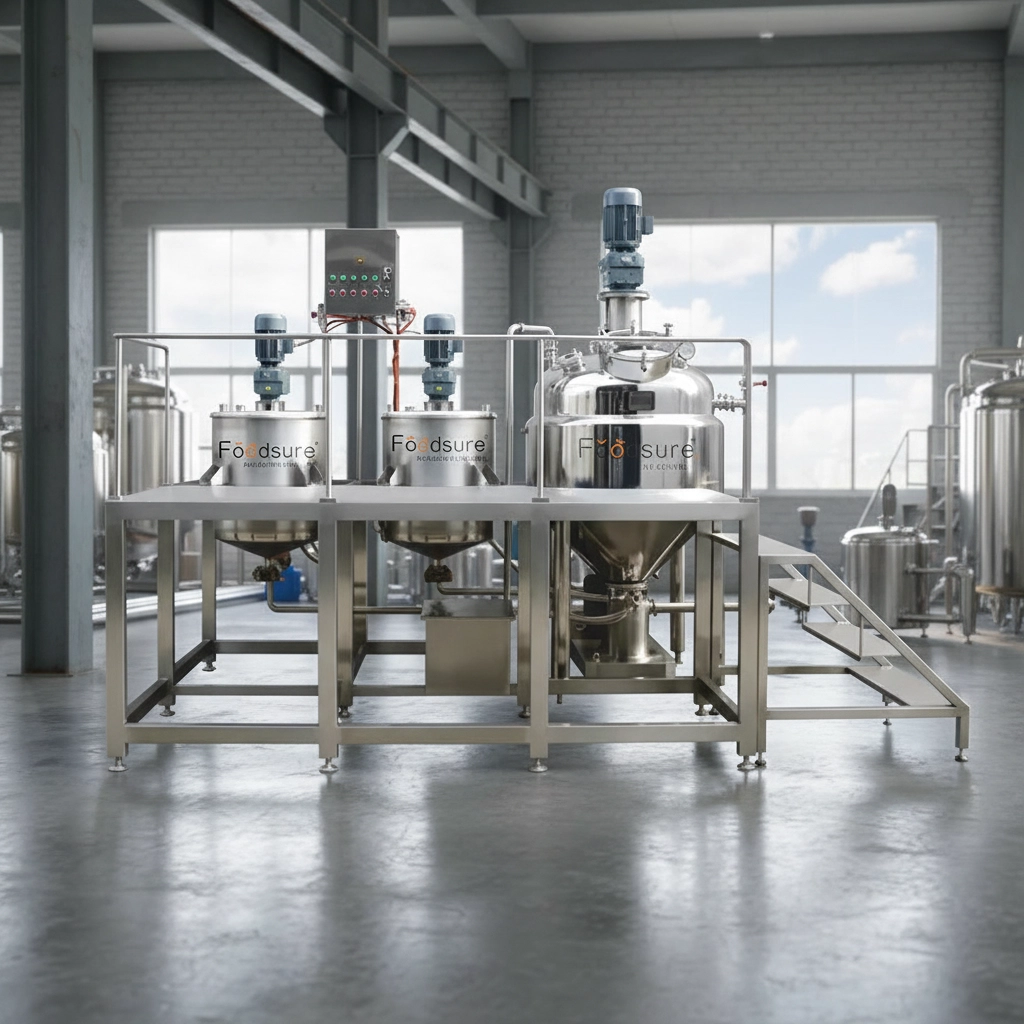
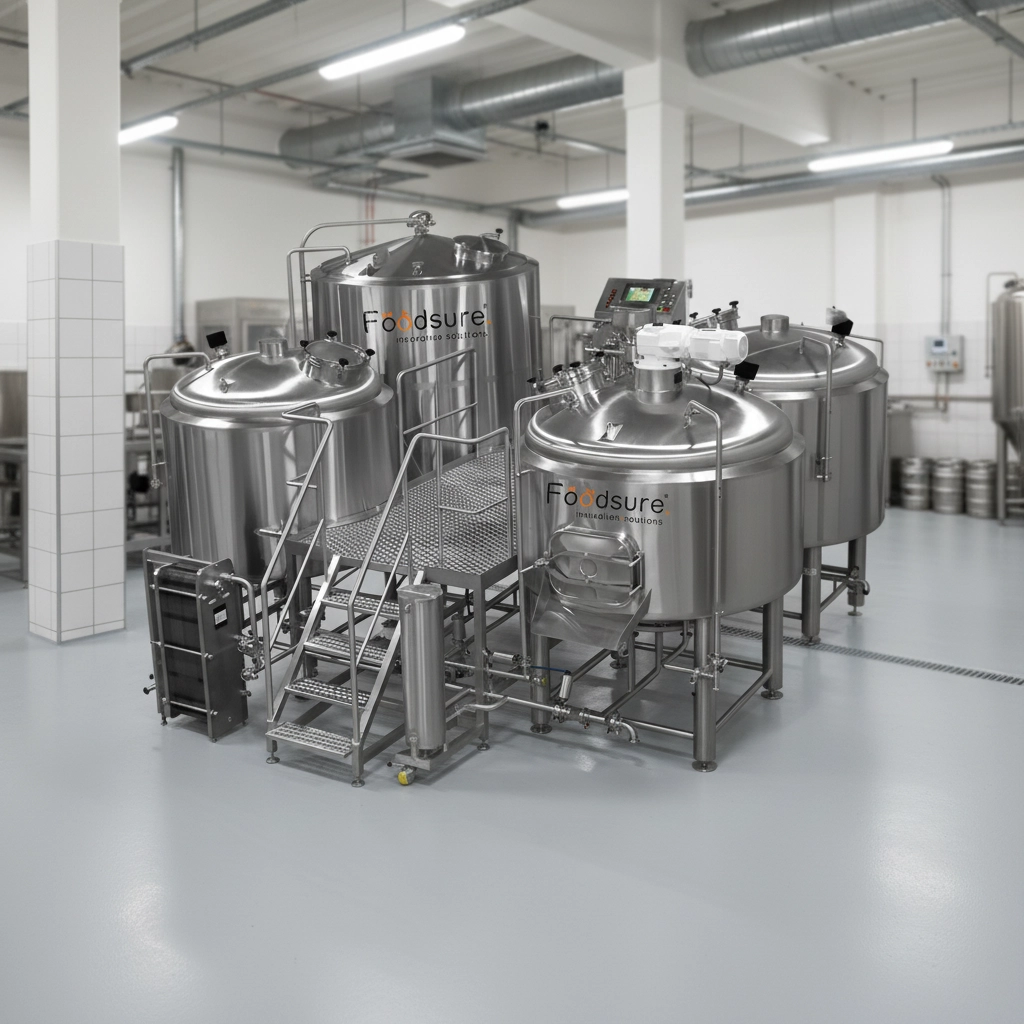
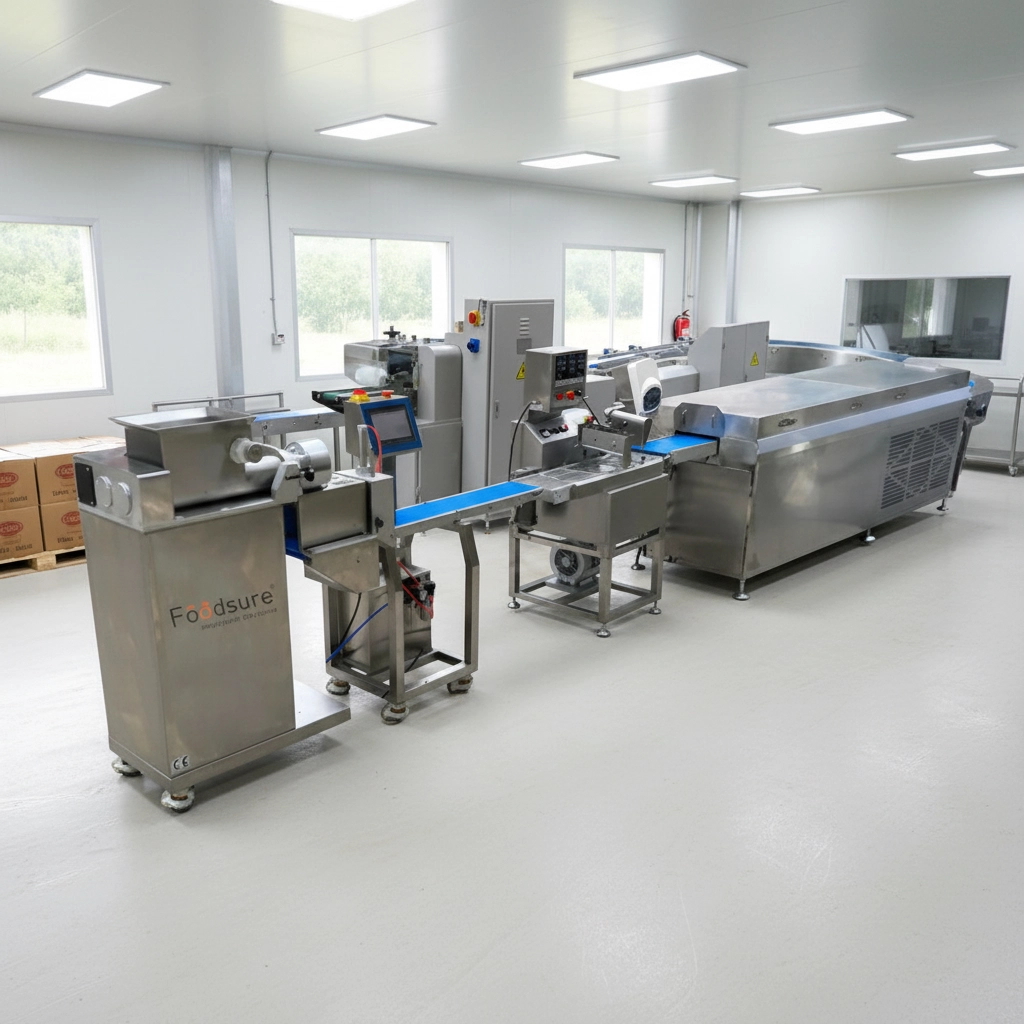
The soya extruder machine is the backbone of modern plant-based protein manufacturing. The system transforms defatted soy flour into high-value products through a controlled extrusion-cooking process that delivers both accurate results and large-scale production. Industrial soya extruder machines offer food manufacturers three essential benefits are steady output, automatic operation, and the ability to meet the growing protein needs of the Indian market.
The blog will explain how the extrusion process operates, describe different machine setups and their performance capabilities, and provide cost information for equipment in India, along with essential considerations for investment, to assist you in making a decision that meets technical and business requirements.
How Soya Extruder Machine Works: Twin-Screw Extrusion & Protein Structuring
The process of soya extrusion uses High-Moisture Extrusion Cooking (HMEC) and low-moisture TVP processing to transform proteins into fibrous structures through their denaturation process.
- Thermomechanical Transformation: The co-rotating twin-screw machine inside the barrel generates strong shear forces that produce operational pressures of 40-60 bar.
- Protein Polymerization: The process of protein polymerization occurs when globular soy proteins undergo temperature expansion between 140°C-180°C to form linear polymers that imitate muscle-fiber structures.
- Phase Transition: The cooling die system maintains its specialized function by blocking flash evaporation, enabling the melt to transform into a laminar texture resembling meat rather than forming a porous snack.
Soya Extruder Machine Process: Complete Step-by-Step TVP Production Flow
The process of transforming defatted soy flour into high-protein meat alternatives follows a five-stage sequence which includes multiple thermomechanical transformations.
- Pre-Conditioning & Hydro-Thermal Mixing: It involves raw materials receiving steam and water for moisture levels between 25-35%. This process pre-hydrates the protein, transforming it from a dry powder into a cohesive, viscous dough while enabling uniform heat distribution.
- High-Shear Plasticization: Inside the barrel, a co-rotating twin-screw assembly applies mechanical energy. The globular protein molecules unfold into long-chain polymers, which create a molten bio-melt when temperatures reach 140°C-180°C.
- Laminar Flow & Texturization: The melt passes through a specialized die, which operates at 40-60 bar of pressure. This stage creates the fibrous matrix; the molecules cross-link into parallel layers, mimicking the physical texture of animal muscle fiber.
- Expansion & Morphological Shaping: The product undergoes die exit, which results in an instant pressure drop that leads to internal moisture flash evaporation. This process produces a honeycomb cellular structure, which enables high water absorption during cooking.
- Automated Cutting & Multi-Stage Drying: The final product geometry (nuggets, chunks, or granules) is defined using high-speed rotary cutters. The product undergoes drying through a fluidized bed or belt dryer to achieve a moisture content below 10%, which ensures long-term shelf stability.
Soya Extruder Machine Comparison: TVP vs HMEC Process, Parameters & Output Quality
| Machine | Function | Capacity | Price Range (₹ Lakh) | Priority |
|---|---|---|---|---|
| Cleaning & Dehulling | Raw prep | 500–5,000 kg/hr | 2–8 | Must |
| Flaking & Defatting | Protein extraction | 100–2,000 kg/hr | 5–30 | Industrial |
| Extruder (TVP) | Core production | 50–2,000 kg/hr | 8–60 | Must |
| Dryer & Cooler | Moisture control | Paired | 3–25 | Must |
| Packaging Machine | Final output | 200–3,000 packs/hr | 2–20 | Recommended |
- Phase transition: The dry extrusion process begins with flash evaporation, which occurs at the die to create a permanent porous cellular structure. The Long Cooling Die used by HMEC transforms melted material into a muscle-like structure, which maintains its size during the cooling process.
- Protein Denaturation: The Dry Extrusion method needs elevated temperatures to produce longer material extensions, while HMEC functions at reduced temperatures, which need additional moisture to protect meat flavor from thermal degradation.
Soya Extruder Machine Price in India 2026: Cost Breakdown by Capacity & Automation Level
The 2026 price landscape for soya extruder machines in India is defined by a shift toward PLC-automated twin-screw technology, which offers superior texturization compared to traditional single-screw units.
| Segment | Capacity (kg/hr) | Price (₹) | Segment Type |
|---|---|---|---|
| Entry-Level | 50–100 | 3–8Lakh | Entry-Level |
| Commercial | 150–250 | 12–28Lakh | Commercial |
| Industrial | 300–500 | 35–65Lakh | Industrial |
| Turnkey Plant | 500–1000+ | 75L–1.5Cr+ | Turnkey Plant |
Soya Extruder Machine Buying: Key Factors for Manufacturer Selection
The process of choosing a manufacturer in 2026 needs to assess two factors, which are Operational Precision and Future-Proofing. The machine’s Specific Mechanical Energy (SME) control functions as the primary element that distinguishes protein quality from its standard production capabilities.
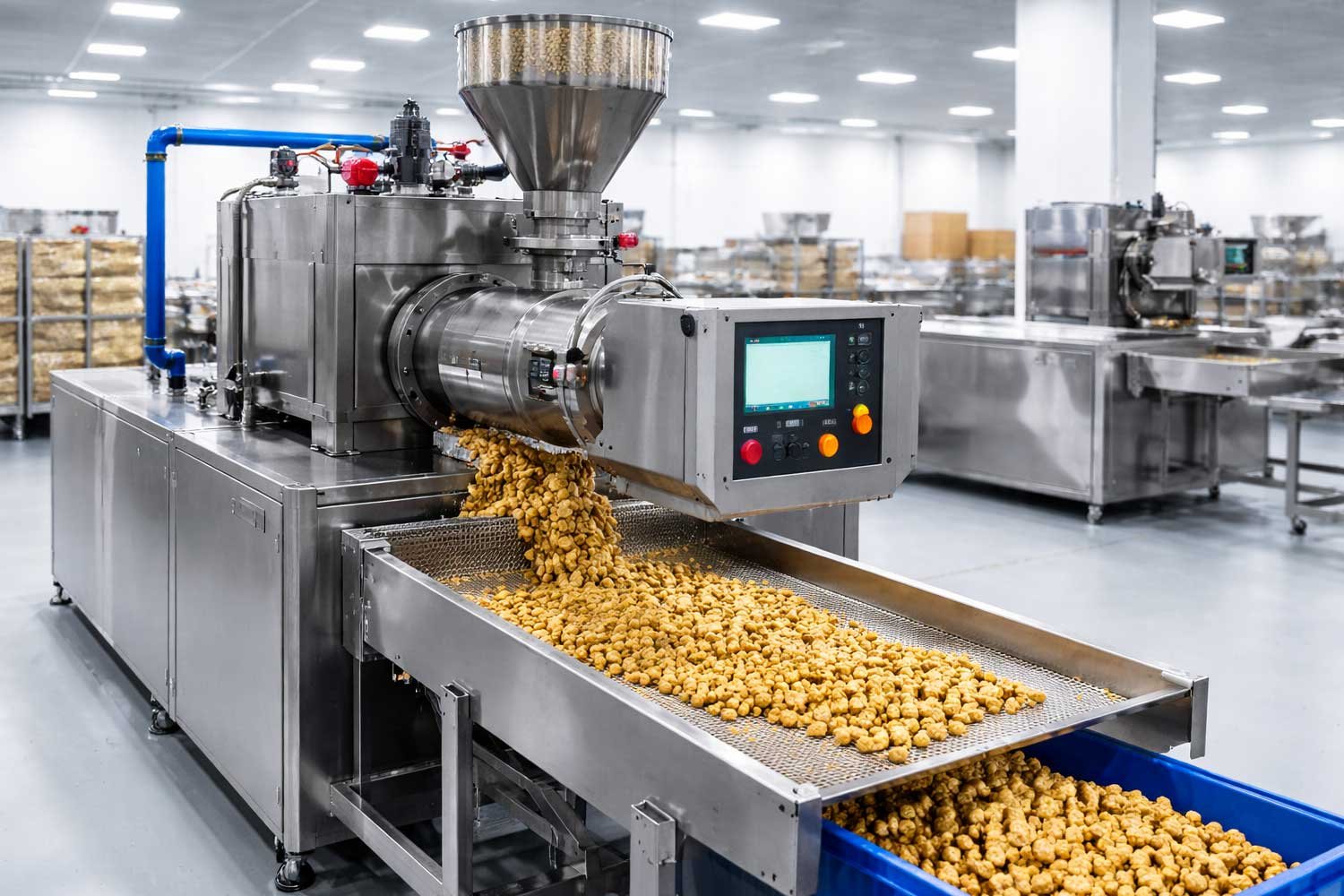
- Precision Control: The system needs to use PLC-integrated PID loops, which maintain temperature control within a ±1 °C range to maintain protein safety and achieve uniform texturization results.
- Metallurgical Durability: The test needs to show that High-Chrome or Nitrided Alloy screws have been used because those materials will withstand the abrasive properties of defatted soy flour, which results in operational interruptions.
- Energy Optimization: The company should select systems that use VFD-driven motors and insulated barrels, as these systems reduce power consumption by 15-20% per ton.
- Compliance Ready: The design must meet FSSC 22000 sanitary requirements through its easy-clean screw assembly system, which enables fast product changes.
Conclusion
A soya extruder machine plays a critical role in building a profitable protein processing business. Foodsure Machines offers dependable solutions that deliver high performance for businesses that need scalable systems. We deliver dependable production results, operational efficiency, and sustainable profit growth to customers who seek to buy soya extruder machines in India or partner with certified soya extruder machine manufacturers in India.
Want to Understand or Set Up a Soya Extruder Machine?
Get expert guidance on extrusion technology, machine capacity, and complete production setup tailored to your business goals.
FAQ
What is a soya extruder machine used for in TVP production?
It transforms defatted soy flour into meat alternatives or high-protein TVP.
How much does a soya extruder machine cost in India for small businesses?
Entry-level prices are between ₹3Lakh-8Lakh.
Which soya extruder machine is best for high moisture (HMEC) processing?
The best machines are twin-screw controlled machines with a lengthy cooling die and PLC.
What capacity of a soya extruder machine suits commercial units?
Semi-automatic 150-300 kg/hr machines are recommended for small factories.
Can a soya extruder machine produce both nuggets and chunks?
Yes, it can be multi-shaped because you can use automated cutting and drying systems.