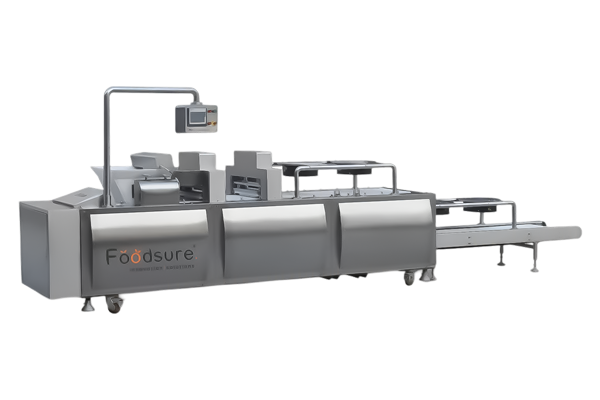
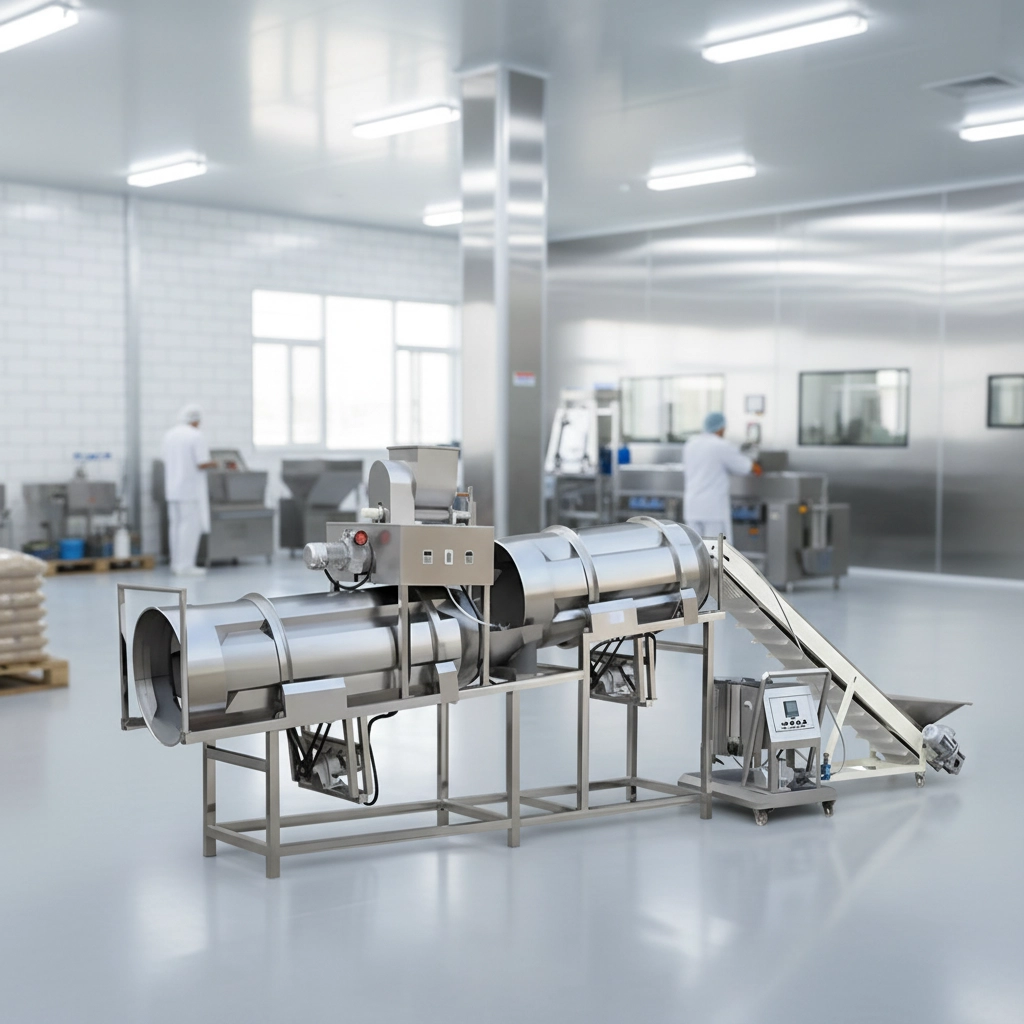
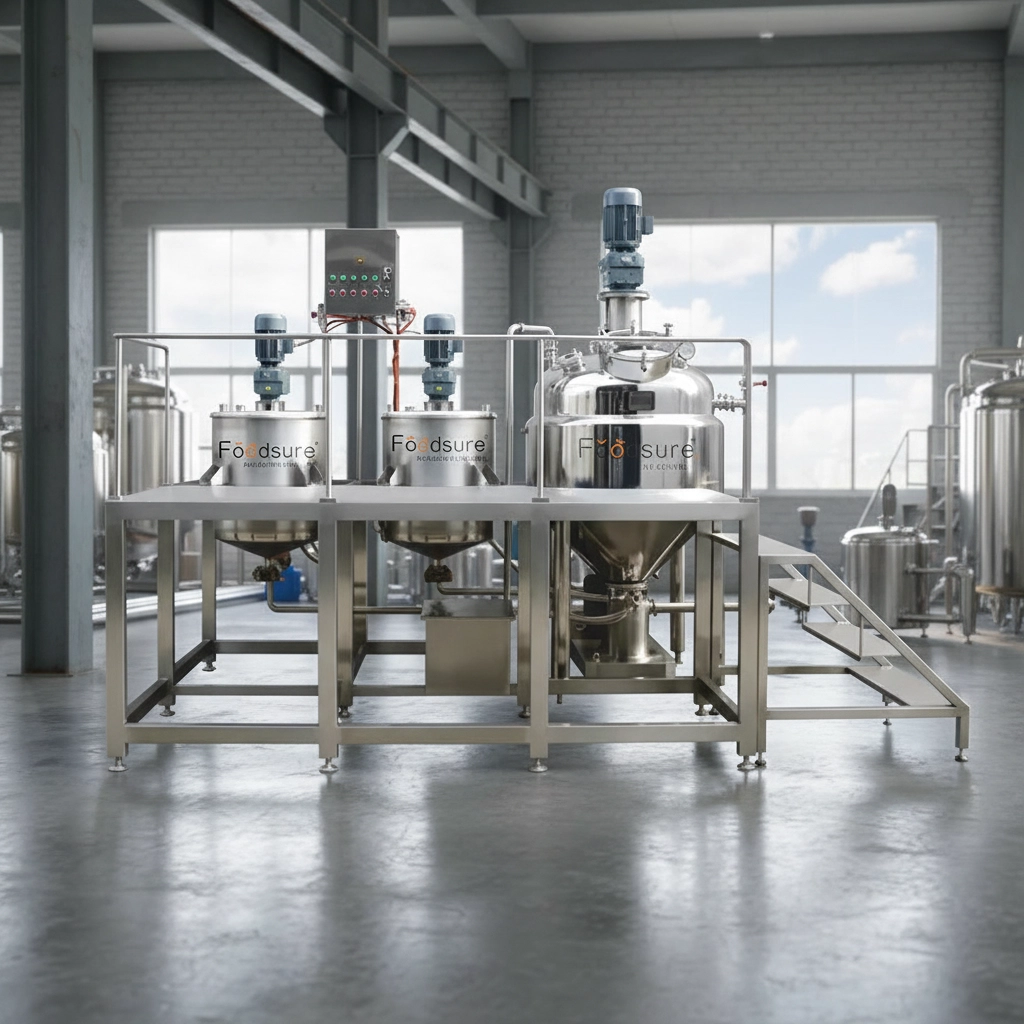
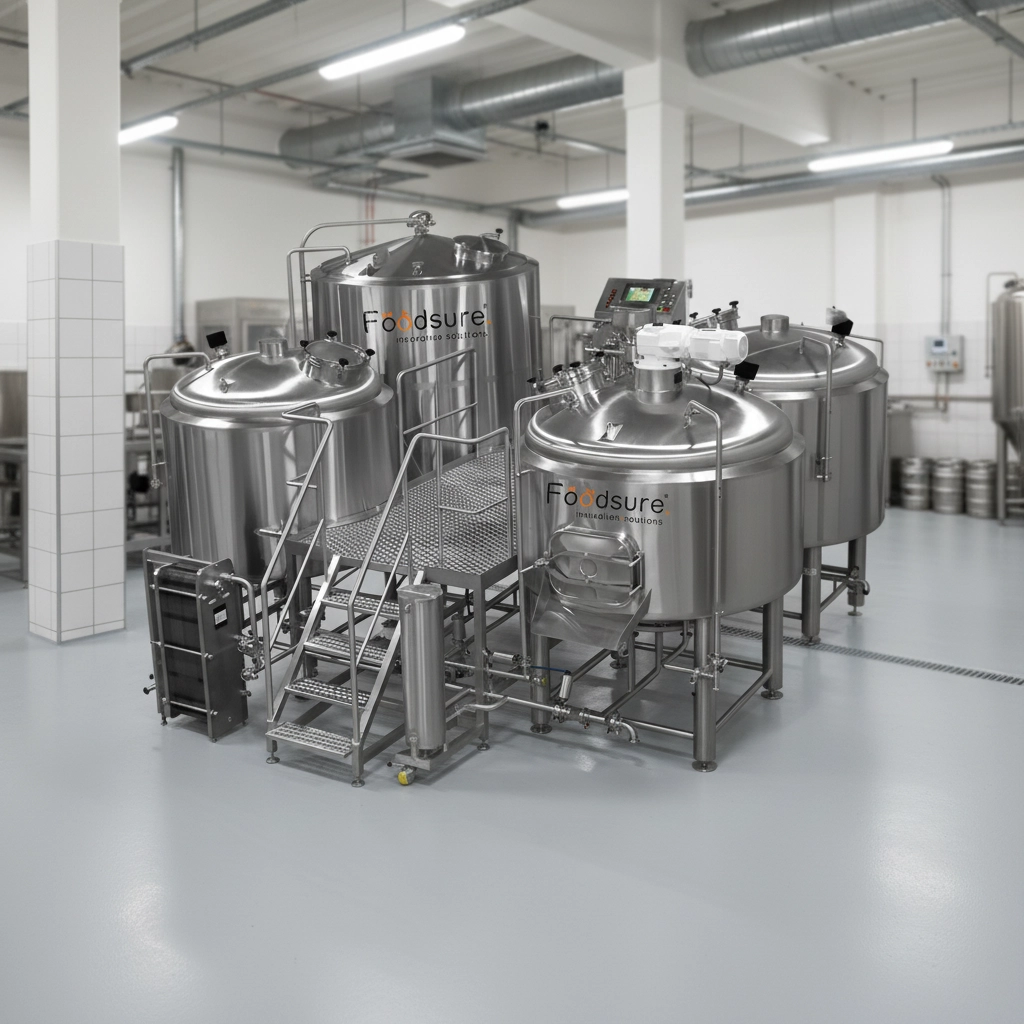
The actual potential of a soya chunks manufacturing enterprise for 2026 generates a 38% return on investment. The demand for affordable high-protein foods will drive India’s textured vegetable protein market to surpass ₹4,200 crore by 2027. The business provides excellent cost-to-margin benefits because it buys raw materials at prices between ₹25-₹45kg/hr and sells products at prices between ₹100-₹150kg/hr. This blog provides a complete overview of the expenses, profit margins, and return on investment for a soya chunks manufacturing business through its analysis of machinery costs, monthly expenses, and expected timeframes for recovery of investments to assist you in making an informed investment decision.
Soya Chunks Manufacturing Business ROI: Real Cost, Profit & Payback Analysis
The soya chunks unit in 2026 becomes profitable through value-added arbitrage because its major input cost, Defatted Soy Flour (DSF), remains an affordable byproduct which the industry supplies at ₹35–50/kg.
The process of twin-screw machine extrusion enables you to convert powder materials into texturised protein products, which generate three times their original value. The high profit margin (₹30–60/kg) remains intact because soya chunks provide the most affordable protein source among vegetarian foods, which makes them inflation-proof essential foods.
Key 2026 success factors include:
- Operating Leverage: Soya nugget manufacturing plant setup that operates their equipment at more than 70% capacit, achieving their break-even point sooner because they have fixed costs for electricity and labour.
- Diversification: The current extruder technology enables the production of High-Moisture Meat Analogues (MMA which generate more revenue for vegan products.
- By-product Efficiency: The process produces minimal waste because it converts fines and broken chunks into Soya Granules, which achieve complete material recovery.
Cost & ROI Breakdown (2026 Estimates)
| Category | Details | Estimated Cost |
|---|---|---|
| Machinery | Extruder, Dryer, Grinder, Packing | ₹8L – ₹15L |
| Working Capital | 2 Months Raw Material & Labour | ₹5L – ₹7L |
| Infrastructure | Shed, Power (20–40 kW), Licenses | ₹3L – ₹5L |
| Total Investment | Small to Mid-Scale Setup | ₹16L – ₹27L |
The Monthly Math (Example: 200kg/day output)
- Production: 5,000 kg/month (25 working days)
- Average COGS: ₹55/kg (Raw material + Power + Labor)
- Bulk Selling Price: ₹95/kg
- Gross Profit: ₹40/kg * 5,000 = ₹2,00,000 per month.
What is the Real Cost of the soya chunks manufacturing business
In 2026, an automatic soya making machine, together with energy-efficient solutions, will establish the main manufacturing expenses for soya chunks production. Base machinery expenses maintain their original value, yet hidden expenses for compliance and high-performance extrusion operations have increased.
Get Cost →
1. Fixed Investment (CAPEX) Analysis
- The Extruder Variance: A single-screw extruder costs less than six lakh rupees but produces inconsistent results with its output. In 2026, successful startups choose Twin-Screw technology, which has a price range between 12-18 Lakh, because it enables them to use high-protein and low-fat labels, which generate a market premium of 15%.
- The Power Load Factor: A typical 200kg/hr plant needs a power connection of 40-75kW. The costs of electrical installation now require high-capacity stabilisers and heavy-duty cabling as essential components because these systems protect PCB components in contemporary automated panel installations.
- Compliance & Licensing: The buyers require NABL-accredited lab testing for nutritional labelling, which measures Protein and Fiber content beyond their requirement of FSSAI State License that costs between approximately 2000-5000 rupees annually.
2. Monthly Operating Cost (OPEX) Reality
- Raw Material (The “Protein” Margin): Defatted Soy Flour (DSF) serves as your primary variable. The smart operators of 2026 use forward contracts to secure price agreements that range from ₹38-₹48/kg with oil mills in order to protect themselves against seasonal soybean price increases.
- The Electricity Subsidy Advantage: MSMEs in several Indian states (like Haryana) can access industrial tariffs, which the government subsidises at rates starting from ₹2 per unit for customers who have loads between 30-40kW. Your unit will qualify for almost a 60% reduction in monthly power expenses, which will directly increase your net profits.
- Labour Evolution: The operation now requires only 4 to 6 skilled workers who operate the systems that are needed. The average skilled worker wage of ₹20,000- ₹25,000 creates a financial burden that results in decreased employee numbers.
Soya Chunks Profit Margin Analysis: Production Cost vs. Selling Price (2026)
Investment Breakdown Table (2026 Targeted)
| Component | 2026 Real-World Note | Estimated (₹) |
|---|---|---|
| Twin-Screw Extruder | Export-quality texture | ₹12,00,000 |
| Multi-Stage Dryer | Reduces moisture <7% (12-month shelf) | ₹3,50,000 |
| Auto-Packing (Pouch) | Nitrogen-flushed | ₹2,50,000 |
| Working Capital | 45-day buffer (Raw material + credit cycle) | ₹6,00,000 |
| Contingency Fund | Spare parts & initial marketing | ₹2,00,000 |
Strategic Margin Drivers
- The Protein Price Increase: Starting in 2026, any item with greater than 52% protein will be priced at ₹10 to ₹12/kg mo than standard items per kilo for every kilo of protein. Using an advanced extrusion process allows you to create a product that looks and feels more like meat, opening up your market to the growing number of vegans and flexitarians.
- The Benefits of Packaging Arbitrage: Branded retail packaged items using 12 microns of polyester/PE will be more profitable than bulk sales because they generate quicker revenue. The net margin will remain high even after taking ₹8–₹10 per kilo from marketing & distribution costs.
- The Cost Savings Associated with Increasing Production: When you increase your output from 100kg/hr-300kg/hr, your variable costs for production drop by ₹4 to ₹6kg/hr, the result of spreading your electricity and labour fixed costs over larger production runs.
Why Soya Chunks Manufacturing Business Profits Drop: Hidden Costs
The evaluation of these figures needs additional measurement because the existing calculations do not include multiple factors that affect the financial performance of food processing operations.
Operational Nuances & Variable Costs
Entrepreneurs encounter their first business reality check during the process of converting their business model from Gross Profit figures to Net Profit numbers. The Monthly Cost of industrial food processing operations, which amounts to ₹6L, contains both raw material expenses and direct labour costs, while it fails to account for Invisible Shrinkage:
- Yield Loss: The input-to-output ratio for many products operates at a ratio that exceeds 1:1. The process of roasting or frying causes moisture to evaporate, while packaging contains fines, which are broken pieces that lead to a 3-7% reduction of available sellable products.
- Utility Spikes: The energy consumption patterns of industrial drying and extrusion machines experience cost fluctuations because electricity rates depend on peak-load pricing.
The Net Profit Bridge
The estimated ₹2.5L – ₹4L Net Profit is achievable only if Fixed Overheads are tightly managed. This includes:
- Marketing & Distribution: In a competitive B2B or B2C market, customer acquisition costs (dealer margins, transport, and digital presence) can consume 10-15% of total company revenue.
- Maintenance & Spares: The organisation needs to allocate funds for preventative maintenance because this practice protects against equipment downtime, which acts as a silent killer to their operational capacity, that assumes 70% utilization.
Strategic Outlook
A 100 kg/hour plant is a sweet spot for scaling. The business needs to implement Value Addition through the development of specialised branded products, which will bring higher selling prices than their current bulk commodity sales that reach a maximum of ₹100/kg.
Detailed ROI & Payback Analysis of Soya Chunks Manufacturing Business
The theoretical ROI needs practical evaluation through liquid payback assessment, which requires people to understand Cash Flow and Accounting Profit. Your startup venture establishes the payback period through the Working Capital Gap, which measures the time needed to turn raw material payments into distributor payment receipts.
The S-Curve of ROI
The Realistic Scenario (65% utilization) shows a 2-year return, but the first 6 months represent learning months because the return on investment stays below zero through trial batches, staff training, and market entry expenses.
- The Optimised Ceiling: The 12- 15 month payback period requires 85% utilization because Supply Chain Synchronisation determines machine speed. The system experiences financial gridlock when equipment fails or essential materials are unavailable, as it must continue to operate at full capacity.
- CAPEX vs. OPEX: Your OPEX (Operational Expenditure) determines your ROI sensitivity, while the initial CAPEX (Capital Expenditure) investment serves as an unchanging barrier. Although high-efficiency motors and automated packaging systems increase initial expenses, they reduce payback time by reducing workforce needs and energy consumption.
Strategic Sensitivity
The Conservative 40% utilization scenario represents its most hazardous operating condition because it generates insufficient revenue to cover essential expenses. Success depends on reaching 65% progress in the first quarter, as this achievement will maintain the 2-year payback period as a financial certainty rather than an estimated future outcome.
How Machinery Affects ROI in Soya Chunks Manufacturing Business
The relationship between machinery and ROI is often misunderstood as a simple price vs. output equation. The most costly equipment actually generates the highest profits because Marginal Efficiency determines its value.
The Hidden Cost of Cheap Entry
A Mini Extruder has a low entry barrier yet operates with excessive Specific Energy Consumption (SEC), which measures the energy needed to process one kilogram of product. A lower-tier machine might use 15% more power per kg than a high-efficiency system, which, over 250 working days, can erode the initial cost savings.
The Technical ROI Drivers
- The Twin-Screw Advantage: While a single-screw system is cheaper, a Twin-Screw Extruder offers superior shear control. The soya nugget machine produces snacks and protein bits with a controlled expansion ratio, which reduces product waste while creating a higher quality texture that sells for premium market prices.
- Wastage Mitigation: High-end automation doesn’t just cut labour; it reduces Human Error Wastage. The feeding systems and temperature controls provide precise measurements which guarantee identical quality between the first-hour and last-hour batches. The system prevents a 2-5% rejection rate that occurs with manual setups.
- The Velocity of Capital: A Fully Automatic line accelerates the velocity of capital. Your company achieves maximum Output per Square Foot by producing three times the volume with the same floor space and half the staff. The fastest way to shift from recovering costs to generating wealth exists through this method.
What Affects Profit in Soya Chunks Manufacturing Business – Key Cost Drivers
The Strategic Executive Summary provides an overview that connects all elements of the financial and operational plan. The pointer converts technical information into a usable system that enables organisations to achieve their sustainability goals.
The Profitability Pillar Framework
- Operational Efficiency (The 70% Rule): The ideal operational range for businesses is between 70-85% of their total capacity. Businesses that operate below this threshold face fixed cost trap situations, which result in overhead costs consuming their profit margins. Businesses that operate above this threshold need to implement advanced preventive maintenance systems that protect them from major operational shutdowns.
- Procurement Strategy (Margin Protection): The majority of operational expenses come from raw material costs, which makes it important to choose Seasonal Bulk Contracts instead of just-in-time purchasing. The new purchasing approach protects you from price changes that occur across all materials because it protects you against price changes that exceed 10%.
High ROI Setup for Soya Chunks Manufacturing Business
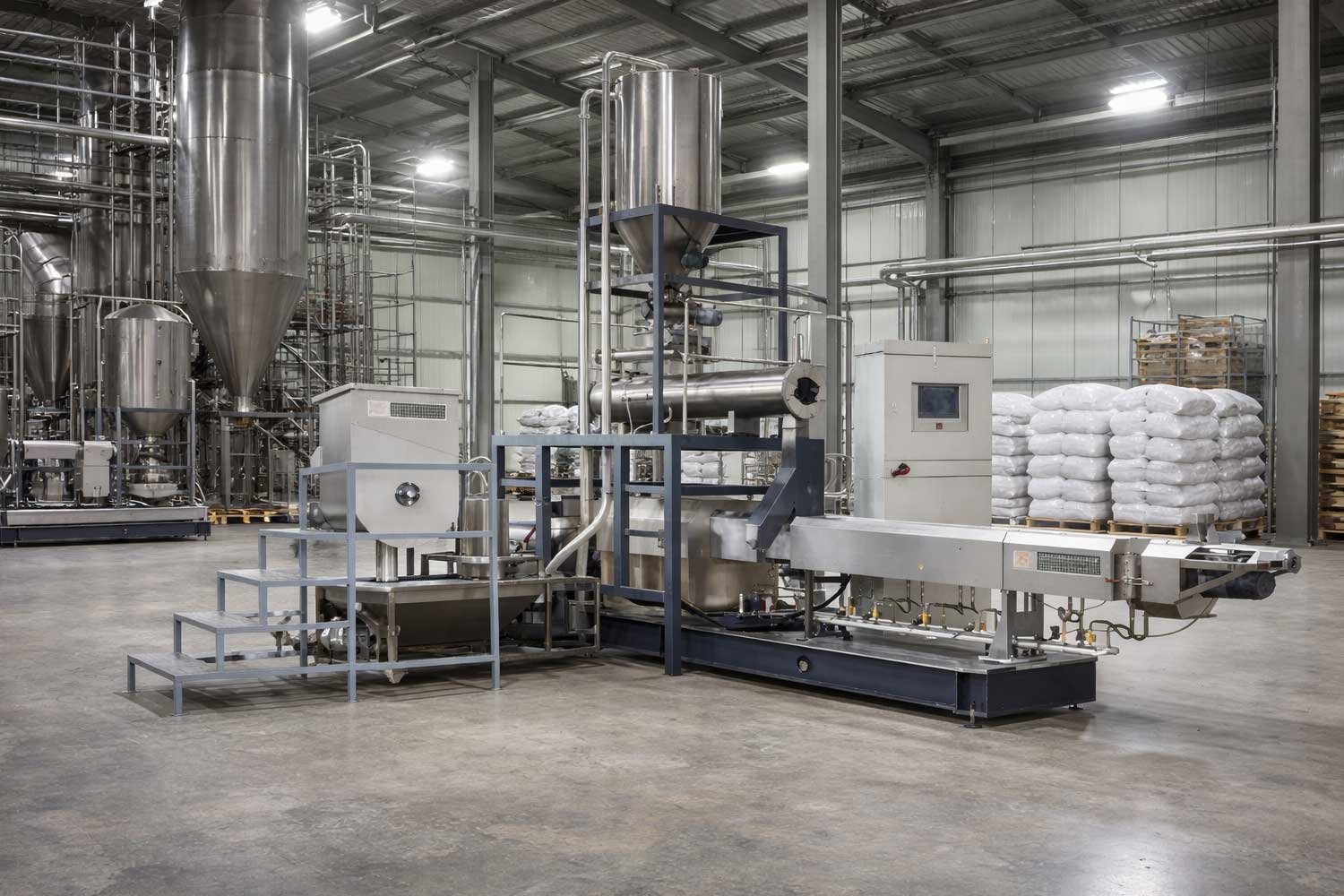
Most entrepreneurs achieve optimal output efficiency through investments in semi-automatic twin-screw extruder systems.
- The Twin-Screw Extruder system: It produces uniform texture results that maintain protein structure in higher amounts while controlling expansion through better engineering. The system provides 10-15% higher output than single-screw systems because it uses dual-screw technology. The soya processing machine suits production needs that demand consistent chunk and granule sizes.
- The Conveyor Dryer system: Enables continuous drying, which decreases batch processing times while keeping moisture content below 8% for extended product shelf life. The system increases operational capacity while it decreases the need for human workers to handle tasks.
- Basic Packaging Line: Starts with semi-automatic sealing and moves to fully automatic operations when production volume reaches stable levels for cost-efficient solutions.
Operational Target:
- Achieve 300–500 kg/day output at 70% utilization within 4–6 months.
- Maintain energy efficiency, which ranges from 0.35-0.5 kWh/kg, to limit production expenses.
- The company needs to maintain uniform product quality because it helps them obtain repeat business from B2B customers while generating predictable income.
Conclusion
The soya chunks manufacturing business stands out as a high-margin, fast-scaling opportunity in the food processing sector, with strong demand, stable raw material access, and attractive ROI within 1–2 years. The company requires machine selection, product quality control,l and process efficiency improvements to achieve operational success.
At Foodsure Machines, we help entrepreneurs create businesses that generate profits while continuing to grow. Our company provides comprehensive services that include extruder selection, production capacity planning, and ROI calculation. Our mission is to provide dependable systems that operate with energy efficiency to lower costs per kilogram while maintaining consistent production levels.
Our team can assist you in achieving quicker payback periods and sustainable business growth if you plan to launch or expand your soya chunks manufacturing operation.
Want to Calculate Your Exact Investment & ROI?
Get a detailed cost breakdown, production capacity plan, and profit estimation for your soya chunks manufacturing business.
FAQ
What is the profit margin in a soya chunks manufacturing business in India?
The profit margin of the soya chunks production business in India ranges from 30%-50%, depending on the size and way you sell.
How much investment is required to start a soya chunks manufacturing business?
It takes starting on ₹15-25 lakh to start small-scale production of soya chunks.
What is the ROI of a soya chunks manufacturing business in 2026?
The Return on investment of the soya chunks Production business in 2026 will be 30%-45% with a payback of 12-24 months.
Which machine is best for a soya chunks manufacturing business setup?
A twin-screw extruder is the best machine for selling to get bigger amounts of soya chunks manufactured and higher-quality products.
Is the soya chunks manufacturing business profitable for small-scale units?
Producing small-scale soya chunks is profitable because the cost of the product is low and there is a lot of demand in the market.