The growing demand for soya protein products in India has created a robust market for soya badi production companies. New business owners find it difficult to choose appropriate equipment because they lack the ability to calculate financial needs and create effective manufacturing operations. This complete blog on soya badi machine plant setup in India breaks down everything from machine types and plant cost to production process and profit margins, so you can confidently start and scale a profitable soya badi manufacturing plant.
Why Soya Badi Manufacturing Business is a High-Growth Opportunity in India
The global soya chunks market size was USD 2,079.17 million in 2025. Based on estimates, the market will be USD 3,887.25 million in 2034, with a CAGR of 7.2% between 2026 and 2034. Entrepreneurs use low-cost defatted soy flour to produce plant-based protein products, which satisfy the high demand from health-conscious and vegetarian consumers who tend to buy products repeatedly, resulting in a fast return on investment.
The Indian soya badi (soya chunks) market has developed from its initial niche stage to become a major industrial segment. The year 2026 presents an exceptional opportunity because of the following reasons:
- Explosive Protein Demand: As more than 40% of Indians identify as vegetarians and urban areas adopt flexitarian eating habits, the market for affordable meat alternatives reaches its highest demand point.
- Economical Raw Materials: Defatted soy flour functions as the main material because it contains high protein content that results from soybean oil production. The process maintains low raw material expenses, which range between 40-60 rupees per kilogram, while the finished product sells at a high retail price.
- Scalable Manufacturing: The current extrusion equipment enables factories to produce products at high speeds. A small-to-medium scale plant can process 200kg/hour, catering to local kirana stores, modern retail, and the rapidly growing e-commerce/quick-commerce sectors.
Industry Note: The Indian plant-based protein market will reach a value of $1.08 billion by the end of 2026, with soya protein dominating the market because of its established supply chain and consumer familiarity.
Minimum Investment Required for Soya Badi Machine Plant Setup in India
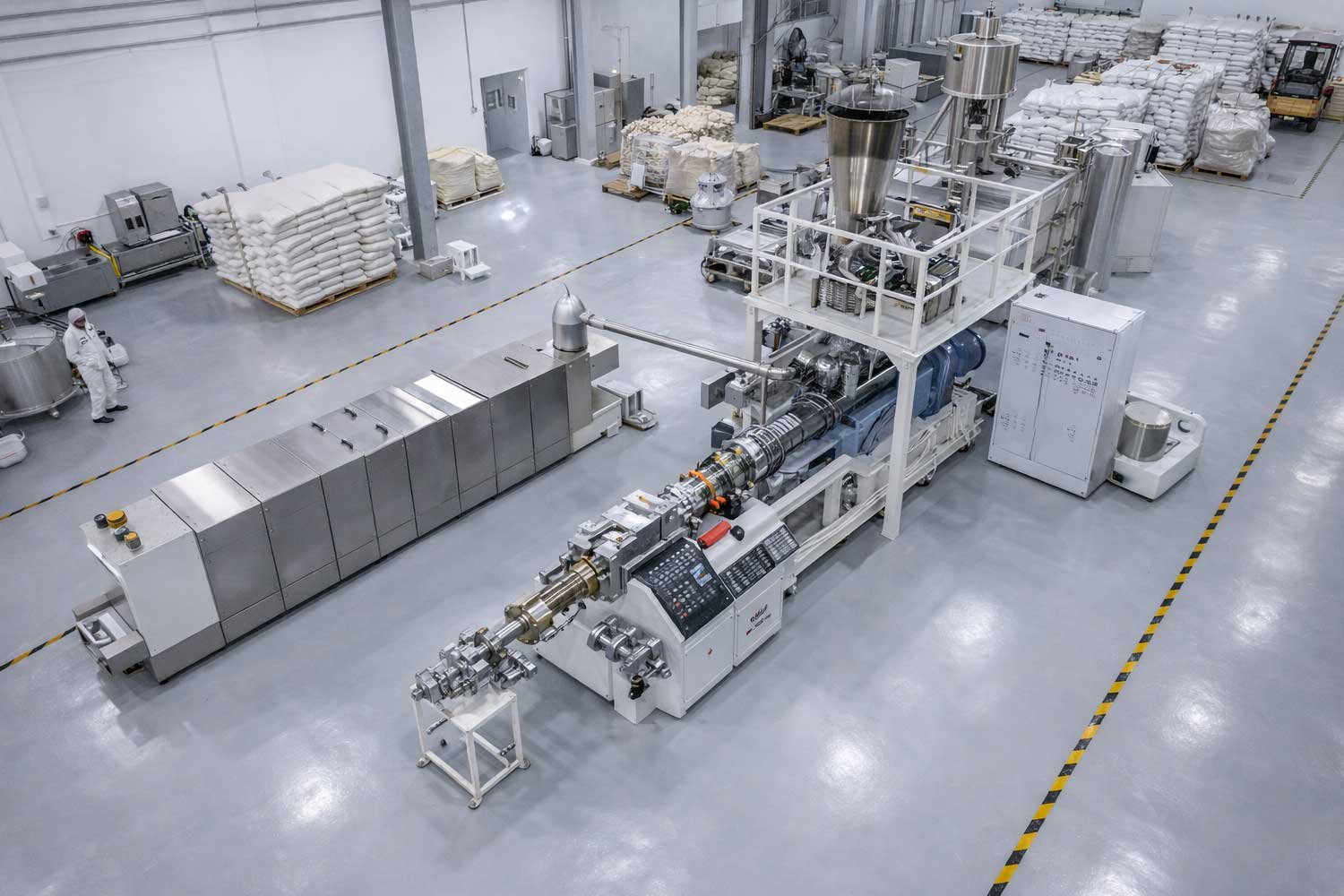
The process of establishing a small-scale soya badi production facility requires minimal initial funding, which permits new business owners to enter the market. The total cost of soya badi machine plant setup in India typically ranges from ₹5-₹15 Lakh for a semi-automatic unit.
The basic extruder system, together with the mixer and dryer unit, costs between ₹3.5-₹8 Lakh according to production capacity, which ranges from 50-100kg/hr.
- Working Capital: The business requires an initial investment between ₹2 lakh and ₹5 lakh to cover the costs of raw material (defatted soy flour), packaging materials, and employee wages.
- Space & Power: The facility requires between 500-1,000 sq ft of space, together with a 15-30 HP 3-phase electricity system.
- Licensing: The business requires a budget between ₹20,000-₹50,000 to obtain FSSAI, GST, and Udyam registrations.
Pro-Tip: You can receive financial assistance from state governments through PMEGP and PMFME programs, which will pay for 35% of your total expenses to build a soya badi production facility in India.
Soya Chunks Manufacturing Process Step By Step
The process of soya chunks production needs to be learned through its entire sequence because this knowledge guarantees product quality and extends product shelf life. The primary operation of this facility uses the soy flour extrusion method to produce high-protein chunks from raw materials.
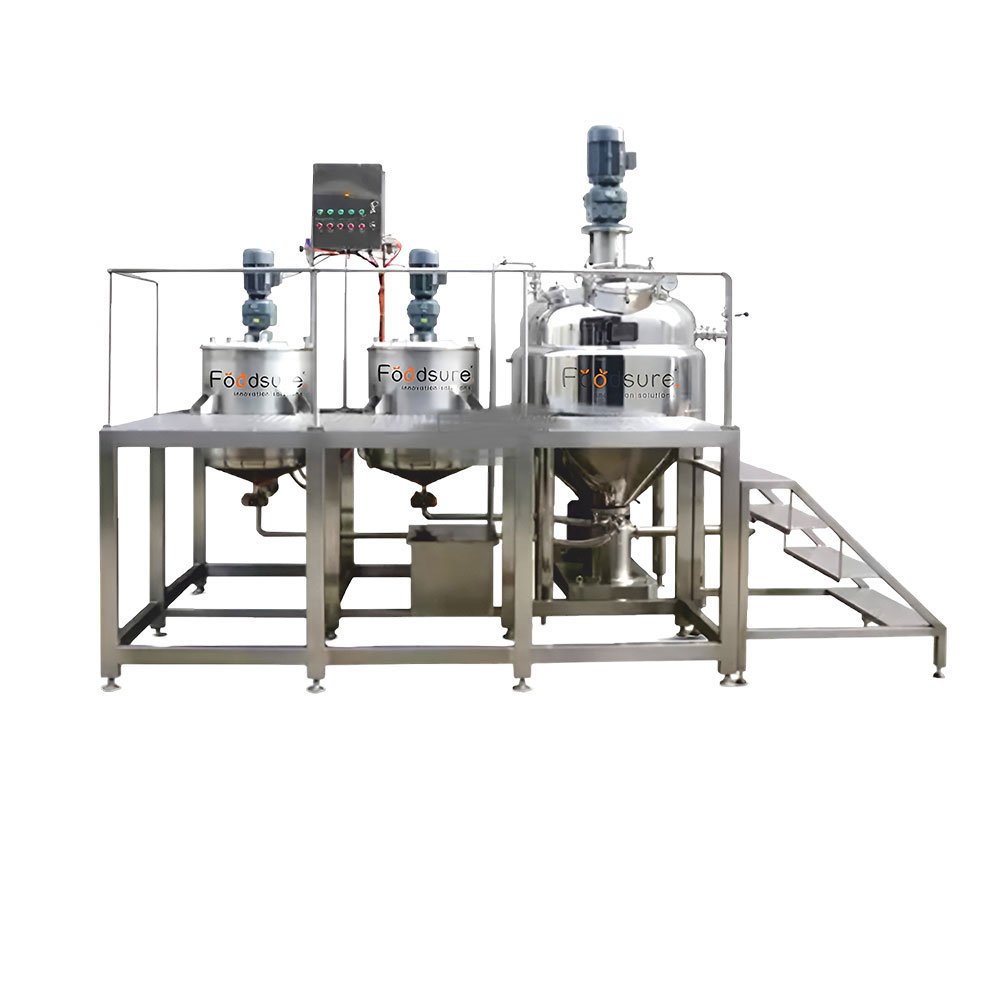
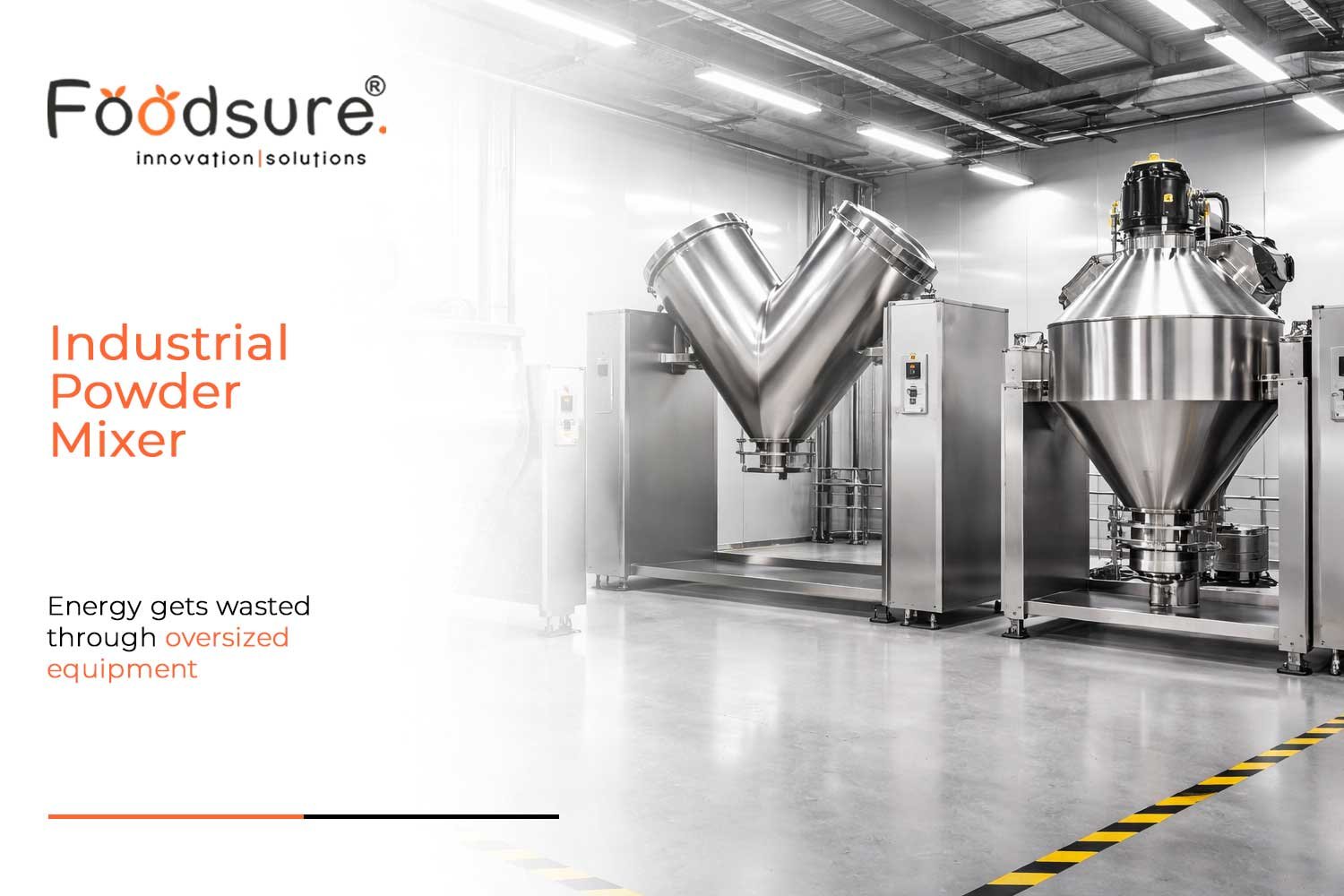
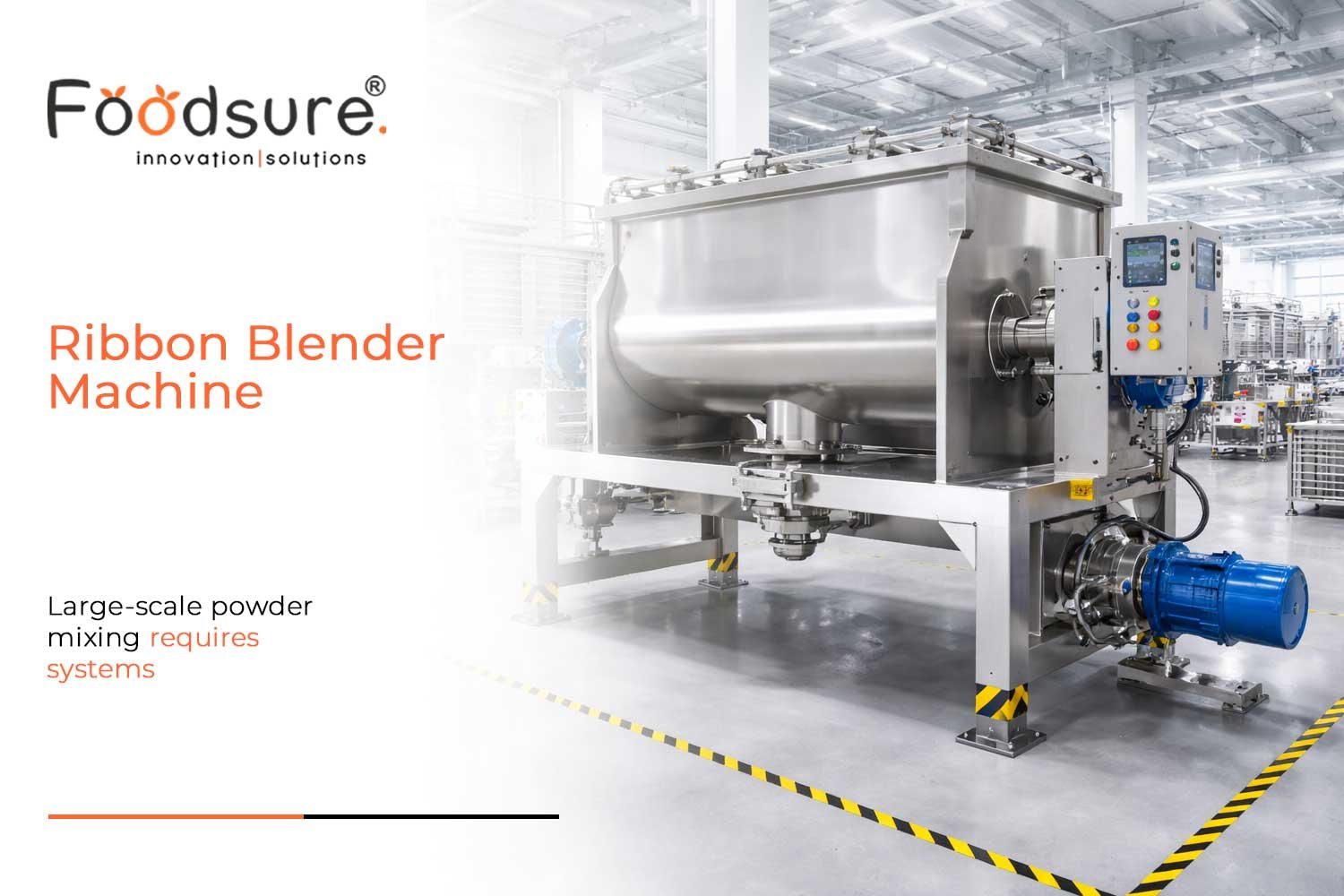
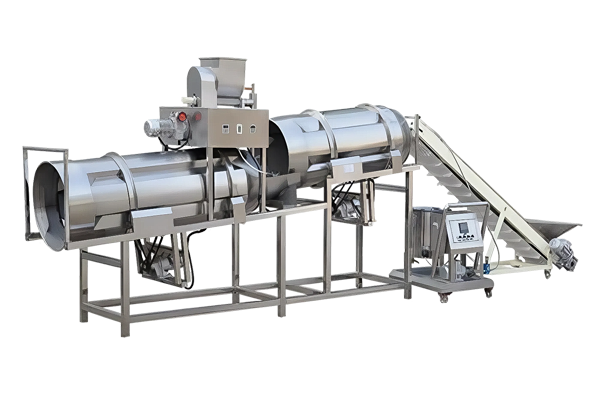
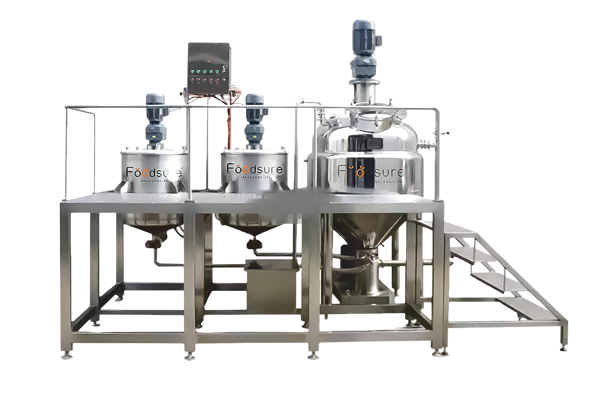
- Mixing: The defatted soy flour is combined with water and additional components through a high-speed ribbon blender to achieve a specific moisture content.
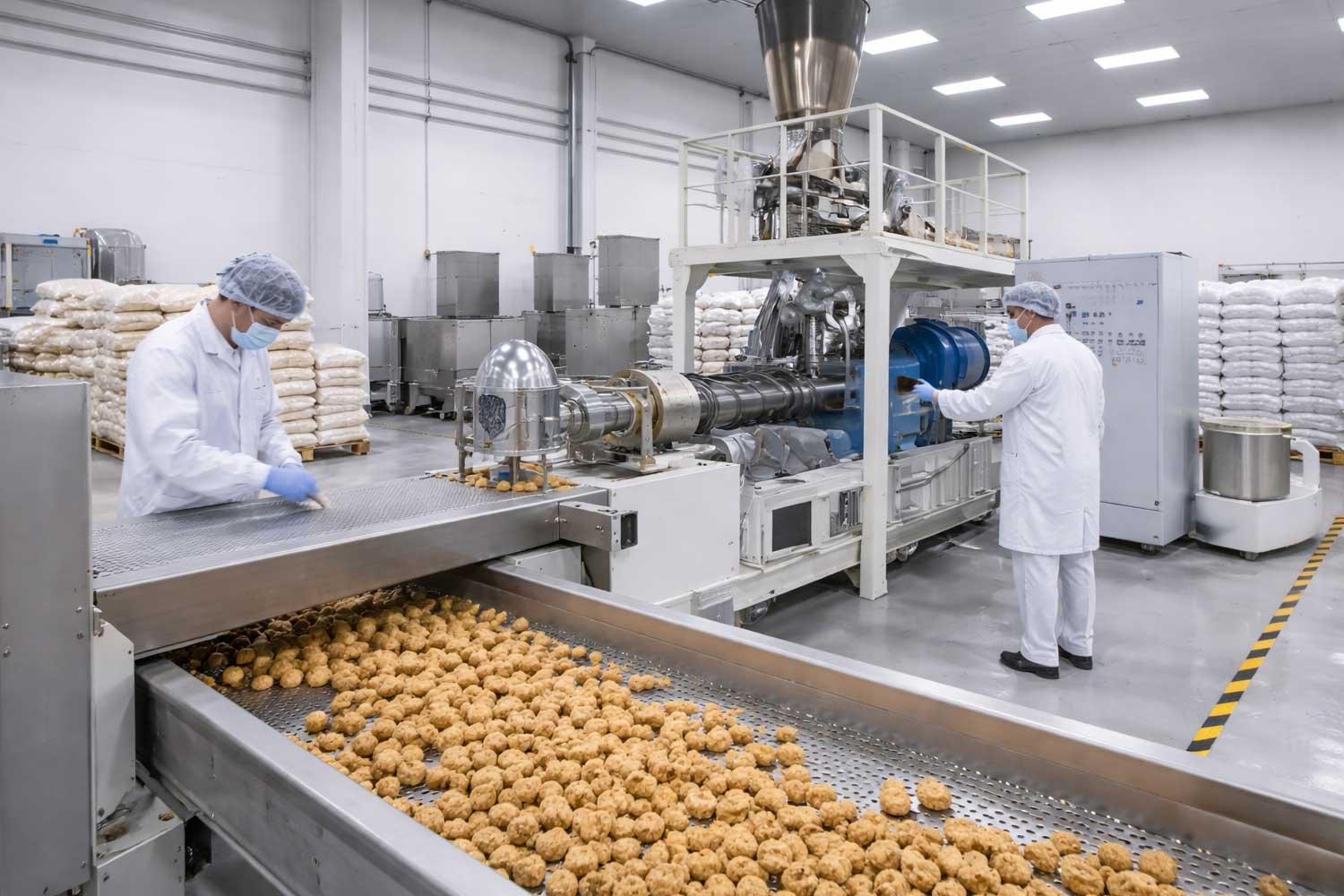
- Extrusion: The extruder receives the mixture, which undergoes high-pressure cooking with elevated temperature to produce textured vegetable protein (TVP) dough.
- Cutting: The rotary cutters shape the cooked soy that emerges from the die head into identical spherical and rectangular pieces.
- Drying: The chunks undergo drying through a conveyor dryer system, which operates continuously until their moisture content drops below 10%, thereby stopping any microbial development.
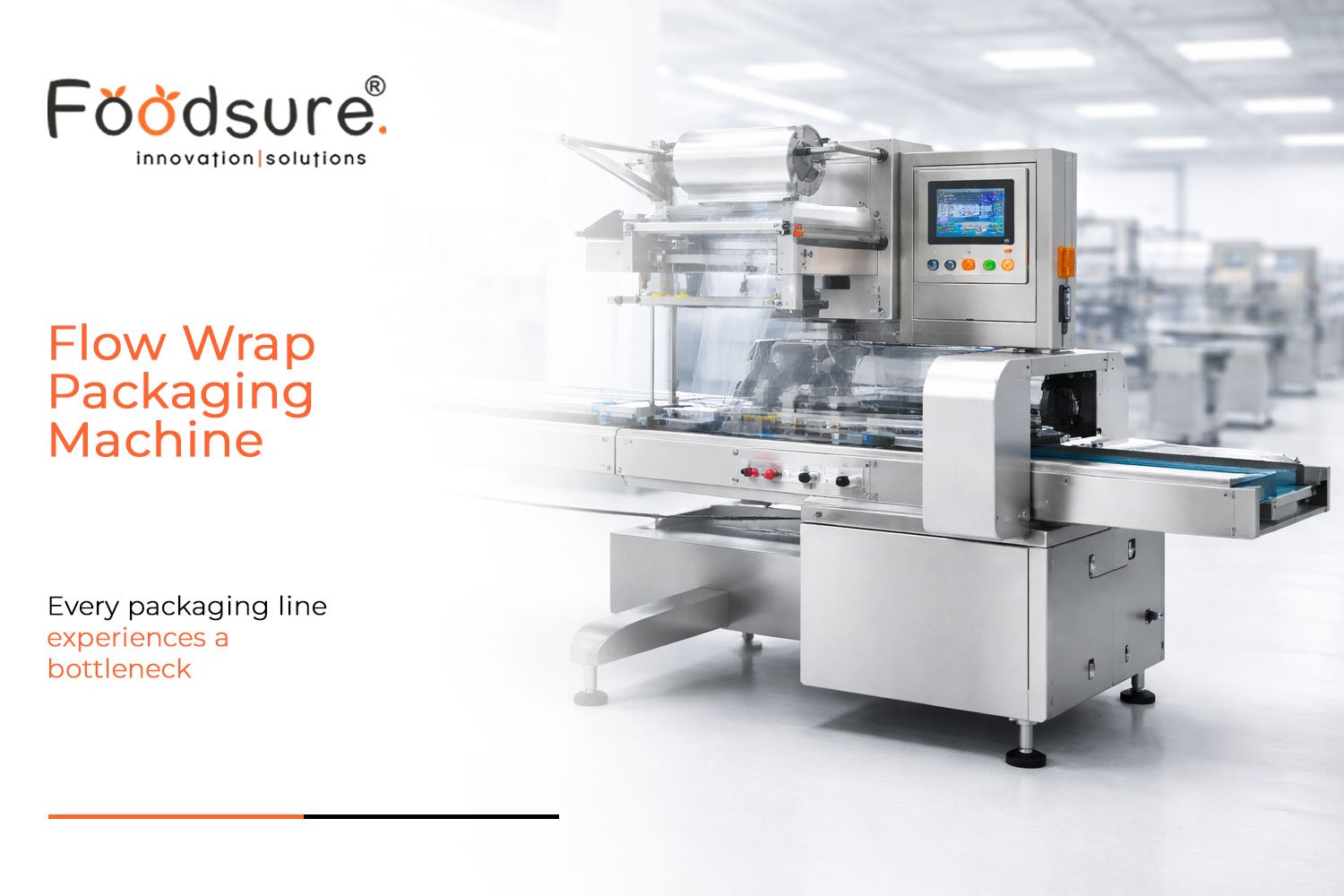
- Packaging: The FFS machines use an automated system to seal the badis in moisture-proof pouches after they have reached their cooling point.
Machines Required for Soya Badi Machine Plant Setup (Beginner to Advanced)
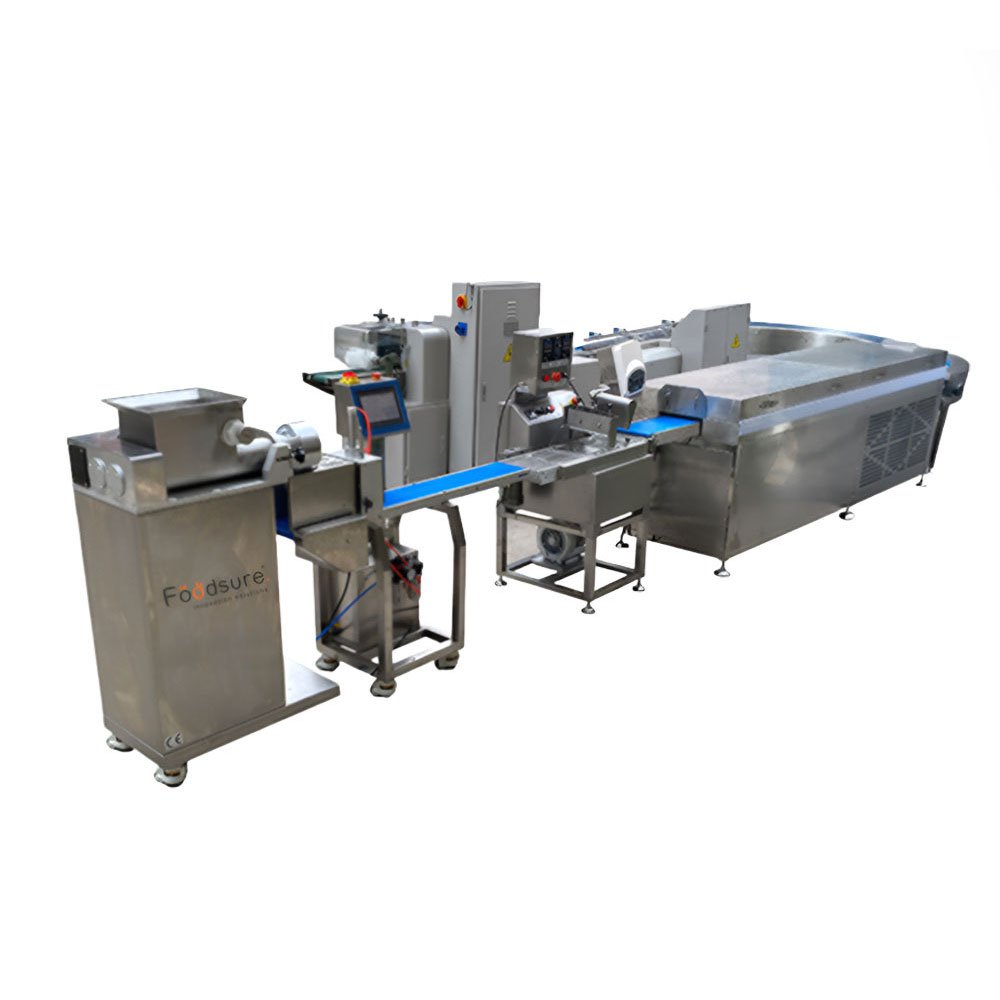
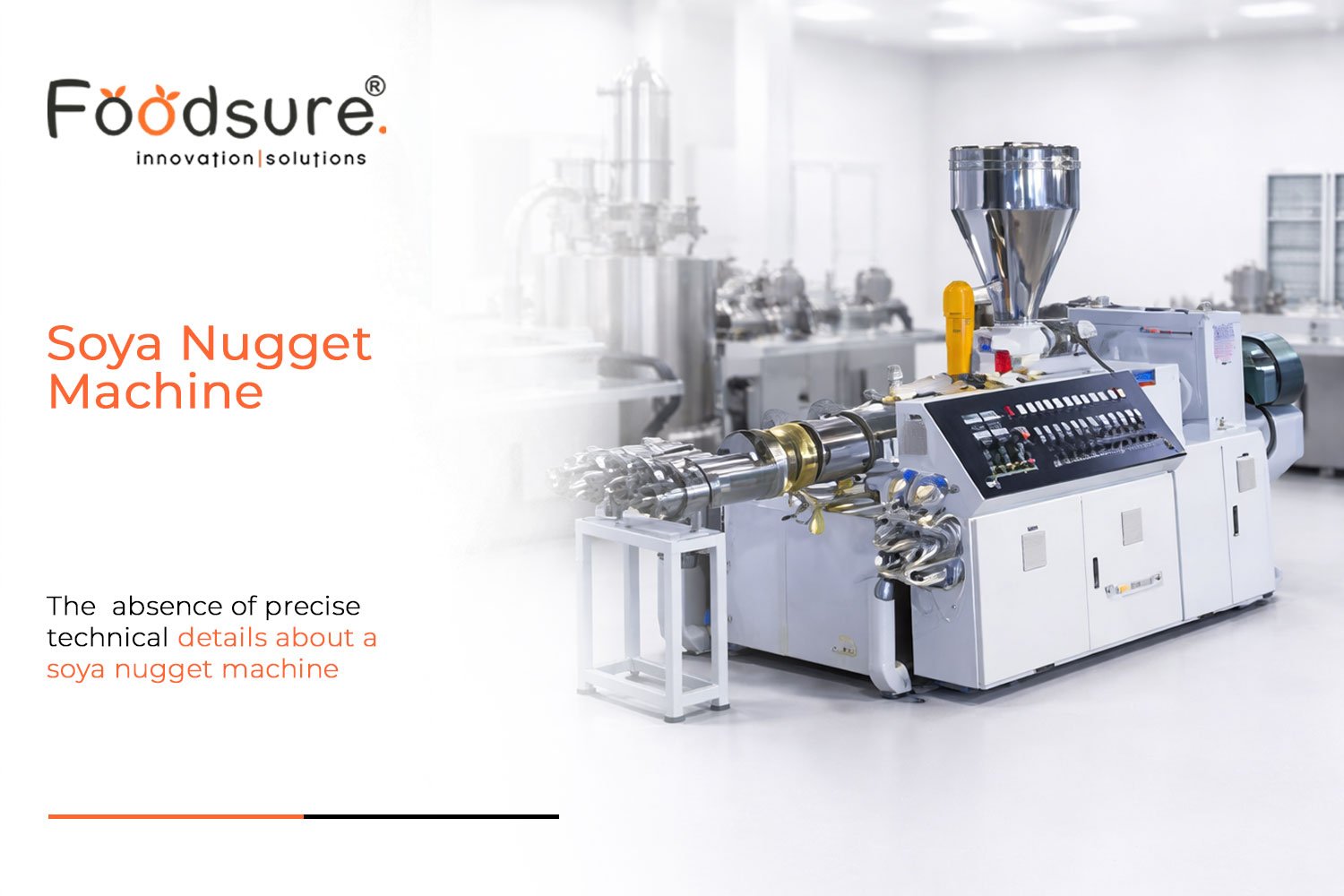
The choice of the appropriate soya chunks making machine will be based on your production objectives and budget. You may require either a standalone soya nugget processing plant or a full soya protein extrusion machine; the system should be able to cook at high pressure as well as cut precisely to achieve the required uniform texture.
Basic Setup (Low Budget)
- Investment: ₹3.5–₹6 Lakh.
- Core Machine: Single-screw commercial soya badi machine (50-100kg/hr).
- Technology: Tray drying and manual mixing (tray dryers).
- Best: Small local suppliers and rural start-ups.
Semi-Automatic Setup
- Investment: ₹8–₹15 Lakh.
- Core Machine: high-torque extruder, with an inbuilt pneumatic cutters.
- Additions: Ribbon blender to achieve a homogenous dough and a semi-automatic pouch sealer.
- Best: City-wide distribution to expanding brands.
Fully Automatic Soya Badi Production Line
- Investment: ₹25 Lakh+.
- Core Machine: Twin-screw soya protein extrusion machine of export-quality texture.
- Workflow: FFS rolling conveyor system between mixing and continuous multi-layer drying and FFS packaging.
- Best Fit: High-volume retail brands and large-scale industrial processes.
How to Select the Right Plant Capacity for Your Business
The decision of the right soya badi plant capacity and production output per hour will depend on your target market and coverage. Comparison of small and industrial soya chunk machines will make sure that you do not overinvest in idle power or underperform at peak at a certain demand.
- Micro-Scale (2550 kg/hr): Best suited in local village-level distribution or speciality organic niches.
- Small-Scale (100150 kg/hr): The most friendly point for most small start-ups pursuing city-wide retail and wholesale.
- Industrial-Scale (250 -500+ kg/hr): Ideal where it is designed to serve a state-wide brand or export-oriented unit in need of high-torque twin-screw extruders.
- Growth: What type of soya badi machine is the best? Modular designs will be sought when you want to expand by increasing the capacity of your dryers or packaging units.
Conclusion
Partner with Foodsure Machines, a trusted soya badi machine manufacturer in India, to streamline your setup. We provide complete solutions, including industrial soya badi plant cost in India and turnkey soya processing plant assistance. Contact us today for the automatic soya chunk machine price.
FAQ
What is a soya badi machine plant setup?
A soya badi machine plant set entails a complete plant comprising a mixer, extruder, dryer, and pack unit for the manufacturing process of soya chunks step by step.
How to start soya badi manufacturing business in India?
Begin with the appropriate capacity choice, investment in equipment, acquisition of licenses, and organisation of work, based on the investment in small-scale soya badi plants.
Which machine is used to make soya badi?
The central machine in a turnkey soya badi plant solution India is a twin-screw extruder with assisting machinery.
How much does a soya chunk machine cost in India?
Soya badi machine plant setup cost is ₹5Lakh (large scale), ₹ 50+Lakh (fully automatic) in India.
Is the soya badi business profitable in India?
Yes, at 20-35%, profitability is based on the badi plant’s capacity and production per hour.