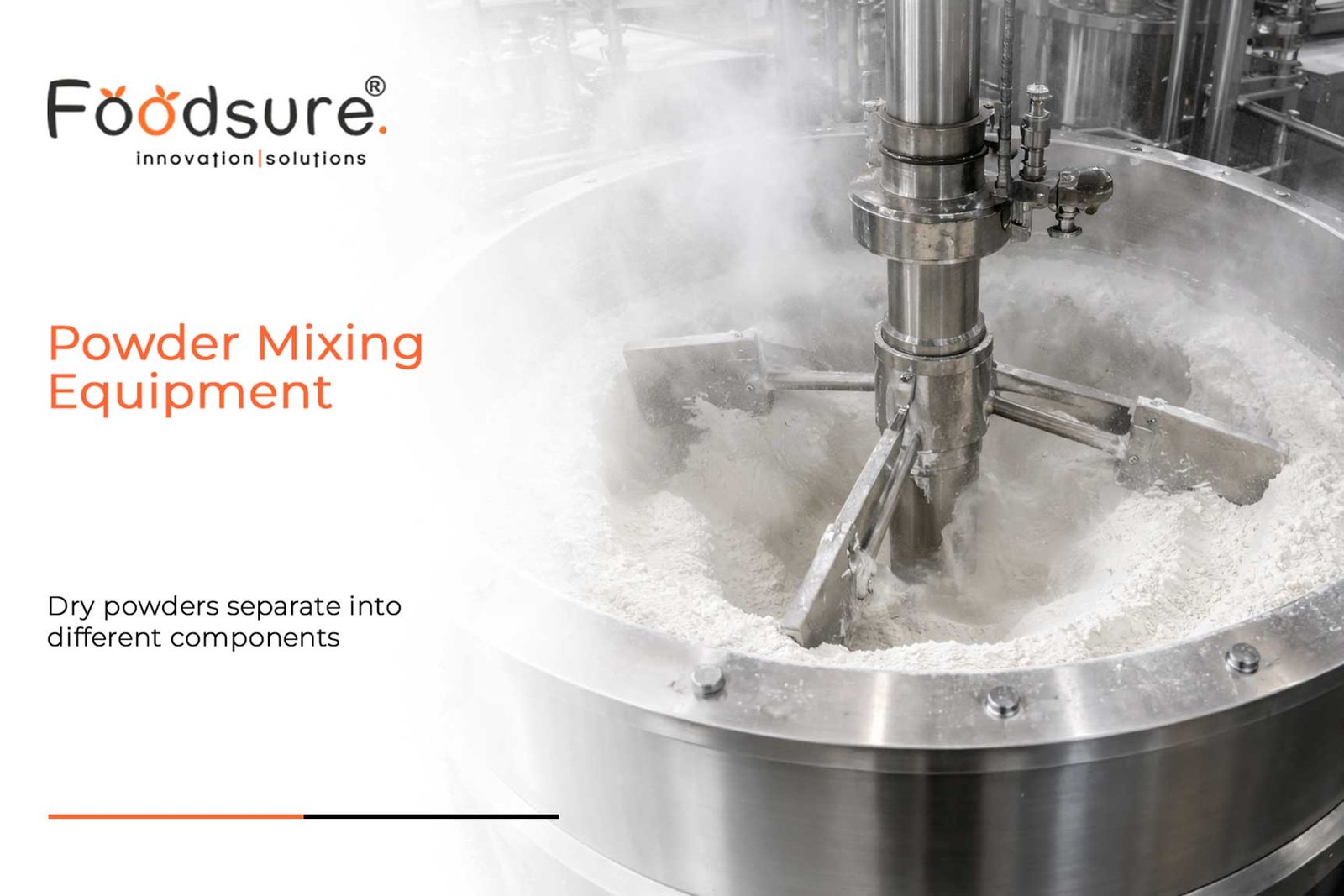
Dry powders separate into different components. The self-leveling property of liquids proves that dry powder mixing equipment needs additional testing. The powder blending system should function as an active control system rather than an inactive background resource in spice blending, nutraceutical premixes, and pharmaceutical manufacturing. The system produces three outcomes are batch deviation, regulatory compliance challenges, and continuous unaccounted material waste, which accumulates throughout operations.
The mixer serves as the essential point where the formulation system maintains its original composition or completely changes into something different. A dry ingredient mixer that engineers its operations effectively controls all particle movement, prevents materials from separating, and produces batches that conform to established standards. The blog explains how scientists achieve powder homogenization using different equipment designs that employ core-mixing mechanisms to produce various mixing patterns and powder-blending outcomes.
How Dry Powder Mixing Equipment Controls Powder Homogenization and Consistency
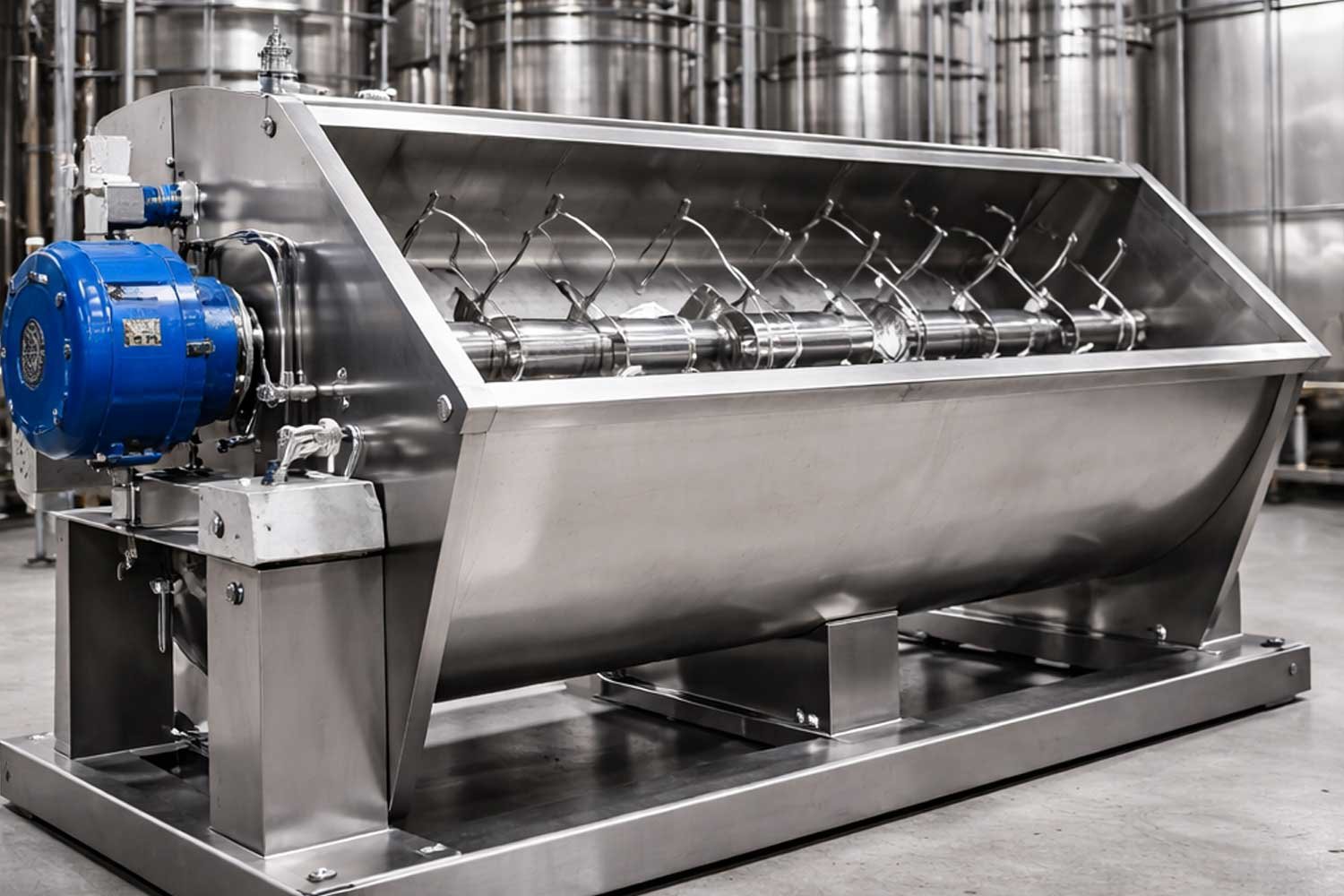
The process of establishing uniform powder distribution in a powder homogenizer requires engineering efforts that need to be executed through controlled procedures rather than using random methods.
Why Powders Segregate
Dry powders show complex behavior through which they display their characteristics because of five factors, which include:
- Particle size variation.
- Density differences.
- Shape irregularity.
- Electrostatic charge.
- Moisture absorption.
Result:
- Heavier particles descend through Percolation
- Fine particles ascend through Elutriation
- Blend loses its cohesion through Segregation when workers handle it
The Three Core Mixing Mechanisms
Convection:
- Function: Bulk particle movement.
- Equipment Example: Ribbon Blender.
- Use Case: High-volume spice blending.
Diffusion:
- Function: Particle redistribution via tumbling.
- Equipment Example: Double Cone Blender.
- Use Case: Fragile pharma powders.
Shear:
- Function: Breaking agglomerates.
- Equipment Example: Paddle / Plowshare Mixer.
- Use Case: Cohesive or sticky powders.
Key Insight:
A high-performance dry ingredient mixer operates through a controlled material-based balance of three mixing mechanisms, which work together because of their design.
Engineering Controls That Ensure Uniformity
The equipment needs to control the Froude Number, which measures centrifugal force against gravity, to achieve a Coefficient of Variation under 5%. The system requires the following components to achieve its operational targets:
- Controlled RPM and torque
- Optimized vessel geometry
- Fill level calibration (40–70%)
- Precision clearance (2–5 mm)
- Anti-segregation discharge design
Target Benchmark:
- Coefficient of Variation (CV): < 5%
- Blend uniformity: 99.5%
Inconsistent Powder Quality?
Fix mixing issues & get uniform output.
Why Poor Dry Powder Mixing Equipment Leads to Batch Failures and Cost Escalation
The industrial food processing sector experiences financial damage when it employs an inferior powder blending system because the effects extend beyond the creation of one faulty product. The process results in hidden operational expenses, which create financial damage that can reduce annual net profits between 15-20%.
- The Batch Rejection Rate: Establishes a connection between blending inconsistency and powder rejection. The entire lot of 500kg to 2000kg must be discarded when a powder homogenizer fails to meet the CV < 5% requirement because this results in the business losing money.
- Raw Material Loss (2–5%): Many manufacturers overdose expensive actives (like vitamins or premium saffron) to ensure every sample meets label claims despite poor mixing. Safety margin waste from spice dry powder mixing equipment exists, but precision equipment for dry powder mixing removes this waste problem.
- Rework Cost: High-speed dry powder blenders for food processing deliver 40 percent labor and energy savings because they eliminate the requirement for secondary milling and re-blending procedures.
- Compliance Risk: High in FSSAI / GMP audits. Inconsistent sample results during a regulatory check lead to plant shutdowns, which result in severe fines and permanent brand damage to the business.
- Production Delays: Caused by reprocessing. The packaging line loses output capability for every hour that operators dedicate to repairing blend problems.
Interpretation:
The process of under-specifying dry powder mixing equipment for spices and nutraceuticals creates multiple operational losses that extend beyond mere quality problems. The company needs to acquire high-torque precision-clearance machinery because this equipment protects its financial performance and maintains trust with customers.
Equipment Selection Framework: Choosing the Right Dry Powder Mixing Equipment for Your Material
The selection process for effective dry powder mixing equipment requires engineers to understand how the material properties of Hausner Ratio and Angle of Repose determine mixing requirements.
| Equipment | Action | Target CV | Fr Range | Batch Time | Power (kW/m³) |
|---|---|---|---|---|---|
| Ribbon Blender | Convective | <5% | 1.0–1.5 | 15–20 min | 10–15 |
| Double Cone | Diffusion | <2% | 0.5–0.8 | 30–60 min | 2–5 |
| Paddle Mixer | Radial / Shear | <5% | 1.5–2.5 | 5–10 min | 15–25 |
| V-Blender | Tumble | <1% | 0.4–0.6 | 20–40 min | 3–6 |
| Fluidized Mixer | Suspension | <3% | 3.0–5.0 | 0.5–2 min | 30–50 |
Selection Logic (Non-Negotiable Factors)
Engineers need to measure inter-particle friction between constituent particles to achieve a Coefficient of Variation (CV) below 5%. The design of dry powder mixing equipment for spices needs to implement a high-shear agitator because the equipment must maintain operational stability while handling large quantities of high-oil-content spices.
Material Properties:
- Particle size distribution: Prevents sifting segregation.
- Bulk density: Determines the motor torque and Froude Number required for fluidization.
- Flowability index & Heat sensitivity: Prevents smearing of fats or waxes.
Process Requirements:
- Batch vs. continuous production: The production method of a business determines the appropriate scale for powder blending operations through its selection of batch or continuous production.
- Micro-ingredient inclusion (< 1%): Requires a powder homogenizer with intensive folding action.
- Throughput targets: The dry ingredient mixer needs to operate at a speed that matches the packaging line requirements to achieve the desired throughput targets.
Compliance Needs:
- Food-grade vs. pharmaceutical: The choice between food-grade and pharmaceutical standards establishes which Stainless Steel grade, SS304 or SS316L, will be used.
- Cleaning validation (CIP/WIP): Essential for preventing cross-contamination in a dry powder blender for food processing.
- Surface finish (Ra ≤ 0.8 µm for pharma): Eliminates nooks and crannies where bacteria can thrive.
Hidden Bottlenecks in Dry Powder Mixing Equipment That Destroy Mixing Efficiency
A powder blending system achieves optimal performance when it reaches high RPMs and eliminates all mechanical blind spots, which hinder proper batch processing.
Dead Zones Inside the Mixer
- The Problem: Internal design flaws create spaces that capture powder materials that should remain free to move.
- The Risk: The production process results in inconsistent outcomes because unmixed pockets spoil the final product.
- The Fix: The development of precision-engineered vessels uses radiused corners with precise tip clearances of $2–5\text{ mm}$.
Over-Mixing vs Under-Mixing
- The Problem: The extended processing time causes particle degradation through attrition, while the shortened processing time prevents complete ingredient distribution.
- The Risk: Each pack displays different nutrient and flavor density patterns.
- The Fix: The organization implements calibrated mixing cycles, which depend on the Froude Number (Fr) and validated CV testing.
Segregation After Discharge
- The Problem: Post-mix vibration creates sifting, which results in particles separating again according to their size.
- The Risk: The dry powder blender achieves a specific blend, which becomes ineffective during the packaging process.
- The Fix: The system uses center discharge valves together with controlled material flow to achieve minimal material drop height.
Poor Sealing and Dust Leakage
- The Problem: Fines escape through non-food-grade seals.
- The Risk: The operation leads to product loss, which results in severe cross-contamination dangers and health risks that OSHA considers dangerous.
- The Fix: Teflon gland seals and dust-tight, heavy-duty construction.
Technical Insight:
The discharge phase of a powder homogenizer performs essential functions that match those done by its mixing phase. The presence of a discharge gate that does not reach the vessel floor creates a dead pocket that holds up to 2-5kg of unmixed material, which will spoil the next batch. The equipment must use pneumatic flap valves for dry powder mixing because they guarantee that 100% of the material will be released.
How to Integrate Dry Powder Mixing Equipment into a Reliable Production Line
Facilities that need dry powder mixers for their high production needs should design their systems to perform as complete production systems instead of using basic blending methods. The process of achieving continuous product quality requires engineers to synchronize material science with mechanical systems that handle material flow according to the international standards established by FSSAI and HACCP.
Phase 1: Material Characterization
A successful powder blending system needs scientists to study every aspect of its raw materials through microscope examination. Before manufacturers select a dry powder blender for their food processing operations, they need to conduct a rheological assessment of their materials.
- Hygroscopic Nature: Salts and sugars, together with certain chemical bases, exhibit hygroscopic properties because they absorb atmospheric moisture from the surrounding air. The resulting caking formation needs a powder homogenizer that operates with high-torque motors to eliminate surface tension binding the particles together.
- Oil Content (Critical for Spices): The design process of dry powder mixing equipment needs to consider the fat-jacket effect, which affects spice materials. Essential oils in powders create stickiness, which requires a standard ribbon blender to use intensifier bars together with choppers to stop clumps from forming.
- Abrasiveness: The mixer walls experience damage because hard minerals and crystalline structures collide with them during operation. The dry ingredient mixer needs to implement wear-resistant coatings together with SS316 plating that uses thicker gauge material to secure metal parts from entering the food products.
Phase 2: Equipment Engineering Standards
The cleanability requirement for industrial food processing equipment exists as an equal requirement to the equipment’s ability to mix material. The following standards must be met because the Coefficient of Variation (CV) requirement needs to stay below 5% while the safety standards need to remain intact.
- SS316 Construction: Food-grade applications that use corrosive substances require SS316L as the standard material for their operations, although SS304 serves as the basic material. Its materials demonstrate better protection against pitting and chemical sanitizers.
- Mirror Finish (Ra < 0.4 µm): For hygiene-critical lines, the internal surface must be polished to a mirror finish. The surface roughness value of Ra proves that bacteria and fines cannot find surfaces to adhere to, which allows for quicker execution of Clean-in-Place (CIP) procedures.
- Anti-Corrosion Design: The procedure requires all welds to undergo grinding with argon purging until all dead spots are removed. The system requires outboard bearings to separate lubricants from the product zone in its powder blending operation.
Phase 3: Validation & Compliance
The professional dry powder blender functions as a validated asset. The regulatory audit requires proof of mix uniformity because guessing the mix uniformity will not meet their needs.
- Required Technical Tests: Blend Uniformity Testing: The chemical analysis of 10 samples from different zones (top, middle, bottom, and discharge) of the powder homogenizer will verify chemical equality.
- Coefficient of Variation (CV): The active ingredient standard deviation across the batch shows minimal variation according to mathematical proof. The industrial standard for CV measurement establishes 5% as the maximum acceptable value.
- Batch Traceability: The digital batch certificate system creates a record for every batch through PLC (Programmable Logic Controller) integration, which tracks mixing time, RPM, and operator IDs.
Regulatory Alignment:
- FSSAI (India): The organization protects against cross-contamination while maintaining non-reactive contact surfaces.
- GMP (Pharma): The dry ingredient mixer needs to pass Installation Qualification (IQ) and Operational Qualification (OQ) testing requirements.
- HACCP: The HACCP system designates the mixer as a Critical Control Point (CCP), which requires discharge magnetic separators to monitor metal-to-metal contact foreign body contamination.
ROI Analysis: Why High-Quality Dry Powder Mixing Equipment Pays Back Fast
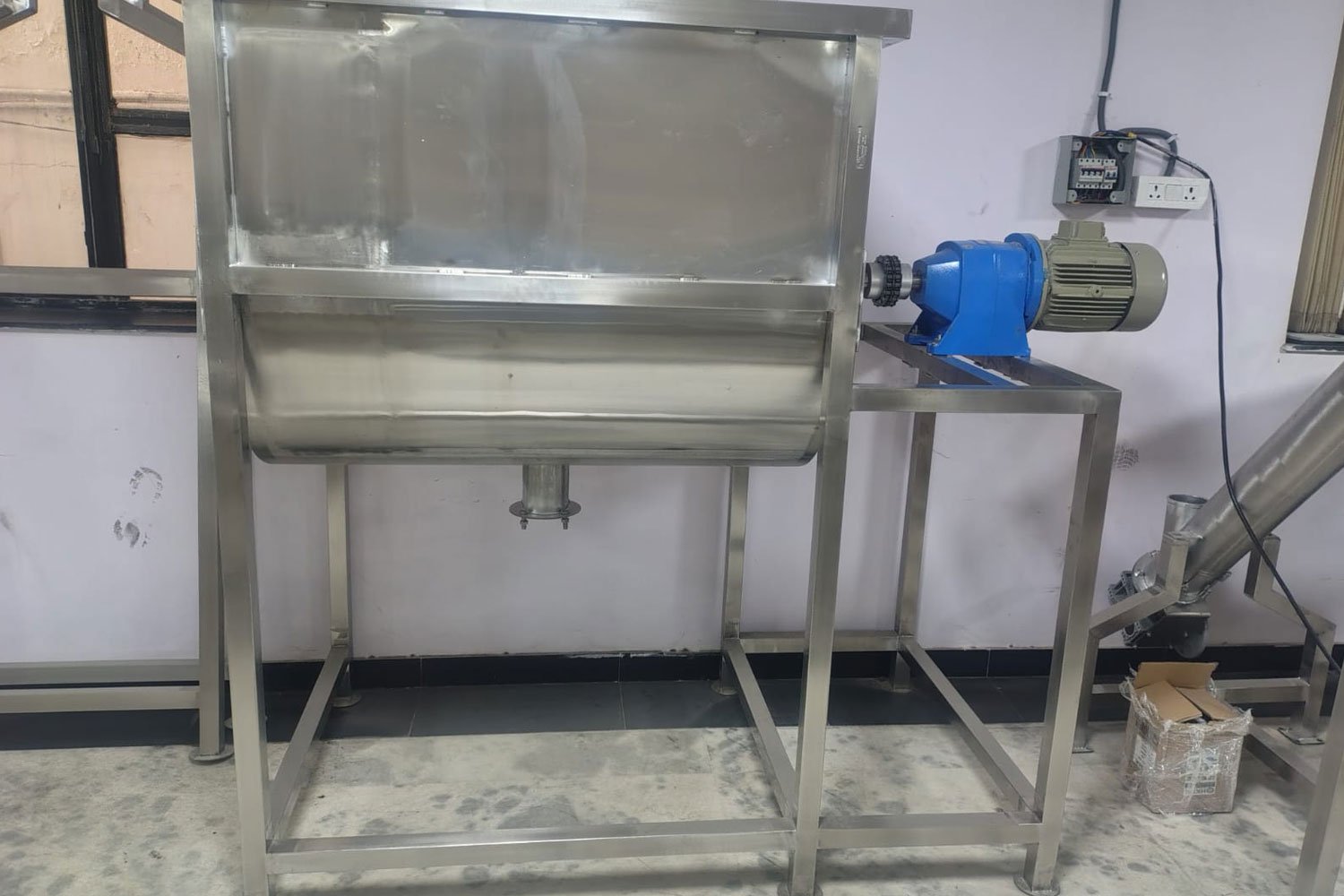
The process of investing in a precision-engineered powder blending system directs financial assessment away from initial expenses toward evaluation of future profit potential. The financial recovery of a high-specification dry ingredient mixer comes from two factors, which include the removal of hidden operational waste and the boost in production efficiency.
- Material Cost Optimization: The manufacturers achieve their goal of cost reduction by maintaining their control values under 5%, which allows them to limit their expensive active ingredient usage to vital requirements.
- Compliance & Audit Readiness: Automated powder homogenizers provide complete batch tracking through their operation. The system protects organizations from FSSAI and GMP audit failures, which result in substantial penalties and harm to their reputation.
- Throughput & Scalability: The transition from manual systems or low-torque systems enables operations to expand from 500 kg/hr-5000 kg/hr while maintaining current workforce requirements, which results in reduced expenses for each kilogram produced.
- Energy Efficiency Gains: The modern food processing dry powder blender system employs highly efficient gearboxes together with Froude Number (Fr) optimized systems to achieve energy efficiency improvements of 15-30% during maximum production periods.
Conclusion
A dry powder blender system has to be designed for consistency before anything happens on the assembly line; therefore, each powder blend is consistent because of the components in a dry powder blender. A properly designed powder blender will give you mixture consistency, maintain the formulation’s integrity, and improve batch consistency by removing variation costs associated with production.
Foodsure Machines provides the precision, reliability, and compliance necessary to complete your product project by developing custom equipment for your production needs. We will match the mixer or homogenizing systems that we design with the actual requirements of your production process rather than trying to fit a generic piece of equipment into your production line. By optimizing your mixing process, you can achieve a consistent product, reduce your waste, and create a scalable system that can grow as your production grows.
Inconsistent Powder Quality?
Fix your mixing process & get uniform output.
FAQ
What is dry powder mixing equipment used for?
Uniformly blended dry ingredients in a powder-blending system can be achieved with a dry-powder mixer, allowing consistent quality from batch to batch.
Why is a powder blending system important in food processing?
Properly mixed dry powders can provide an even distribution of all of their respective components in a dry-powder mixer; therefore, they can help prevent any inconsistencies that could occur when using a powder-blending system to mix multiple ingredients concurrently.
How does a dry ingredient mixer improve product consistency?
In dry-powder mixing equipment, a dry-ingredient processor helps control the movement of the dry ingredients being mixed and also helps reduce the potential for segregation, thereby increasing uniformity within the equipment.
What role does a powder homogenizer play in manufacturing?
A homogenizing mixer homogenizes the micro-sized dry ingredients contained within the mixing equipment, which is essential for both the maintenance of quality and the compliance aspects of the dried powder mixture.
Which industries rely on dry powder mixing equipment for spices and powders?
Consistent mixing between bulk powders is very important for the food, pharmaceutical, and nutraceutical industries; therefore, they all rely on the use of dry-powder mixers when mixing whole spices or any other type of bulk powder mix.