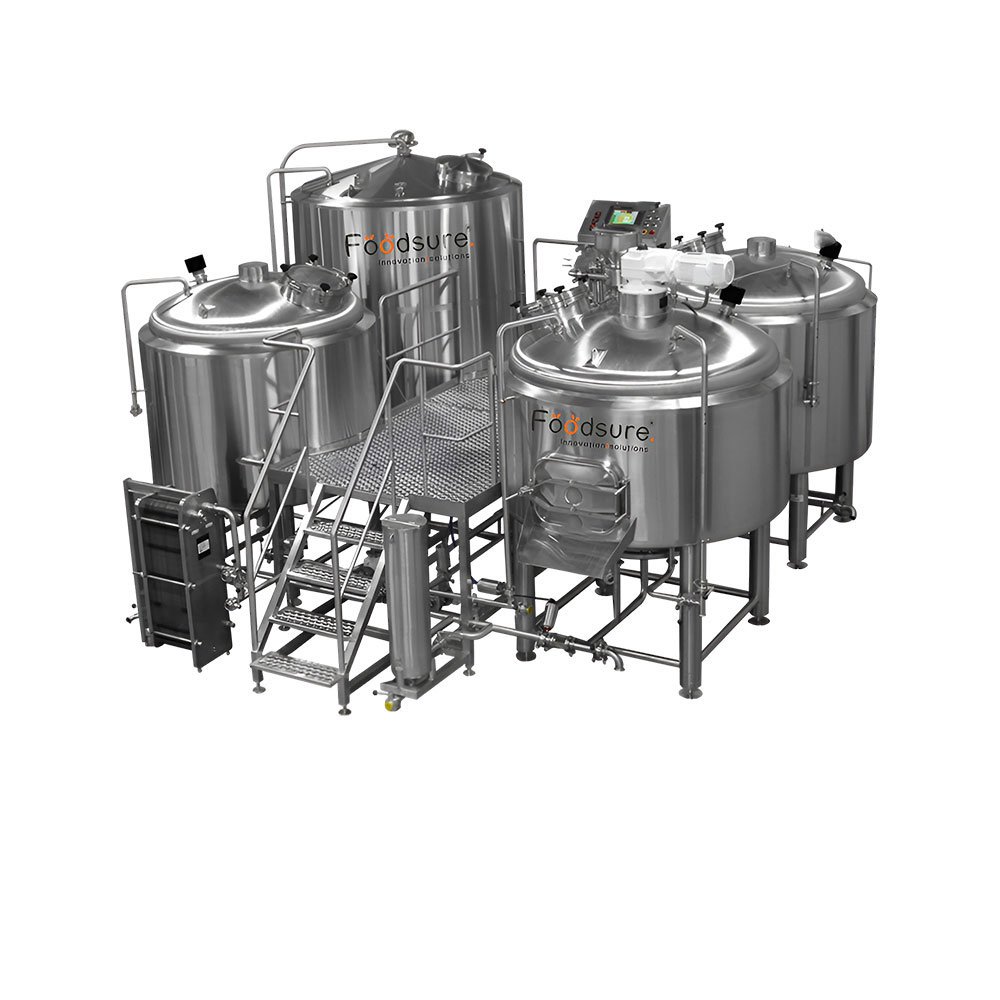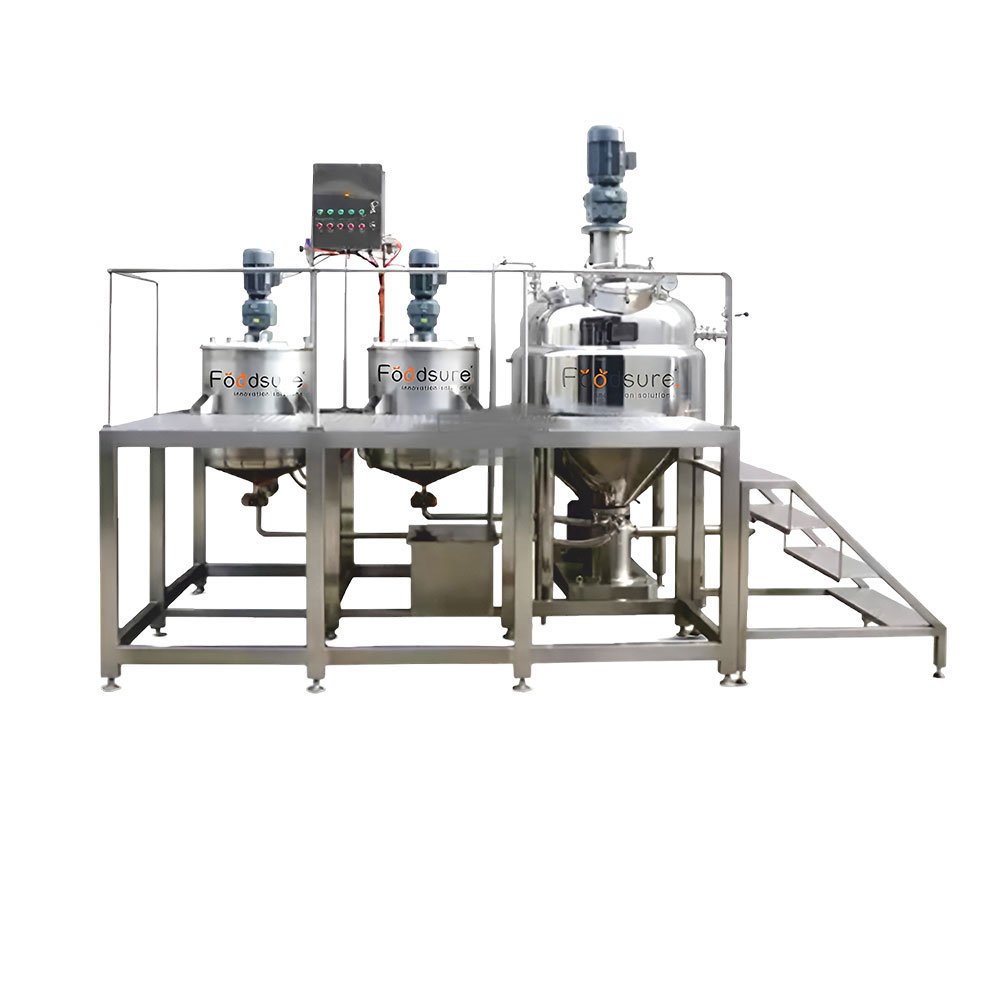
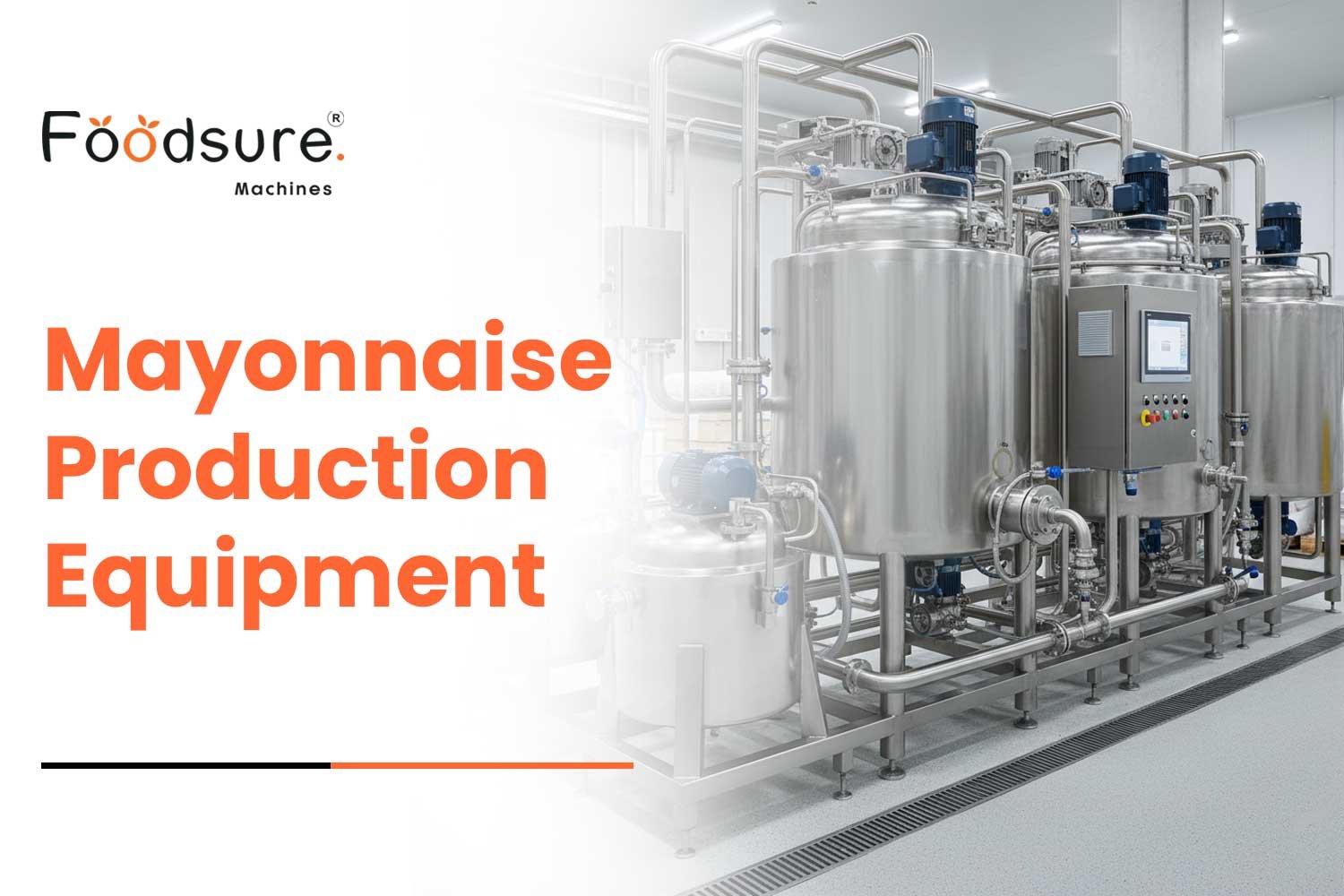
India’s mayonnaise market is expanding at more than 20% a year, and that growth is not coming from multinational brands alone. Local food startups, café chains, and private-label manufacturers are driving a quiet revolution in ready-to-use sauces. Making good mayonnaise is not the challenge. But making it consistently, at scale, without losing texture and taste. That is where your equipment matters. The right mayonnaise production equipment gives you precision, hygiene, and repeatable results.
How Growing Mayonnaise Consumption Is Powering the Need for Modern Mayonnaise Production Equipment
The worldwide mayonnaise market had a value of around $12.97 billion in 2024. And is expected to grow to approximately $18.20 billion by 2033 for a consistent growth rate of 3.8% each year. Growth has come mostly from simple adjustments to mayonnaise products. Better packaging for adequate shelf-life, promotion of international flavors, and a seemingly limitless amount of cooking content shared in a visual space on the internet.
Real Challenges Entrepreneurs Face While Setting Up Food Production Equipment
1. Inconsistent Emulsion and Separation
In an industry, many small units face the same problem, which is that oil and water do not blend properly. And the batch ends up separating. This problem usually happens when the mayonnaise-making machine mixer does not create enough force, and the temperature is not stable. As we know, mayonnaise is all about stability. If you use a well-designed machine, it helps you to keep the mix balanced so every batch turns out smooth and uniform.
2. Hygiene and Food Safety Concerns
When mayonnaise production equipment is made from cheap materials and has poor welds, food particles get stuck in tiny gaps. That problem turns into contamination. And you failed to achieve food safety checks and a shorter shelf life. For the machines, always use clean, food-grade steel and equipment that is easy to wash and keeps your production line safe.
3. Overspending on Unnecessary Automation
A lot of new brands are directly buying fully automatic mayonnaise machines, thinking it will make them more efficient. But the machine depends on your production level and automation. For many small setups, a semi-automatic mayonnaise machine is enough to meet demand and maintain quality.
4. Space and Layout Issues
Before buying a mayonnaise-making machine, always first check which machine layout is best for the space you have. Then buy a machine. Rather than a poor setup slowing everything down, like materials piling up, workers get in each other’s way, and efficiency drops.
5. Hidden Maintenance Costs
An imported mayonnaise processing line often look appealing at first, but can become expensive to maintain. Service parts take weeks to arrive, and service is not always available nearby. Always select equipment with local support and easy-to-replace parts saves time, money, and a lot of unnecessary stress.
What You Can Do to Solve These Equipment Buying Problems
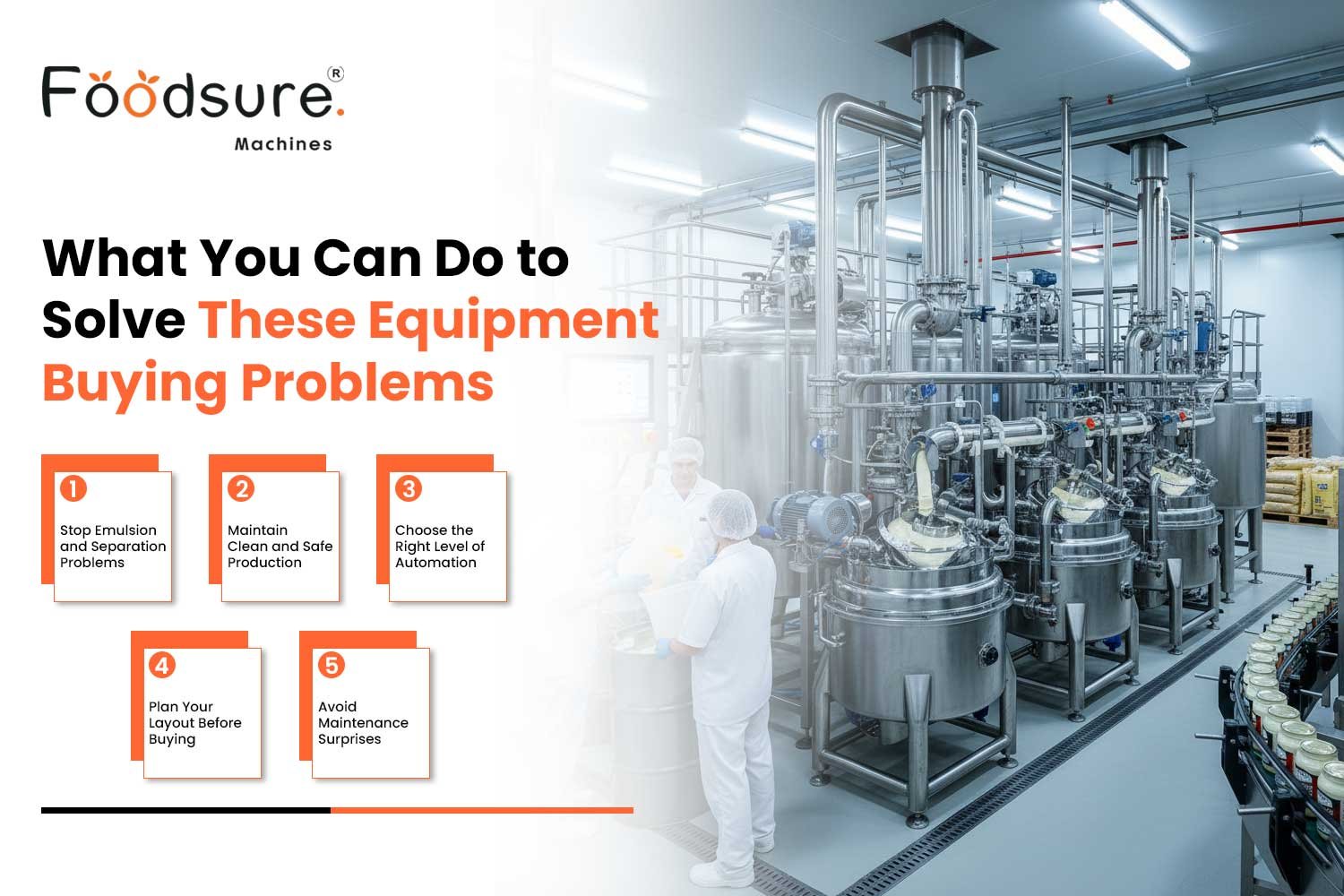
1. Stop Emulsion and Separation Problems
Before buying, check how evenly a machine mixes and heats. A stable unit will keep the blend smooth without you having to keep adjusting it.
2. Maintain Clean and Safe Production
Clean machines make safe food; it’s that simple. Stainless steel 304 machines with smooth surfaces and no tiny corners where food can stick. Because it is easier to clean, it gives you a better product quality, and the shelf life will be longer.
3. Choose the Right Level of Automation
There are mainly two types of mayonnaise processing lines. Which usually depends on your production levels and automation, which is best for your business. A semi-automatic mayonnaise machine is ideal for a small business. A fully automatic mayonnaise machine is ideal for large-scale production.
4. Plan Your Layout Before Buying
A lot of production delays happen because the layout wasn’t planned well. Think about how materials move from start to finish, keep the flow straight and simple. Check your space before buying a machine and review with the machine supplier.
5. Avoid Maintenance Surprises
Many suppliers import mayonnaise production equipment, but in the early days often looks great until something breaks. Then you wait weeks for parts or service. Go with machines that have local support and easily available spares.
Things Every Food Entrepreneur Should Check Before Buying Equipment
Most food entrepreneurs make the mistake of rushing through equipment choices. But the small details are what keep your production smooth and your product consistent.
- Food-grade SS304 build: This is the metal you can trust. It keeps your product safe and prevents rust.
- Vacuum or high-shear mixer: It gives you a smooth, stable mix every time, without separation.
- Temperature and RPM control: These settings help you repeat the same quality batch after batch.
- CIP cleaning system: Makes cleaning simple and fast, saving hours of manual work.
- Warranty and spare support: You’ll thank yourself later when a part wears out and help is just a call away.
- Local after-sales service: It’s not just convenient, it keeps your downtime low and production steady.
How to Calculate ROI Before Buying Mayonnaise Production Equipment
| Setup Type | Capacity | Investment (₹) | Break-Even (Months) |
|---|---|---|---|
| Semi-Automatic | 500–1,000 jars/day | 8–15 lakh | 10–14 months |
| Fully Automatic | 2,000+ jars/day | 20–35 lakh | 12–18 months |
Start Your Mayonnaise Production Journey with Foodsure Machines
Building a mayonnaise business isn’t just about recipes; it’s about setting up the right industrial mayonnaise machine from day one. Foodsure Machines helps you plan your production, choose an industrial mayonnaise machine that fits your capacity, and keep operations simple and reliable. You get real guidance, not just a catalog of equipment.
FAQ
Q1. What are the raw materials necessary for mayonnaise equipment?
The equipment utilizes basic styles of ingredients (e.g., oil, egg yolks, vinegar or lemon juice, and stabilizers), which process the food ingredients to manufacture a smooth, consistent, stable emulsion.
Q2. What will you require for machines or equipment for a mayonnaise operation?
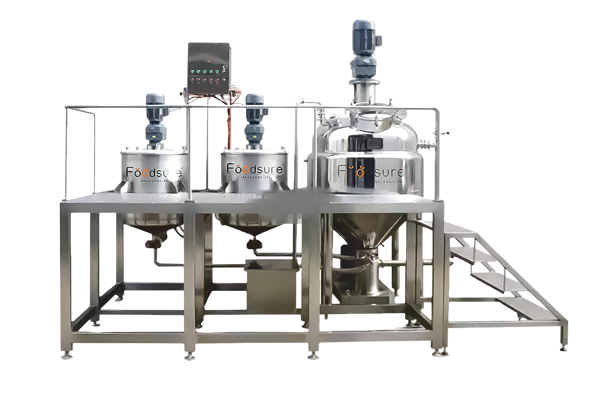
You will require at least a mayonnaise processing equipment system, which includes a high shear mixer, an emulsifier, storage tanks, and filling equipment, etc., to ensure consistency and hygiene.
Q3. Is making mayonnaise machines/equipment a feasible or profitable business?
Yes. A continuous market featuring repeat business can bring a small-scale mayonnaise operation to a multi-crore business in a few years.