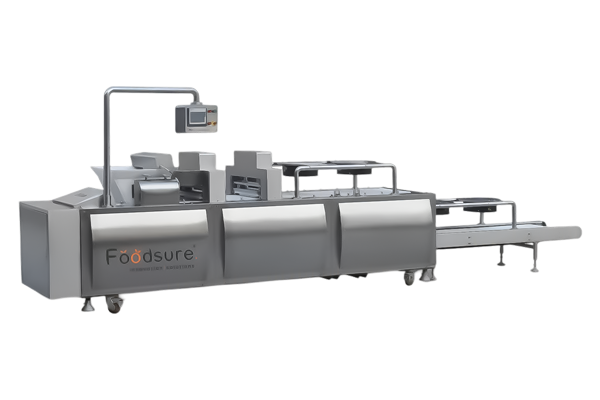

Growth-oriented protein barfirms are silently destroyed by production bottlenecks. Your margins are determined by the machinery you select, regardless of whether you are hand-pressing small quantities or considering an industrial line. We conduct a comparison of manual vs semi vs fully automatic protein bar machine to determine the actual regrets of founders and to provide guidance on how to avoid the common pitfalls of scaling inadequately or falling behind.
Manual vs Semi vs Fully Automatic Protein Bar Machine: Complete Comparison for Founders
| Feature / Aspect | Manual Protein Bar Machine | Semi-Automatic Protein Bar Machine | Fully Automatic Protein Bar Line |
|---|---|---|---|
| Typical Production Capacity | 50–100 bars/hr | 500–1,500 bars/hr | 5,000–20,000+ bars/hr |
| Weight Precision | Low (±5 g variance) | Medium (±1 g variance) | High (±0.2 g variance) |
| Labour Requirement | 4–6 people | 2–3 people | 1 operator |
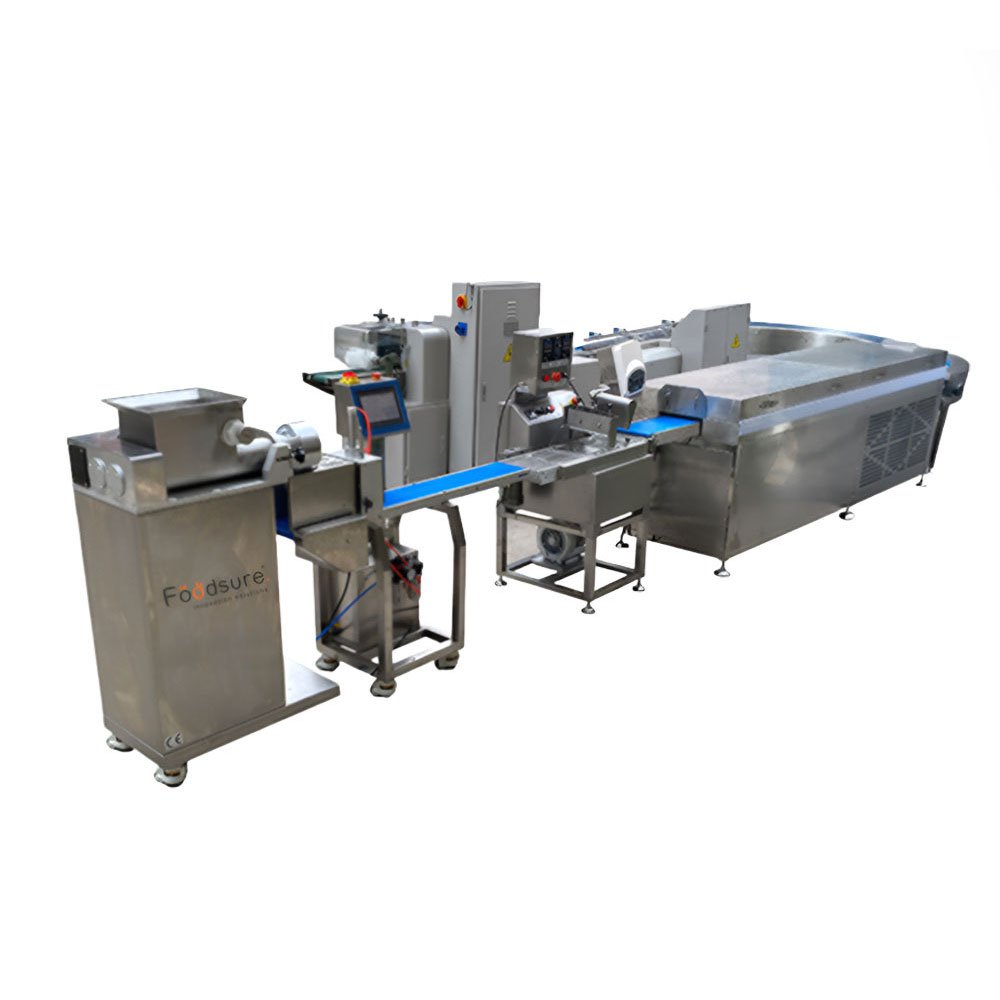
| Automation Level | Manual forming and cutting | Automated extrusion & cutting with manual feeding | End-to-end automation (mixing to packaging) |
| Ease of Operation | Very simple; minimal training | Moderate; basic operator training required | Complex, skilled operator or technician needed |
| Maintenance Needs | Minimal; basic cleaning | Monthly servicing + deep cleaning during changeovers | Daily checks; technical staff often required |
| Scalability Potential | Very limited; growth bottleneck appears quickly | Moderate; suitable for scaling startups | Very high; designed for industrial output |
| Energy Consumption | Low | Medium | High |
| ROI Behavior | Slow ROI due to low output | Balanced ROI for growing brands | Fast ROI only at high utilisation |
| Key Founder Regret | Ingredient waste, inconsistent quality, slow production | Labour costs rise with scale; long changeover time | High dead capital, under-utilisation, technical complexity |
| Best Use Case | Proof of concept, recipe trials, local selling | Small brands and startups (sweet spot) | National distribution, contract manufacturing, export |
| Risk Level for Startups | Low investment risk but high inefficiency | Moderate risk with manageable investment | High financial risk if demand is uncertain |
The Hidden Risks of Each Automation Level: What Founders Learn After Scaling

The kitchen-to-factory transition represents the main financial risk that founders face when they launch their protein bar business. The regret exists because business owners purchase unsuitable equipment when their actual needs require different machine specifications.
The analysis presents three production levels with their particular challenges, which founders must navigate during business operations.
1. Manual Protein Bar Machines
- The Hidden Trap of Low Entry Cost: Founders choose manual machines to test the market for under ₹2,000. The 1,000-bar limit establishes a point where creators start to feel their decision-making errors.
- The Weight Giveaway: Manual presses often vary by ±3 g-5 g/bar. The waste of raw materials results from your practice of producing 100,000 bars annually while giving away 3g of extra protein blend for each bar.
- Shelf-Life Sabotage: Manual handling increases oxygen exposure and moisture variability, which causes bars to harden and create bloom faster than machine-sealed counterparts.
2. Semi-Automatic Protein Bar Machines
- The Maintenance Gap Choice: This is the most popular choice for startups, which typically costs between ₹5-₹16 Lakh. The system handles extrusion and cutting operations automatically, while operators need to load material and use trays for processing.
- The Changeover Headache: Founders often regret not checking how long it takes to clean the machine between flavours. A quick changeover that takes 4 hrs essentially kills half a day of production.
- The Labour Ceiling: The semi automatic protein bar machine for startups of the process requires 3-4 operators for its execution. Founders often find that as they scale their operations, their labour costs increase at a steady rate, which results in their profit margins remaining unchanged despite sales growth.
3. Fully Automatic Protein Bar Line
- The Capacity Trap for Over-Funded Startups: Large-scale lines which start at ₹50,000 Lakh provide complete automated solutions which handle all processes from mixing through to flow-wrapping.
- Technical Debt: The operation of these machines requires sophisticated expertise. The factory operation ceases when a single sensor breaks down because the facility lacks specialised technicians to repair the fully automatic line system.
- Utilisation Inefficiency: Running a high-capacity line at only 20% capacity is a financial disaster. The energy expenses for starting and cleaning a large production line exceed the total revenue generated by the small batch of bars that are produced.
How to Choose the Right Protein Bar Machine for Your Startup
Commercial protein bar machine India selection creates an equilibrium between current cash flow needs and future operational requirements. Most founders fail by over-investing in dead capital before they have the sales to support it. The semi-automatic protein bar machine for small business operations functions as the ideal solution for a growing brand because it enables high-precision extrusion and cutting while maintaining nutritional labelling accuracy without requiring the expensive operation of a complete protein bar production line.
Key Selection Pointers:
- Prioritise Accuracy: Select a machine that handles your specific binder (dates vs. syrup) to avoid costly weight giveaway and inconsistent nutritional data.
- Modular Growth: Your extruder system needs that support for future integration with a cooling tunnel and flow-wrapper system because you plan to expand your operations.
- Sanitation Speed: Tool-less disassembly allows companies to reduce flavour-changeover times from hours to minutes.
- Technical Support: Before purchasing any machine, customers require vendor confirmation about local spare parts availability and operator training services to protect themselves against revenue loss from machine downtime.
Red Flags to Watch Before Buying a Protein Bar Machine

The purchase order vetting process requires you to evaluate potential manufacturer risks, which need to be assessed before signing.
- Vague Material Specs: The machine will corrode through time because they lack AISI 304 or 316 stainless steel confirmation for all food-contact surfaces.
- No Live Test Run: The supplier shows major trust issues through its decision to deny testing your specific recipe. Sticky protein dough reacts differently from trial flour-and-water mixtures because friction heat creates texture destruction.
- Missing Documentation: The company needs to deliver complete electrical and pneumatic schematics. The technician needs these documents because he cannot repair the machine without access to manufacturer support.
- Third-Party Subcontracting: The company needs to reveal whether they create the machine through internal production. Suppliers who contract out parts often suffer from inconsistent quality and lack the deep technical knowledge required for troubleshooting.
- Unrealistic Lead Times: The company needs to conduct final stress tests and quality control checks after they commit to delivering a custom line within 15 days during peak season.
Conclusion
The correct manual vs semi vs fully automatic protein bar machine selection will determine your business efficiency, operational expenses, and development potential. We provide founders with operational support to prevent them from making expensive errors through our practical assistance and trustworthy equipment. Foodsure Machines provides you with customised solutions that extend from your initial business stage to your scaling phase.
FAQ
Q1. How to choose between manual, semi automatic, and fully automatic protein bar machine?
Ans: The decision should be made depending on the budget, the need for production, and future plans to scale up.
Q2. Which protein bar machine is best for startups: manual or automatic?
Ans: Due to cost and efficiency considerations, most startups choose semi-automatic machines in the beginning.
Q3. What is the cost difference between manual vs semi vs fully automatic protein bar machine?
Ans: The manual option presents the lowest expense, while the semi-automatic system establishes a middle cost range, and the fully automatic system demands the greatest financial commitment.
Q4. What capacity should a protein bar machine for small business startup have?
Ans: Most startups come up with a 50 – 150 kg/hr, depending on the expected demand.
Q5. What is t he price range of semi automatic protein bar machine for startups?
Ans: Semi-automatic machinery naturally falls in a medium level of investment compared to other types of machinery.