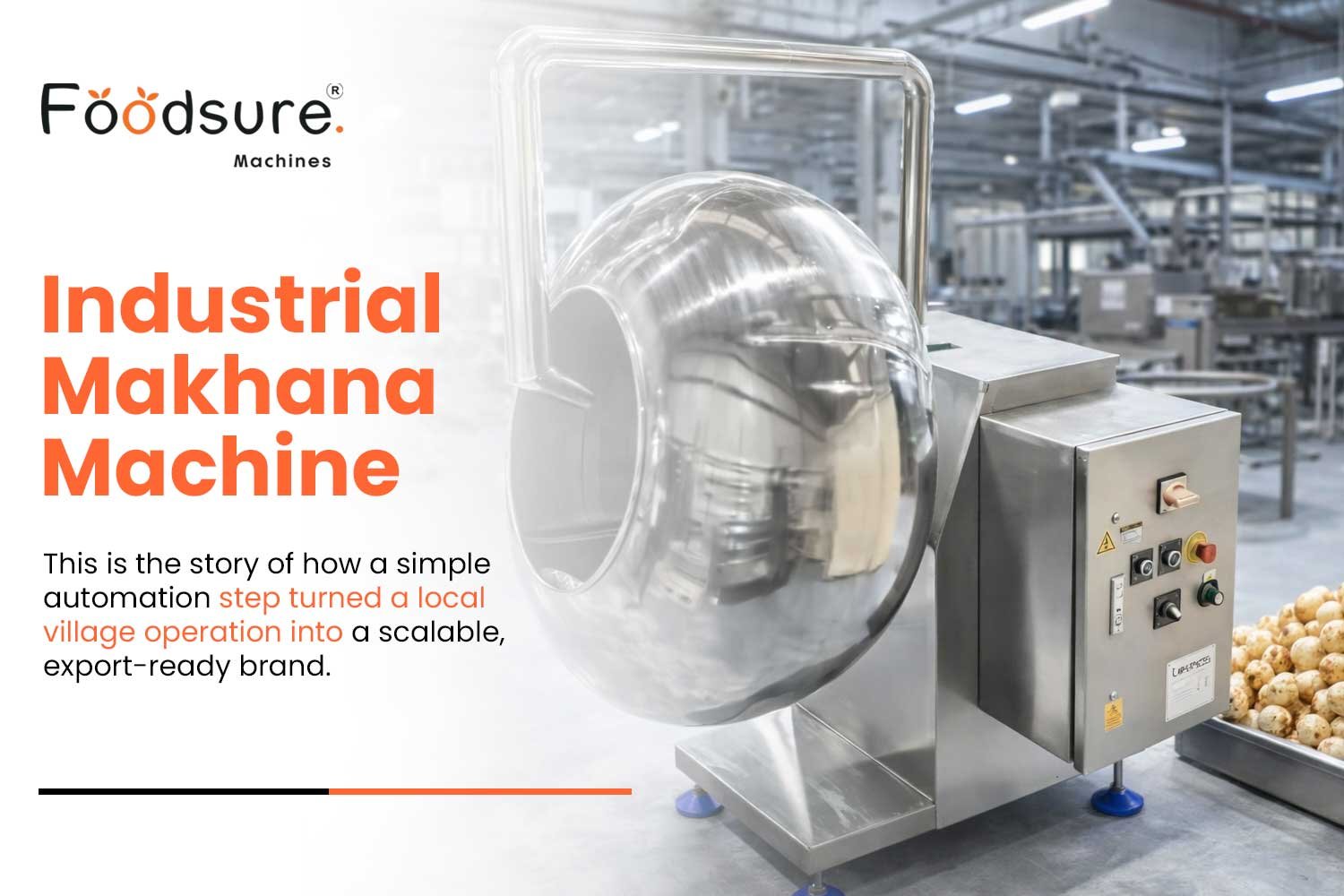
In a modest village in Bihar, farmers relied on manual methods to produce makhana for the local markets. Limited capacity restricted them to selling only small quantities, rendering it impossible to satisfy increasing demand. When orders started pouring in from beyond the district, manual methods fell short until an industrial makhana machine transformed their production. This is the story of how a simple automation step turned a local village operation into a scalable, export-ready brand.
Manual Makhana Processing and the Limits of Local Sales
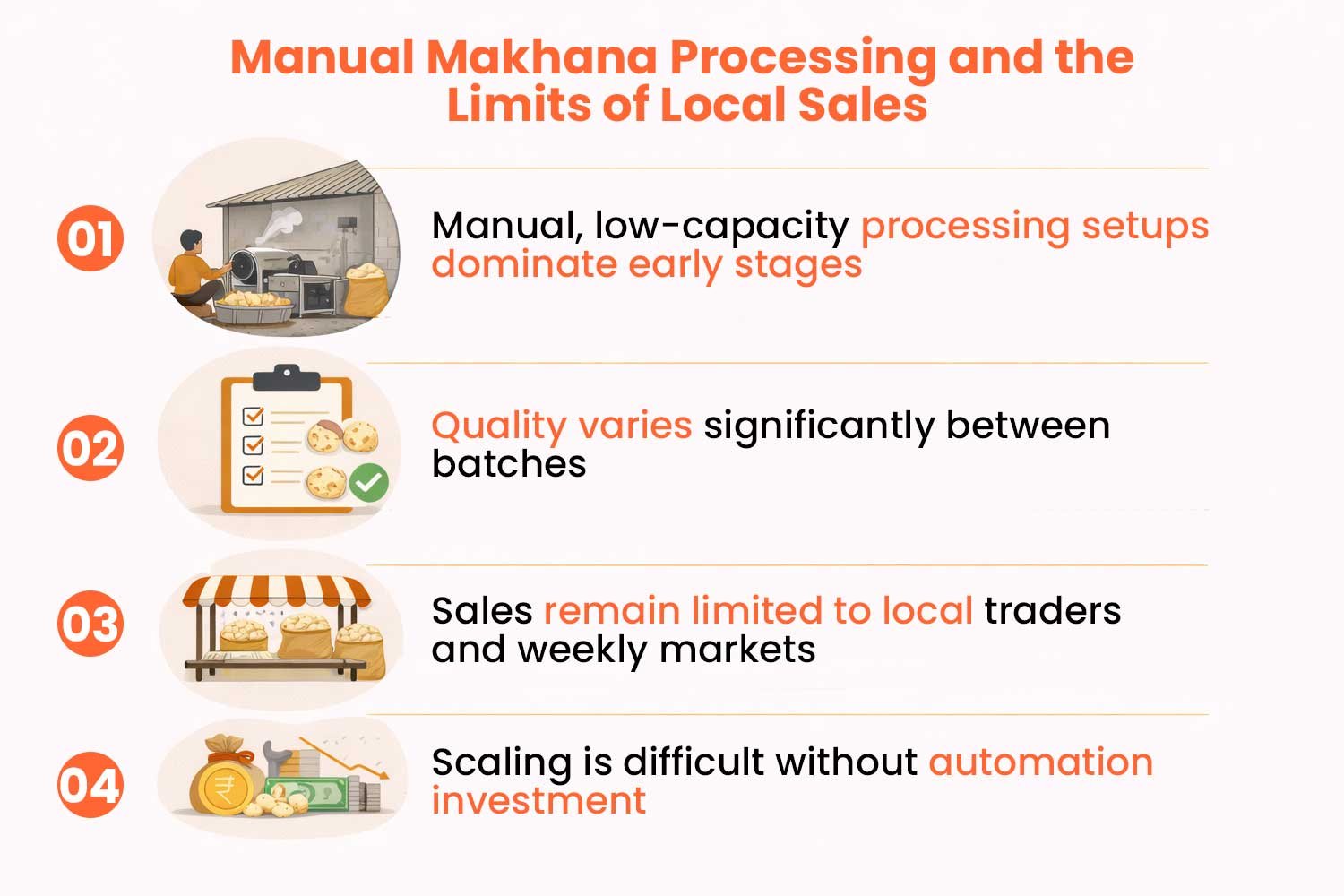
- Many small makhana processing machine units in Bihar have become operational through initially village setups or FPO-managed clusters. The majority of the work was performed manually, with farmers roasting seeds or utilising small-capacity devices capable of processing only a few kilograms per hour.
- Inadequate roasting and handling procedures led to notable variations in quality between samples. These were so substantial that it became hard to keep a product that was uniformly acceptable to buyers.
- The main sales channel was local traders and weekly markets, which not only limited the income but also the whole rural makhana business to a small scale.
- To get the small-scale market, it was hard to compete even in a local market. Expansion would be like placing a bet on the wrong side without sufficient investment in automation or advanced processing technology.
Growth Pains: Why Small-Scale Makhana Units Struggle with Demand
- With manual roasting and limited machinery, the unit had to decline some orders as it could not provide the same quality, which could hurt its reputation.
- The workforce experienced more fatigue as they had to put in extra hours only to satisfy the growing demand.
- Missed delivery deadlines became a frequent issue, which not only frustrated customers but also diminished their likelihood of remaining loyal.
Why Manual and Semi-Automatic Makhana Processing Breaks Down at Scale
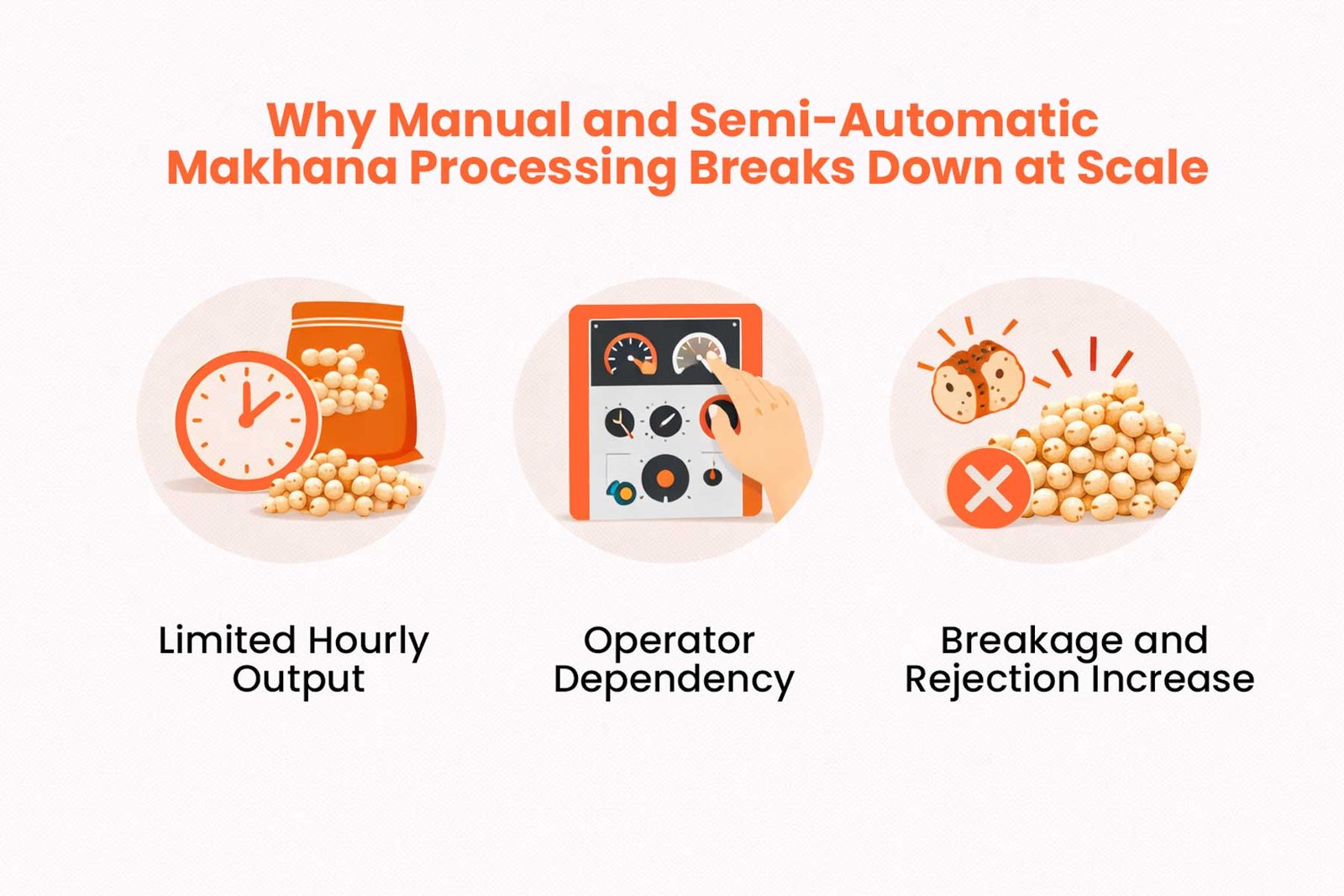
- Limited hourly output: Manual roasting and a semi-automatic makhana machine generally limit the output to a maximum of 15–25 kg/hour, creating a significant barrier for growth. Demand can reach this limit, but then orders accumulate rather than being fulfilled.
- Operator dependency: The quality of the output depends on the operator’s skill. Fatigue, shift changes, and human judgment all directly affect the roasting consistency and the batch recovery.
- Breakage and rejection increase: The restrictions imposed by these industrial makhana roasting machines of lower capacities lead to a greater number of broken shells, internal fractures, and strict size rejection. This invisibly reduces the saleable yield and profits at scale and is hence often neglected.
Why the Business Shifted to an Industrial Makhana Machine
- The planned capacity available was equivalent to the demand: No orders were limited by hourly restrictions anymore. The manufacturing facility was chosen based on realistic peak demand, ensuring that production could scale without frequent stoppages.
- Continuous roasting made the process faster: Batch-wise operations delivered inconsistent throughput, varied heat exposures, and unpredictable outputs, which were important for achieving the consistency required for export-grade products.
- Food-grade construction: The use of stainless steel for contact parts, the enclosure of roasting zones, and the control of airflow resulted in higher standards of hygiene compliance and also a reduced risk of contamination during long production runs.
- Less dependence on labour: The process of automation reduced the dependence on skilled operators for the two aspects of the process, namely temperature judgment and the timing of the batches. One trained supervisor could now oversee the output that was previously handled by several workers using an industrial makhana machine.
Key Components of an Industrial Makhana Processing Machine
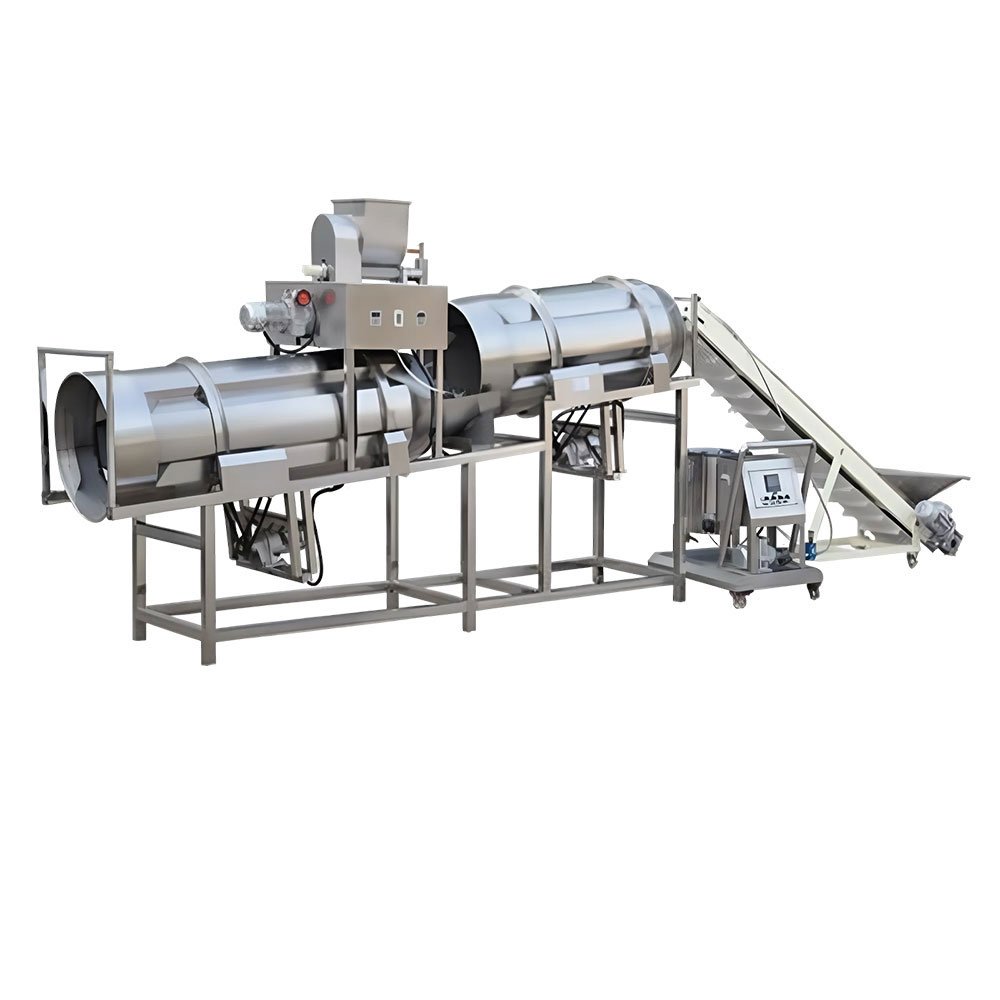
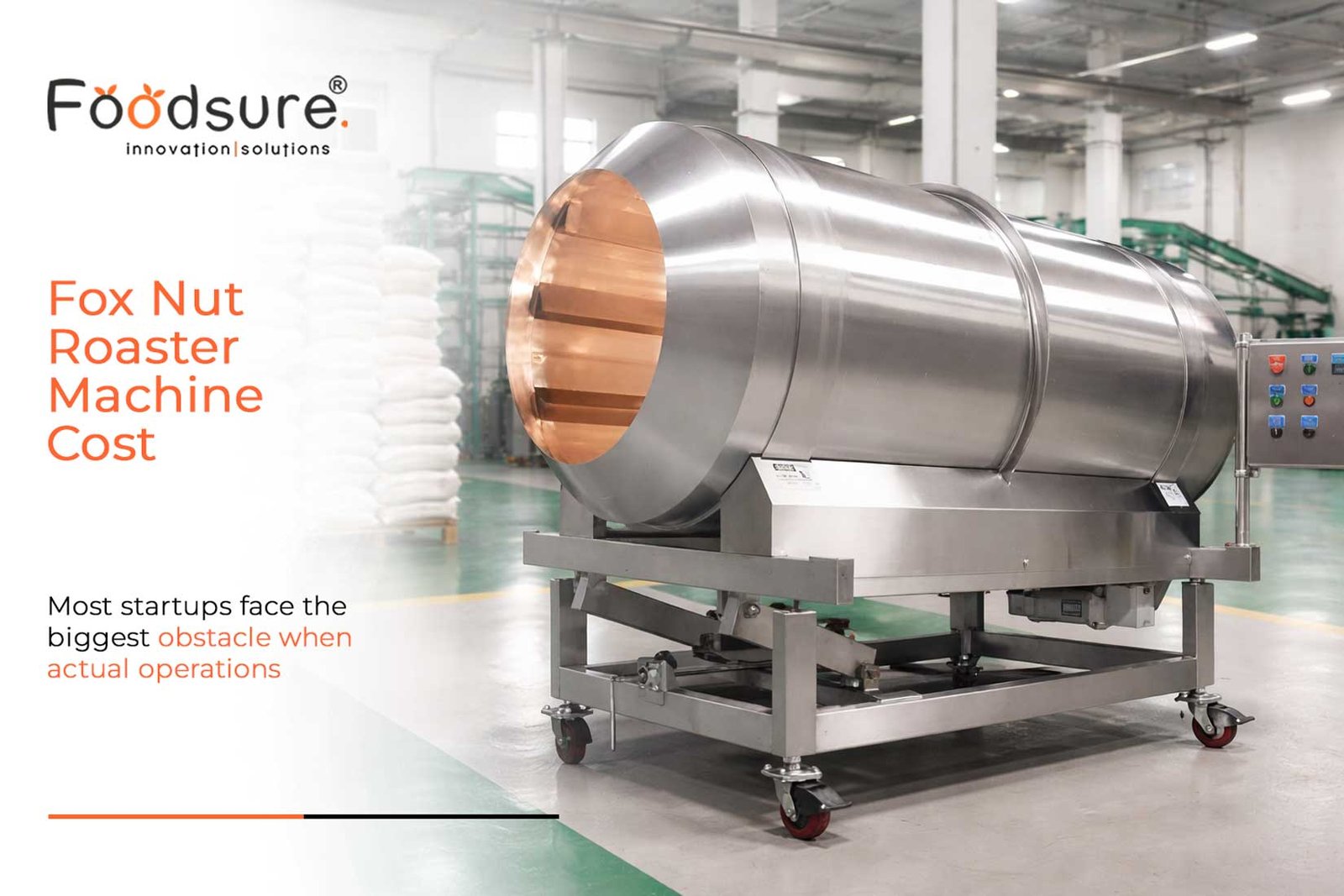
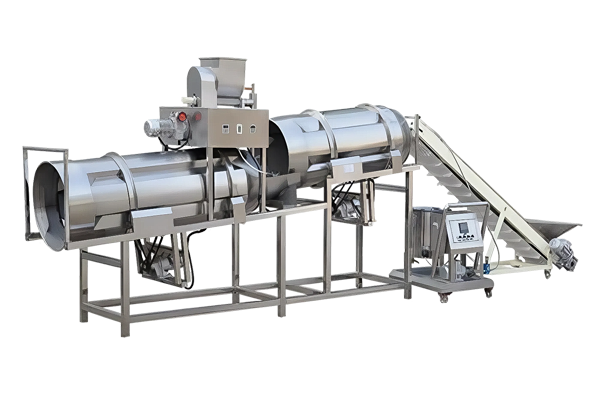
- Automatic continuous roaster: Guarantees an even roast and maximises production yield with constant temperature zones during long runs.
- Precision grading system: It enables you to expand your market by charging higher prices through consistent quality by grading according to size and weight.
- Controlled oil application: No more oil to waste, and at the same time, the improved taste and quality of life of the product due to the controlled oil application.
- Cooling and hygienic transfer: Fast cooling and closed transport routes ensure that there will be no moisture, loss of product, and contamination by post-roasting.
How Measurable Improvements Were Achieved in 6 Months
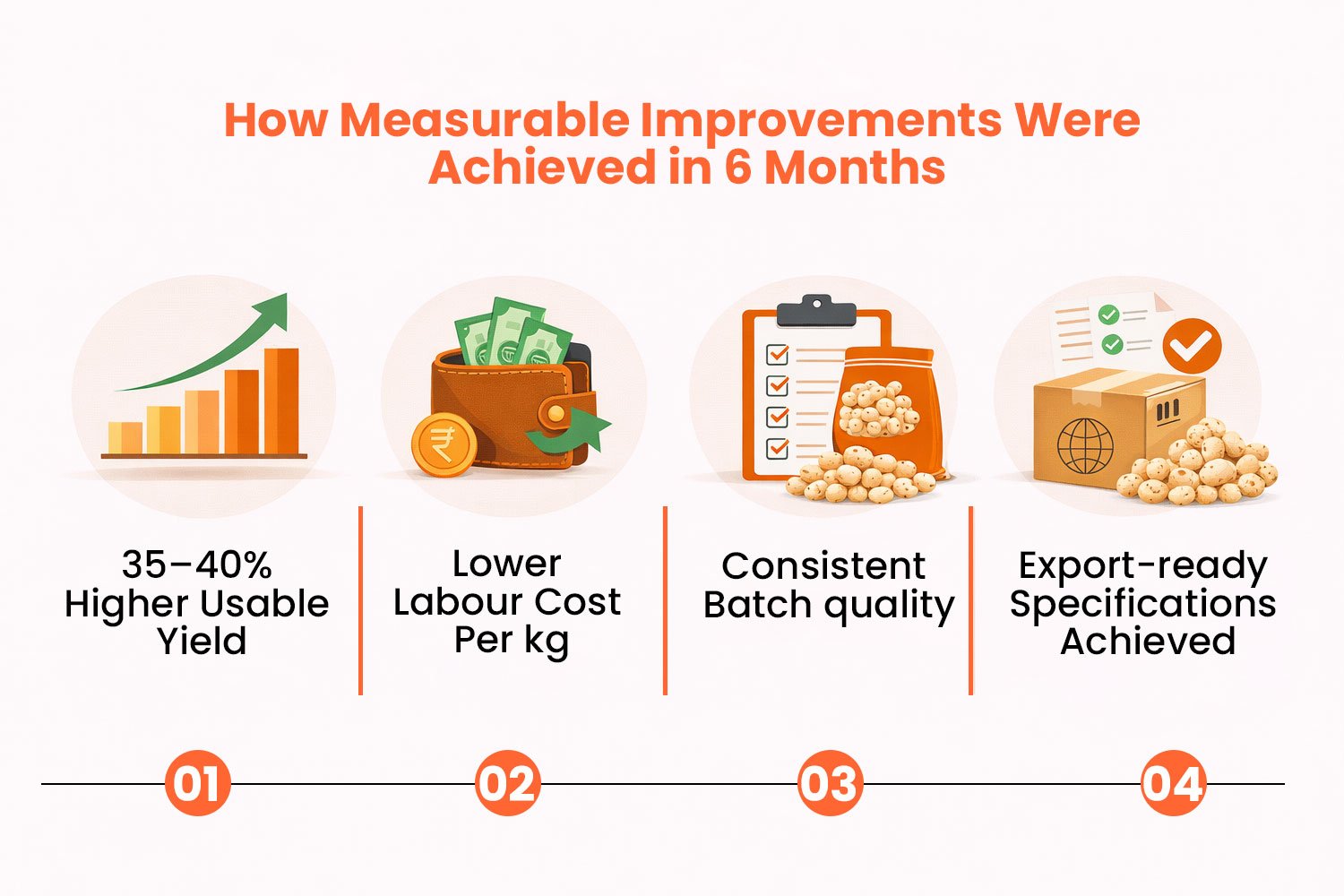
- 35–40% higher usable yield: The reduction in kernel breakage and internal cracking due to the uniform temperature zones and regulated oil application. The entire batch was transformed into export-grade makhana for sale instead of going to rework or rejection.
- Lower labour cost per kg: Automation has replaced manual monitoring of the batches and has also taken over the handling of the batches. There was a need for fewer operators per shift, and the labour output became predictable, thereby cutting the per-kg processing cost without increasing the working hours.
- Consistent batch quality: The roasting process was continuous, resulting in no variability in the quality across different batches. The brand reliability for the repeat buyers has improved because the colour, expansion, and moisture levels are kept within tight limits.
- Export-ready specifications achieved: The product’s uniform sizing, hygienic handling, and controlled roasting ensure compliance with the export standards for appearance, shelf stability, and food safety audits.
Industrial Makhana Machine Cost Breakdown – What the Investment Really Looks Like
| Timeline | What Improves First | Operational Metrics (Indicative) | Business Impact |
|---|---|---|---|
| First 6 Weeks | Process stability & consistency | • Rejection drops from 10–12% to 6–8% • Output stabilises at 70–75% of rated capacity • Manpower per shift reduces by 1–2 operators |
Buyers receive uniform quality; daily losses become visible and controllable |
| 6 Months | Throughput & cost efficiency | • Usable yield improves by 25–35% • Cost per kg reduces by ₹12–₹20 (labour + wastage) • Capacity utilisation reaches 80–90% |
Bulk and repeat orders become viable; margins stop fluctuating |
| 1 Year | Scale readiness & ROI clarity | • Consistent output at 90–95% capacity • Annual volume increases by 1.4–1.6× vs manual setup • Net margin improvement of 8–12% |
Investment recovery becomes measurable; export & institutional supply become realistic |
Developing a processing structure suitable for industrial production of makhana was the primary aim.
Profit Progression: What the Numbers Look Like After Automation
The figures presented are indicative and are based on a steady usage of an industrial makhana processing unit. The actual outcome is dependent on the cost of raw materials, the price at which the product is sold, and the market channel used.
| Timeline | Avg Monthly Output | Avg Net Profit per kg | Approx. Monthly Net Profit |
|---|---|---|---|
| First 6 Weeks | 2,000–2,500 kg | ₹15–₹22 | ₹30,000–₹55,000 |
| 6 Months | 3,500–4,500 kg | ₹25–₹35 | ₹90,000–₹1.6 lakh |
| 1 Year | 5,000–6,500 kg | ₹35–₹50 | ₹1.8–₹3.2 lakh |
Conclusion
Foodsure Machines has witnessed how a proper industrial makhana setup can elevate village operations to the status of large, profitable brands. We emphasise uniform quality, control, and long-term return on investment, so you expand with trust, not speculation.
Ready to Start Your Industrial Makhana Machine Journey?
Connect with us online for quick support.
What is an industrial makhana machine?
It is a high-capacity machine designed to roast, grade, and process
large batches of makhana with minimal manual intervention.
What capacity does it usually have?
Most industrial makhana machines handle 100–500 kg per hour,
depending on model and configuration.
Can it meet export-quality standards?
Yes. It delivers consistent roasting, precise grading,
and hygienic handling every batch.
Is it suitable for FPOs or small units?
Absolutely. Once demand outgrows manual or semi-automatic setups,
industrial machines enable scaling.
How soon can I expect ROI?
With proper utilization, ROI is typically achievable
within 12–24 months.