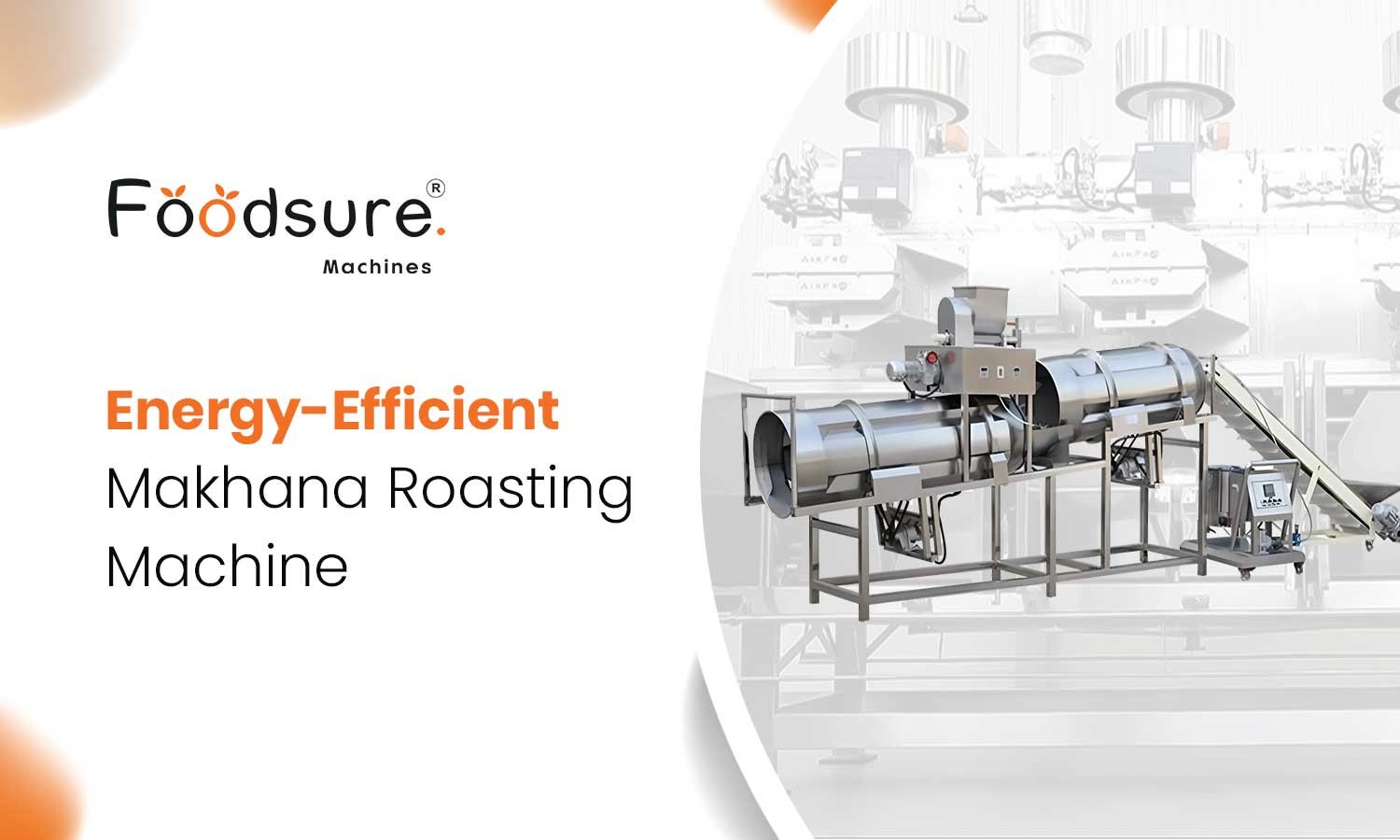
As diesel costs rise, rural makhanas are slowly losing money, but makhana roasting machines that use less energy are changing the rules. FPOs and small processors are saving money on fuel costs and improving roast quality by using solar-powered models and low-consumption devices. The result is lower costs, better quality output, and a growth path that is more sustainable and focused on getting profits.
Why Traditional Makhana Roasting Setups Fail Rural Units
The traditional makhana roasting units have multiple problems which need to be addressed.
- The rural units face high fuel expenses because their diesel and firewood consumption rates lead to faster fuel depletion, which reduces their operational income.
- The market value of the product decreases because non-uniform heating causes certain batches to become either undercooked or burnt.
- The traditional method fails to meet food safety standards, which leads to product sale difficulties because of its inadequate hygiene standards.
The implementation of energy-efficient makhana roasting machines and solar-powered makhana roasting machines will solve existing problems while enhancing business profits.
What Makes a Energy-Efficient Makhana Roasting Machine ?
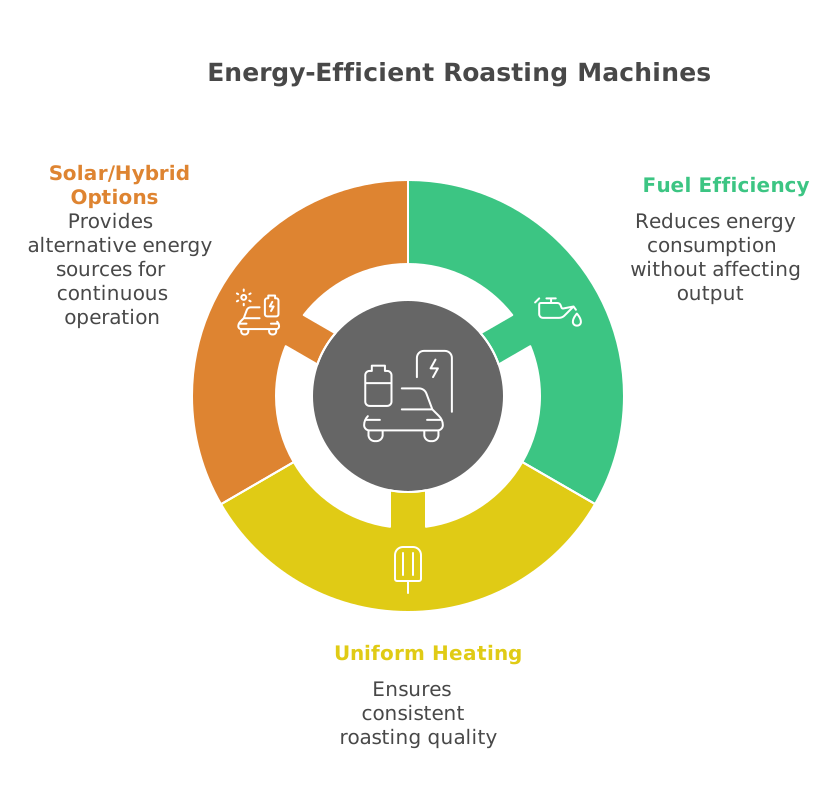
Fuel-Saving Technology
- Smart heating systems which include hot air systems and drum roasting systems achieve energy savings through their operation.
- The combination of insulation and heat recovery systems provides continuous temperature control.
- The system achieves cost savings through reduced energy waste which results in decreased fuel expenses for each production batch.
Uniform Heating for Consistent Quality
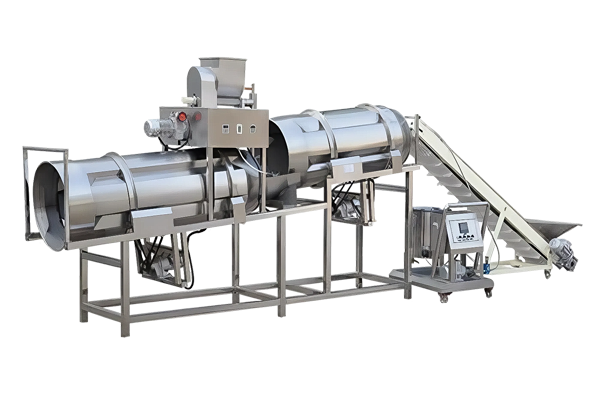
- The energy-saving makhana roaster machine together with its conveyor systems achieves complete seed roasting through its operation.
- Automated temperature control system delivers temperature regulation for the production of identical product batches.
- The market price of a product increases when its quality maintains consistent standards.
Solar & Hybrid Power Options
- The system enables users to switch between solar power and grid power and diesel power without interruption.
- The system enables continuous production to occur in remote areas that experience power supply interruptions.
- The system decreases energy expenses while the business maintains its production capacity.
Real Savings: A Case from Bihar’s Madhubani District
The Farmer Producer Organization in Madhubani, Bihar faced two main challenges which included their high fuel expenses and their unpredictable results during roasting. The organization operated a diesel-powered makhana roasting machine which required 120 liters of diesel fuel each month and generated monthly expenses of approximately ₹48,000 while producing products that failed to meet market standards.
The FPO selected Foodsure Machines for the 2026 installation of their solar-powered energy-efficient makhana machine which featured a 50 kg/hour makhana roasting capacity and hybrid power system that combined solar energy with LPG fuel.
Madhubani FPO Case Study: Solar-Powered Makhana Roaster Machine – Before vs After & ROI
| Parameter | Traditional Diesel Roaster | Solar-Powered Energy-Efficient Roaster | Improvement / Notes |
|---|---|---|---|
| Monthly Fuel Consumption | 120 liters diesel | 48 liters LPG + free solar energy | 60% reduction |
| Monthly Fuel Cost | ₹48,000 | ₹18,000 | ₹30,000 savings |
| Roasting Consistency | 70% batches uniform | 95% batches uniform | +25% quality improvement |
| Labor Requirement | 3 workers/day | 1 worker/day | Reduced 66% |
| Power Supply Dependency | Full diesel | Solar + LPG backup | Reliable production |
| Machine Cost | ₹4,00,000 | ₹4,00,000 | Includes solar panels + hybrid setup |
| Monthly Savings on Fuel | – | ₹30,000 | Diesel replaced by solar & LPG |
| Additional Revenue from Quality | – | ₹10,000 | Higher market price due to uniform roasting |
| Total Monthly Profit Improvement | – | ₹40,000 | Fuel + quality gain |
| Payback Period | – | 10 months | Machine cost ÷ total monthly profit improvement |
| Profit Margin | – | 25–30% | Based on total sales and reduced expenses |
Hybrid Makhana Roasting Machine Cost & Specification Breakdown
The project expenses will decrease through the adoption of solar energy which provides actual financial benefits to the company andmakes roasting operations more stable while reducing fuel-related operational difficulties. The actual financial impact of each makhana roasting machine price option will become clear when you present the makhana roasting machine price and monthly cost data.
| Feature / Parameter | Entry‑Level Roaster | Mid‑Range Industrial Roaster | High‑End Integrated Line | Full Processing Setup |
|---|---|---|---|---|
| Typical Price (₹) | 85,000 – 1,95,000 | 1,45,000 – 3,00,000 | 10,00,000 – 11,80,000 | 14,50,000+ |
| Capacity (kg/hr) | 10–100 kg/batch | 50–200 kg/hr | Up to 100 kg/hr | 100–250 kg/hr |
| Fuel / Power Source | Electric / small LPG options | Electric / Heater system or LPG | PLC‑controlled Electric/Hybrid | Solar + Grid + LPG hybrid |
| Automation Grade | Semi‑Automatic | Automatic | Automatic PLC Control | Semi‑Automatic to Fully Automatic |
| Material of Construction | SS304 / MS options | MS/SS mixture | SS304 Food‑Grade | SS304 Food‑Grade throughout |
| Temperature Control | Manual / Basic | Manual with indicator | Digital PID / PLC based | PLC / Digital with multiple stages |
| Typical Power Consumption | 6–9 kW | ~10 kW / 2hp motor | ~20 W (control system) | 20–40 kW (entire line) |
| Warranty & After‑Sales | 6–12 months | 1 Year Standard | 1 Year + Support | 1 Year + Installation Support |
| Best For | Small units / pilot projects | Mid‑size units | Industrial processors | Large FPOs & commercial plants |
For a full guide on how leading processors in Rajkot are upgrading with Best solar makhana roaster, read this case-based breakdown.
Financing and Government Support for Energy-Efficient Equipment
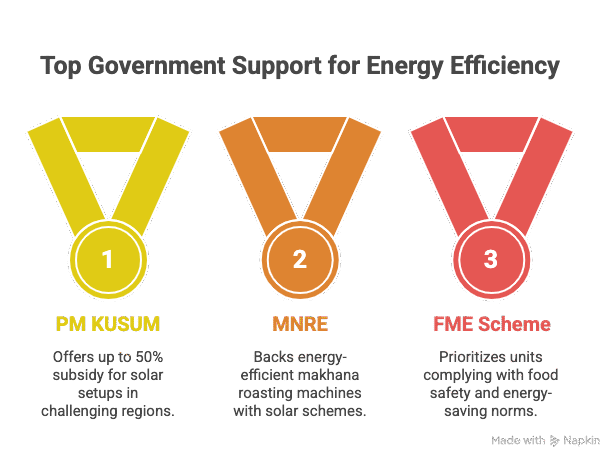
Government Support Is Real
- The MNRE supports Energy-saving makhana roaster through its solar-based programs. The PM KUSUM program provides solar energy systems with a subsidy that reaches 30% of their total cost. The subsidy program provides funding that can reach 50% in remote locations.
The Solar Machines Get Preference
- If you operate a solar-powered roasting unit that uses hybrid technology your system already meets approval requirements. The MNRE has established relaxed solar panel efficiency requirements for rural solar units. The Best solar makhana roaster becomes more affordable because of these changes which make installation simpler.
The Modernization Process Controls Loan Disbursement.
- The FME scheme provides better chances of success for food safety and energy-saving compliant units. The state of Bihar together with Madhya Pradesh provides specific benefits through feeder-level solarisation and state subsidies which make these system upgrades more affordable.
Want to know which subsidy fits your unit best? Explore Government Support for Solar Food Processing
Why Energy Saving Makhana Machine Make Sense for Rural Units

- The advanced insulation together with controlled heating establishes diesel or electricity usage reduction through its operation. The solar roaster dealers in India operate their systems through solar power or hybrid power which ensures service continuity during times of power problems.
- Automated temperature controls manage roasting processes to deliver consistent results which improve overall quality. The process now produces products that have complete uniformity and can be sold without any burnt edges or raw center sections.
- The solar roaster dealers in India use food-grade stainless steel for their equipment which requires only basic maintenance needs. The equipment is designed to withstand actual operating environments instead of manufacturing settings.
Why Foodsure Machines Leads in Solar Roasting
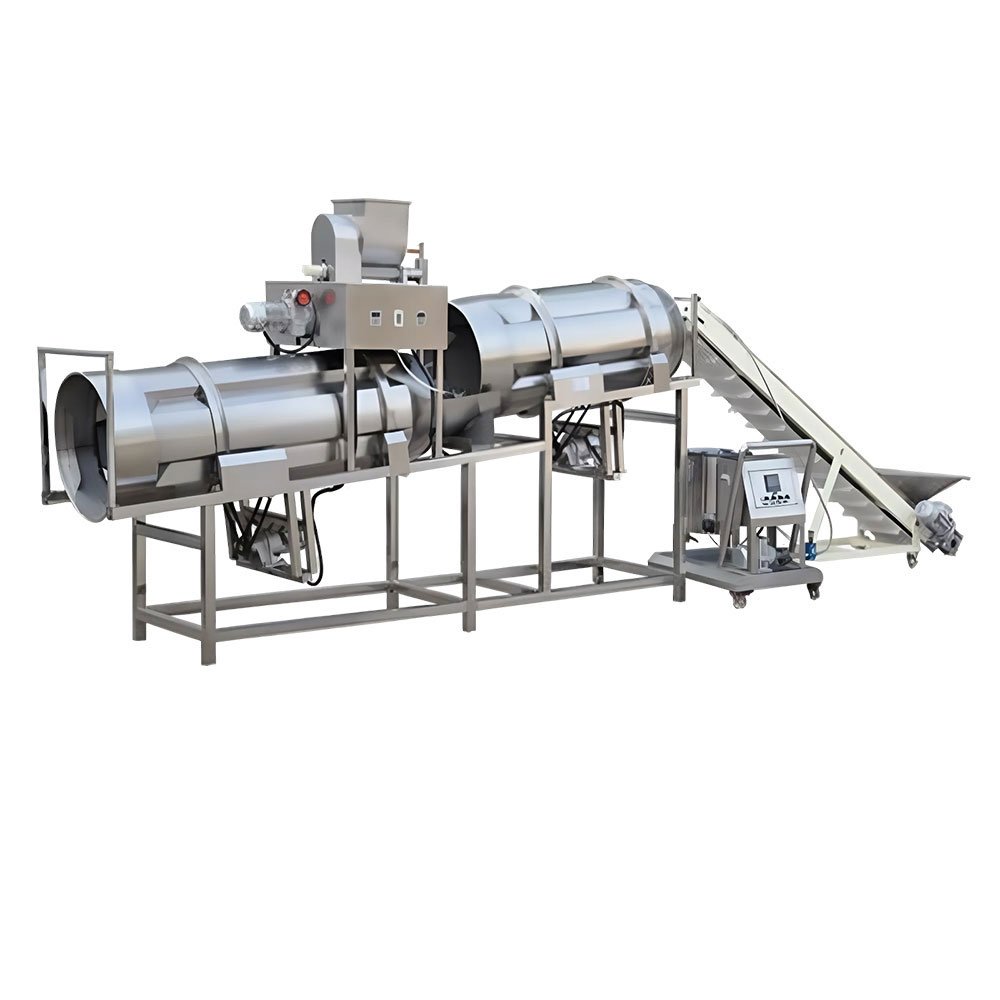
Foodsure Machines helps FPOs and rural units set up the right-sized makhana roasting line, with no waste, no overspend. Our energy-efficient roasting machine for makhana handles up to 100 kg/hour with precise temperature control (100°C–450°C) and a SS 304 hygiene-grade build. Batch or continuous roasting, consistent quality, and flavoring-ready. It’s a clean, scalable system that saves energy and boosts profits from day one. Ready to install a solar roasting unit that actually pays for itself?
START YOUR MAKHANA PROCESSING UNIT WITH LOWER ELECTRICITY COST
Save up to ₹40,000/Month with Energy-Efficient Makhana Roasting Machines
Foodsure Machines provides energy-efficient makhana roasting systems designed for rural entrepreneurs, startups, and small food businesses. Reduce electricity consumption, improve roasting consistency, and scale your makhana production with reliable commercial equipment and expert support.
FAQ
What is an Energy-Efficient Makhana Roasting Machine?
It’s a roasting system that uses less fuel while giving steady, even heat. That means is every batch roasts uniformly and you don’t lose product to uneven puffing.
How much does a makhana processing machine cost?
Most machines cost between ₹3–10 lakh depending on capacity and automation. Fuel savings and higher output quality usually recover that investment faster than people expect.
Why should rural FPOs use an energy efficient makhana roaster?
Fuel is one of the biggest running costs. Lower consumption directly improves margins, keeps quality consistent, and makes income more predictable month after month.
What is the best solar makhana roaster for small units?
Solar with a backup source is the practical choice for small processors. These systems can reduce energy costs by up to 60 percent while still running reliably during low sunlight.
How much energy can I save with an Energy-Efficient Makhana Roasting Machine?
Many processors see fuel expenses drop by 50 to 60 percent per month. That difference goes straight to per kilo profit.
Can hybrid machines run on solar alone?
Yes, when sunlight is strong. When it drops, the system shifts to LPG or grid power automatically, so production keeps moving without delays.
How long is the payback period for a solar makhana roaster?
Lower fuel bills plus better roasting quality usually bring payback within 8 to 12 months for small and mid-size units.
Is maintenance complicated for energy efficient makhana roasters?
Not really. Regular cleaning and simple routine checks are enough, which works well for rural setups with limited technical staff.
Can I produce high-quality makhana consistently with a makhana processing machine?
Yes. Controlled, uniform heat leads to consistent puffing, better texture, and batches that meet market quality standards every time.