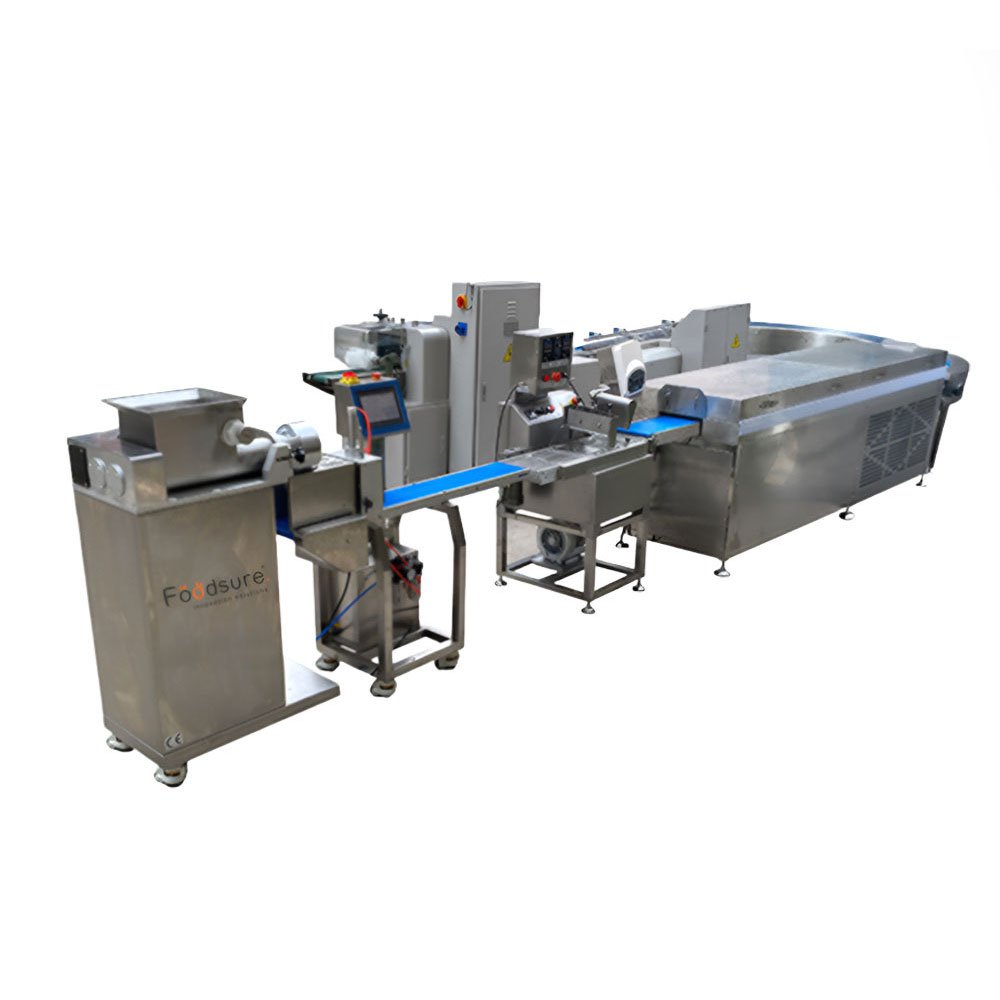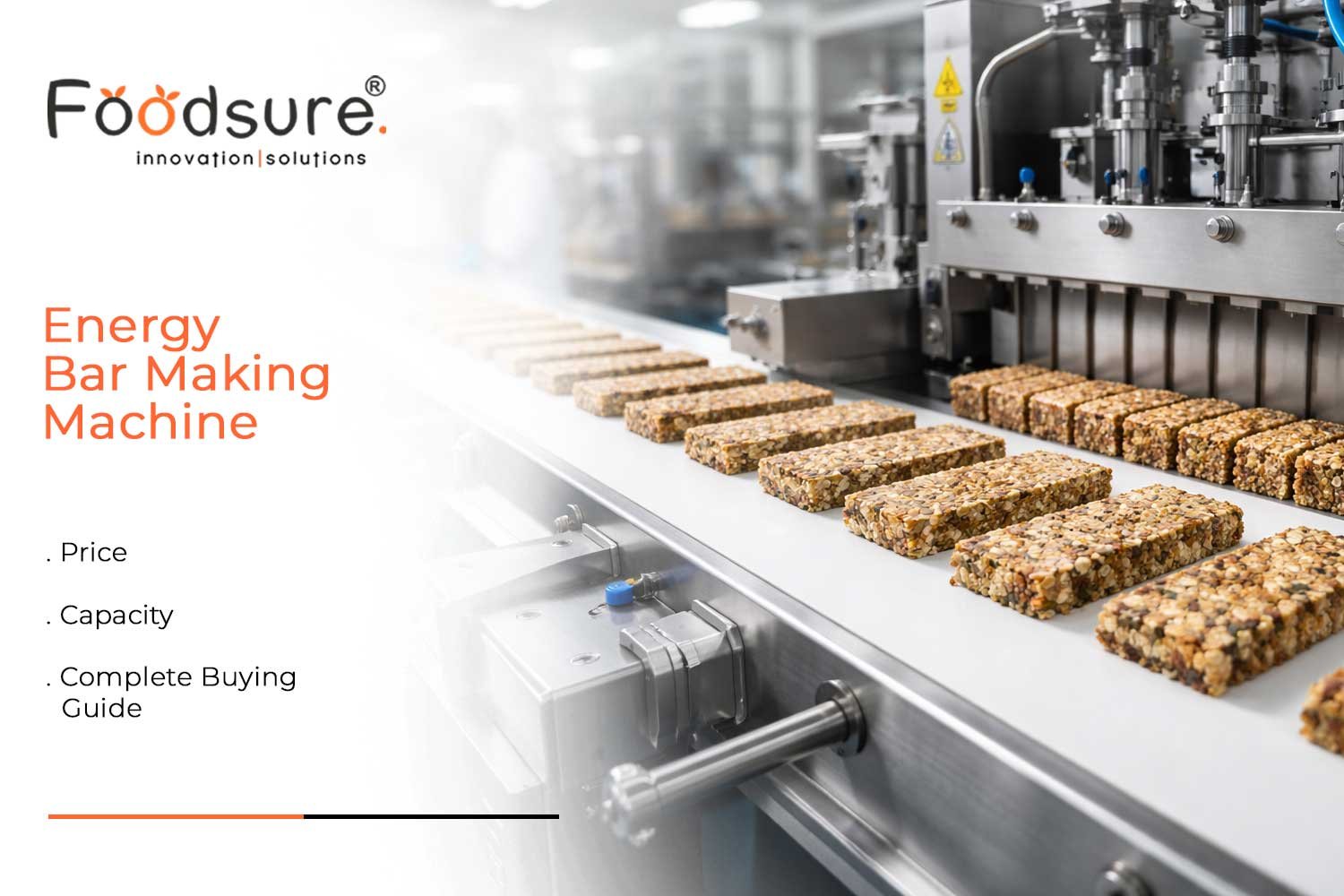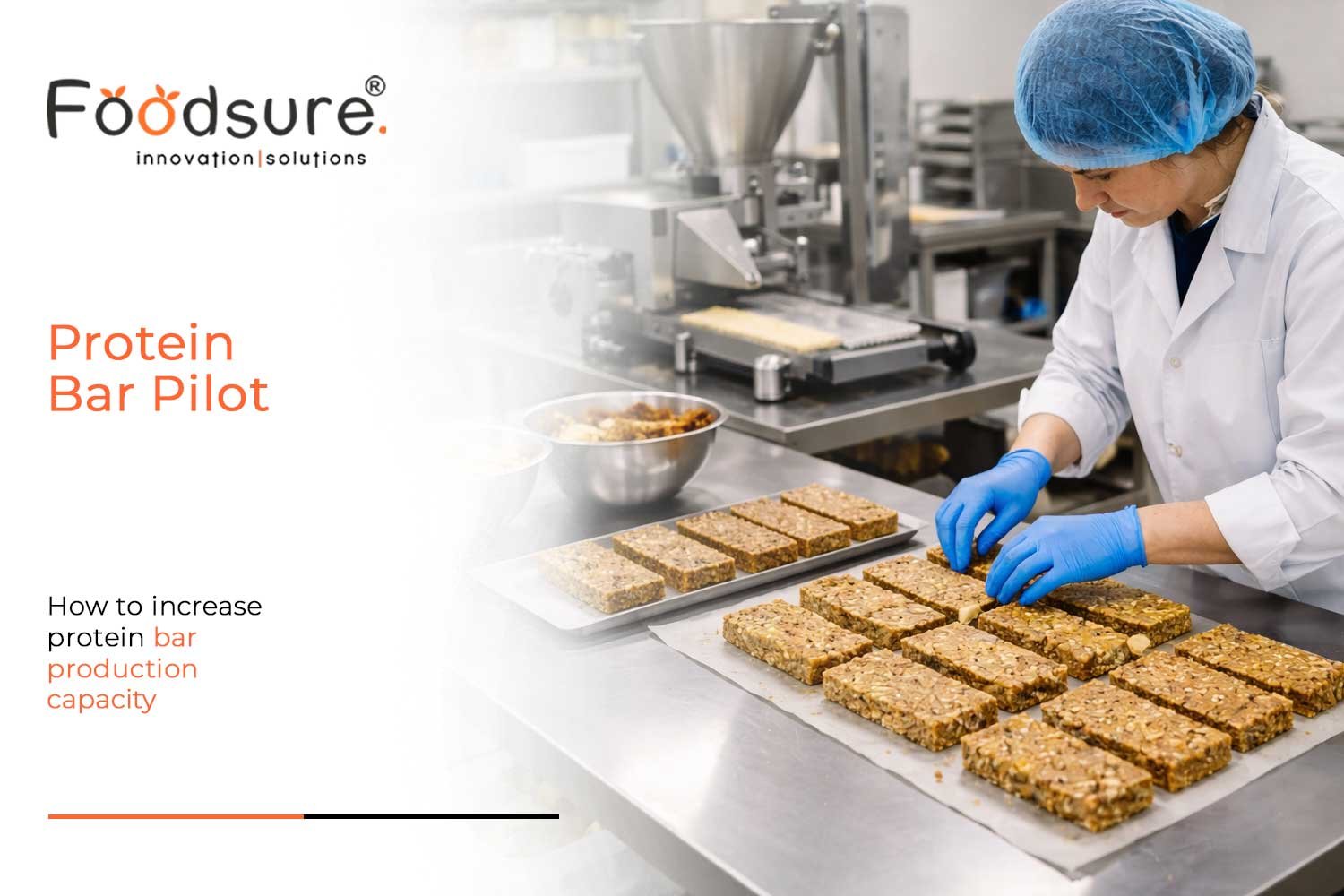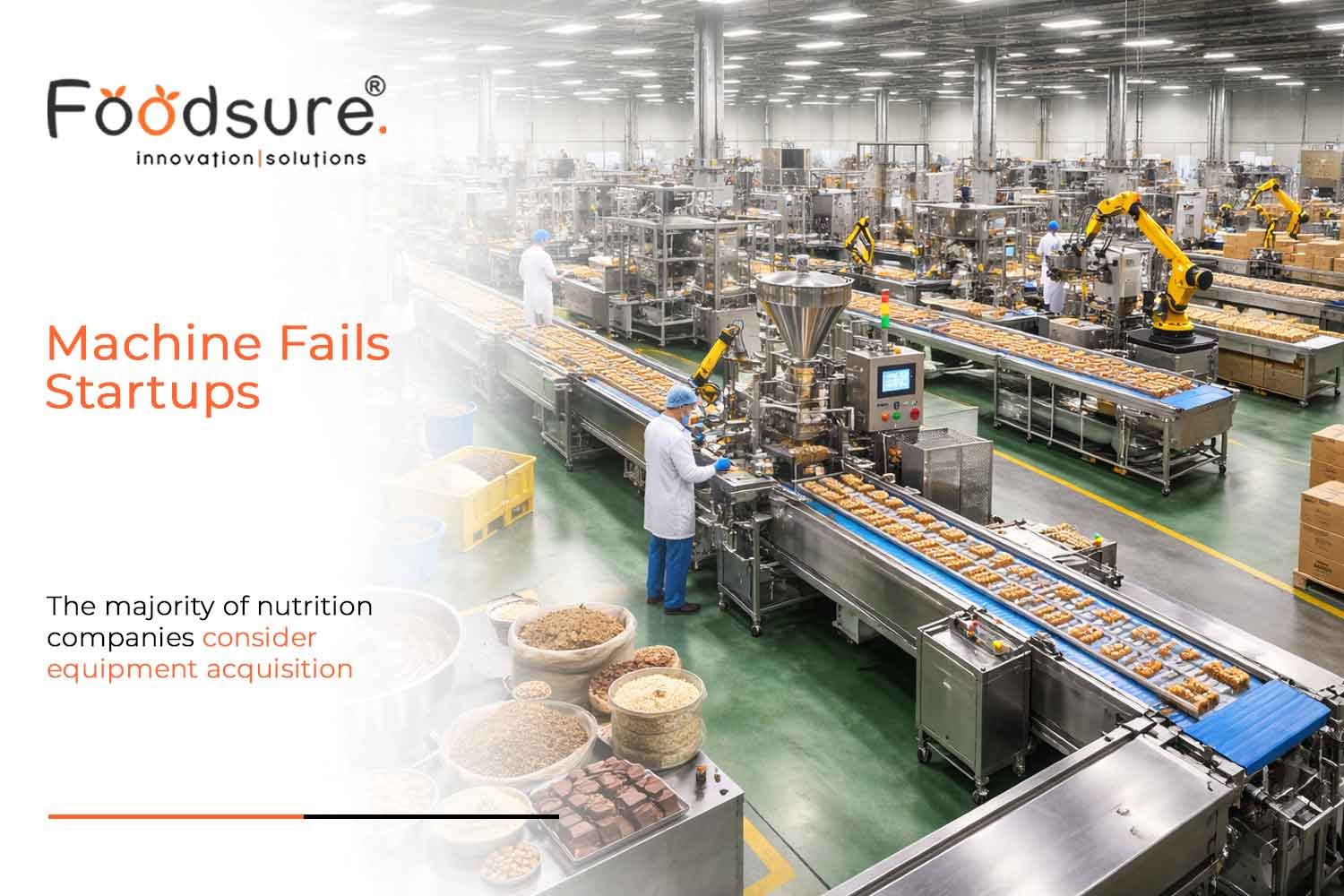
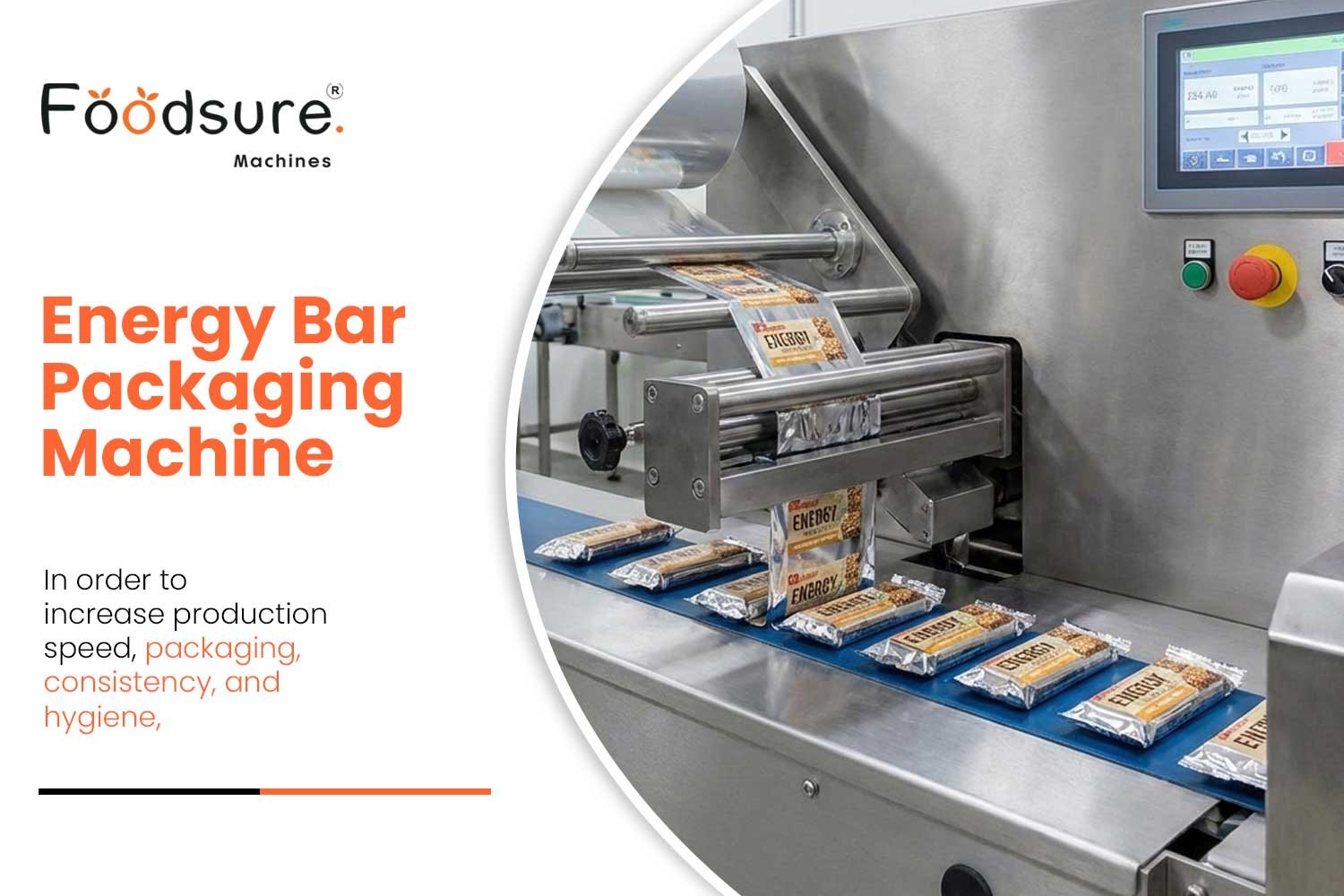
In order to increase production speed, packaging, consistency, and hygiene, an energy bar packaging machine automates the wrapping, sealing, and cutting of energy bars. With quick changeover features, these machines typically handle 60–300 bars per minute, which reduces manual labour by 40–60%, and support multiple SKUs. This makes them essential for small, medium, and large-scale manufacturers aiming to scale efficiently.
In this blog, we explain how energy bar packaging machines improve efficiency, where automation adds the most value, and what manufacturers should consider when choosing the right packaging setup.
Does An Energy Bar Packaging Machine Really Improve Production Efficiency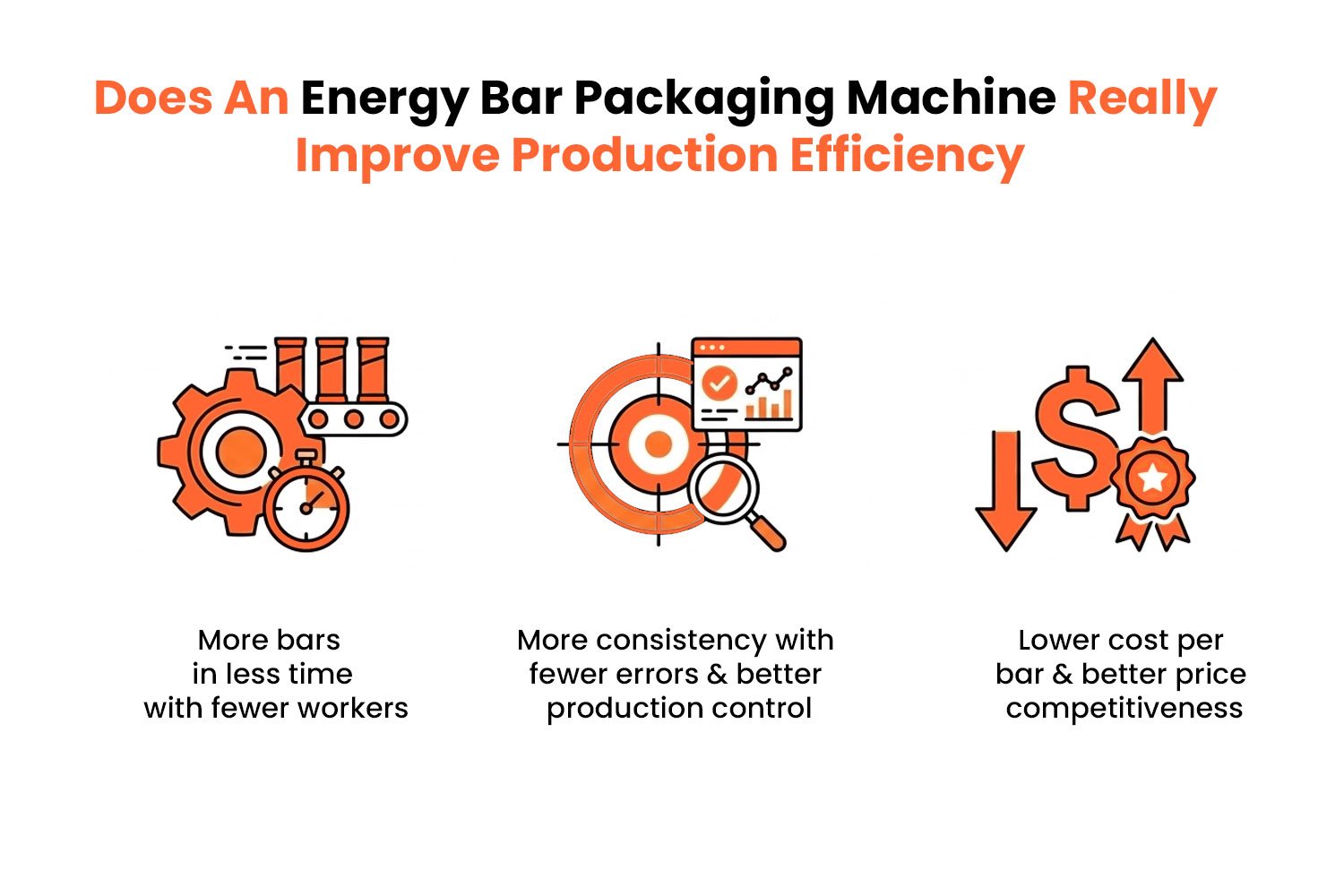
- Today, automated energy bar machines allow manufacturers to package more bars in less time and with fewer people being involved in the packaging process.
- So, manufacturers can produce more consistently than before, and less chance for error when packaging products. Furthermore, each day, manufacturers can track their production goals and have more control over their production.
- The increased efficiency provided by automation allows manufacturers to decrease their overall cost per bar. This enables them to be much more competitive in price-sensitive markets, while at the same time greatly reducing the overall cost of each bar compared to manufacturers who do not use automation systems.
Read More: Energy Bar Production Line Strategies That Help Manufacturers Cut Costs by 40%
What Is An Energy Bar Packaging Machine Used For
Energy bar packaging machines manufacturers wrap and package energy bars for commercial distribution. Protecting against contamination, moisture, and damage.
Energy bar packaging machines are used at energy bar, protein bar, and functional snack manufacturing facilities. The energy bar making machine provides consistency in the size of each energy bar and the quality of the seal. Therefore, provide energy bar manufacturers with the ability to meet retail packaging requirements. At the same time, it extends the shelf life of packaged energy bars.
Which Is Better, Manual Packaging Or An Automatic Energy Bar Packaging Machine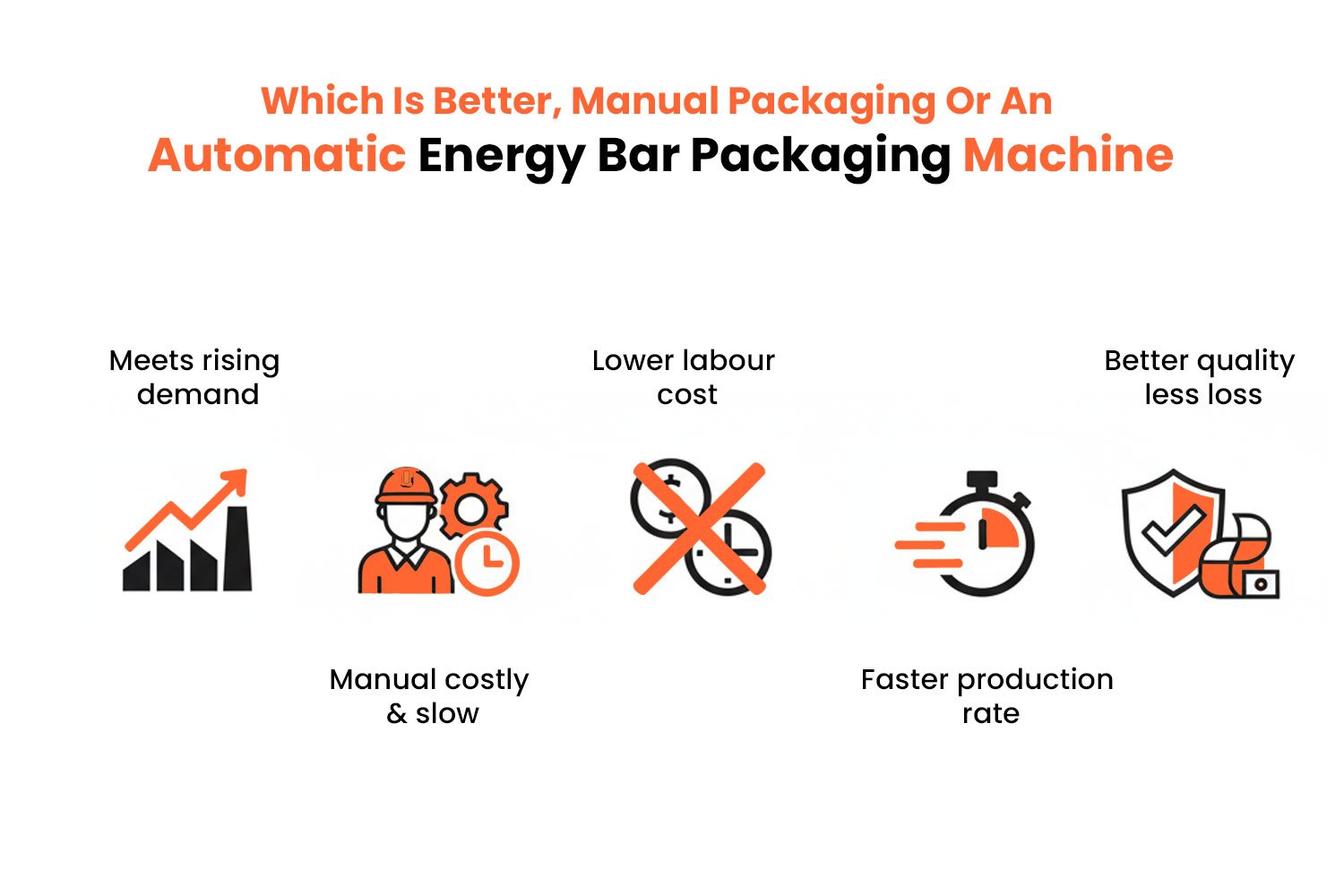
- More energy bars will be produced than can be packaged manually due to rising demand, and therefore, the automated packaging machine offers manufacturers a solution to this problem.
- While many companies use manual packaging methods when packaging small amounts of energy bars, as the volume increases, so does inefficiency in manufacturing and higher labour costs associated with using a manual process.
- By automating the packaging process, manufacturers can reduce labour costs associated with packing energy bars and improve long-term operational efficiencies.
- In addition, manufacturers of energy bars can expect to benefit from increased speed of production and a higher production rate. Packaging energy bars using automated machines also enables greater quality control of the packaged products.
- Automatic energy bar machines offer manufacturers greater cost savings and lower packaging losses than traditional packaging methods.
Read More: Everything You Should Know Before Buying an Energy Bar Machine
Can One Energy Bar Packaging Machine Handle Different Bar Sizes
| Feature | Typical Range / Value | What It Means |
| Supported bar length | 40–180 mm | One machine can pack short snack bars and long energy bars |
| Supported bar width | 20–60 mm | Suitable for slim, standard, and wide bar formats |
| Supported bar thickness | 10–30 mm | Handles soft, dense, and layered bars |
| Number of SKUs per machine | 5–20+ SKUs | Multiple product variants on one line |
| Changeover time | 10–25 minutes | Fast size changes with minimal downtime |
| Tool-free adjustments | Available in most models | Reduces setup errors and labour |
| Downtime reduction | 30–50% | Compared to manual size changeovers |
Read More: Comparing Energy Bar and Protein Bar Machines: A Complete Guide
Conclusion
At Foodsure Machines, the packaging machines we manufacture enable increased efficiency, food safety, and business growth through automation. Our automated solutions provide consistent quality products, reduce reliance on manual labour, and allow food manufacturers the flexibility to grow their businesses both now and in the future with greater certainty.
FAQ
What is an energy bar packaging machine?
It’s the equipment that wraps and seals energy bars automatically so they can move straight into storage or sale.
How fast does an energy bar packaging machine work?
Speed depends on the model, but most run anywhere between 60-300 bars a minute.
Is an energy bar production line suitable for small manufacturers?
Yes. If volumes are still moderate, smaller or semi-automatic machines do the job without overinvesting.
Can one machine handle different bar sizes?
Most can. You adjust the settings for length and width, and you’re good to go.
What packaging materials are commonly used?
BOPP, laminated films, and foil wraps are the standard options across the industry.
Does using a machine really reduce labor costs?
It does. In real terms, labour requirements usually drop by 40 to 60%.
Are energy bar packaging machines food-safe?
They are, provided they’re built with food-grade materials and maintained properly.
Can the same machine pack protein bars as well?
Usually yes. It only becomes an issue if the bar size or texture is significantly different.
What kind of maintenance does the machine need?
Nothing complicated. Regular cleaning, basic lubrication, and routine inspections keep things running smoothly.
Is machine packaging good enough for export markets?
Yes. Consistent seals and uniform packs meet most retail and export expectations.
How much space does an energy bar equipment machine need?
Most installations fit comfortably within 10 to 25 square meters, depending on capacity.
When does it make sense to invest in one?
Once you’re crossing around 5,000 bars a day and manual packing starts slowing you down, it’s time.