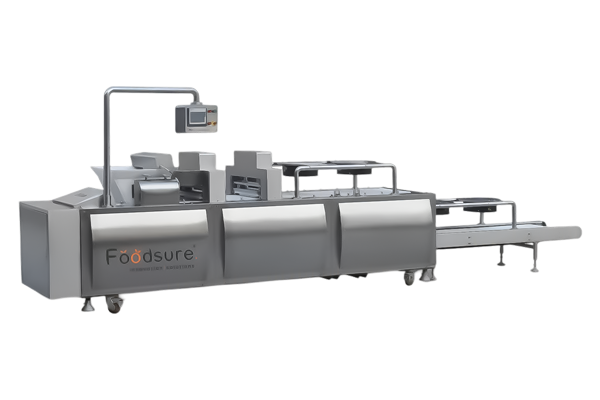
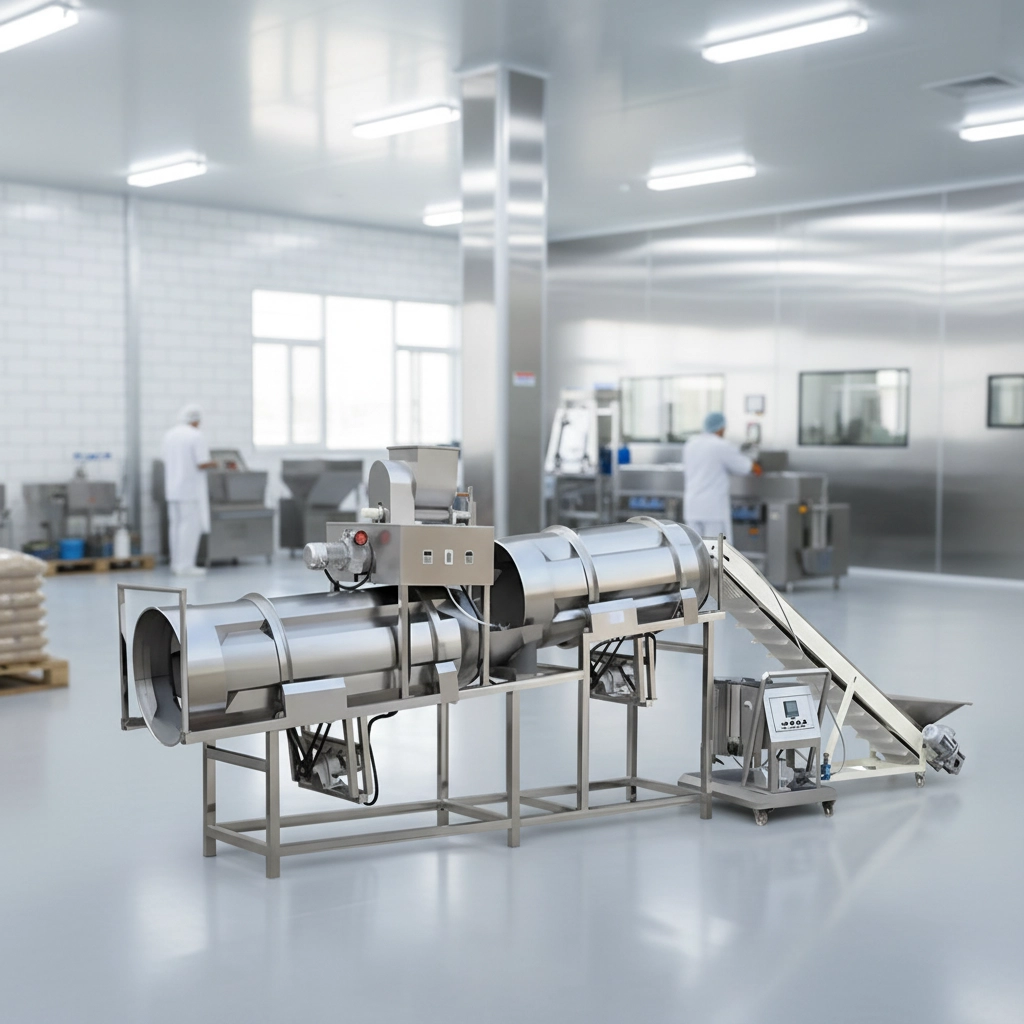
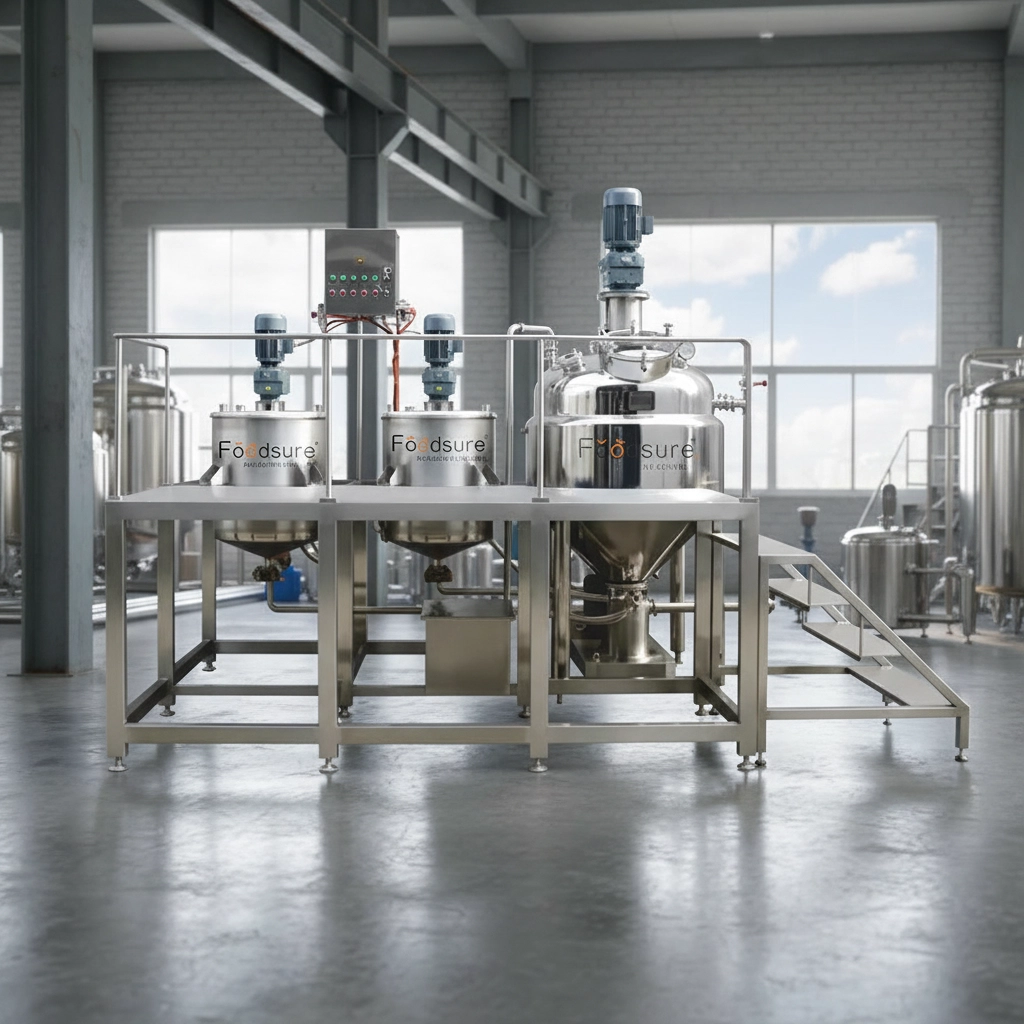
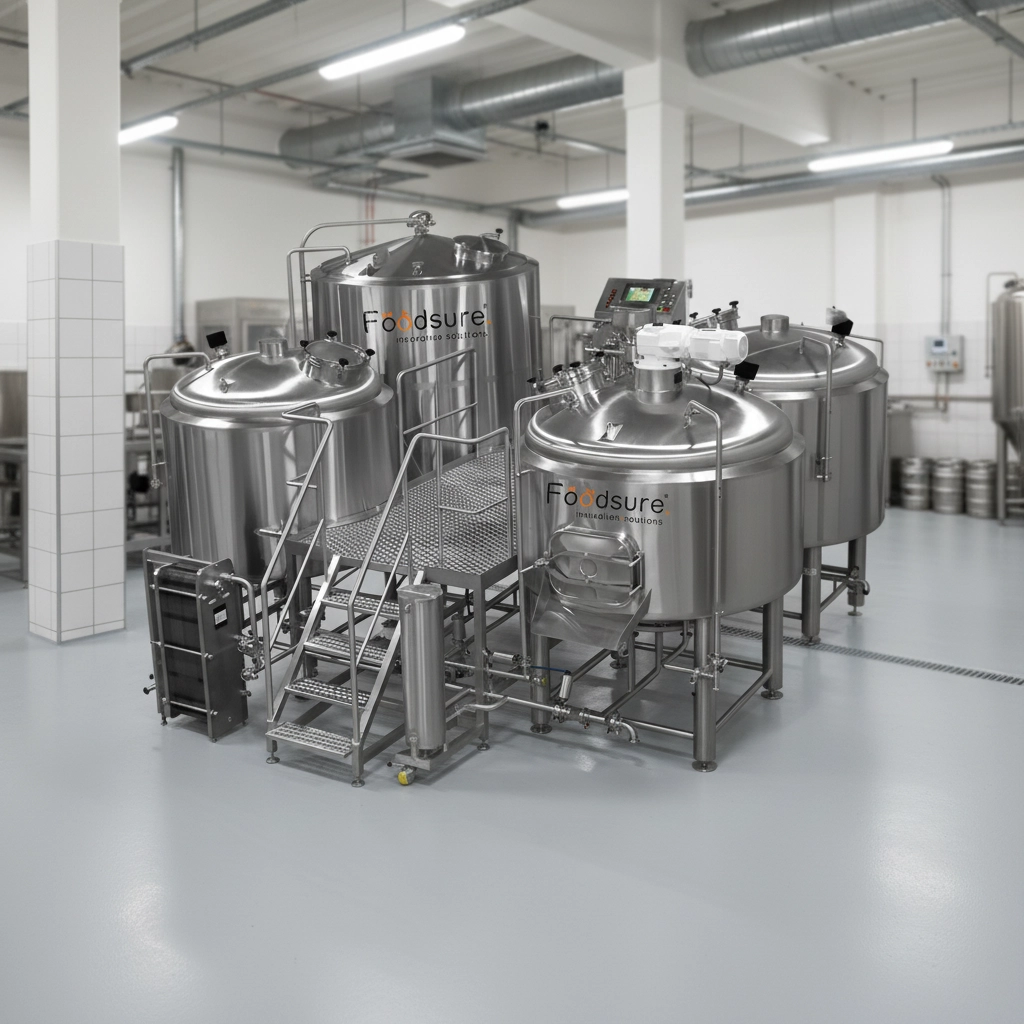
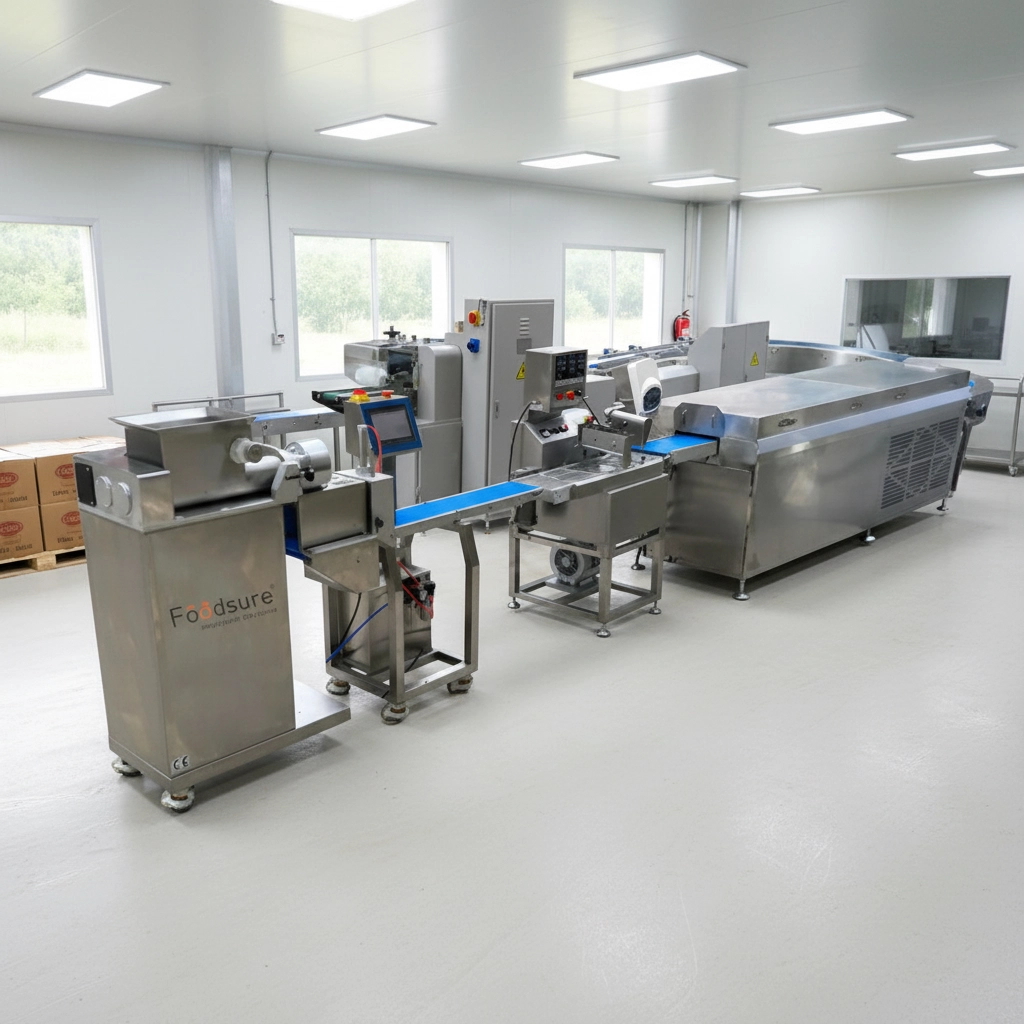
Every successful snack brand depends on its production system, which delivers consistent results, efficient operations, and increased production capacity. The Energy Bar Machine for Your Business serves as the main component of this system because it functions as both equipment and an essential base for best energy bar equipment, determining output quality, production speed, and business profitability. The selection of the appropriate machine determines the product consistency across all batches, the cost-per-bar and operational efficiency of your business, and your business’s ability to grow without production bottlenecks.
Most manufacturers make an error when they choose this option because they focus on product formulation and brand identity rather than the machinery that produces their products. The result is often inconsistent output, higher wastage, and limited growth capacity. This blog serves to establish solutions for the existing problem. The guide teaches you how to choose energy bar machine for your business, assess equipment for energy bar production, and use selection methods to choose an investment that will deliver a return on investment.
Energy Bar Machine Selection Criteria for Your Business: From Capacity to Automation
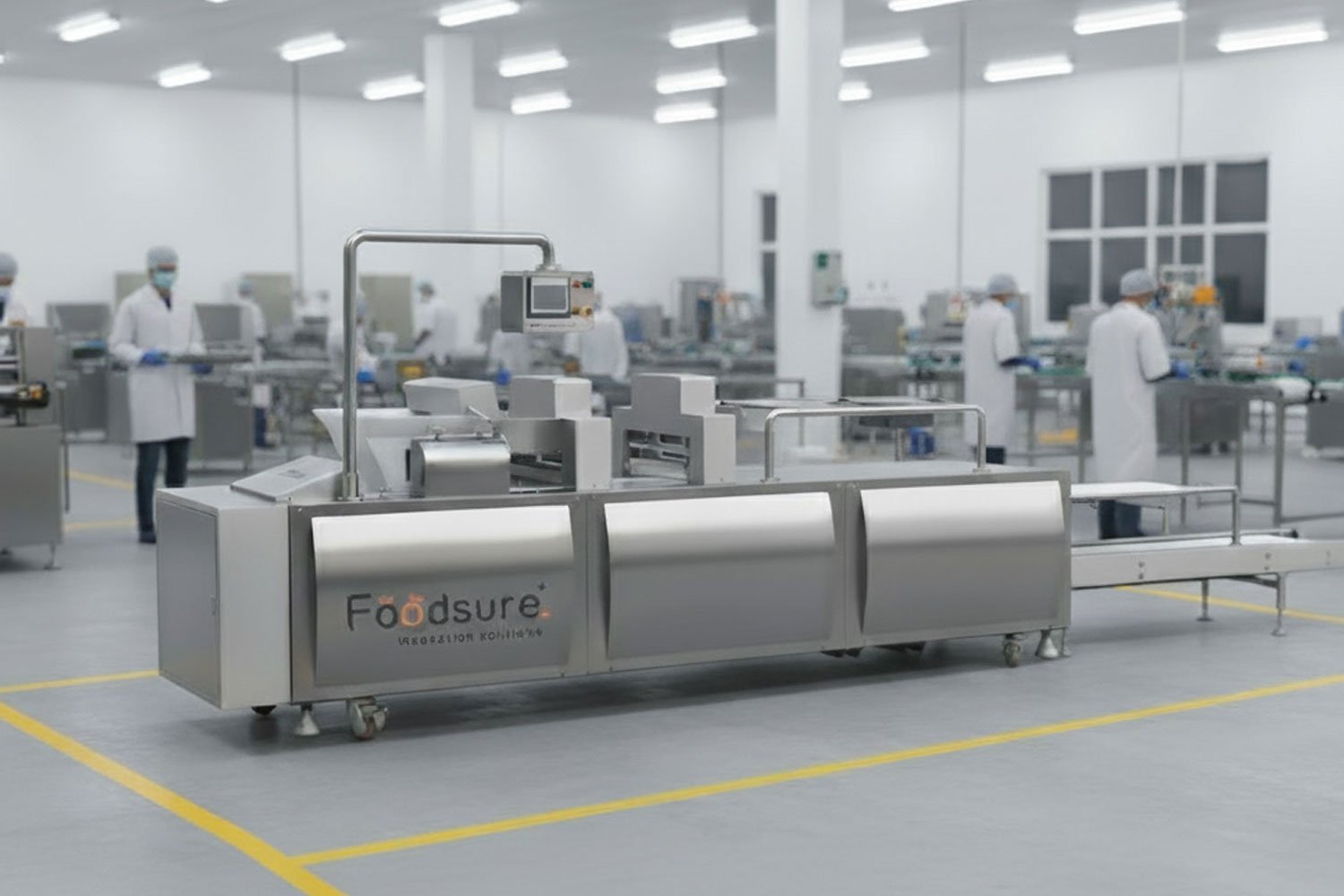
The process of selecting an Energy Bar Machine for Your Business is more than a purchasing decision, as it serves as an essential link between recipes and business expansion. Your profit margins in the energy and protein bar industry depend on the production process, which relies on mechanical physics.
Why Energy Bar Making Machine Selection is a Growth Lever
- Rheology and Texture Control: High-protein and honey-based formulas behave as non-Newtonian fluids according to rheology and texture control studies. A high-torque extrusion machine enables sticky materials to move freely while preserving essential nutrients from heat damage.
- Precision and Compliance: Retailers demand strict weight tolerances. Advanced extrusion systems use volumetric cutting or ultrasonic guillotines to ensure every bar is within ±1% of the target weight, which prevents giveaway and eliminates legal risks.
- Waste Minimization: Manual or low-grade slab forming often results in trim waste (the edges of the sheet). High-precision extruders produce a continuous rope, which reduces scrap rates from 15% to less than 2%.
- Operational Scalability: A modular energy bar extruder machine lets you exchange nozzles and cooling tunnels. This means you can pivot from standard bars to center-filled or bite-sized formats without replacing the entire line.
Your production process becomes a competitive edge when you align your machinery with your specific ingredient profile.
Step 1: Production Planning for Energy Bar Machine Selection Criteria
The process of setting production targets establishes which assets will deliver superior performance. The energy bar manufacturing machine operation should match the actual mechanical properties of your ingredients, which include their viscosity and shear sensitivity characteristics.
Strategic Goal Mapping
- Viscosity-Machine Alignment: Cold-press extrusion maintains sticky binders like dates and honey in their original texture because it avoids heat-based oil separation. Dryer granola mixes use multi-roller slab systems to create compression because they need to protect their delicate ingredients, like nuts and puffed grains, from being crushed.
- The Productivity Gap: The machine, which has a capacity of 500 kg/hr, will only produce 300 kg/hr when the formulation needs an extensive cooling time. Your objectives need to include all aspects of the production line, which encompasses the time needed for the bar to complete its setting process before it can be cut into pieces.
- SKU Versatility vs. Efficiency: Your company needs to select machines that support tool-less changeovers when it plans to produce multiple flavor variations. Your weekly production capacity increases by 20% when you decrease wash-out time from four hours to 45 minutes without hiring extra workers for a second shift.
- ROI on Automation: The switch from batch production, which uses manual mixing and loading, to continuous manufacturing decreases workforce expenses by 60%, but companies need to maintain reliable material supply chains to prevent their costly equipment from remaining dormant.
Step 2: Choose the Right Energy Bar Machine Type for Your Business
The choice of technology directly impacts production speed and product quality because incorrect technology selection results in both increased production delays and complete product damage. The high-fiber protein dough, which undergoes testing through a slab system process, will experience delamination (the bar falls apart). While the extruder process of granola results in expensive whole nuts becoming crushed into a paste.
Technical Performance Matrix
| Machine Category | Ideal Viscosity (cP) | Output (Bars/Min) | Waste % | Setup Time (Min) |
|---|---|---|---|---|
| Slab & Cutter | 5,000–15,000 | 50–200 | 8%–12% | 45 |
| Extrusion | 20,000–100,000+ | 100–600 | <2% | 90 |
| Cold Press | 50,000–80,000 | 30–80 | 3%–5% | 30 |
| Moulding Line | 2,000–10,000 | 200–1,000+ | <1% | 180+ |
- Slab Systems: Best for gravity-fed mixtures. Their system uses 3-roll gauging to control thickness, but their process creates additional work because edge-trimming generates substantial output.
- Ultrasonic Extruders: Critical for sticky date bases. The 20kHz blade vibration prevents material adhesion, which results in precise cutting that maintains complete shape integrity.
- Thermal Constraints: Extruders create friction, which causes temperature increases of 5°C – 10°C. The bar requires a jacketed cooling sleeve specification when it contains active probiotics or chocolate chips.
- The 1:10 Rule: High-end extruders provide an exact weight accuracy improvement of 1%, leading to mid-scale factories saving 12,000 per year from raw material losses at their 10k bars per day production level.
Step 3: What to Look for in Energy Bar Machinery Features
The prediction of your long-term OEE (Overall Equipment Effectiveness) relies on machine intelligence, which operates beyond the equipment boundaries. High-specification features are necessary because they protect against both batch failures and regulatory compliance violations.
Critical Engineering Features
- Metallurgy & Hygiene: The standard material requirement for SS304 should be upgraded to SS316L for bars handling extremely acidic or salty materials, as SS316L protects against pitting corrosion. The design should include hygienic features together with sloped surfaces, which minimize bolt threads, because these factors will decrease CIP (Clean-In-Place) time by 30%.
- Precision Control (PLC): Delta and Siemens PLC systems with HMI touchscreens operate on current production lines. The energy bar production line enables users to manage recipes by saving extrusion speed and blade frequency parameters, which will produce identical results for the 1,000th batch as the first batch.
- Synchronized Servos: Standard motors create drift problems, which result in the production of bars with varying lengths. Servo-driven conveyors achieve perfect synchronization with the cutting head while maintaining length accuracy within ±0.5mm at all operational speeds.
- Thermal Management: The compression chamber generates friction, which causes protein bars to lose their protein structure. The water-jacketed barrels maintain a consistent internal temperature range between 20°C-25°C, which allows the soft-bite texture to remain intact throughout an 8-hour work period.
- Surface Tension Tech: For date-based sticky mixes, Teflon-coated rollers and plasma-coated hoppers must be specified to prevent product accumulation, which requires downtime for scraping operations.
Step 4: Match Capacity with Investment in Energy Bar Machine Selection Criteria
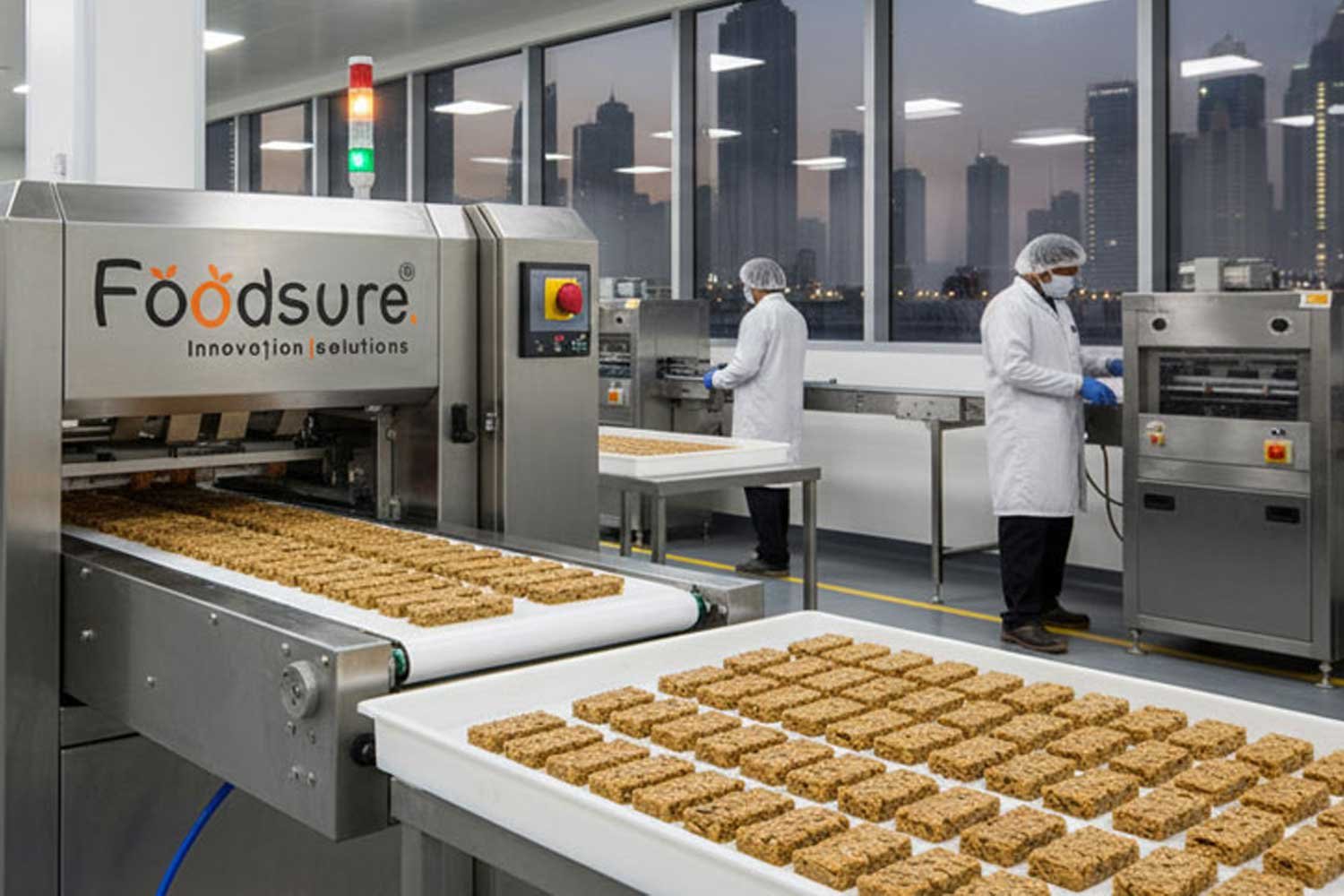
The true value of investment planning extends beyond machine-based prices to their entire operational expenses. The Balance of Plant (BoP) requires evaluation before making investment decisions because your extruder costs ₹10L, but your production system needs a cooling tunnel, which costs an additional ₹5L to achieve proper operational speed.
Financial & Operational Benchmarks
| Stage | Output (kg/day) | Labor Req. | ROI Period | Energy Cost/unit |
|---|---|---|---|---|
| Startup | 400–800 | 3–5 pax | 12–18 Mo | High (Manual) |
| Growth | 800–2,400 | 2–3 pax | 10–14 Mo | Medium (Semi-Auto) |
| Industrial | 2,400–6,000+ | 1–2 pax | 18–24 Mo | Low (High Efficiency) |
- The Sweat Equity Trap: Startups often choose manual cutting to save ₹2L. Manual operations result in a 5% weight loss because workers use different cutting methods. At a scale of 1,000 bars/day, the saved money is lost in raw materials within 6 months.
- Modular Scalability: Invest in a VFD-enabled (Variable Frequency Drive) motor. The system enables you to operate at 30% capacity today while increasing operational power to 100% during business growth periods without causing equipment damage.
- Buffer Strategy: Always specify your machine for 120% of your projected Year 2 demand. Industrial food machines reach their most effective functioning when operating between 70% and 80% of their capacity; continuous operation at maximum capacity causes particular problems with bearing components, resulting in a maintenance cost increase of over 15%.
Step 5: What to Look for An Energy Bar Machine for Your Business
The Total Cost of Ownership shows the actual operational efficiency of a system. You must assess the system’s capacity to maintain operational stability through extended 8-12 hr work periods, which go beyond its initial purchase cost.
Performance Benchmarks
- Density Control: Advanced commercial bar machines use pressure-compensated hoppers for density control, which maintains weight within a range of ±1.5% to stop retailers from rejecting products due to under-filling.
- Wastage Recovery: High-end units use internal scrap-return systems to recycle edge-trims back into the hopper, which maintains product loss at less than 1%.
Efficiency Factors
- Sanitary Engineering: Tool-less disassembly should serve as the primary disassembly method because it reduces sanitation time from 3 hrs to 45 min, which results in a 15% increase in annual production capacity.
- Energy Recovery: Use IE3-grade motors and VFDs because they reduce “startup surge” expenses, which become vital during high-torque protein dough operations.
Flexibility
- Rapid Changeovers: The system provides HMI-saved recipes that enable automatic belt speed adjustment and cutting frequency modification for various SKUs within a 5-minute time frame.
Step 6: Food Safety Standards for Energy Bar Machine for Your Business
The legal framework enables businesses to safeguard their brand through product recalls, which can lead to export rejections. Food safety standards will progress from basic cleaning methods to complete implementation of monitoring systems by 2026.
Mandatory Standards
- Traceability Integration: ISO 22000 and FSSC 22000 standards require modern PLC systems to record batch-specific information, which includes temperature and speed data.
- Global Export Readiness: For markets like the UAE or Nigeria, CE Certification and Halaal-compliant lubricants (H1 grade) are essential to clear customs and retail audits.
Material Requirements
- Metallurgical Integrity: SS316L serves as the mandatory material requirement for salt-based and acidic fruit base formulations, while SS304 functions as the commonly used standard material.
- Sanitary Design: Engineers should implement a Zero-Pocket design which uses sloped surfaces and radiused corners (R3 minimum) to eliminate dead zones that enable protein dough fermentation.
Step 7: Supplier Check in Energy Bar Machine Selection Criteria
The effectiveness of a machine depends entirely on the quality of its supporting system. The food processing industry loses thousands of dollars in raw material costs, together with missed retail deadlines, when equipment stops working for 24 hours.
What to Check
- OEE Performance Trials: Demand a Fatigue Test using your specific sticky formulation for at least 4 hours to verify that motors don’t overheat or rollers don’t seize.
- Component Interchangeability: Ensure the supplier uses global standard parts, which include Schneider electrics and SKF bearings, so you aren’t held hostage by proprietary spares during a crisis.
Red Flags
- The Black Box PLC: Avoid suppliers who lock their software; you must have the ability to calibrate sensors and update recipes without a paid service visit.
- Geographic Latency: The absence of local field engineers from your supplier will cause an increase in your Mean Time to Repair MTTR because a sensor swap, which should take a short time, will require a week-long equipment shutdown.
Step 8: Energy Bar Machine for Your Business – Cost & ROI Planning
The TCO metric determines whether a purchase represents a low-cost option or a profitable investment. The year 2026 will see scientists study energy-to-output ratios while they work to decrease Hidden Productivity Leak expenses, which result from repeated cleaning and calibration tasks.
Hidden Costs
- The Sanitation Tax: Machines that lack Hygienic Design (IP69K ratings) require 3,000+ annual labor and water expenses. Rapid-release conveyors reduce this cleaning overhead by 40%.
- Electrical Load Balances: The total electricity costs for high-torque extruders that use IE4 motors will exceed their initial purchase costs because these systems save 18% on electricity expenses during peak load times, which occur in 12-hour operational cycles.
ROI Benchmarks
- The Giveaway Recovery: Businesses that use PLC-synchronized cutters to lower weight deviation from 5% to 1.5% will find that machine price differences become profitable within 120 production days.
- Labor Displacement: Automated cooling tunnels in combination with manual tray-loading processes enable one operator to handle a 500kg/hr operation while they achieve 55% OPEX reduction.
Conclusion
Choosing the appropriate Energy Bar Machine for Your Business is a custom fit based on your formulation, production volume, and business compliance requirements. By utilizing the framework in this blog, you will be able to evaluate your energy bar equipment based on its ability to meet performance, scalability, and long-term cost efficiencies.
At Foodsure Machines, we assist manufacturers in selecting energy bar machines that are designed to produce consistent output throughout the manufacturing process, are compliant with food safety legislation, and will be able to support increased demand as needed. The Foodsure Machines commercial range of bars is designed to provide measurable results beginning on the first day of production.
Not Sure Which Energy Bar Machine Fits Your Business?
Get expert advice on machine capacity, automation level, and pricing based on your production goals and budget.
✅ Machine Selection Guidance
✅ Capacity & Output Planning
✅ Budget-Friendly Options
FAQ
What should I look for in energy bar machines before making a purchase?
In looking to buy an energy bar machine, pay attention to five thing are formulation compatibility, throughput capacity, portion accuracy, CIP cleaning support, and food grade certifications are all essential features that cannot be sacrificed.
What are the most important energy bar machine selection criteria for small businesses?
The selection criteria used by small business owners when choosing a piece of equipment to manufacture energy bars include the type of output flexibility required, the ease of cleaning, the low maintenance costs associated with operating the machine.
How do I know if a machine matches what to look for in energy bar machines for my bar type?
For assurance that you have purchased a machine that will work with your formulation, conduct test runs using your actual product. This is the only way to verify machine compatibility prior to making a purchase commitment.
Is certification part of the energy bar machine selection criteria I should check?
Yes, CE marking, NSF certification, and food-grade stainless steel (SS304/SS316) are essential criteria to be considered when purchasing equipment for any commercial production facility.
What to look for in energy bar machines when comparing multiple suppliers?
Be sure to compare portioning accuracy, after-sales support, availability of spare parts, warranty terms, and verified throughput data with purchases made by others, not just on purchase price.