
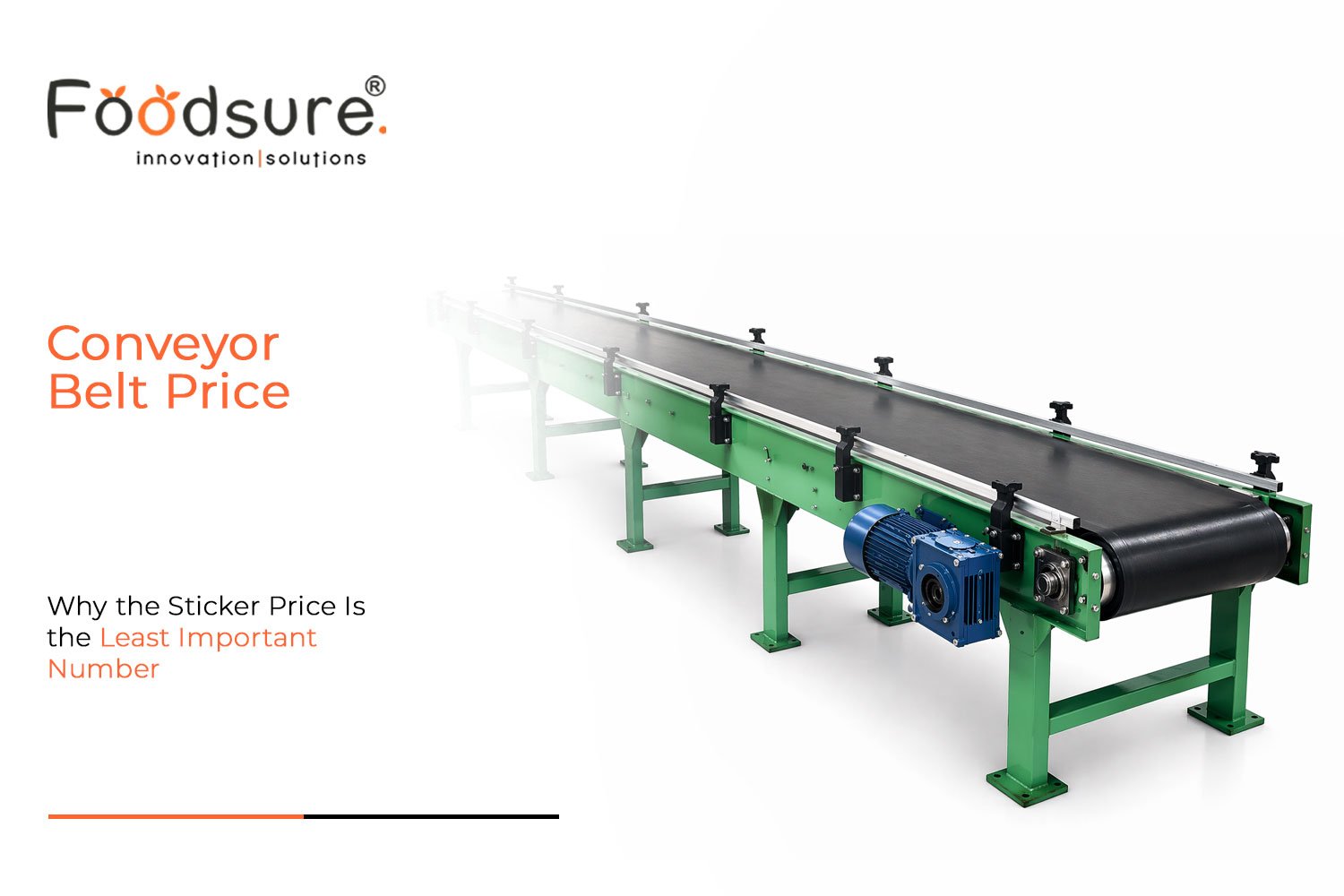
In India, manufacturers and distributors frequently advertise industrial conveyor belt prices on quotation sheets. The unfortunate reality is that these are usually only indicative of how much a conveyor belt costs; they do not give an accurate picture of the true cost of ownership. When purchasing a conveyor, one must look beyond price to include many important factors, including the risk of downtime, the likelihood of frequent change-outs, high energy consumption, and maintenance expenses.
Every year, Indian industries reportedly lose a whopping Rs. 2,400 crore due to unexpected conveyor downtime. The vast majority (approximately 75%) of this lost revenue is due to consumers choosing to buy conveyor belts based solely on their price. This blog post will provide guidance on how to transition from a price-based consideration of conveyor belt options to one based on the total cost of ownership when selecting conveyor belts.
Conveyor Belt Price in India: What It Really Covers And What It Hides
Most customers believe that the total investment cost includes only the quoted conveyor belt prices. The actual cost represents only the product expenses without any additional costs.
What Suppliers Typically Include in Conveyor Belt Price
The typical quotation includes:
- Belt materials (PVC, rubber, or stainless steel).
- Standard dimensions and specifications.
- Manufacturing and delivery charges.
The actual system cost only includes the parts required for operation.
What the Price Does NOT Cover (But You Will Pay For)
Here are the components that are needed for a conveyor system to function properly in manufacturing:
- Frame and supporting structure.
- The renovation of drive (motors, gears, etc.), as well as rollers, pulleys, and tensioning systems.
- System components such as PLCs, sensors, and variable frequency drives.
- Installation and alignment of the entire system (including existing infrastructure).
- Cost of maintenance and any downtime associated with that.
Insight – The true cost of cheaper belts is due to the forgotten lifecycle cost. Cheaper belts have worse parts; their poor quality leads to misalignment issues; misalignment issues lead to unexpected machine failures, resulting in a loss of revenue every hour that far exceeds the cost of the belt itself. When considering the total cost of the ownership of all components, do not only consider the price.
Conveyor Belt Price Per Meter in India: Benchmark Cost Comparison by Type
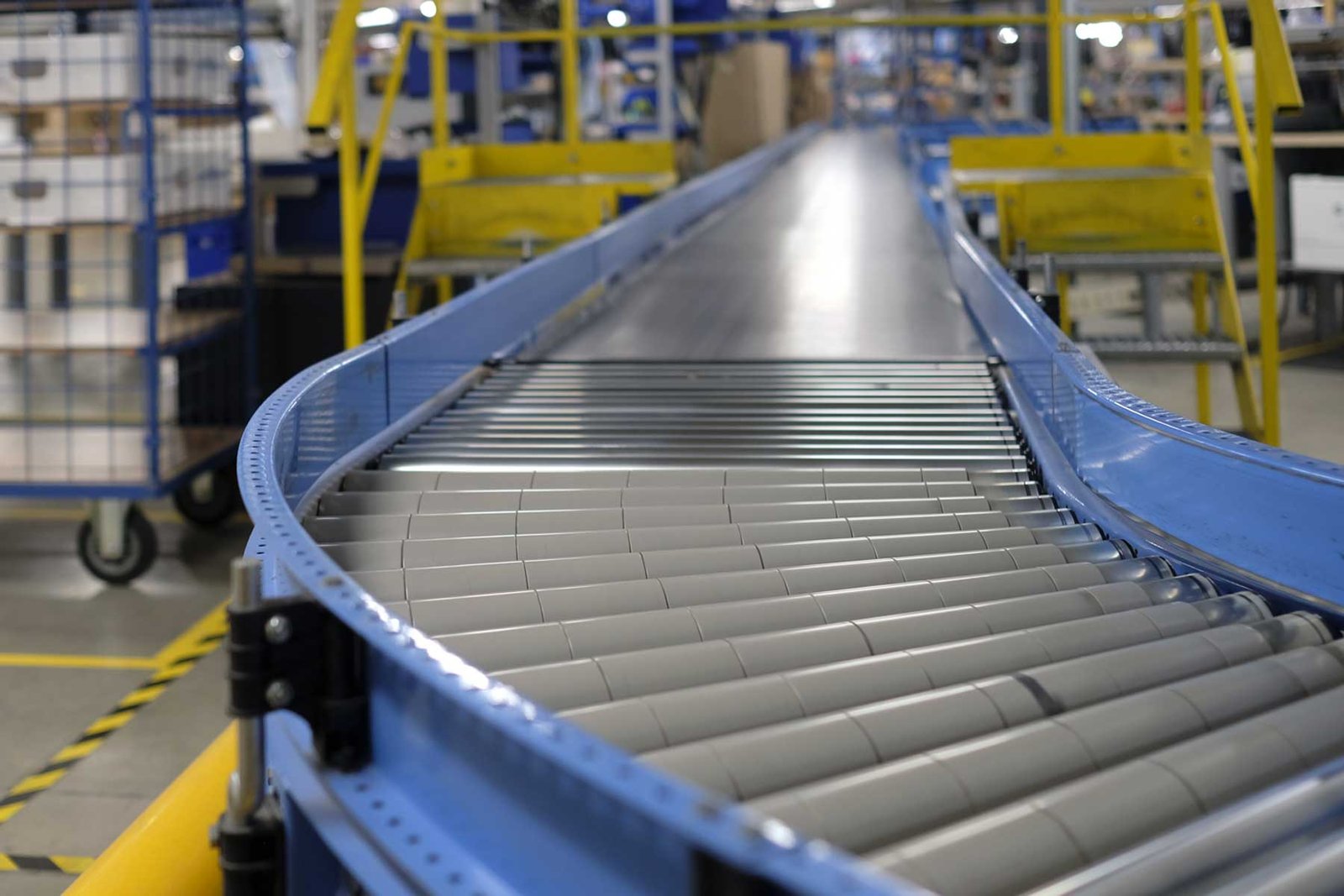
The India conveyor belt cost estimation depends on three belt specifications, which include width, ply and material type. The industrial sector faces rising raw material expenses, which make budget quotes unsuitable for future use after the year 2026.
Market Standards (2026)
In order to make the right decision, you need to take into account the belts’ performance classes. The cheapest heavy-duty belt can be a regular industrial belt with incorrect labelling, failing when in operation.
| Belt Type | Price/m (₹) | Use Case |
|---|---|---|
| Standard PVC | 400–2,500 | Packaging, electronics |
| Food Grade (PU/PVC) | 800–3,500 | Pharma, meat, dairy |
| Industrial Rubber | 700–3,200 | Mining, cement |
| Heavy Duty / Chevron | 1,200–7,000 | Incline bulk handling |
| Speciality (Heat/Oil) | 3,000–11,000 | Foundry, chemical |
Why Price Ranges Are So Broad
The substantial difference that exists between per-meter pricing results from three concealed factors.
- Width and Ply: A 500mm wide belt is drastically cheaper than a 1200mm belt. A 4-ply rubber belt (high tensile strength) costs twice as much as a 2-ply version.
- Reinforcement Material: Belts that use Steel Cord or Nylon (NN/EP) reinforcement require higher costs than standard cotton or polyester weaves because they maintain their shape under tension.
- Surface Engineering: The production process for Cleats and Sidewalls and Rough Top textures, which provide grip, requires extra manufacturing time, which increases material costs to twice their original value.
Key Insight: The evaluation of a ₹400 PVC belt against a ₹1,500 Rubber belt goes beyond pricing because it reveals a total operational dissimilarity. The specification of your tensile strength (kN/m) and top cover thickness must accompany your quote requests to establish direct product comparison.
Key Factors That Drive Conveyor Belt Price in India: 8 Cost Drivers Every Buyer Must Know
The price quotation for a conveyor belt in India includes more expenses than only the raw materials. Technical specifications require businesses to meet their most critical obligation because of upcoming market changes and new regulatory rules from 2026. The eight factors you need to understand will help you determine which quote offers better value than a cheap option.
1. Material Grade & Compliance
- The gap between Standard PVC (₹400m) and Food Grade PU (₹1,200+/m) exists because FSSAI and FDA-compliant polymers incur higher production costs.
- The materials protect against bacteria because they remain solid without any open spaces.
- The 2026 FSSAI reforms require risk-based inspections, which will impose severe penalties on restaurants and pharmaceutical companies that use non-compliant belts.
2. Belt Architecture (Width & Ply)
- The relationship between cost and production volume does not follow a straight line. A 4-ply rubber belt offers better tension handling abilities than a 2-ply rubber belt because its cost reaches double the 2-ply value at the same width.
- The company charges slitting charges for custom widths, which makes standard sizes more affordable.
3. Environmental Resistance
Specialised coatings add special premium costs to their products, which exceed standard pricing through their specialised benefits.
- Heat Resistant: +30% to +50% (Required for foundries or hot clinker).
- Oil Resistant (OR): +25% to +40% (Essential for machine parts or oily seeds).
- Flame Retardant: +35% (Mandatory for underground mining).
4. System Complexity vs. Component Cost
As a rule of thumb, the complete system price is 5–8 times the belt price.
- Belt only: ₹50,000.
- Full System: ₹2,50,000 – ₹4,00,000 (Including motors, VFDs, and sensors).
5. Installation & Commissioning
The installation costs range between ₹40,000-₹2,00,000 based on how accessible the site is and whether the project needs on-site hot vulcanising to join the belt ends.
6. Energy Consumption (The Friction Tax)
Low-grade belts have higher sliding friction. Eff-Line belts help large businesses decrease electricity use by 45% because each 20-meter installation generates savings between ₹60,000-₹80,000 annually.
7. Maintenance & Lifespan
A premium belt lasts 3–5 times longer than a budget alternative. Cheap belts require frequent re-tensioning and tracking adjustments, which lead to operational halts that cost factories ₹1 Lakh per hour because of missing production.
8. Engineering & Customisation
Inclines require Cleats or Sidewalls, which add labour-intensive fabrication costs. A cleated belt typically costs 40% more per meter than a flat belt of the same material.
Key Insight: Total Cost of Ownership (TCO) needs to become the main focus for decision-making purposes. The most expensive option to select involves a belt that has a 20% lower initial cost, but it needs 15% more power to operate and requires maintenance because it breaks down two times each year.
Need the best conveyor belt price for your plant?
Get complete pricing based on belt quality, size, motor power, customization, installation, and long-term operating value.
Hidden Costs Behind Conveyor Belt Price in India: Why Your Actual Spend Is Much Higher
The actual expense of a conveyor belt system needs to be calculated through its effects on productivity throughout your manufacturing operations. The hidden expenses of industrial projects in India become their main budgetary challenge because they exceed their expected costs by 25- 40% in 2026.
1. The Downtime Drain
The manufacturing facilities of India experience unplanned downtime, which results in industries losing ₹70 Lakh every hour across their main industrial sectors. The belt snap causes a complete machinery shutdown, which prevents all work for your staff while jeopardising materials during food and chemical processes.
- Wasted Labour: You pay for idle operators and emergency technical teams.
- The Emergency Premium: Last-minute repairs typically cost 2–3x more than scheduled maintenance.
2. The Replacement Cycle Trap
A bargain belt only lasts between 6 and 12 months before it starts to show signs of stretching, fraying, and losing its ability to hold. A reinforced belt made from NN or EP grade materials will last for 3 to 5 years without losing its functional capabilities.
The Math: The total expense of purchasing three low-cost belts over three years will exceed the cost of buying a single high-quality belt. The calculation does not include expenses related to replacing the belts.
3. Compliance and Audit Risks
The 2026 FSSAI and safety reforms now classify incorrect material use, yet which people should use industrial PVC for food as a legal liability instead of a quality problem.
- Audit Rejection: Non-compliant belts create an audit rejection risk, which leads to immediate facility shutdowns or substantial penalties during risk-based inspections.
- Reputation Loss: A single contamination event linked to a porous low-grade belt can destroy a brand’s market standing overnight.
Hidden Cost Impact
| Hidden Factor | Estimated Annual Impact (INR) | Risk Level |
|---|---|---|
| Unplanned Downtime | ₹5 Lakh – ₹25 Lakh | Extreme |
| Excessive Energy Draw | ₹30,000 – ₹80,000 | High |
| Compliance Fines | ₹1 Lakh – ₹10 Lakh+ | Moderate |
Key Insight: If a conveyor belt manufacturer in India offers prices that appear excessively low, this indicates the supplier transfers their long-term financial risks to your company’s balance sheet. The Annualised Cost of the belt needs to be calculated in its entirety, instead of being assessed through its purchase price alone.
How to Calculate Total Conveyor Belt Cost in India (TCO Method Beyond Conveyor Belt Price)
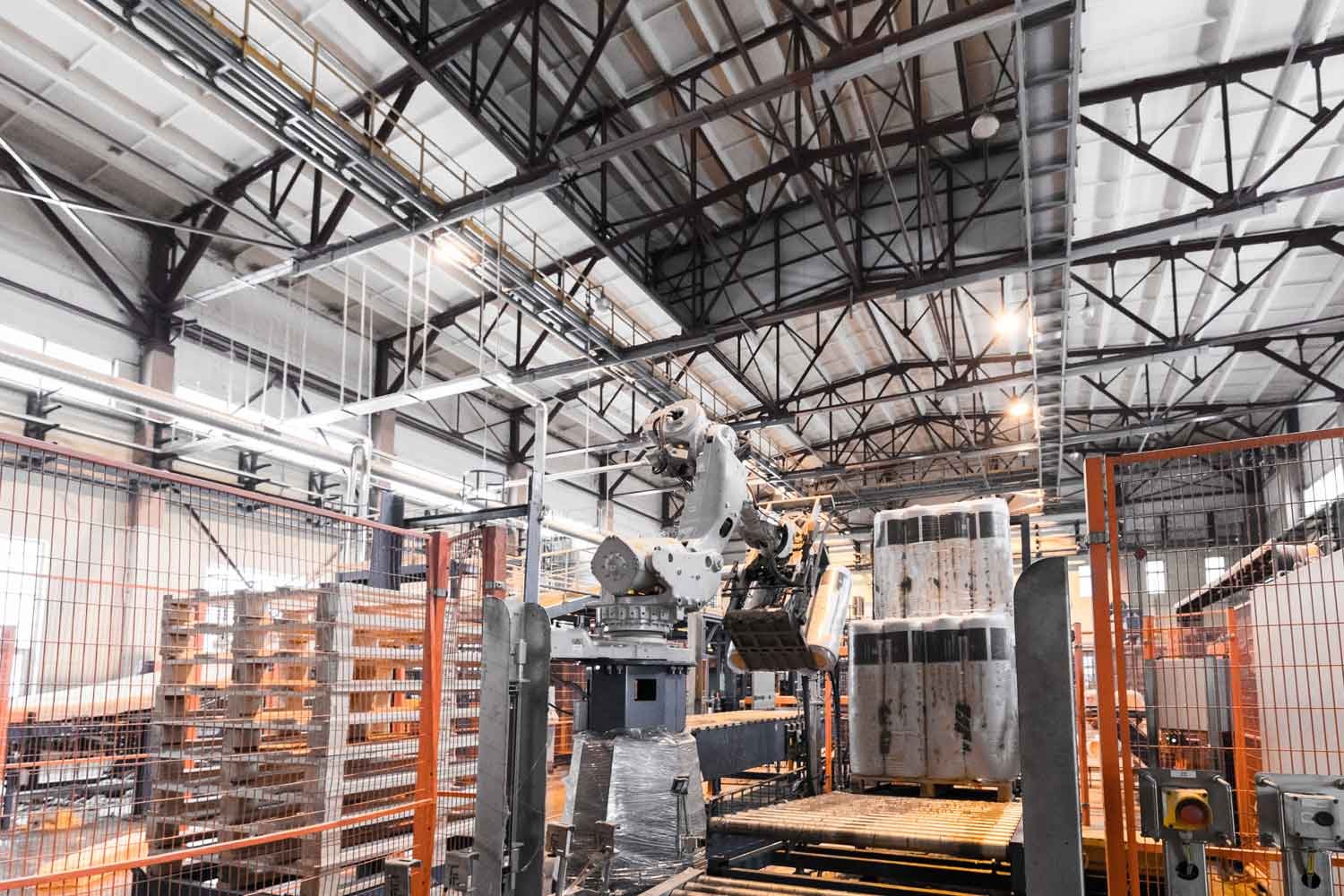
In order to go from buying a part to investing in a system, you have to apply the Total Cost of Ownership (TCO) concept. Instead of looking at the price, you will be analysing your bottom line for 5 years.
The 5-Year TCO Formula
For your actual costs, calculate:
TCO= (BC×R) + SC + IC+ (MC×5) + (DC×F)
Real-World Calculation: Cheap vs. Premium
Let us compare the Budget Belt (with frequent failures) and the Premium Belt (durable) in a typical 20-meter industrial belt application in India.
| Cost Factor | Budget Option (Low Initial Price) | Premium Option (High Initial Price) |
|---|---|---|
| Initial Belt Cost | ₹40,000 | ₹1,20,000 |
| Replacements (5 yrs) | 5 (Once per year) | 1 |
| System Hardware | ₹3,00,000 | ₹3,00,000 |
| Installation Cost | ₹30,000 per swap (×5) | ₹40,000 |
| Annual Maintenance | ₹50,000 | ₹15,000 |
| Downtime Cost | ₹5,00,000 (5 failures) | ₹0 |
| 5-Year Total | ₹12,40,000 | ₹5,35,000 |
Final Calculation: Cost Per Unit
The only thing that affects your bottom line is the Cost Per Unit Produced.
Total 5-Year Cost / Units Produced = Real Cost Of Manufacturing
In the case above, despite the huge upfront premium of three times, the cheap”Budget Belt ended up costing the company ₹7,05,000 more over five years. This hidden cost of buying cheaply is what breaks the bank in manufacturing.
Insight: With 1,000,000 units produced in 5 years, the Premium Belt is only going to cost you ₹0.53 per unit, while the cheap belt would cost you ₹1.24 per unit.
Conclusion
The actual cost of a conveyor belt in India isn’t the price shown on your quote. It’s the total amount you will spend on that conveyor belt over its useful life! When you include maintenance costs, lost production due to downtime, and overall system efficiency, very often the lowest price will be the highest long-term cost.
Foodsure Machines provides you with an overall picture to evaluate your investment. We help guide you through the following are selecting your materials, designing your system, and completing a long-term cost analysis so that your purchase provides acceptable, consistent and predictable performance. Our approach will ensure that when you purchase a conveyor belt, you will have created a dependable, cost-effective manufacturing system that can sustain growth and lower risk exposures in operations.
Need the real conveyor belt price, not just the sticker price?
Get complete pricing with quality specs, installation cost, warranty, and long-term value for your food processing plant.
FAQ
What affects the conveyor belt price in India for food processing?
The price of food-grade conveyor belts depends on their material compliance and hygiene standards, and their chemical resistance capabilities.
What are the hidden costs behind conveyor belt pricing in industrial setups?
The actual cost of a conveyor belt system increases because of both downtime and maintenance requirements, as well as installation work.
How to calculate total conveyor belt cost for a factory?
The 5-year TCO model requires you to include all costs for conveyor belt operation, which includes maintenance expenses and downtime expenses.
Why do cheap conveyor belts increase long-term maintenance costs?
The low cost of industrial conveyor belts creates a situation where customers experience repeated breakdowns, which lead to greater expenses for repairing the equipment.
How to choose the right conveyor belt within budget?
The study evaluates Indian conveyor belt prices together with product quality for identical categories and uses.