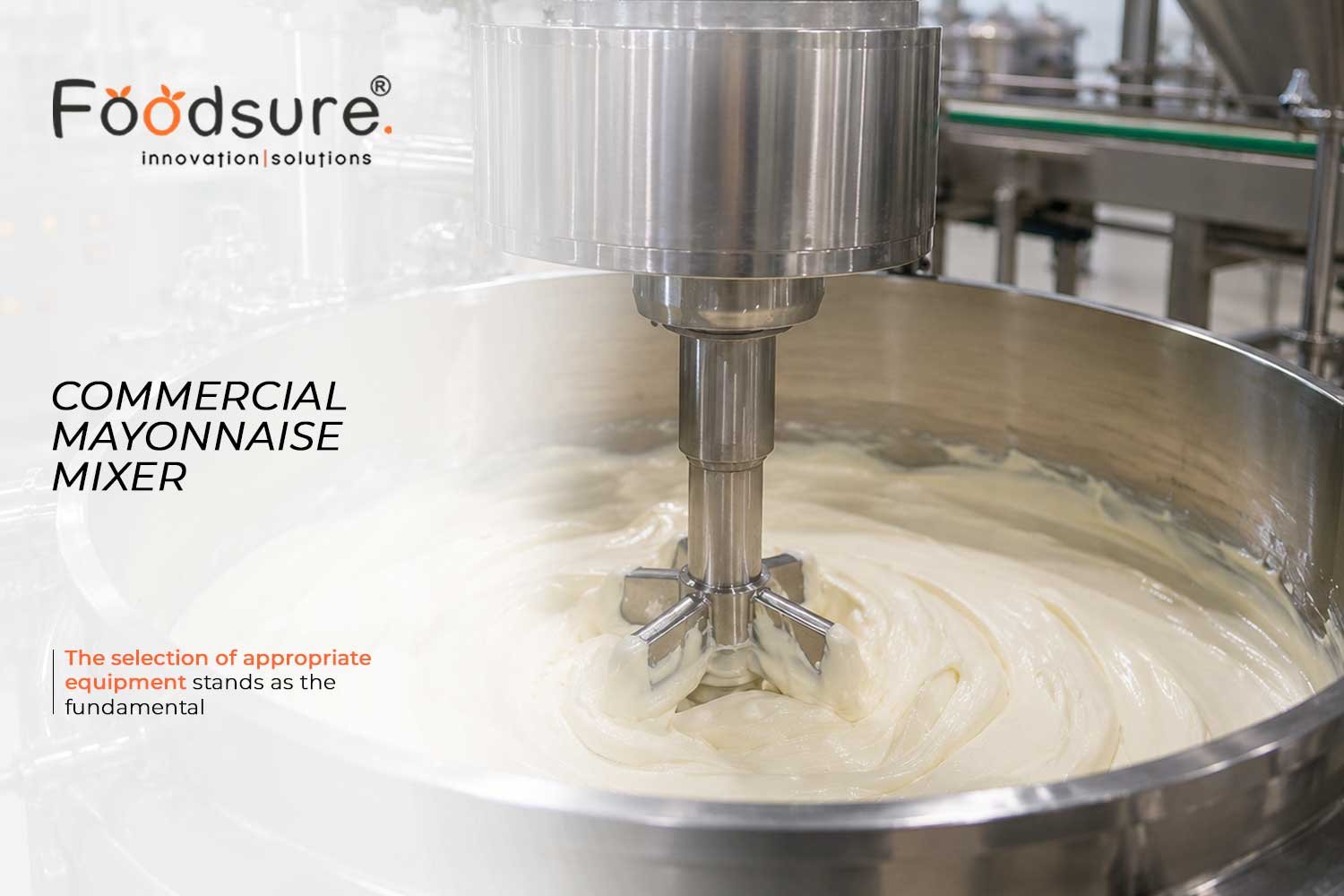
The selection of appropriate equipment stands as the fundamental requirement for establishing a successful condiment business. The commercial mayonnaise mixer efficiency decides your product’s texture and shelf stability, and your profit margins, whether your business operates as a startup producing artisanal batches or as an established facility expanding to national distribution. The Indian food processing market in 2026 has adopted “No-Touch” hygiene protocols and energy-efficient motors as its new industry standards.
This blog contains all the necessary information that you need to make a well-informed investment decision.
What is a Commercial Mayonnaise Mixer?
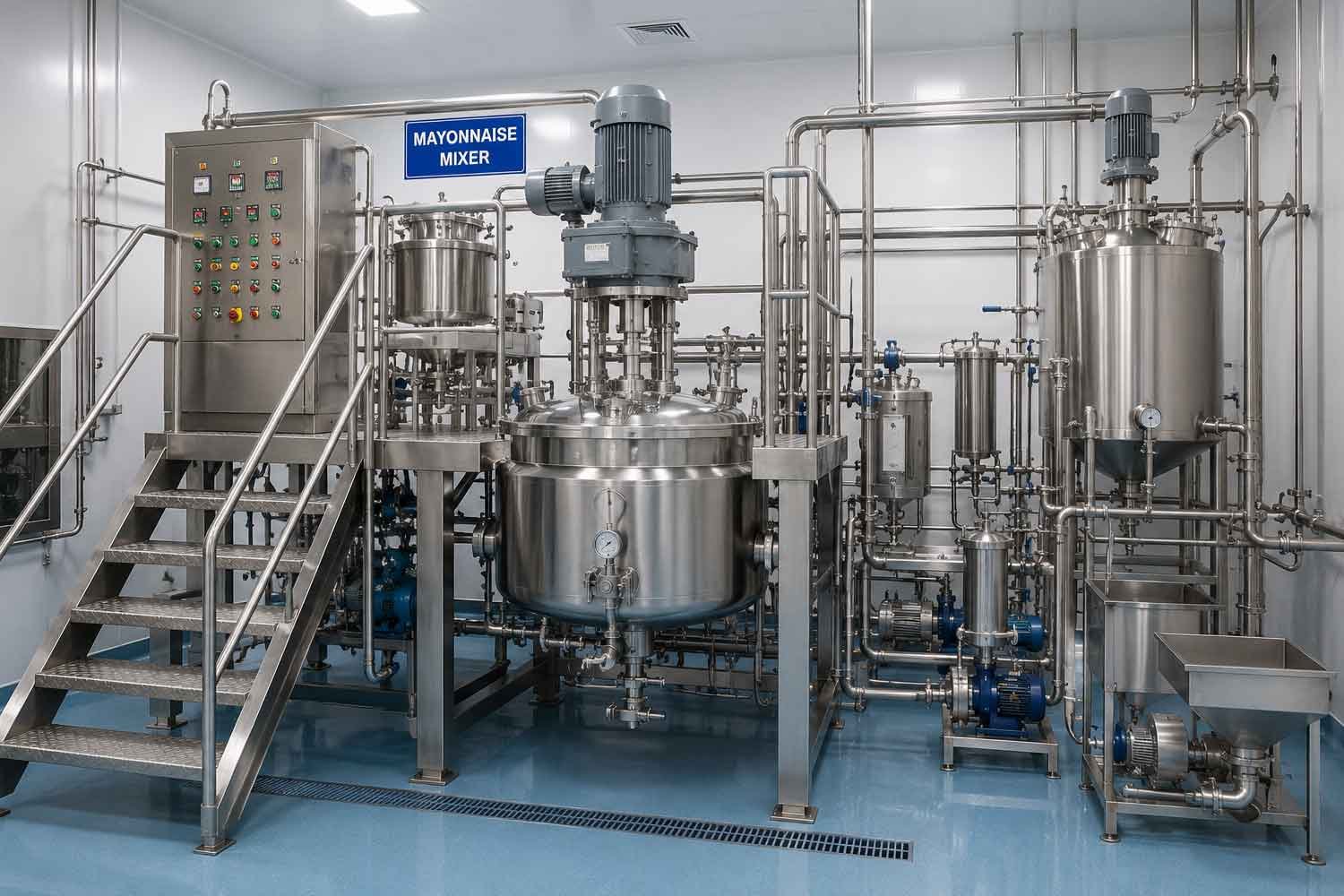
A commercial mayonnaise mixer is a specialised industrial appliance used to assist the emulsification of oil, water, egg yolk (or plant-based stabilisers) and acidifiers. These machines differ in that they are designed to deal with high-viscosity liquids and form a permanent emulsion that will not split or weep over time, like regular kitchen blenders. The reasons why manual mixing is not scalable:
- Irregularity: Low-grade or manual mixing is likely to cause batches of different thickness.
- Labour Intensive: Hours required to bring the droplet size to micron-level to professional mayo.
- Shelf Life Problems: No emulsification results in oil splitting, and that spoils the image of your brand.
The 5 Main Types of Commercial Mayonnaise Mixers
The technical specifications of food machinery present a difficult challenge to people who need to navigate them. We have categorised the most effective machines available in the Indian market today.
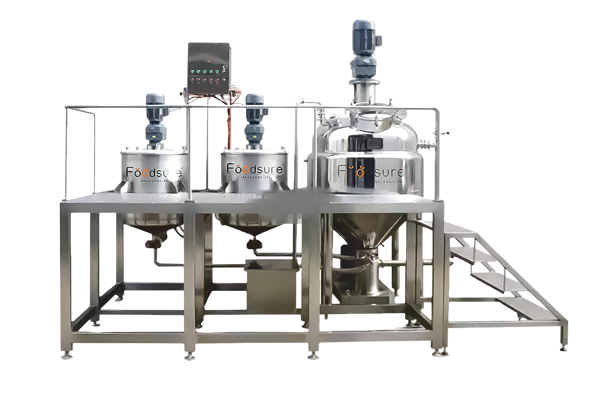
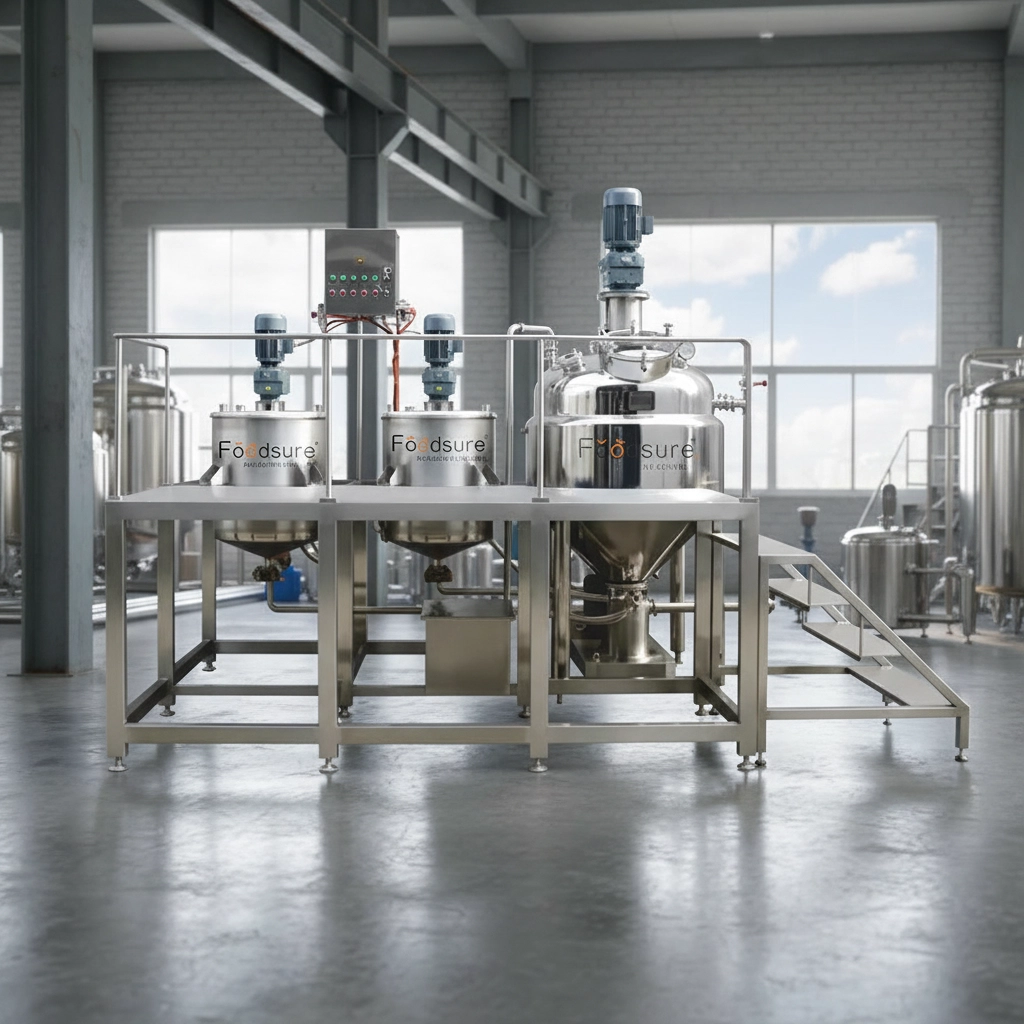
High Shear Mayonnaise Mixer
- The high shear mayonnaise mixer serves as the primary equipment used in food service operations throughout India.
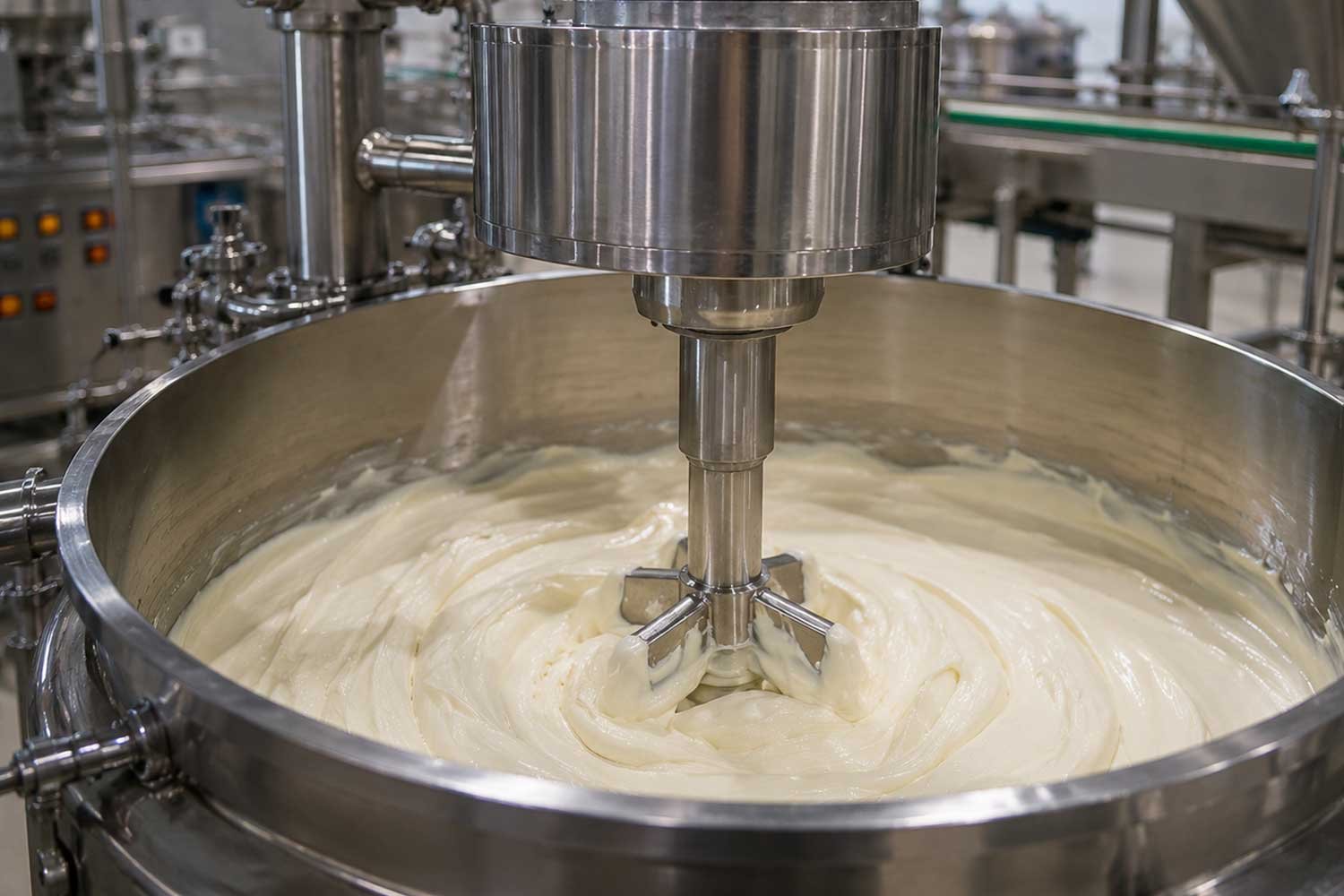
- The system uses a rotor/stator assembly that operates at high speeds to pull ingredients into the mixing head while shearing them through small openings.
- Best for: Medium-sized businesses making 50–200 litres daily.
- The key benefits of the system include rapid emulsification, which produces results within 10 to 15 minutes and exceptional value for money.
- The estimated cost range for the product starts from ₹2,00,000 and reaches up to ₹6,00,000.
Automated Commercial Mayo Mixing Machine
The commercial mayonnaise mixer integrating PLC (Programmable Logic Controller) is the best option for businesses that want to reduce human error. These units enable you to store recipes and automate the process of oil-dosing.
- Best use: Plants that are concerned with the high consistency and low labour expenses.
- Selling points: One-touch control and electronic control of temperature and speed.
- Estimated Cost: ₹4,00,000 to ₹9,00,000.
Mayonnaise Homogeniser Machine
When you aim to rival high-quality international brands, a mayonnaise homogeniser machine is a necessity. It injects the mixture into a small valve under pressure, which ruptures the oil droplets to less than micron sizes.
- Ideal use: Quality, smooth, gourmet mayonnaise and export-quality products.
- Significant Advantages: Excellent texture and greatly improved shelf life.
- Estimated Cost: ₹3,00,000 to ₹8,00,000.
Mayo Blender Machine
The Mayo blender machine is an all-purpose entry-level product. Although it does not have the radical shearing capacity of industrial units, it is very versatile in the business that has several types of sauce manufacturing.
- Ideal use: Cloud kitchens, small caterers, and budget-friendly startups.
- Important Advantages: Small footprint, simple to use, and dressings are multi-functional.
- Estimated Cost: ₹1,50,000 to ₹4,00,000.
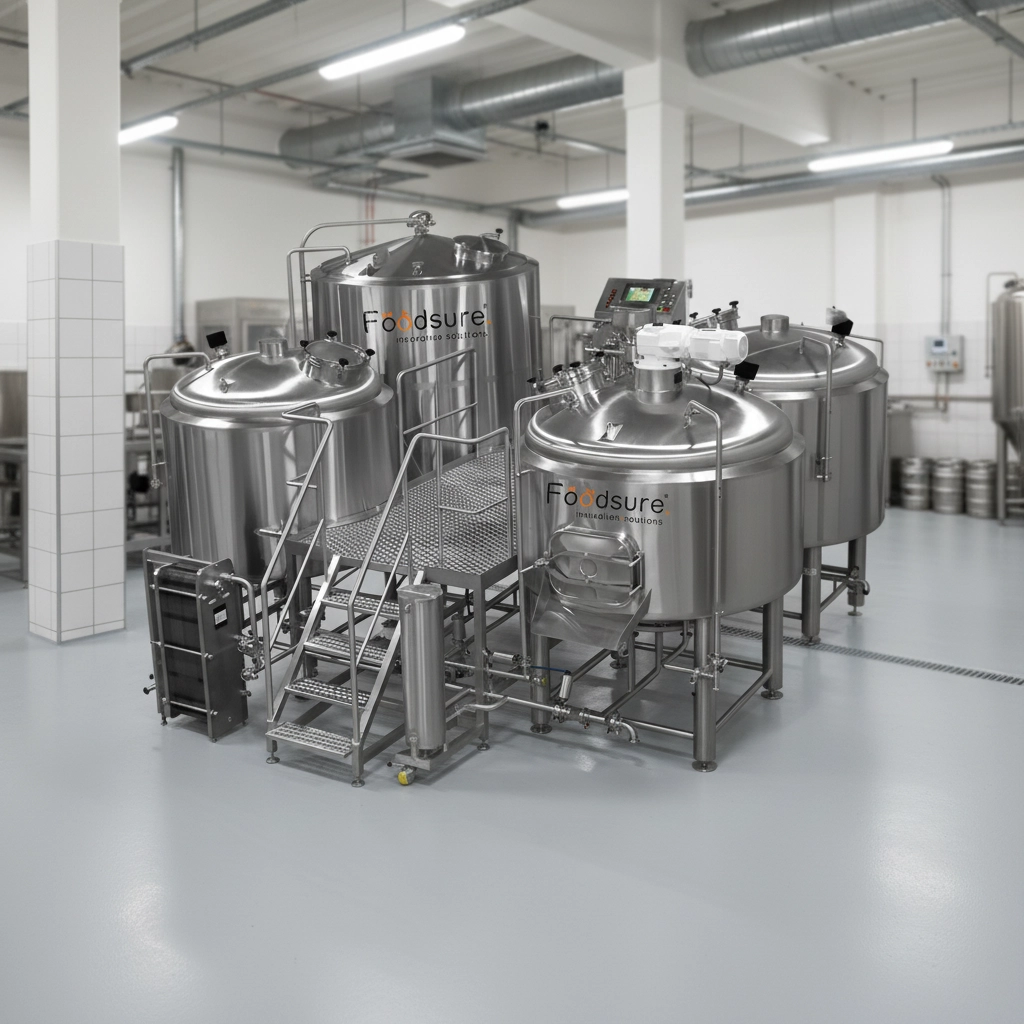
Industrial Mayonnaise Mixer & Processing Plant
In large-scale production, an industrial mayonnaise mixer can be a component of a whole mayonnaise processing machine ecosystem. They are vacuum-sealed and do not allow oxygen bubbles (oxidation) to be present, and most have built-in cooling jackets.
- Ideal use: Large food manufacturing plants and national suppliers.
- The main advantages: The highest throughput (thousands of litres/day) and vacuumization of air-free mayo.
- Estimated Cost: ₹8,00,000 to ₹20,00,000+.
Comparison of Mixer Specifications
| Feature | High Shear Mixer | Automated Machine | Homogenizer | Mayo Blender | Industrial Plant |
|---|---|---|---|---|---|
| Daily Capacity | 50–200 L | 200–500 L | 100–400 L | 20–50 L | 1000+ L |
| Speed Control | Manual / VFD | Fully Digital | High Pressure | Basic Switch | Integrated PLC |
| Texture Quality | Creamy | Consistent | Silky / Premium | Standard | Professional |
| Cleaning | Manual / Easy | Self-Cleaning (CIP) | Moderate | Very Easy | Automated (CIP) |
How to Choose the Right Mixer for Your Business
Step 1: Measure Your Daily Production Volume
You shouldn’t purchase what you need today; you should purchase what you need in 12 months.
- Micro-scale: 2050 litres a day (Select a Blender).
- SME-size: 50-150 litres per day ( Select High Shear).
- Industrial-scale: 150+ litres per day ( Select Automated or Processing Plant).
- Hack: Buy a machine that is 30% larger than your maximum load at present.
Step 2: Utility and Space Requirement
Don’t just need a floor plug on industrial machinery.
- Floor Space: Make sure that there are 100-250 square feet for the machine and operator movement.
- Electrical: A majority of commercial units in India need a 415 V three-phase power connection.
- Drainage: Large-scale production needs to be close to the industrial floor drains to be washed down daily.
Step 3: TCOB Budgeting
The retail price is just the starting point. These are other costs to consider:
- Installation & Commissioning: ₹20,000 to ₹75,000.
- Operator Training: ₹10,000 to ₹20,000.
- Annual Maintenance (AMC): ₹20,000 to ₹50,000.
Key Features to Look For
Build and Material Quality
In the food industry, Grade Stainless Steel SS304 or SS316 is a must. Mayonnaise has vinegar and lemon juice; the metals used will cause corrosion, resulting in food safety breaches and machine breakdown.
Speed Control and Temperature Control
Variable Frequency Drive (VFD): You can vary the frequency (500-3000 rpm) so it does not over-mix.
Jacketed Vessels: A cooling jacket is essential to maintain the temperature of the components between 15 °C and 20 °C, which will maintain the emulsion.
The ease of maintenance and hygiene
Find Clean-in-Place (CIP) compatibility. When a machine is hard to disassemble, it will result in bacterial growth and batch contamination. FSSAI standards have never been stringent in the past; select a design with No-Touch hygiene features.
Technical Maintenance Schedule
| Frequency | Task | Benefit |
|---|---|---|
| Daily | 5-minute deep cleaning & sanitisation | Prevents bacterial growth |
| Monthly | Lubricate moving components and inspect seals | Avoids leakage, friction, and wear |
| Quarterly | Calibrate PLC systems and sensors | Ensures recipe and process consistency |
| Annually | Complete motor and blade inspection | Extends machine service life beyond 10 years |
Conclusion
The selection of the appropriate commercial mayonnaise mixer is a key investment that determines the scalability of your brand and product integrity. By 2026, the Indian food industry will require both high efficiency with high speed and high hygiene compliance.
The most successful vendors are such as Foodsure Machines, which are regarded as a key collaborator to Indian entrepreneurs, providing speciality mayonnaise processing machines that combine high-shear technology with low-cost automation. When you align daily production targets to the correct shearing technology, you get a stable, quality emulsion that will bring back customers.
Looking for the best commercial mayonnaise mixer in India?
Get expert guidance on mixer capacity, emulsification quality, automation, pricing, and the right setup for consistent mayonnaise production in 2026.
FAQs
Which is the most suitable mixer in a startup?
A mayo blender machine is the most balanced in terms of versatility and cost to new businesses in the market.
Should I have a three-phase power connection?
Indeed, the vast majority of industrial-grade commercial mayo mixing machines in India have a three-phase 415 V power supply requirement to maintain steady operation.
What can I do to avoid oil separation?
A high shear mayonnaise mixer of well-known brands, such as Foodsure Machines, will guarantee that the oil droplets remain small enough to remain permanently emulsified.
Are these mixers required to be stainless steel?
Definitely; only food-grade SS304 or SS316 can resist the acidic properties of vinegar and lemon juice without corroding and contaminating the batch.
Can one machine be able to produce various sauces?
The majority of processing machines in the mayonnaise industry are extremely versatile and may be used to produce salad dressings, sandwich spreads and fancy ketchups.