Over 60% of small manufacturers in India incorrectly estimate their roasted peanut production expenses at between ₹3-₹5 lakh because no one explains the full picture to them. The price of a peanut roasting machine only starts at its quoted amount. Your business operations begin to lose money through electricity expenses, employee turnover, material wastage, and regulatory fines before you achieve your first profitable production run. This blog provides a 2026 cost breakdown for roasted peanut production, including all hidden expenses not mentioned in the brochures, to help you maintain your profit margin in the Indian roasted peanut market.
The Real Cost Blueprint of Roasted Peanuts Manufacturing in 2026
The manufacturing process for roasted peanuts in 2026 now requires more complex procedures than the basic method of purchasing a drum and operating a furnace. The producers of today mistakenly determine their return on investment by using only the purchase cost of peanut roasting equipment, which exists in India. Your business needs to establish resilience through an investment evaluation system that functions across three separate financial assessment levels.
Layer 1: The Visible Capital (Fixed Investment)
The sticker price phase has begun, which establishes the initial product cost. The market will provide multiple options in 2026, but the total expenses will exceed the metal materials needed for the peanut roasting machine.
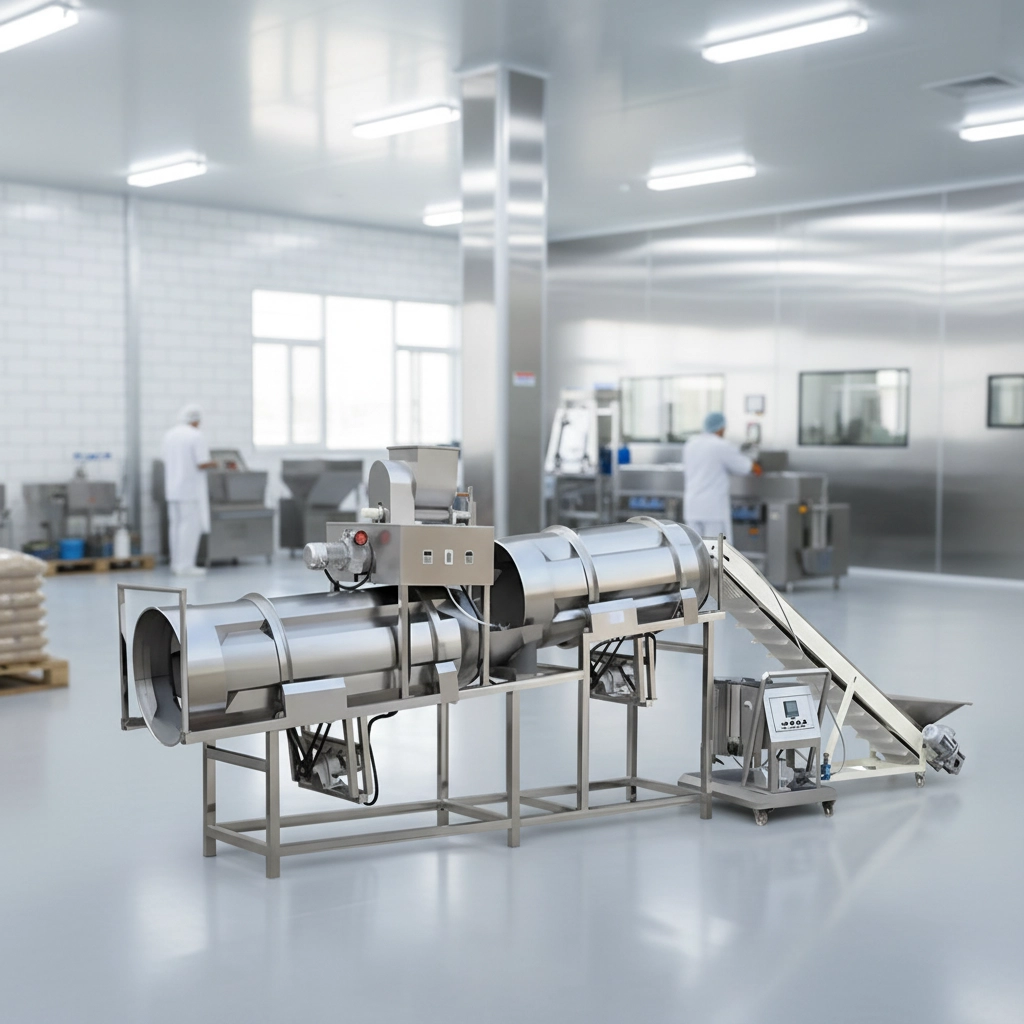
- The Core Unit: The IoT-enabled peanut roasting machine in India now costs high-output models because they include embedded sensors that stop excessive roasting.
- Ancillary Equipment: A roasted peanut production process requires more equipment than a roaster because you need to allocate funds for
- De-stoners and Aspirators: To remove field debris before roasting.
- Cooling Conveyors: Essential to stop the cooking process immediately.
- Grading Machines: To ensure uniform size for even roasting.
- Installation & Integration: The automatic peanut roasting machine requires 2026 software integration to function with your inventory management system.
Layer 2: The Semi-Visible Operations (Variable Burn)
The Semi-Visible Operations (Variable Burn) processes define everything that exists between the visible and hidden business operations.
Your business’s monthly expenses vary depending on how much production work you perform.
- Energy Intensity: The electricity cost for the peanut roasting machine in India has risen by 15% since 2024. If you operate a machine without heat-recovery technology, your financial losses will rise because you waste resources.
- Technical Human Capital: The labour cost in the roasted peanuts production business has shifted. The business requires a reduced number of movers who need to get trained as operators to perform digital calibration and peanut processing machine maintenance.
- Consumables: The business needs food-grade lubricants and gas for hybrid burners, which depend on global energy index changes.
Layer 3: The Hidden Leakages (The Profit Killers)
The third layer reveals the hidden business expenses that lead to profit destruction throughout the roasted peanut enterprise in India.
The silent costs that businesses incur through their operations will result in profit losses for your roasted peanut enterprise in India because these costs remain unrecorded on pro-forma invoices.
- The Shrinkage Tax: Peanuts lose weight during roasting. The groundnut roasting machine loses 10kg of groundnuts for every ton processed when moisture loss exceeds 1% through improper temperature control. The annual financial impact of this process in high-volume roasted peanut processing reaches lakhs of rupees.
- Thermal Inertia Waste: The energy wasted while heating up or cooling down the machine between batches.
- 2026 Green Compliance: The introduction of new carbon credit requirements through Indian regulations forces commercial peanut roasting machines, which operate inefficiently, to pay Emission Surcharges that can reach 5% of their total revenue.
- Maintenance Debt: The actual costs for peanut roasting machines in India include both purchase expenses and ongoing maintenance expenses, which create maintenance debt. The failure to complete a ₹20,000 sensor calibration results in a ₹2,00,000 batch failure.
Peanut Roasting Machine Price in India: Real Cost Breakdown
All equipment market factors instead of using the catalog price as your sole pricing reference for 2026 equipment market access. The following section provides a technical analysis which shows the actual cost components that determine your groundnut roasting machine investment decision and the reason why actual costs exceed initial price estimates.
The 2026 Price Spectrum
- Micro/Small Scale (₹80,000 – ₹1.5 Lakh): The system uses batch-type drum roasters which operate as its primary equipment. The equipment proves most suitable forlocal shops yet it fails to provide energy-efficient insulation which meets 2026 standards.
- Semi-Automatic Units (₹1.5 Lakh – ₹3.5 Lakh): The system provides improved temperature management through its automatic unloading and tilting functions which decrease the need for manual work.
- The Commercial Peanut Roasting Machine (₹6 Lakh+): Operates through automatic systems which include continuous belt and rotary systems that use IoT sensors and heat recovery modules.
The “Hidden” Invoice Add-ons
The cost of a peanut roasting machine in India does not include essential equipment needed for proper installation.
- Electrical Load Setup: Modern high-efficiency roasters require stabilized 3-phase power. The industrial transformer upgrade or heavy-duty stabilizer installation will result in total expenses ranging from ₹40,000 to ₹1,00,000.
- Civil & Structural Work: A commercial peanut roasting machine requires special flooring because standard flooring cannot support its weight. The system requires heatproof tiling and soundproofed platforms to manage vibration and thermal expansion.
- Exhaust & Ducting: 2026 environmental regulations need specialized scrubbers or high-velocity chimneys for controlling smoke and oil vapors emitted during roasted peanuts processing.
Semi-Auto vs. Automatic: The ROI Battle
| Feature | Semi-Automatic Machine | Automatic Peanut Roasting Machine |
|---|---|---|
| Labor Requirement | High (constant monitoring) | Minimal (1 supervisor for 3 units) |
| Consistency | Batch-dependent (human error) | Digital Precision (PLC controlled) |
| Energy Waste | High (heat loss during manual unloading) | Low (recirculating air systems) |
| 2026 Suitability | Good for niche / gourmet batches | Essential for high-volume wholesale |
The “Cheap Machine” Trap
Often, low-cost machines are made from lesser quality materials; this problem occurs when a thin gauge of mild steel is used instead of food-safe stainless steel (SS304/316). The disadvantages to the use of these products include:
- Heat Distribution: Uneven heating will cause some of the peanuts to be burnt or charred while other peanuts will be un-cooked.
- Repair/Dealer Markup: Many of these cheap machines come from fabricators who are not organized and do not provide any type of after-sale service/support. Therefore, you as the user will end up paying the full cost of any repairs through third-party service costs.
5 Hidden Costs in Roasted Peanuts Manufacturing That Reduce Your Profit Margin in 2026
The only method to safeguard your financial results in a market with daily changing raw material prices requires you to uncover all concealed expenses associated roasting peanuts. The five silent leakers establish operational success for factories as they determine whether a facility will expand its operations or cease production after its initial phase.
-
Energy Inefficiency:
Drums without proper insulation create substantial heat loss which requires heating systems to operate at maximum capacity. The 2026 heat recovery system-free machine operation will increase your energy expenses by 15-20% which results in financial losses for your business during each production run.
-
Maintenance Debt:
The peanut roasting machine price and maintenance cost should not be neglected because it leads to total system breakdowns. The process of monthly sensor calibration and bearing lubrication needs to be maintained because its absence creates inconsistent roasting patterns and thermal lag which damages product quality and brand image.
-
Packaging (Nitrogen Flushing):
The 2026 shelf-life requirements need more than basic sealing methods to achieve compliance. Many producers fail to include food-grade nitrogen and high-barrier pouch costs as operational expenses when they calculate their per-gram production expenses.
-
Compliance (FSSAI + Pollution Norms):
New 2026 environmental mandates require advanced smoke scrubbers and oil-mist collectors. Any business that fails to allocate funds for “Green Compliance” audits will face severe financial consequences and immediate shutdown of their facilities.
-
Downtime & Cooling Delays:
The weight of your peanuts decreases through moisture shrinkage during every minute they stay in a hot drum after roasting. The process of slow cooling cycles not only decreases sellable weight but also creates a bottleneck that reduces your daily production capacity.
Most manufacturers lose 8–12% of their gross margin simply by failing to track moisture loss during the cooling phase.
Common Mistakes in Peanut Processing Business India (And How to Avoid Them)
The Indian snack market is unforgiving in 2026. The severe danger of startup failure currently exists because entrepreneurs treat roasted peanuts manufacturing as a business that requires no active management. Success in this sector requires avoiding these five critical pitfalls that drain capital and kill scalability.
The Profit-Drain Listicle
- Choosing Machines Based on Price Only: The cheapest groundnut roasting machine purchase leads to thin-gauge drums that will warp because they operate under high temperature conditions. The machine creates “hot spots” which cause half your batch to burn while the remaining portion stays uncooked.
Fix: The solution requires food-grade SS304 construction together with high-density insulation to achieve consistent heating throughout the system.
- Ignoring Electricity Planning: The majority of units experience failure because they fail to consider maximum demand charges which appear on their 2026 utility bills. The operation of heavy motors during peak tariff hours results in power costs that increase by three times.
Fix: The solution involves setting roasting cycles for “off-peak” times together with VFD installation to control motor operations.
- Poor Raw Material Selection: The processing of peanuts with moisture content above 8% results in severe weight reduction and inconsistent crunch quality.
Fix: The solution requires the purchase of a digital moisture meter together with the use of calibrated kernels which must originate from trusted suppliers.
- No Maintenance Budget: The majority of errors which occur within peanut processing operations in India arise from maintenance debt. A single jammed bearing or fouled sensor will halt your entire production line operation for multiple days.
Fix: The solution requires businesses to reserve 3% of their monthly income for establishing a preventative maintenance fund.
Small Scale vs Automatic Setup – Which Peanut Roasting Machine Is Right for You?
The most important capital management decision in 2026 requires you to select between two options which include a manual-assisted setup and a peanut roasting machine that operates with full automatic control. The best peanut roasting machine for small business India serves as the optimal choice for new market entrants because it provides high-quality performance through its semi-automatic batch roaster system.
Most organizations implement automation solutions because their operations reach larger scales. The small-scale operation requires less initial investment but it increases staff requirements while experiencing thermal leakage when operators perform manual unloading. The automatic peanut roasting machine guarantees all kernels achieve identical crunch profiles because it removes any possibility of human mistakes.
| Feature | Small Scale (Semi-Auto) | Commercial (Automatic) |
|---|---|---|
| Initial Cost | ₹1.2L – ₹2.5L | ₹6L – ₹15L+ |
| Output | 30–50 kg/hr | 150–500+ kg/hr |
| Labour | 2–3 Operators | 1 Supervisor |
| ROI | Faster (low debt) | Higher (lower OpEx) |
Conclusion
Profits for roasted peanuts manufacturers often leak away due to unforeseen expenses, including labour, energy, waste, and regulations. All of these elements play a role in determining roasted peanut manufacturer’s overall cost structure in 2026. The difference between a successful unit and a scalable company is how effectively you manage these costs and how successful you are in preserving your profit margin while running a peanut manufacturing business in India.
At Foodsure Machines, we help clients choose the right equipment to make peanuts and control their operating costs as well as set them up for long-term success. With our assistance, you won’t merely start your business; you will grow your business with ease.
Hidden Costs Alert • 2026 Industry Insight
Are You Losing Money Without Even Realizing It?
Most roasted peanut manufacturers focus only on machine cost… but real losses come from raw material rejection, poor packaging, and shelf-life issues. These hidden costs can silently reduce your profit by 10–20%.
FAQ
What is the peanut roasting machine price in India for a small setup?
The cost range for a peanut roasting machine in India is between ₹80,000 to upwards of ₹6 lakhs for varying sizes and whether or not they are automated.
What are the hidden costs in roasted peanuts manufacturing business in India?
In addition to the initial purchase price, there are hidden costs associated with the production of roasted peanuts that include electricity, labor, upkeep, spoilage, and compliance.
What is the electricity cost for peanut roasting machine India per month?
Electricity costs for a peanut roaster in India can typically fall anywhere between ₹15,000 to ₹60,000/month depending upon the usage of the machine and the type of machine being used.
What is the profit margin in roasted peanut business India?
The profit margin on roasted peanuts in India can typically be from 10%-25% depending on how productive and effective/efficient you are with controlling your costs.
Which is the best peanut roasting machine for small business India?
For a smaller company, the best peanut roasting machine in India would most likely be a semi or fully-automatic unit as this would provide the highest amount of output at the lowest cost.