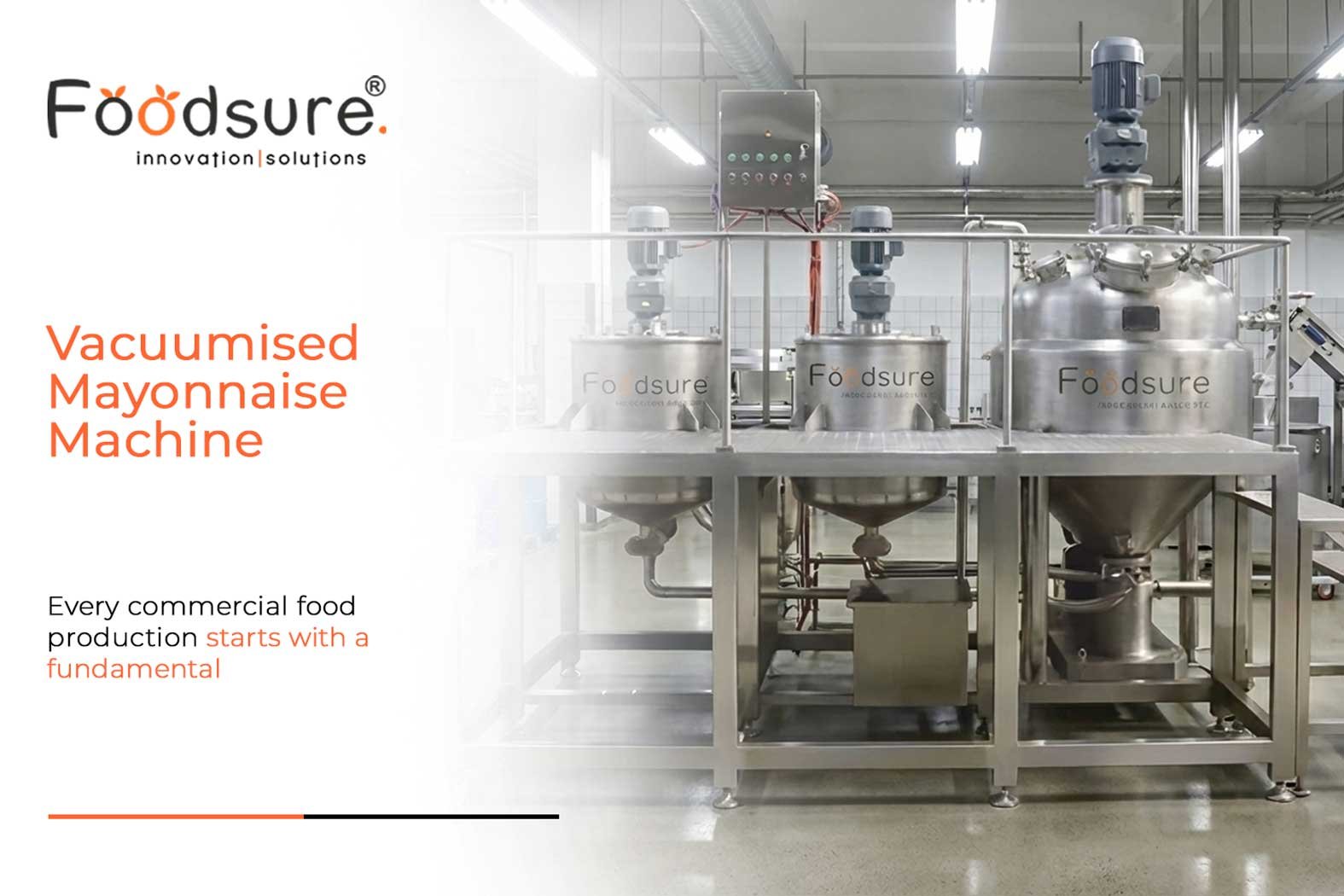
Every commercial food production starts with a fundamental choice between validating all aspects or proceeding to operate the business without proper validation. A Vacuumised Mayonnaise Machine operates as a production asset because its performance determines how product quality, shelf life, and profit margins will be affected. The process of validating mayonnaise machine systems through factory acceptance tests, actual system tests, and pilot batch testing is essential to project success because it protects the facility from operational system failures that would incur substantial costs.
The team needs to establish pressure, shear, and temperature operating limits through tests conducted under actual working conditions, which will determine their ability to scale operations. The guide begins with engineering validation, which leads to FAT testing of emulsifier performance, and then proceeds through controlled trials to the final performance validation stage. The objective is simple are turn your machine into a predictable production-ready system that produces standard-compliant batches that generate financial returns for your business.
Engineering Deep-Dive: Critical Parameters in Vacuumised Mayonnaise Machine Performance Testing
Vacuum System: Oxygen Control = Shelf Life
Vacuum serves two functions, which include product deaeration and direct product stability maintenance.
What to Validate:
- Vacuum draw-down speed: It requires testing to see if it can reach the system’s target between −0.8 and −0.95 bar within its preset cycle times.
- The pressure-holding capacity: Demonstrates zero leakage because all seals and valves successfully maintain vacuum pressure without allowing air to enter.
- De-aeration efficiency: Measurement of micro-bubble elimination, which leads to a volume sink after the product packaging process.
Why it matters:
Oxygen, which enters the system through air bubbles, leads to faster oxidation of lipids. The process eliminates oxygen from the system, which stops oil rancidity and produces a thick, shiny finish that prevents spoilage without using too many preservatives.
Emulsification System: Shear Defines Texture
The homogenizer controls your product’s texture by determining its creamy or unstable properties.
FAT testing emulsifier checkpoints:
- Rotor-stator RPM stability: The system needs to maintain a constant speed during viscosity testing.
- Droplet size distribution: The process needs to create a mouthfeel with heavy-body characteristics, which requires D(4,3) measurements below 2.5 µm.
- Uniform shear: The system needs to create a uniform shear, which prevents dead zones from accumulating unemulsified oil.
Red flag:
The process of changing shear rates results in an irregular distribution of droplets, which leads to oil-weeping and storage-related problems that affect batch quality.
Thermal Control: Heat Can Break the Emulsion
The high-speed mixing process produces kinetic energy, which makes it impossible to maintain stability in delicate egg-based formulations.
Performance validation parameters:
- Jacket temperature uniformity: The system must maintain a temperature range of ±1°C throughout the entire vessel wall.
- The cooling response time: Measures how effectively the chilled water system counteracts heat generated by shear forces.
- The peak temperature monitoring: Ensuring that the product remains under the protein denaturation temperature limit.
Failure scenario:
The process defines a chain reaction that starts with localized overheating that causes protein denaturation and ends with complete emulsion breakdown and total batch destruction.
Why Every Vacuumised Mayonnaise Machine Needs Pre-Dispatch Validation
The factory acceptance test mayonnaise machine phase is the final technical audit before the asset is commissioned. The system performs a stress test which evaluates if the engineering meets the special rheological needs required for mayonnaise, which has different pressure-based behavior than regular sauces.
| Parameter | Test Metric | Acceptance Limit | Goal/Outcome |
|---|---|---|---|
| Vacuum Level | Negative Pressure | -0.08 to -0.95 bar | 0% Micro-bubbles |
| Vacuum Hold | Decay Rate | < 0.01 bar / 15 min | Oxygen-free seal |
| Droplet Size | D(4,3) Particle Analysis | 2.0 – 5.0 Microns | Peak Stability |
| Emulsifier Speed | Rotor Tip Velocity | 15 – 35 m/s | Texture Uniformity |
| Shear Stability | Motor Load (Amp) | ± 2% Variance | Batch Consistency |
| Heating Rate | Thermal Gradient | 2°C – 4°C / Minute | Process Control |
| Cooling Rate | Thermal Gradient | 3°C – 5°C / Minute | Emulsion Safety |
| Temp. Accuracy | PT100 Sensor Logic | ± 0.5°C | No Protein Burn |
| Oil Dosing | Flow Meter Accuracy | ± 0.1% Precision | Exact Oil-to-Water |
| Cleanliness | Riboflavin / Swab | 0% Residue | 100% CIP Success |
| Yield Recovery | Discharge Loss | < 0.5% Total Vol. | Minimum Wastage |
Key FAT Learnings
A failed FAT serves as a strategic protection that stops your facility from experiencing complete operational shutdowns. Failures during mayonnaise machine testing occur because of these three main issues:
- Seal leakages: Mechanical seals that do not stay properly positioned experience failure when exposed to high vacuum conditions.
- Homogenizer calibration: The rotor-stator gap needs adjustment because its current state produces coarse texture results.
Documentation Requirement
The performance validation requires documentation, which must be maintained throughout FSSAI, ISO, and HACCP audits. The following evidence needs to be documented:
- Signed performance report: The document verifies that all technical KPIs were satisfied.
- Deviation logs: The document provides a thorough account of all modifications that occurred throughout the testing period.
- Calibration records: The documents contain certification for both pressure gauges and temperature sensors.
- Dosing glitches: The system experiences problems because it fails to maintain correct oil-to-water ratios during rapid injection. The system experiences problems because it fails to maintain correct oil-to-water ratios during rapid injection.
The Real Process Builder for Vacuumised Mayonnaise Machine Trials
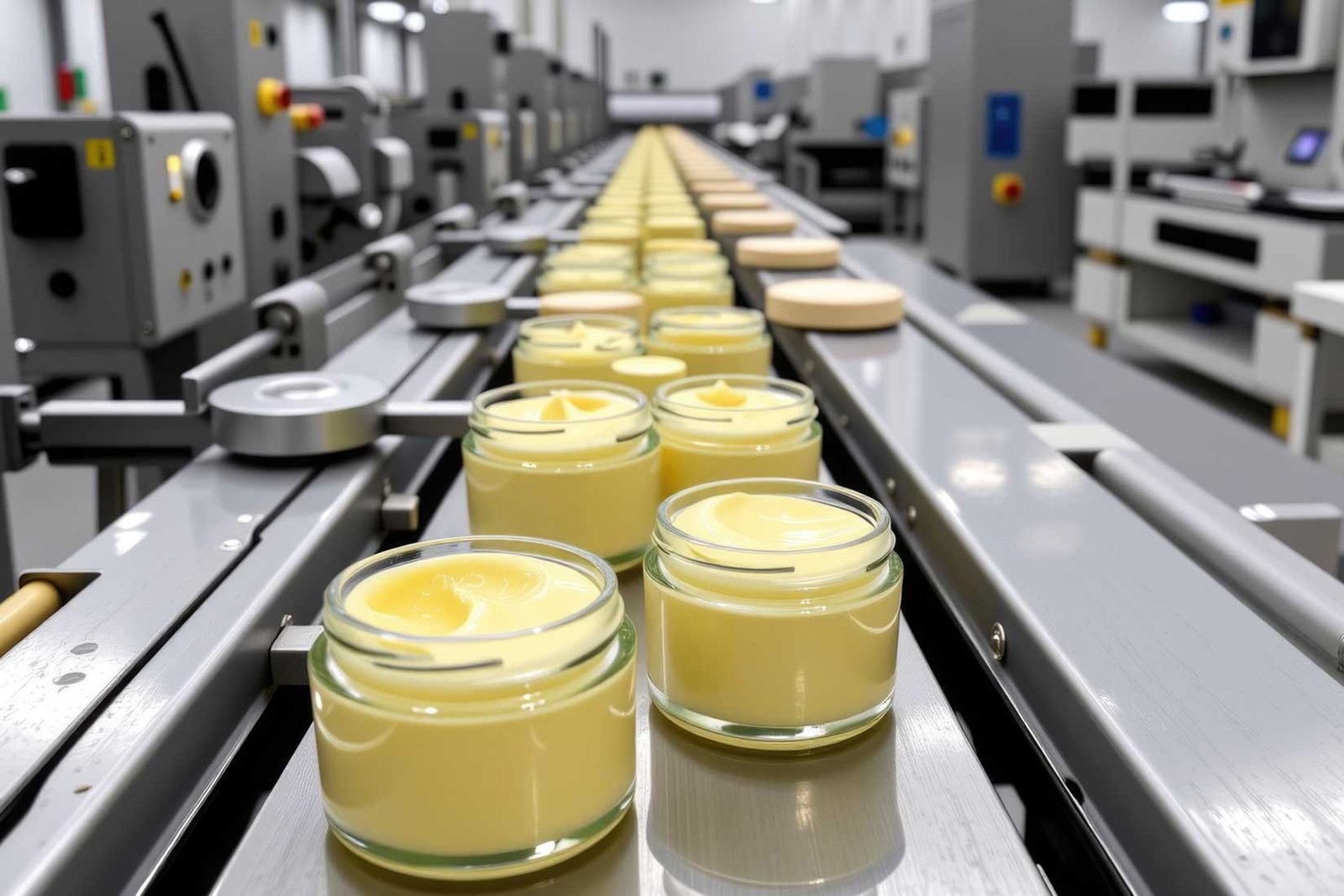
The testing process for pilot batches starts after FAT approval, which connects engineering work with the production process that follows. This phase establishes a controlled production environment by converting testing equipment into an operational production facility.
Step-by-Step Trial Strategy
- Dry Run (Mechanical Integrity): The test evaluates PLC logic and sensor feedback and emergency stop sequences through execution without using any physical materials.
- Water Run (Hydrodynamic Test): The test checks seal integrity under pressure while it tracks the heating and cooling jacket thermal ramp rate development.
- Mayonnaise Machine Trials (10–30% capacity): The real formulation test shows how the Vacuumised Mayonnaise Machine handles actual viscosity and shear resistance testing situations.
- Consistency Validation: The Brookfield method provides viscosity measurements that confirm that the texture meets the exact target profile requirements.
What You Must Lock Here
Your Standard Operating Procedure (SOP) depends on these parameters for its basic structure:
- The Oil Addition Sequence: Exact timing to deliver oil when needed to stop emulsion inversion from happening.
- The Mixing & Homogenizer Specification: Specific RPM values and time duration requirements to achieve consistent experimental outcomes.
- Cooling Dynamics: Specific time intervals after shear processing for the stabilization process to achieve full stabilization.
Minimum vs. Maximum Fill Testing
The testing process requires performance validation to measure how testing volumes cause behavior changes.
- Minimum Fill: The process starts when the emulsifier head fails to meet complete submersion requirements, which creates two dangers because of splash production and vacuum-based air entry.
- Maximum Fill: The system faces two dangers because of insufficient space, which prevents proper de-aeration while increasing motor torque requirements.
Goal: It requires the same rheological results to be obtained through all batch sizes within the 20% to 100% operating range.
Performance Validation: Final Commercial Readiness of a Vacuumised Mayonnaise Machine
The closing point of the technical evaluation appears here. The initial tests assessed the machine’s abilities, but the performance validation test showed that all system elements operated properly through their complete production cycle, which included the human operator, environmental conditions and the behavior of raw materials during large-scale operations.
Validation Benchmarks
The Vacuumised Mayonnaise Machine achieves commercial readiness when it produces consistent results throughout multiple production runs.
- Succession: 3-5 consecutive production runs to proceed without any need for human control.
- Rheology: To maintain viscosity changes within a range that exceeded 5% limit.
- Stability: No instances of phase separation or “oil-weeping” throughout its 24-hour resting period.
- Operational Sync: Operational synchronization through two parameters, which included stable energy usage and operational time that varied by less than 2 minutes.
Core Metrics to Track
The mayonnaise machine trials need to track these KPIs because they will help determine future profitability.
- Energy Efficiency: Total kW consumed per ton of mayonnaise produced.
- Yield Recovery: The process achieves more than 99.5% output through effective scraping and discharge methods.
- Maintenance Velocity: Total cleaning and sanitization turnaround time using CIP protocols.
Trial Batch Mayonnaise Production (Full Simulation)
The trial batch of mayonnaise production serves as an essential practice. The testing needs to replicate actual business operations because it needs to identify hidden operational elements.
- Run Conditions: The facility operates with a complete ingredient supply while staff members use standard water and steam sources through their normal work schedule, after which they operate in actual production settings.
- Outcome: The equipment shows operational performance in real factory conditions, which include both environmental temperature and moisture content, because it operates beyond laboratory testing.
Read more: Fully vs Semi Automatic Mayonnaise Machines
How Vacuumised Mayonnaise Machine Testing Drives Profitability
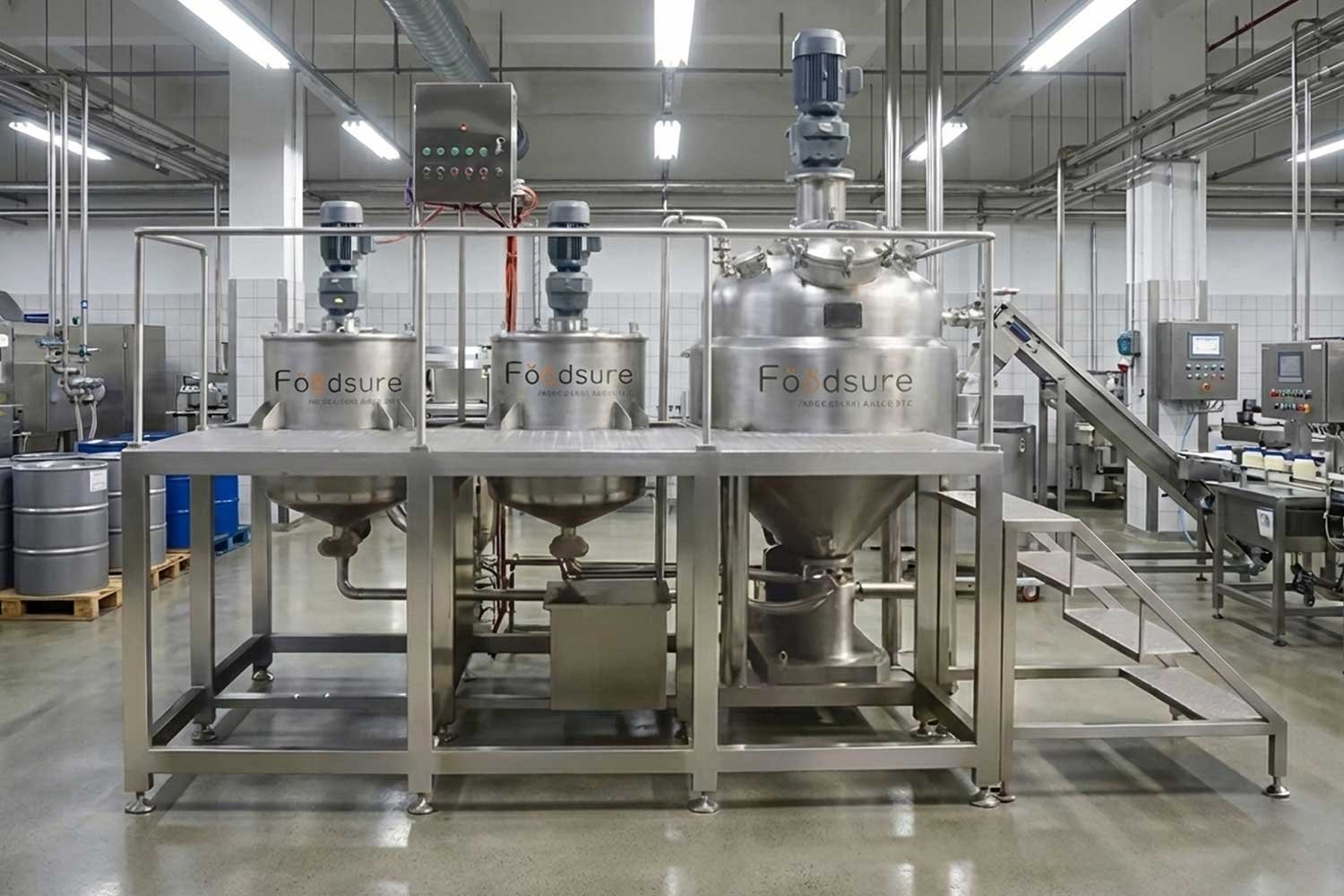
Performance testing serves as an essential business requirement because it evaluates future production capabilities through financial examination. The rigorous performance validation process ensures that capital expenditures on the Vacuumised Mayonnaise Machine result in actual financial benefits.
Proven Gains from Vacuum Processing
High-performance trials consistently demonstrate that vacuum-integrated emulsification outperforms atmospheric mixing in three key areas:
- Ingredient Savings: The vacuum environment enables manufacturers to achieve stronger oil and water bonding, which allows them to decrease stabilizer requirements from xanthan gum and modified starch by 5-10% while maintaining viscosity.
- Higher Density Output: The product achieves 15-20% higher density because all entrapped air has been eliminated. Removing air creates a product that demonstrates premium quality through its glossy appearance and mouthfeel, enhancing brand perception.
- Better Yield Recovery: The combination of precision-engineered scrapers with conical vessel designs enables yield recovery to reach above 99.5 percent because these systems prevent product loss better than traditional mixers, which create excessive wastage through their thick residue.
Power & Cost Efficiency
The mayonnaise machine testing process requires us to monitor particular operational costs during our testing phase, which helps us determine the cost of each kilogram produced.
- Energy per Batch: We determine the optimal power consumption range for our high-shear homogenizer through measurement of its actual kW usage, which shows the point where emulsion stability ends and power usage begins.
- Time Optimization: Validation shows that vacuum processing achieves total batch cycle time reductions of 25% when compared to traditional methods because it speeds up the de-aeration process.
- Rework Elimination: The validated machine eliminates all batch failures, which leads to significant savings because the company no longer has to pay for wasted ingredients and product disposal efforts.
Technical ROI Summary
| Efficiency Driver | Impact Level | Financial Benefit |
|---|---|---|
| Stabilizer Reduction | 5% – 12% | Lower Raw Material Cost |
| Batch Cycle Time | -20% to -30% | Higher Daily Throughput |
| Product Density | +15% to +20% | Premium Market Pricing |
| Wastage / Loss | < 0.5% | Maximum Resource Utility |
Insight:
The validated Vacuumised Mayonnaise Machine shows a better return on investment because it provides faster payback time. The process stabilization through the trial batch mayonnaise production period lets you achieve cost savings by eliminating all expense drivers that come from process variation, excessive energy usage, and required human work.
Fixing Issues in Vacuumised Mayonnaise Machine Performance Validation
The mayonnaise machine trials function as an essential testing period, which scientists use to discover all mechanical defects and product flow problems that exist within the system.
| Validation Parameter | Failure Threshold | Actionable Fix | KPI Outcome |
|---|---|---|---|
| Vacuum Leak | > 0.02 bar / 10 min | Replace EPDM / Viton O-rings | 0% Micro-bubbles |
| Homogenization | < 2800 RPM | Adjust VFD parameters | < 2.5 µm Droplets |
| Oil Injection | > 15% / min | Recalibrate Flow Meter | Stable Emulsion |
| Thermal Delta | > ±1.5°C | Tune PID / Clean Jacket | No Protein Burn |
| Seal Temp. | > 65°C | Check Coolant Flow | Zero Seal Failure |
| Scraper Gap | > 2 mm | Re-tension Teflon blades | < 0.5% Loss |
| Current Draw | > 10% Flux | Check Phase / Motor Load | Torque Stability |
| CIP Velocity | < 1.5 m/s | Boost Pump Pressure | 100% Sterility |
Critical Maintenance Check
The testing requires you to check both the mechanical seal temperature and the cooling line flow during the emulsifier testing process. The seal housing temperature reaches 65°C during the 4-hour test because of insufficient lubrication, which leads to certain failure during 24/7 commercial operation. You must repair these silent killers immediately to maintain production operations.
Conclusion
The complete value of any vacuumisation mayonnaise machine is achieved by thorough validation of the equipment prior to scale-up. By conducting factory acceptance testing (FAT) of mayonnaise making machine procedures, developing and controlling mayonnaise machine test conditions, and performing structured pilot batch testing, you will ensure that your machines are providing consistent results in terms of emulsification, texture stability, and expected outputs.
At Foodsure Machines, we perform complete performance validation on our clients’ machines, including FAT testing emulsifier efficiency and real-world production batch mayonnaise testing to help them reduce the risk of costly production problems. Our process is simple are perform all necessary testing, verify the results, and proceed with the scale-up of your production process with complete confidence.
Ready to Validate Your Mayonnaise Production Setup?
Test your vacuumised mayonnaise machine for emulsification quality, consistency, and performance before full-scale production.
FAQ
What is a vacuum emulsifying machine used for in mayonnaise production?
An emulsifying machine works by pulling out the air and giving it a consistent texture.
How does a factory acceptance test mayonnaise machine checklist help buyers?
An emulsifying machine must pass all of the factory acceptance tests for mayonnaise prior to shipping.
Why is pilot batch testing for the mayonnaise production process important?
Mayonnaise pilot batch testing allows manufacturers to verify consistency and texture at scale before entering full production.
What is the benefit of using a vacuum homogenizer mixer for a mayonnaise production line?
A mayonnaise vacuum homogenizer is designed for a consistent droplet size and improved stability of products produced.
How do mayonnaise machine trials and performance validation improve output?
Trials and performance validation of a mayonnaise machine provide the basis for judging the reliability of the machine and decreasing failure and increasing efficiency in production processes.