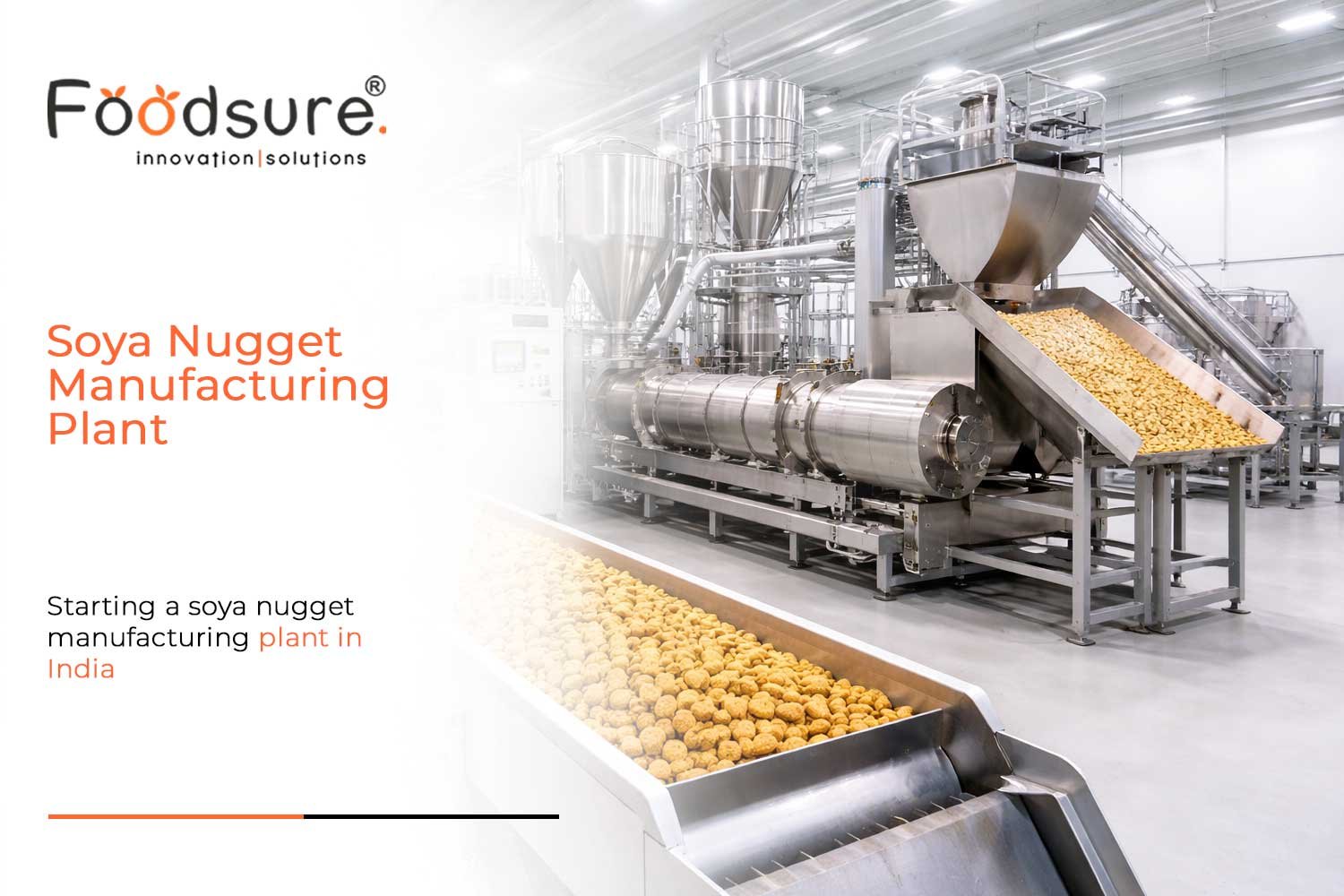
Starting a soya nugget manufacturing plant in India is one of the most profitable food processing business opportunities in 2026. The plant-based protein market is growing at 25-30%, driving increased demand for soya chunks (textured vegetable protein – TVP) across retail, wholesale, and institutional markets. The complete blueprint offers all necessary elements to help entrepreneurs, MSMEs, and investors establish a capital-efficient soya chunks manufacturing enterprise that can grow.
This blog provides all necessary information for establishing a successful soya nugget production facility, which includes selecting machinery, determining investment expenses, sourcing raw materials and conducting manufacturing operations, obtaining licenses and establishing return on investment standards. The step-by-step roadmap enables you to evaluate both small-scale operations and complete automated production using soya extruder machines, which will support your plant launch, optimization and scaling efforts.
Step 1: Soya Nugget Market Growth & Profit Potential in India
The production of soya nuggets will shift toward specialized protein texturizing products, which generate higher profits during the upcoming 2026 period. The following section presents authentic research findings from established research organisations.
1. Market Opportunity & Verified Growth
- Total Addressable Market: The Indian meat substitute market is valued at 448.84 million in 2026, with a projected CAGR of 10.05% through 2031.
- Segment Dominance: Textured Vegetable Protein (TVP) remains the powerhouse of this sector, commanding a 52.15% revenue share in 2025.
- Processing Scale: The Indian soybean processing market will achieve a processing capacity of 5.97 billion in 2026, according to current market projections, which estimate that it will grow to 6.8 billion by 2029 .
2. Financial & Operational Benchmarks
- Profitability: Standard soya nugget plants demonstrate gross profit margins of 30–40% and net profit margins between 15–22%
- Cost Structure: The main operating expense component, which drives expenses to 70–80% total operating costs, consists of defatted soy flour, which serves as the primary raw material.
- Raw Material Pricing (March 2026):
- Industrial Defatted Soya Flour: Currently trading at ₹55–₹60/kg for bulk 50kg bags.
- Full-Fat Enzyme Active Flour: Trading slightly higher at ₹65/kg.
3. Strategic Business Positioning
- Institutional Shift: The policy & nutrition push serves as the primary force driving government mid-day meal programs and protein fortification initiatives to adopt soya nuggets as their affordable protein solution with extended shelf life.
- Regional Dominance: North India markets dominate the industry because they are located near the soybean bowl, which represents Madhya Pradesh, and because people in the region prefer to eat vegetarian food.
- Market Entry Tip: The off-trade channel, which includes retail stores, accounts for 68% of current sales, while the on-trade segment, which includes HoReCa establishments, shows the highest growth rate at 10.39% CAGR, resulting in a substantial market opportunity that new manufacturers can pursue.
Step 2: Soya Nugget Manufacturing Plant Project Planning & Investment Structure
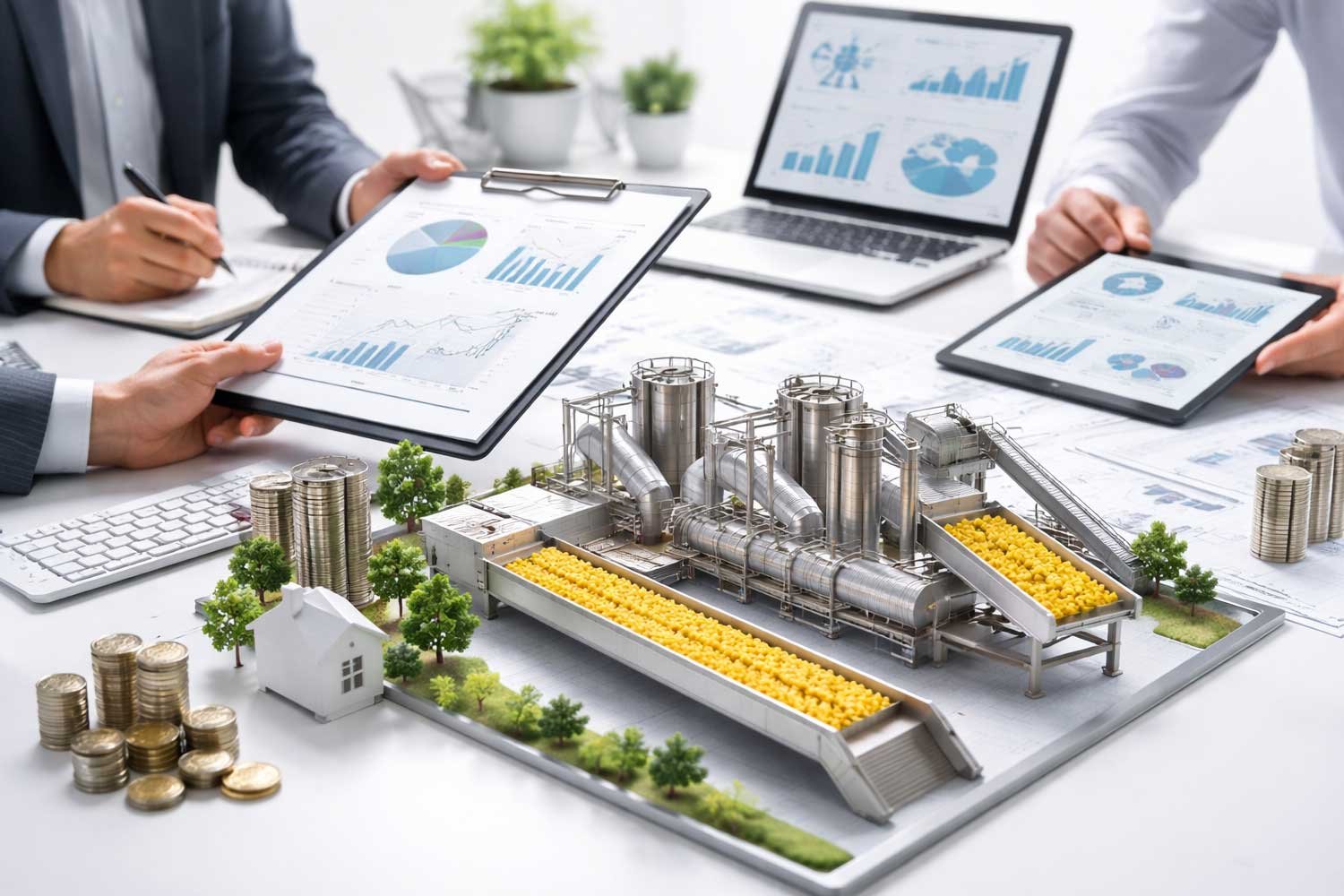
The Soya Nugget manufacturing industry plans to adopt fully automated PLC-controlled production systems in 2026 to meet the FSSC 22000 hygiene requirements. The main capital expenditure for the project is machinery, but the actual capital requirement occurs through Working Capital, which needs 3-6 months of cash reserves to handle price fluctuations of defatted soy flour that makes up 70-80% of total operational expenses.
Current efficient plants establish their Break-Even Point (BEP) at 35-38%, while advanced twin-screw extruders decrease manual labor requirements by 60% when compared to traditional manual production methods.
| Scale | Daily Output | Investment (₹) | Key Hardware | Space (Sq Ft) |
|---|---|---|---|---|
| Startup | 400–500 kg | ₹30L – ₹50 Lakh | Semi-Auto Extruder | 3,000 |
| Growth | 1 – 2 MT | ₹80L – ₹1.5 Crore | PLC Twin-Screw | 8,000 |
| Industrial | 5 MT+ | ₹2 Cr – ₹5 Crore+ | Integrated Line | 25,000+ |
Strategic ROI Insight: In the current market, medium-scale units offer the best risk-to-reward ratio. The company qualifies for MSME subsidies, including PMEGP and CLCSS, which can provide funding of 25-35% of total project expenses. The funding will reduce the payback period to less than 18 months.
Step 3: Legal Compliance & FSSAI Registration for Soya Nugget Plant India
The compliance requirements for 2026 now require active digital monitoring through the FSSAI FoSCoS portal and the National Single Window System (NSWS) instead of using unchanged documentation methods.
- State License production range between 101kg and 2MT per day requires a state license. Central License production of more than 2MT per day or 100% Export-Oriented Unit operations requires this license.
- The Green Category classification of soya extruding operations shows that this industry produces only small amounts of wastewater, which helps facilities to obtain their Consent to Operate (CTO) from the State PCB with less difficulty.
- ISO 22000 provides international certification for domestic purposes, but FSSC 22000 (Version 6.0) has become a requirement for exporting products to the US, EU, and UAE.
Step 4: Soya Nugget Manufacturing Plant Location & Infrastructure Planning
The industrial blocks in C and D categories should receive first priority for location-based industrial development activities. The MSEs in Haryana can access electricity through these zones, which provide subsidized rates of ₹2 per unit that lead to substantial savings on their electricity expenses.
The FSSAI 2026 no-backtrack rule mandates FSSAI to create a straight path that extends from Raw Material Receiving to Finished Goods in order to stop wet extrusion and dry packaging areas from becoming cross-contaminated.
Power & Utility Precision
- Power requirements for a 200 kg/hr line reach 80-100 HP, while the system needs a 125 kVA Transformer to manage twin-screw extruders that require high-torque startup operations.
- The standard soya extrusion process requires 150-200 liters of water each hour for both dough conditioning and cooling jacket functions.
- The modern zoned drying system uses a zoned mesh-belt dryer, which extracts moisture from products through an internal moisture removal process that stops the crusting process, which results in internal mold and 2026 regulatory recalls.
Step 5: Soya Nugget Manufacturing Plant Machinery Setup & Extruder Selection
- Extrusion Torque: High-torque-density motors, which deliver a maximum torque of 15 Nm/cm³, have become essential for processing defatted high-protein soybeans because they prevent barrel clogging during operation.
- The Die Factor: The use of Variable-Speed Rotary Cutters will become more popular than fixed blades in 2026 because these cutters allow production lines to create three different product sizes through die-head changes.
- Smart Drying: The Multi-Stage Belt Dryers use their first operational section to maintain 120 °C while their second section maintains 80 °C, which stops case hardening and enables packaging to keep breakage rates under 2%.
- Expansion Ratio: The bari industry standard requires a target ratio of 3.5:1 because this ratio provides fast water absorption while preserving product structure during pressure cooking.
Step 6: Raw Material Planning for Soya Chunks Manufacturing Plant in India
- The NSI/PDI Criticality: For 2026 meat-analog quality, maintain an NSI of 20–30% because products with higher solubility, which exceed 50% NSI, usually produce mushy nuggets that break apart during retort or pressure cooking.
- Admixture Innovation: Advanced plants now use Pea Protein Isolates at 5–10% levels to mask the beany aftertaste, which enables them to sell their products as multi-protein to high-end retail stores.
- Anti-Nutritional Factors (ANF): The 2026 FSSAI surveillance requires Urease Activity to remain under 0.1 mgN/g/min, which protects consumers from digestive issues that result from product consumption.
Step 7: Step-by-Step Soya Nugget Manufacturing Plant Process in India
- Raw material: The screening processes of defatted soy flour enable the removal of contaminants which creates uniform particle sizes that are necessary for achieving the required product texture during both extrusion and final production processes.
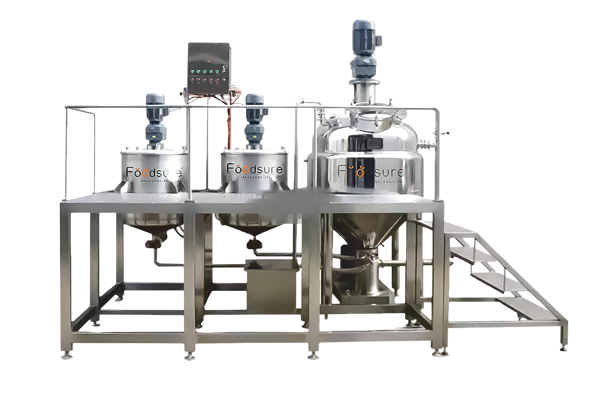
- Mixing & Moisture Conditioning: The flour undergoes blending with water and additives to reach approximately 20-30% moisture contentwhich facilitates proper protein hydration and extrusion flow.
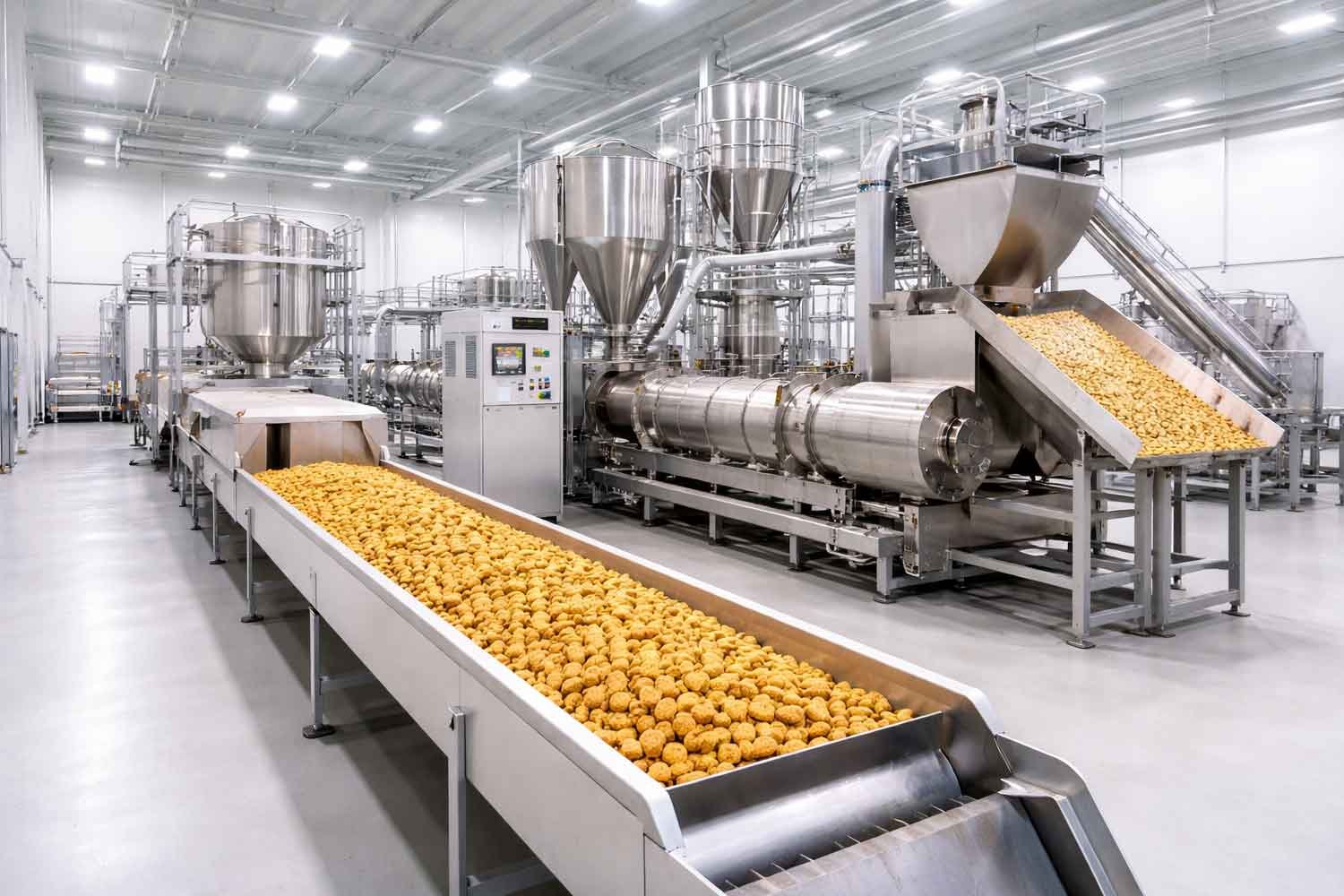
- Extrusion Cooking: The mixture enters a twin-screw extruder which uses 150-200°C temperature to generate heat and pressure which creates shear forces that transform proteins into a meat-like structure that resembles fibrous material.
- Die Cutting (Shape Formation): The high-speed cutters produce nugget shapes from the extrudate while they maintain specific dimensions which control both drying performance and product marketability.
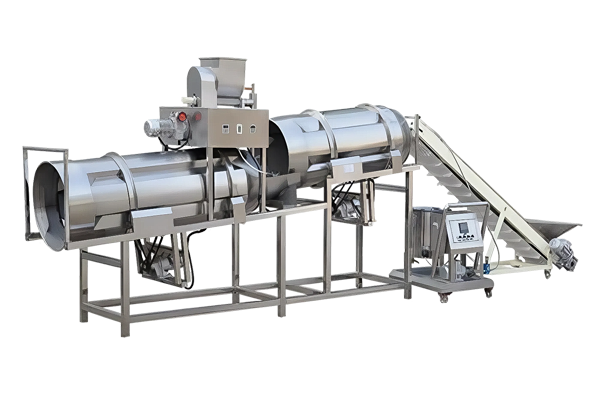
- Drying (Moisture Reduction): The rotary and belt dryers remove moisture from materials until it reaches a level below 10% which ensures product shelf stability and prevents microbial growth.
- Cooling: The ambient cooling process protects packaging from interior condensation while it maintains product structure to prevent shape changes.
- Grading & Quality Check: The sieving process verifies size consistency while quality control checks examine moisture levels, protein content, and structural strength.
- Packaging Machine: The soya packaging process uses nitrogen to replace oxygen in packaging which extends product shelf life while it prevents oxidation and maintains product freshness.
Step 8: Soya Nugget Manufacturing Plant Scaling & Expansion Strategy
Short-Term (0-6 Months):
- Focus on stabilizing extrusion consistency, moisture control and batch uniformity to achieve lower rejection rates.
- Target approximately 70% capacity utilization through two main activities, which include obtaining repeat B2B orders and establishing partnerships with regional distributors.
- The company will optimize its defatted soy flour supply chain while establishing basic quality standards that comply with the Food Safety and Standards Authority of India requirements.
Mid-Term (6-18 Months):
- The company will expand production capacity by implementing a second operational shift, which will enhance equipment performance through improved operational efficiency.
- The company will develop new products, which include mini chunks and granules, and flavored variations to expand its market reach in retail and HoReCa.
- The company will improve its branding, packaging, and distribution systems through e-commerce and offline retail channels.
Long-Term (18+ Months):
- The company will enter export markets in the Middle East, Africa, and Southeast Asia after achieving compliance with international quality standards.
- The company will expand its product range to include high-moisture meat analogues and fortified protein products.
- This will help them capture the premium plant-based protein market and improve profit margins.
Conclusion
We establish a successful soya nugget production facility through our assistance, which provides essential equipment, financial assessment tools and return on investment methods. Foodsure Machines delivers complete production systems to customers while offering affordable equipment solutions for soya chunk manufacturing and providing expert assistance with their custom food processing plant budgets.
Ready to Start Your Soya Nugget Manufacturing Plant?
Get complete guidance on plant setup, machinery selection, investment cost, and production capacity to launch your business successfully.
FAQ
Why does the cost of a soya nugget manufacturing plant vary in India?
Depending on capacity, automation and quality of machinery; therefore, they can range between ₹30 lakh and ₹5 Crore rupees.
How is equipment used to produce soya chunks?
A soya chunks making machine is used to change the soy flour into Textured Protein by utilising a twin-screw extruder.
Why is the soya nuggets business profit margin attractive?
The profitability of soya nugget businesses is reported to be 15-22% profit margins due to the overall high demand and low cost associated with the raw materials.
Why is defatted soy flour used in soya nugget manufacturing?
Defatted soy flour is used as the main raw material in the production of soya nuggets because of its highly concentrated protein content, and also because it provides structural properties necessary for processing.
How does the soya chunks manufacturing process work?
The entire soya chunk manufacturing process includes mixing, extrusion, drying, cooling and packing.