Soya nuggets, soya chunks, and textured vegetable protein (TVP) are often treated as the same ingredient, but in reality, they differ significantly in size, texture, rehydration time, and application and choosing the wrong one can impact final product quality. The three products originate from defatted soy flour, which advanced TVP machine soya chunk extrusion technology transforms into their respective end products. The blog analyses the shared foundation, identifies its structural distinctions, describes the extrusion method used to create it, and assists you in selecting the appropriate format for your specific use.
TVP Machine Soya Chunk: Protein Transformation & Functional Advantages
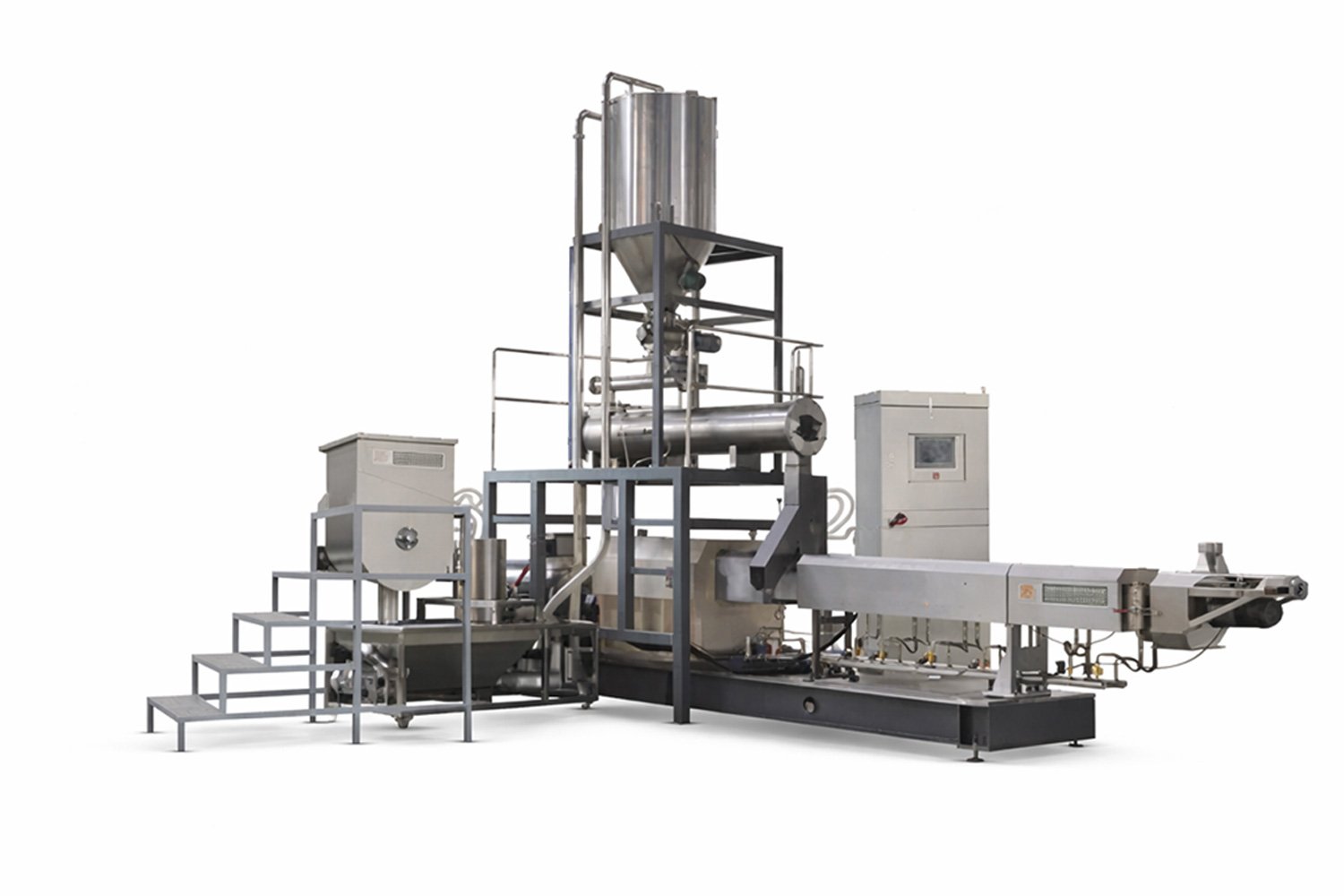
The transformation process converts basic legumes into advanced protein products, which serve as the fundamental element of these products. The process creates a meat-like, fibrous network through structural changes during high-pressure processing.
Industrial and Nutritional Knowledge Breakthroughs
- Manufacturing Excellence: The process uses high-temperature, high-pressure soy flour extrusion technology to create textured defatted soy products that maintain consistent expansion with a porous structure.
- Protein Efficiency: The product contains 50-54% protein, which serves as the main ingredient for creating meat-alternative proteins.
- Functional Versatility: The product achieves efficient seasoning absorption during industrial flavouring and home cooking through its neutral taste and ability to hold large amounts of water.
- Health Profile: The product meets clean-label food manufacturing standards because it contains no cholesterol and low fat while providing essential iron and dietary fibre.
TVP Machine Soya Chunk Industrial Insights into Soya Chunk Production Equipment
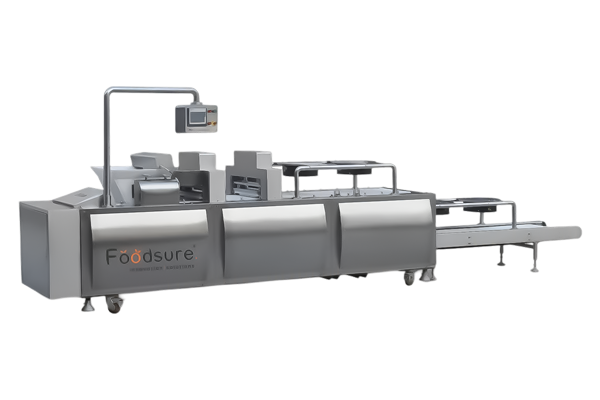
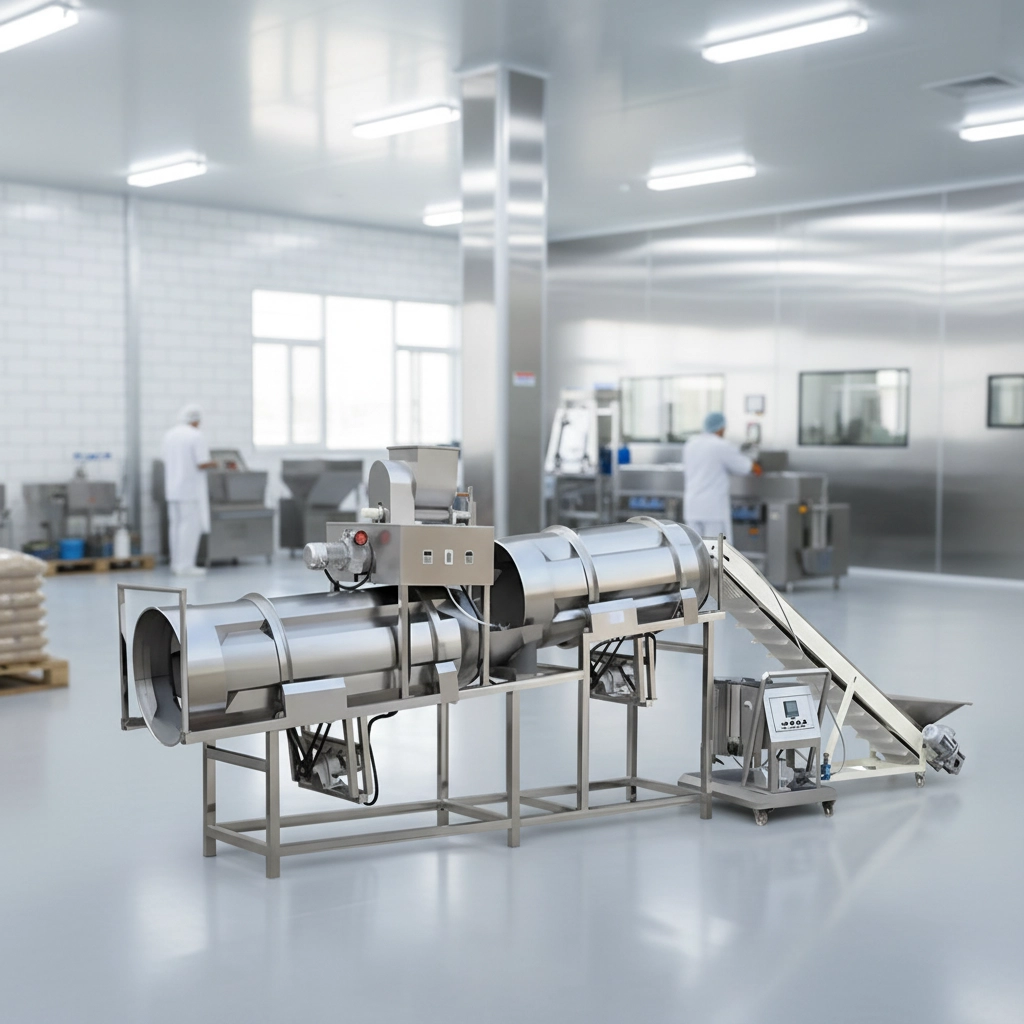
The three products share a common protein base, but each product displays different physical properties, which determine its use in both plant-based protein processing and high-protein food production. Each format, which includes a TVP extruder for soya chunks and commercial soya chunk equipment, serves specific industrial purposes.
Soya Chunks (High-Protein Production)
- Irregular and porous structure with high expansion.
- Takes 15-20 mins to cook, best used in large-scale preparation.
- Thick, fibrous texture appropriate in curries, school and college catering, and export products.
- Produced on the basis of an industrial TVP machine for soya protein with a high-capacity output.
- Typically used in commercial soya chunks production lines with TVP machine configurations.
Soya Nuggets (Mid-Range Processing Format)
- Smaller, even shape by an automatic soya nugget machine.
- Quick hydration (8-10 minutes) increases operational efficiency.
- Holds together even when subjected to heat, making it suitable for QSR, frozen foods, and ready mixes.
- Favoured in minuscule TVP soya chunk production facilities as well as medium-sized units.
- Applicable in the production of snacks that are rich in protein, as well as fast food.
TVP (High Versatility Protein Format)
- In granules, flakes and minced forms.
- Maximum surface area will be at a maximum, so rehydration will occur quickly (3-5 minutes).
- Base component of producing meat-alternative proteins and processed foods.
- Made by zoning with soy protein extruder/plant protein texturisation equipment.
- Commonly applied to the step-by-step production of soya chunks by use of a TVP extruder in snacks, fillings and RTE products.
Comparison of Soya Chunks Nuggets and TVP for Different Food Applications
| Feature | Soya Chunks | Soya Nuggets | TVP (Granules/Flakes) |
|---|---|---|---|
| Average Size | 20–35 mm | 10–18 mm | 1–5 mm |
| Structural Behavior | Large, irregular, and dense | Uniform, symmetrical, and porous | Granular, flaky, or minced |
| Hydration Ratio | 1:3 (1kg dry = 3kg wet) | 1:2.5 (1kg dry = 2.5kg wet) | 1:2 (1kg dry = 2kg wet) |
| Soaking Time | 15–20 minutes | 8–10 minutes | 3–5 minutes |
| Protein Content | 52%–54% | 50%–52% | 50%–53% |
| Expansion Ratio | High (3.5x to 4x) | Medium (2.5x to 3x) | Low to Medium (1.5x to 2.5x) |
| Primary Industrial Use | Curries, Biryanis, Bulk Meals | Stir-fries, QSR menus, Salads | Meat extenders, Patties, Snacks |
| Machine Setup | High-capacity TVP extruder | Automatic nugget machine | Twin-screw extruder system |
Essential Market & Functional Differences:
- Dimensional Hierarchy: The maximum size of Chunks reaches 3-5mm, while the next largest size consists of uniform Nuggets that measure 10-18mm, and granular TVP operates within the 1-5mm range.
- Hydration Efficiency: The rehydration process takes 15-20mins for dense chunks, while TVP flakes require only 3-5 mins to complete rehydration.
- Texture & Integrity: The solid structure of chunks presents a bite that resembles meat, while TVP has been designed to mix well with processed patties and snacks.
How to Start Soya Chunk Manufacturing Business with TVP Machine in India
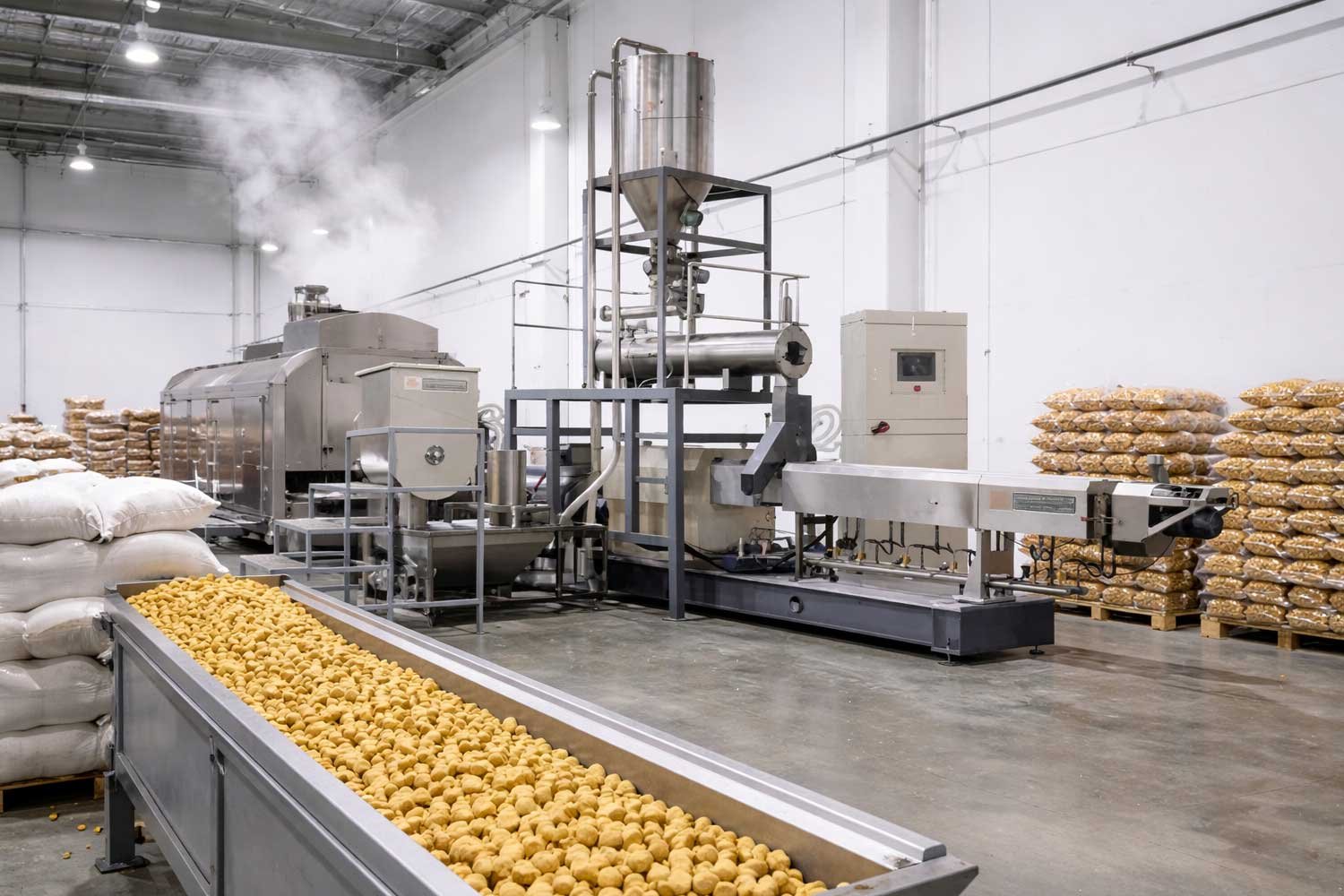
The Indian plant-based protein industry will reach a market value of ₹1.08 billion by 2026, with soya protein emerging as the primary market force because of its established distribution network and consumer base knowledge. The multi-functional TVP machine soya chunk line investment enables manufacturers to fulfil multiple customer needs through their single efficient production system.
Strategic Investment & Business Growth
- Diversified Revenue Streams: A high-torque twin-screw extruder system can produce chunks, nuggets, and TVP granules through die-head replacement and expansion settings modification.
- High Profitability Metrics: Modern soya chunk plants in India achieve gross margins between 25-35%, while small-to-medium facilities between 100-150 kg/hr represent the best choice for citywide distribution.
- Scalable Entry Points: Startups’ semi-automatic setups (₹8–15 Lakh) targeting local retail and quick-commerce.
- Industrial Scale: Fully automatic lines (₹50+ Lakh) designed for state-wide brands or export-oriented units.
- Government Support: The 2026 government initiatives, PMFME and PMEGP, provide manufacturing units with capital expenditure subsidies that reach 35%, which results in faster return on investment.
Conclusion
At Foodsure Machines, we help you buy TVP machine for soya chunk production in India with complete support. We provide TVP soya chunk machine price in India with installation cost, ensuring the best price for a commercial soya chunk production line with TVP machine. Our solutions cover industrial TVP machine for soya chunk production cost and specifications, making us a trusted partner for businesses looking to invest in soya chunk making machines.
Confused Between Soya Nuggets, Chunks, or TVP for Your Production?
Get expert guidance on choosing the right product type and TVP machine setup based on your target market, capacity, and profitability goals.
FAQ
Q1. What is the difference between soya nuggets and soya chunks?
Ans: The distinction is primarily size and texture: use bigger and heavier chunks and smaller and cook quicker nuggets.
Q2. How are soya chunks manufactured using a TVP machine?
Ans: Soya chunks are made by extrusion of defatted soy flour using a twin-screw TVP machine with high temperature and pressure.
Q3. Which machine is used to make soya nuggets and chunks?
Ans: Both nuggets and chunks are produced using a TVP extruder or soya chunk making machine.
Q4. Is a soya nugget business profitable in India?
Ans: Yes, because of the increase in the demand of low cost protein and the low cost of raw materials.
Q5. How much does a TVP soya chunk machine cost in India?
Ans: Depending on capacity, automation and specifications, the cost would be between small-scale and industrial systems.