
One of the most critical decisions for any food venture is the selection of the appropriate protein bar machine capacity. An inaccurate machine can limit development, while a larger model may unnecessarily tie up capital. This guide highlights a straightforward comparison of 50kg/hrs vs 200kg/hrs protein bar machines, explaining the practical considerations and cost implications to assist founders in making an informed, scalable production decision.
Understanding Protein Bar Machine Capacity Basics

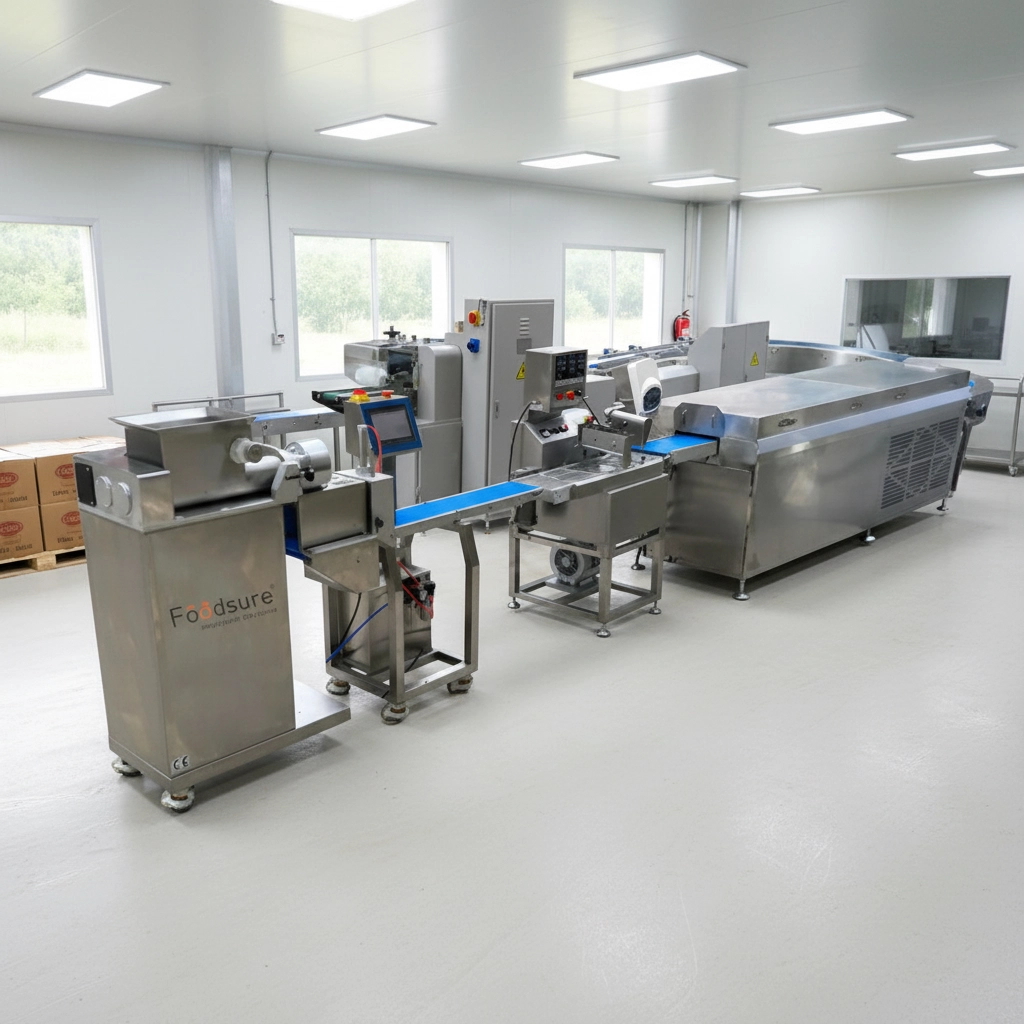
The production capacity of protein bar making machines serves as the core element that determines how efficiently your factory operates. The capacity represents your production line’s highest potential output, which you can measure in hourly weight production.
To prevent downtime in protein bar production, your commercial protein bar manufacturing machine needs to match the speed of your mixing and packaging processes.
- 50 Kg/hrs (The Pilot Scale): Beyond just low volume, this capacity allows for high yield recovery. The smaller production line design results in reduced material losses during both startup and shutdown phases, which makes it ideal for handling high-value materials and producing small-scale artisanal products.
- 200 Kg/hrs (The Industrial Threshold): This capacity moves you into continuous manufacturing. The dough at this scale maintains its thermal properties, which results in improved texture consistency throughout the production of multiple thousands of units.
Side-by-Side Comparison: 50 Kg/hrs vs 200 Kg/hrs Protein Bar Machine
Choosing the right protein bar production capacity involves more than just output because it affects labour costs and energy expenses, storage requirements, production expenses and expansion capabilities. The following comparison provides complete details that will assist you in making your decision.
| Factor | 50 Kg/Hr Machine | 200 Kg/Hr Machine |
|---|---|---|
| Output / Shift | 400–500 Kg/day | 1,600–1,800 Kg/day |
| Labor Requirement | 1–2 operators | 3–4 operators |
| Energy & Utilities | Low | High |
| Raw Material Storage | Small batches | Large batches |
| Startup Cost | ₹5–10 Lakh | ₹20–35 Lakh |
| Ideal Stage | Early-stage / test market | Growth / contract manufacturing |
| Use Case | Small-scale protein bar manufacturing, pilot runs, recipe testing | Industrial protein bar machine, high-volume production, contract manufacturing |
Cost Implications of Choosing the Wrong Protein Bar Machine Capacity
The selection of protein bar machine capacity requires correct decision-making because any wrong choice leads to both operational mistakes and financial results, which determine production expenses for protein bars.
- The Idle Capital Trap (200 Kg/hr): The situation creates a power problem because your production line operates at 200 kg/hrs while your sales only sustain 50 kg/hrs. The system requires significant power to warm up its large motors and cooling tunnels until they reach their operational state.
- The Rushed Upgrade Penalty (50 Kg/hrs): System results in two additional capital expenditure losses when a machine exceeds its capacity within twelve months. The smaller unit requires you to sell it at a 30-40% used discount, while you need to finance new installation, facility re-wiring and operator retraining for the larger system.
- Yield Loss & Changeovers: Small-scale protein bar machines with 50 Kg/hrs capacity experience higher material waste during their initial dial-in phase, whereas larger machines with 200 Kg/hrs capacity lose more production volume through purge cycles because they switch between flavours, which makes them more expensive for companies that operate 10+ different SKUs.
- ROI Break-Even Windows: The 50 Kg/hrs setup requires 12-18 months to reach the break-even point with its basic boutique sales, while the 200 Kg/hrs setup achieves break-even within 10 months when it runs at 70% capacity.
Determining the Ideal Protein Bar Machine Capacity Based on Your Business Stage

- Startup Stage (<500 Kg/mo): The startup protein bar machine with a capacity of 50kg/hrs will enable the company to focus on both cash flow and research development activities. The system tests new recipes with minimal waste and operates effectively in small production environments.
- Regional Growth (500–3,000 Kg/mo): The company needs to establish a protein bar production line, which will enable it to manufacture products at mid-tier capacity. This distribution system enables multiple stores to operate their business while keeping their labour expenses at manageable levels.
- National/Contract Scale (>3,000 Kg/mo): The protein bar production process requires a protein bar manufacturing system that can produce at least 200 kg/hrs. The system achieves optimal return on investment through its ability to run continuously while delivering better cost-per-unit performance.
Conclusion
Foodsure Machines recognises that operational efficiency and business expansion depend on selecting the appropriate protein bar machine capacity. Our team ensures our machines align with your startup’s stage, helping you scale production, reduce costs, and achieve consistent results.
FAQ
What is the best way to select a protein bar machine for my startup?
Determine the scale of your production for protein bar manufacturing and guidelines to choose from while beginning your adventure in entrepreneurship.
How do I choose the right production capacity?
Align the machine output with the production of proteins when choosing the appropriate protein production capacity.
How can I scale protein bar manufacturing efficiently?
Scaling up production using suitable equipment involves the gradual upward adjustment of batch sizes and working hours.
Should I pick 50 Kg/Hr or 200 Kg/Hr for my small brand?
Evaluate current demand, labor and storage needs with the person working for the 50 kg per hour and 200 kg per hour protein bar machine for the useful guide for minor brands.
How do I plan machine capacity for a new food business?
Consider future demand and varied industry trends in the forthcoming muscle bar machinery installation for some form of new food business.
What is the ideal production capacity for startup machines?
Select a machine that finds the right mix of output, waste, and operating expenses for the best production capacity of a protein bar in a startup.
Are there tips for choosing the right machine for ROI?
The protein bar production machine selection guide, which founders should use to minimise downtime and maximise production efficiency, explains how to optimise protein bar machine capacity for improved return on investment.