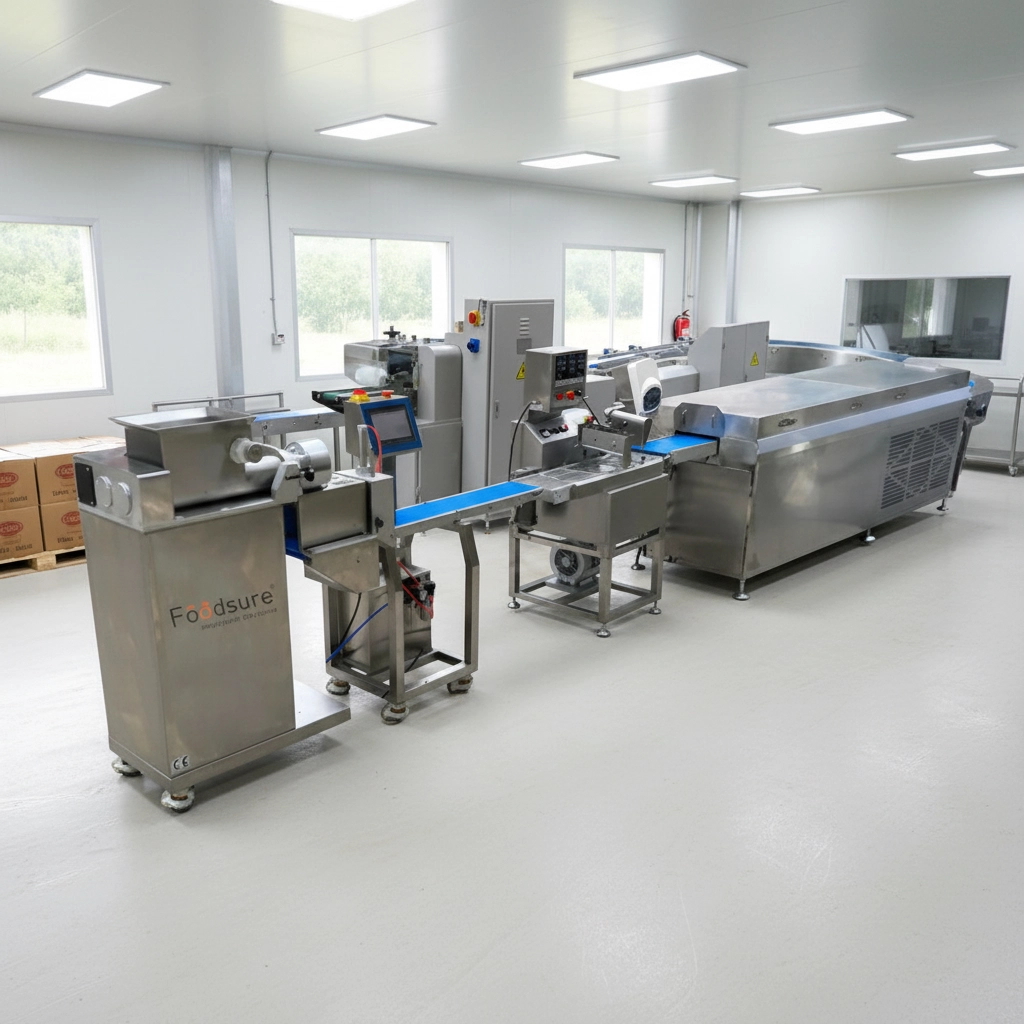

The establishment of a makhana production unit provides FPOs, small industries and rural startups with significant expansion opportunities. The first decision requires determining whether to purchase complete automated systems or choose miniature production equipment. Each option presents distinct operational expenses and production capabilities and staff requirements, return on investment(ROI), and timelines. Selecting the wrong configuration can hinder expansion or increase operating costs. This blog explains a detailed comparison between small scale vs fully automatic makhana machines through an examination of their specifications, operational efficiency and financial requirements.
Why Choosing the Right Makhana Making Machine Matters
The selection process for equipment requires the operator to evaluate both technical requirements and organisational needs. Here is why the details matter:

- Yield & Grade Recovery: High-quality makhana machines minimise broken bits. Your ROI increases when you use a machine that maintains flake integrity because premium large-sized flakes sell at higher market values.
- Fuel Efficiency: Roasting requires a substantial amount of energy. Modern machines operate with optimised heating chambers, which decrease biomass and gas usage while maintaining your operational costs at a minimum.
- Operational Simplicity: For FPOs and small businesses, labour is a major constraint. The system requires a design that allows operators to control its functions without needing advanced engineering knowledge.
Quick Comparison: Small Scale vs Fully Automatic Makhana Machines
| Feature / Parameter | Small-Scale Machine | Fully Automatic Machine | Founder’s Notes / Insights |
|---|---|---|---|
| Machine Type | Semi-Automatic | Fully Automatic | Small-scale ideal for startups; fully automatic for scaling operations |
| Output per Hour | 50–100 kg | 300–500 kg | Fully automatic produces 3–5x more output |
| Manpower | 2–3 operators | 1 operator | Fully automatic reduces HR dependency |
| Power Consumption | 3–5 kW | 15–20 kW | Higher energy usage but better productivity per kW |
| Initial Investment | ₹3–5 Lakh | ₹25–50 Lakh | Fully automatic has faster ROI potential |
| Running Cost / Month | ₹20–30K | ₹50–70K | Cost per kg is lower in a fully automatic |
| Maintenance | Monthly | Quarterly | Fully automatic includes advanced self-cleaning features |
| Product Consistency | Medium | High | Uniform roasting and flavouring with a fully automatic |
| ROI | 12–18 months | 6–12 months | Faster payback if market demand is steady |
| Scalability | Limited | High | Fully automatic supports multiple production lines |
| Space Requirement | 100–150 sq. ft | 500–700 sq. ft | Fully automatic requires dedicated floor space |
| Ideal For | FPOs, small startups | Medium & large startups | Choice depends on budget, output, and growth plans |
| Lead Time per Batch | 1–2 days | Few hours | Fully automatic reduces the production cycle |
| After-Sales Support | Basic | Comprehensive | Foodsure Machines provides installation, training, and long-term support |
Small-Scale Makhana Machines: Features, Cost & Output
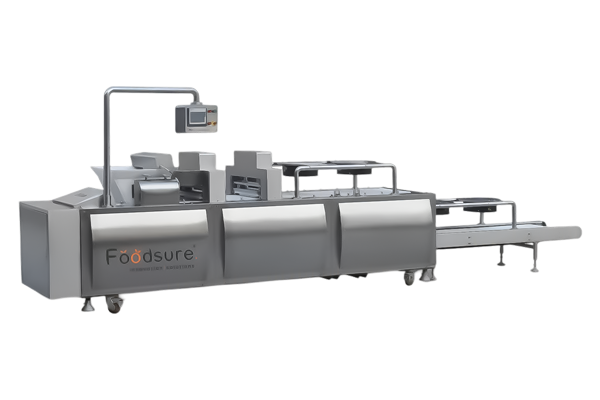
The new semi automatic makhana machine system functions as a quality control system that helps new entrepreneurs and farming producer organisations achieve their business goals. The equipment offers an optimal solution for 2026 market demands because it operates at lower costs than industrial production systems while requiring less work than manual operations.
Typical Small-Scale Machine Specification
- The system operates at a capacity range between 50-100kg/hrs, which produces an actual output of 150-180kg of roasted makhana across two to three batches.
- The system requires 2-3 operators who possess skills for feeding operations and monitoring tasks, performing basic sorting duties.
- Power Consumption main unit requires 3-5 kW, but the integrated roasters with heaters can reach higher power consumption levels.
Investment & Running Cost
- The initial cost of a standalone roaster ranges from ₹3-5 Lakh, while the price for a mini-production plant with grading and flavour coating equipment reaches up to ₹8-9 Lakh.
- The monthly operating expenses range from ₹20-30K, which includes electricity costs between ₹5,000-₹8,000+ minor maintenance expenses of ₹3,000-₹5,000 and lubricant expenses.
- The operational costs for makhana processing equipment are recovered through manual methods, which yield 15-20% more saleable product than the equipment.
ROI & Real-World Expectations
The payback period requires 12-18 months to complete. The machine delivers its true worth through speed because it creates uniform, large-sized flakes, which achieve higher market value than broken bits.
Fully Automatic Makhana Machines: Features, Cost & Output
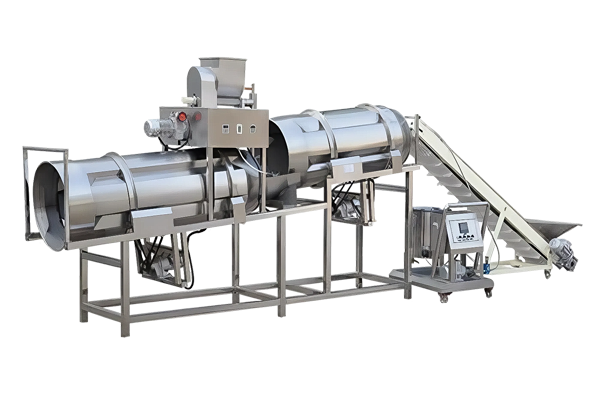
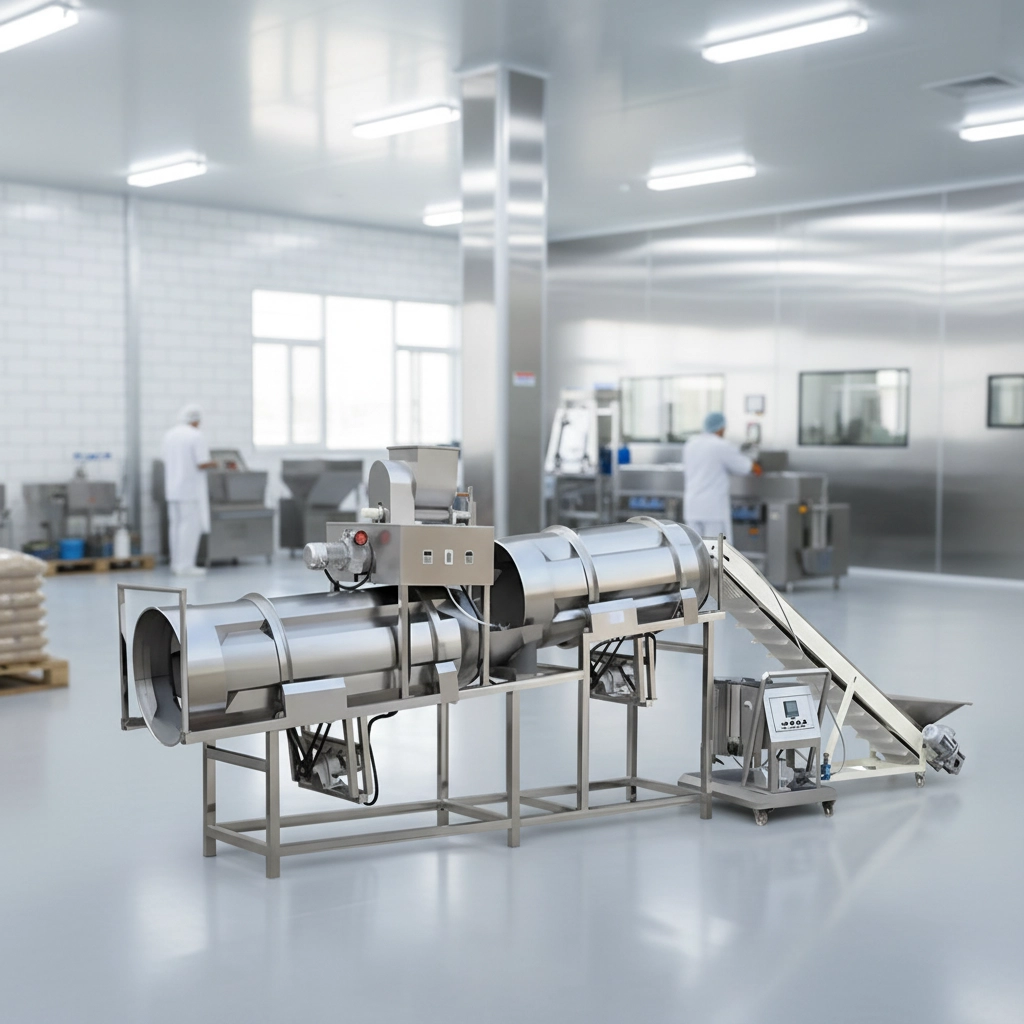
The standard for industrial-scale production at established enterprises and exporters requires a high-capacity makhana machine. The entire manufacturing process at these facilities uses automated systems to control every aspect from seed cleaning to roasting and seasoning without requiring human operators.
Key Benefits Of Fully Automatic Makhana Machines
- Industrial Output: The system operates between 300-500kg/hrs, which allows it to produce multiple tons throughout the day to fulfil demands from large retail customers and export markets.
- Minimal Manpower: The complete system needs just one main operator together with one to two loading and unloading staff members who handle equipment movement.
- Superior Quality Control: The system uses PLC-controlled heating, which achieves zero burn rate while producing uniform product expansion that creates Grade A flakes, which sell at high market prices.
Fully Automatic Makhana Machine Price
- Initial Cost: The required financial investment ranges between ₹25 Lakh-₹50 Lakh based on custom features, which include nitrogen-flushing packaging units.
- Monthly Running Cost: The expenses range between ₹50k-₹70k because it includes both industrial power costs, which range from 10-65 kW and maintenance needs, plus high-volume fuel needs that include LPG or Diesel.
Output & ROI Comparison
The fully automatic makhana machine price exceeds the cost of other machines, but users achieve ROI within 6-12 months because of scale efficiency. The semi-automatic method produces lower profits than the hourly wage because the method breaks, which leads to a 15% reduction in work productivity.
How to Choose the Best Makhana Processing Machine for Your Startup
Your makhana machine selection process needs to consider both your operational requirements and your target market. A small-scale makhana processing machine allows startups to test local demand because it requires minimal risk and investment.
Decision Framework: Small Scale vs Fully Automatic Makhana Machines
To select the appropriate business direction, you need to assess these four essential business elements:
Financial Runway:
- Small-Scale operation requires minimal capital expenditure between ₹3–5 Lakh, which enables the company to maintain its cash reserves for brand development and marketing purposes.
- The Fully Automatic system needs between ₹25–50 Lakh in capital expenditure, which requires companies to establish credit relationships or obtain investor support because it provides lower production costs per unit.
Target Market Requirements:
- The Local Sales market needs only semi-automatic equipment because it allows minor changes in crunch and size to proceed.
- The Export/Premium Retail market demands fully automatic production lines because they provide exact moisture control and consistent product distribution needed for their required standards.
Space & Infrastructure:
- The small unit requires 500- 800 sq ft of space.
- The fully automatic line needs an industrial shed that exceeds 2,000 sq ft and uses high-tension power lines with specialised exhaust systems.
Conclusion
With the appropriate technology and guidance, starting a makhana processing business becomes significantly more practical. Our goal is to make expansion realistic and inexpensive because we recognise the difficulties faced by FPOs and rural business owners. We are providing dependable, scalable solutions to create successful businesses using Foodsure Machines.
FAQ
What is the difference between Small Scale vs Fully Automatic Makhana Machines?
Small-scale machines suit low-volume production because they require more manual work but deliver better results than fully automated systems. The system needs to solve its problem because it needs manual support to work at full speed.
What is the fully automatic makhana machine price in India?
The system requires users to provide their data through either web or mobile applications which need to be processed until the users give their final approval for release.
Is a semi automatic makhana machine suitable for startups?
The semi automatic makhana machine serves as the perfect solution because it enables startups and FPOs to achieve their production goals at a lower cost than they would need for complete automated systems.
Which is more profitable: Small Scale vs Fully Automatic Makhana Machines?
Businesses that require low initial investment should choose small-scale operations because these systems generate better returns on investment than fully automated machines, which produce high-volume output.
How do I choose between a semi automatic makhana machine and a fully automatic one?
You should select a semi automatic makhana machine that meets your budget needs while providing flexible production capabilities. You should switch to full automatic operations when your production requirements and business growth needs reach a specific level.