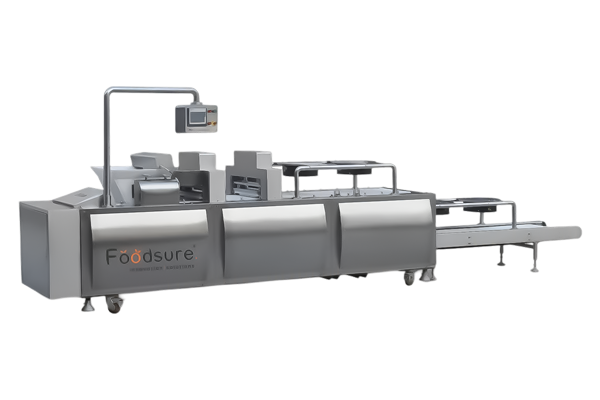
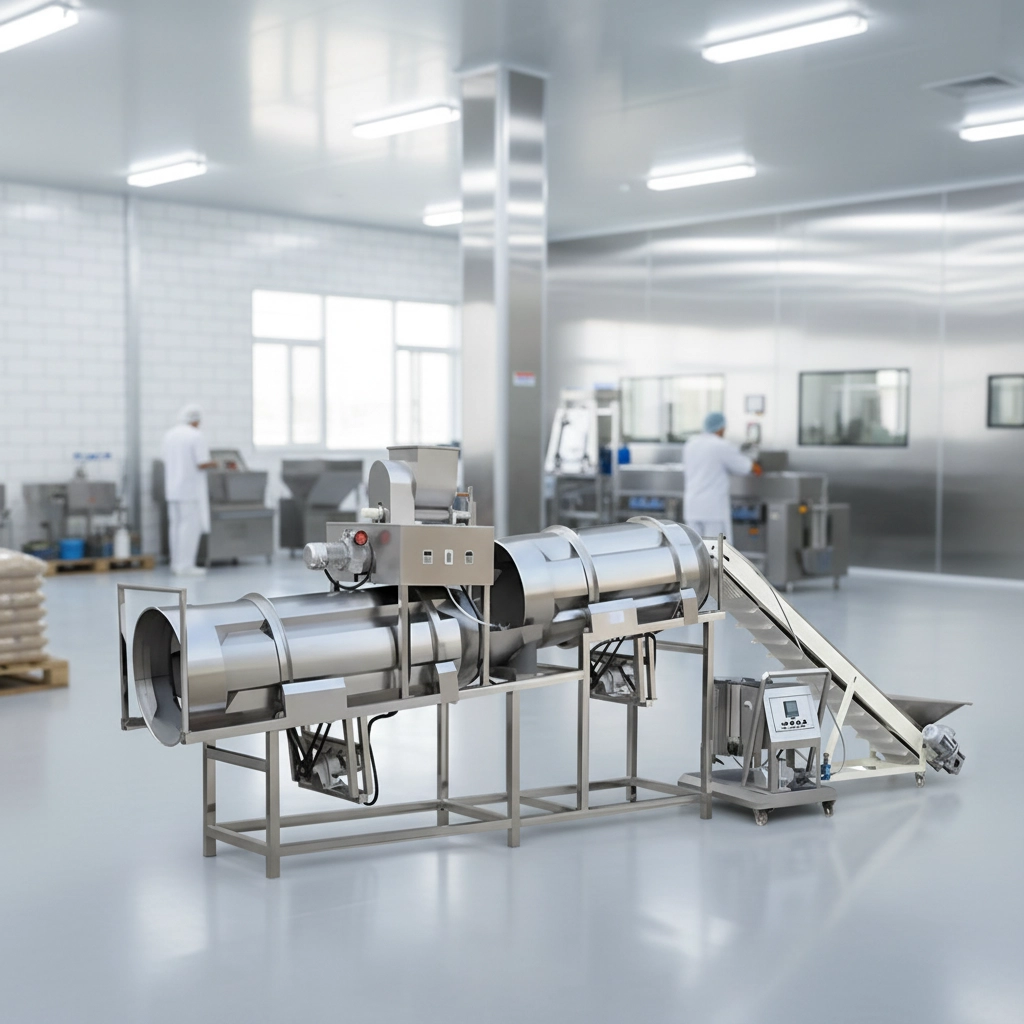
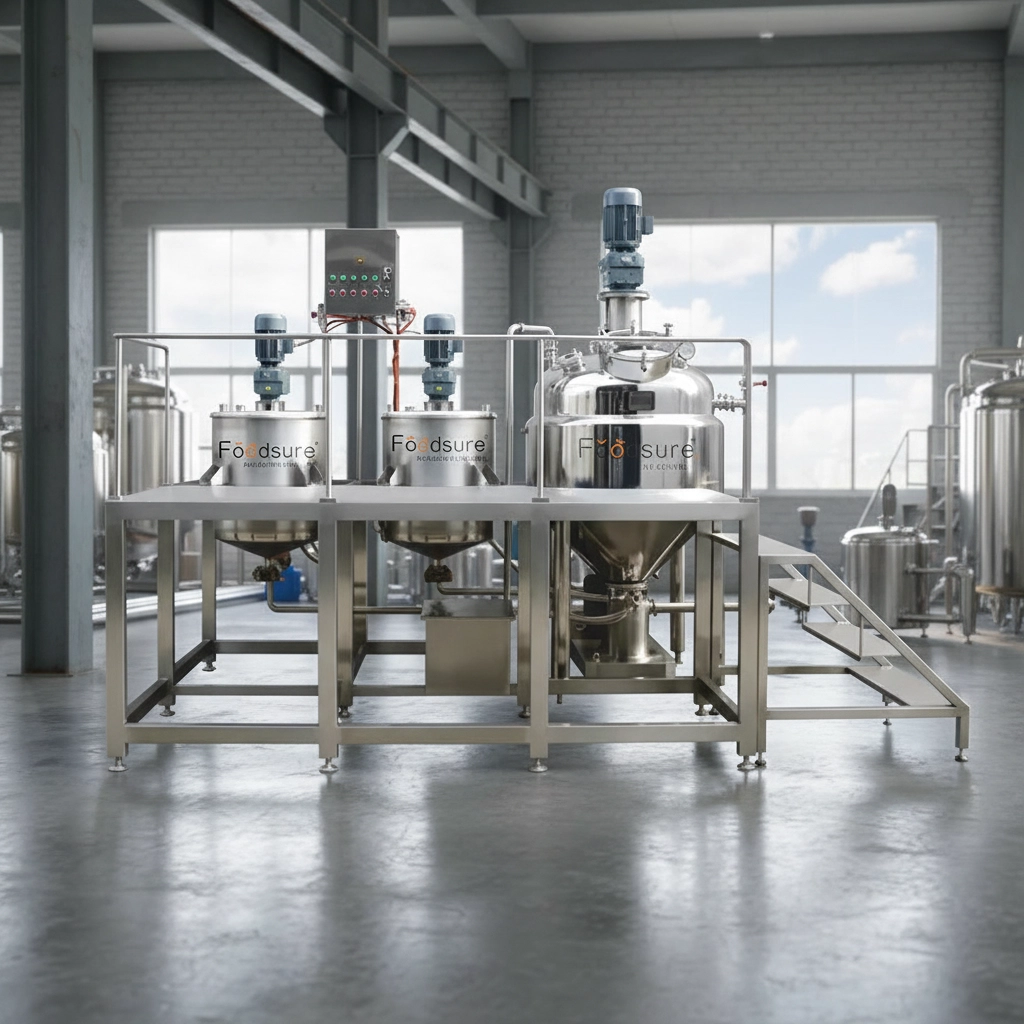
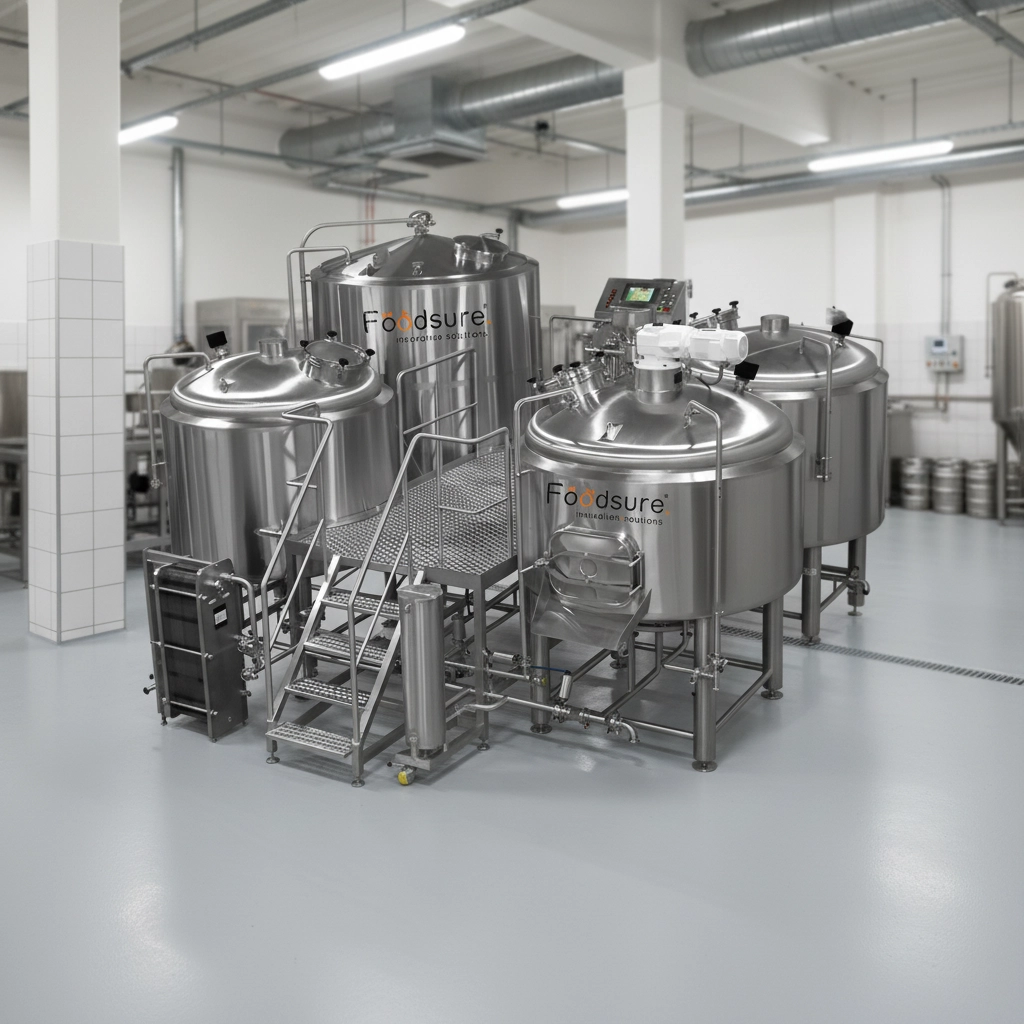
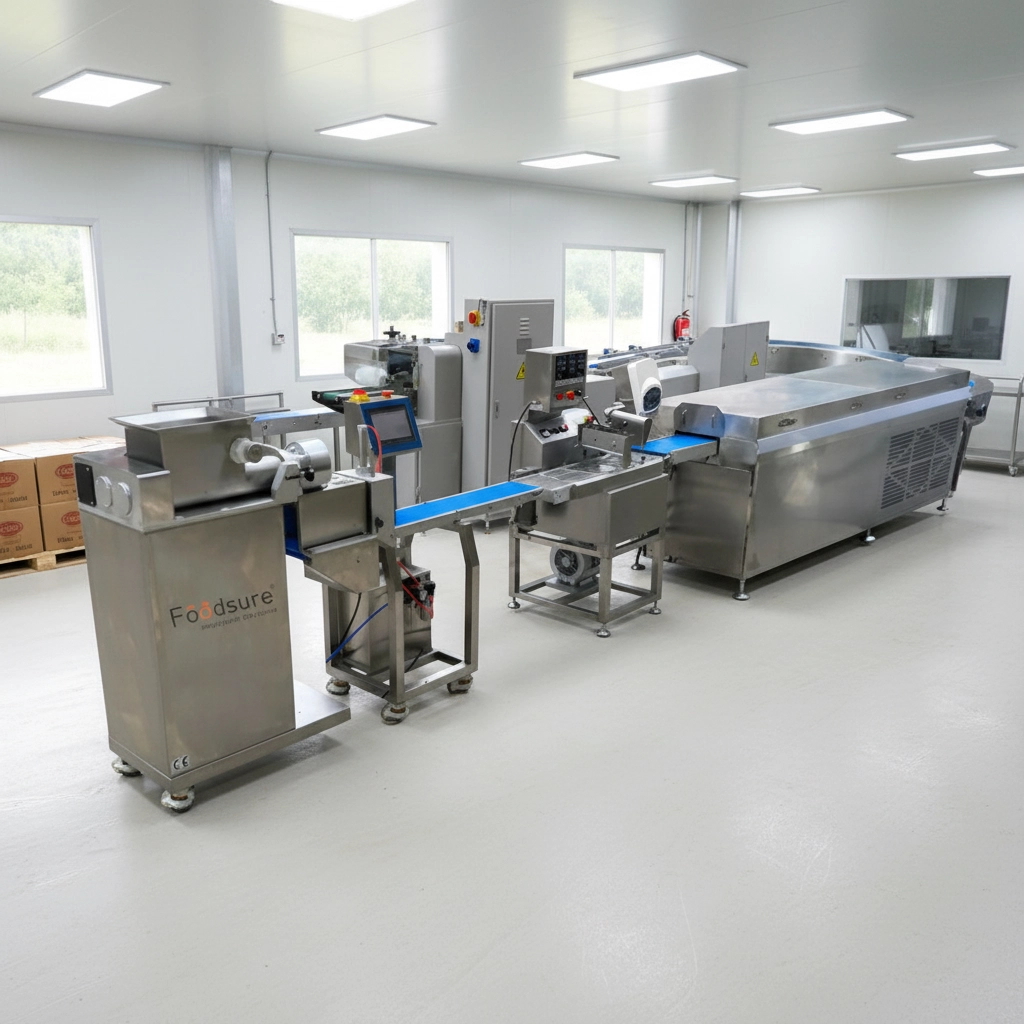
The functional snack market is experiencing rapid growth, which has made protein bars the most popular product in this emerging trend. Manufacturers need automatic protein bar making line for small and medium manufacturers because these machines deliver three essential benefits which include faster production times and better sanitary conditions and more reliable product results.
The protein bar manufacturing process requires proper protein bar production line selection which needs to be understood by both new nutrition brands and existing brands who want to grow their businesses.
| Metric | Insight | Source / Notes |
|---|---|---|
| Global protein bar market size | USD 15.97 billion in 2024 (Fortune Business Insights) | From Fortune Business Insights |
| Global projected size | USD 24.25 billion by 2032 (Fortune Business Insights) | Implies growth across 2025–2032 |
| Global CAGR | 5.45% CAGR (2025–2032) (Fortune Business Insights) | Baseline for global market |
| Global protein snacks market | USD 24.0B (2024) → USD 74.1B (2034), ~12.1% CAGR (InsightAce) | Protein bars fall under this category |
| India protein bar market size | USD 863.9M in 2024 (Grand View Research) | India-focused study |
| India market projection | USD 1,266.9M by 2030 (Grand View Research) | Forecasted growth |
| India CAGR | 6.6% CAGR (2025–2030) (Grand View Research) | Higher than global |
| India energy / protein-rich bars growth | 14%+ CAGR; protein bars ~44% share (Mordor Intelligence) | Signals strong demand |
Protein Bar Manufacturing Process (Step-by-Step)
A commercial protein bar manufacturing process requires precise control at every stage to maintain texture, nutrition, and shelf life.
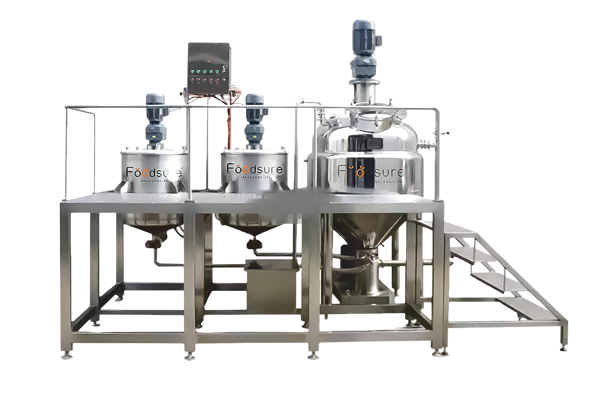
- Ingredient Weighing & Mixing: The mixing process combines proteins with syrups fats and fibers and inclusions through temperature-controlled mixers. This step directly affects the quality of bars made using a protein bar manufacturing machine.
- Binder Heating & Blending: The process involves heating liquid binders such as glucose and maltitol before mixing them with dry ingredients. Incorrect heating can cause texture failure in the protein bar production steps.
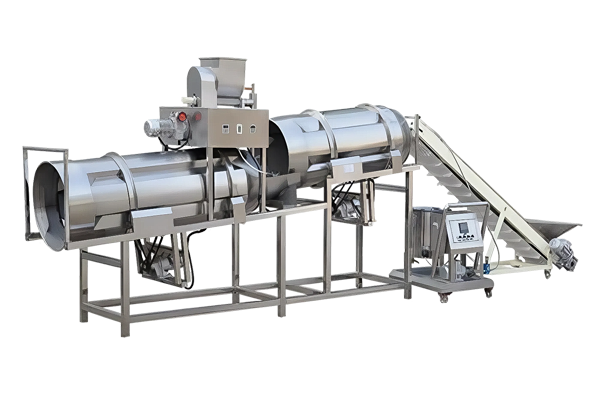
- Slab Forming / Extrusion: The protein bar extrusion machine and slab former shape the blended mass into its desired form. The compression pressure establishes the bar’s density through this measurement process.
- Rolling & Thickness Control: Modern automatic protein bar production lines require uniform thickness to achieve proper cooling and cutting results.
- Cooling Tunnel: Cooling tunnels provide stabilisation for both fats and binders. The bars produced by a commercial protein bar machine will experience oil separation when the cooling process lacks proper control.
- Cutting & Forming: automated wrapping on a protein bar production line requires precise cutting which creates uniform dimensions.
- Wrapping & Packaging: The process of wrapping the bars requires a consistent bar size which directly impacts the sealing quality and shelf life of the product.
The Hidden Gaps in Protein Bar Manufacturing
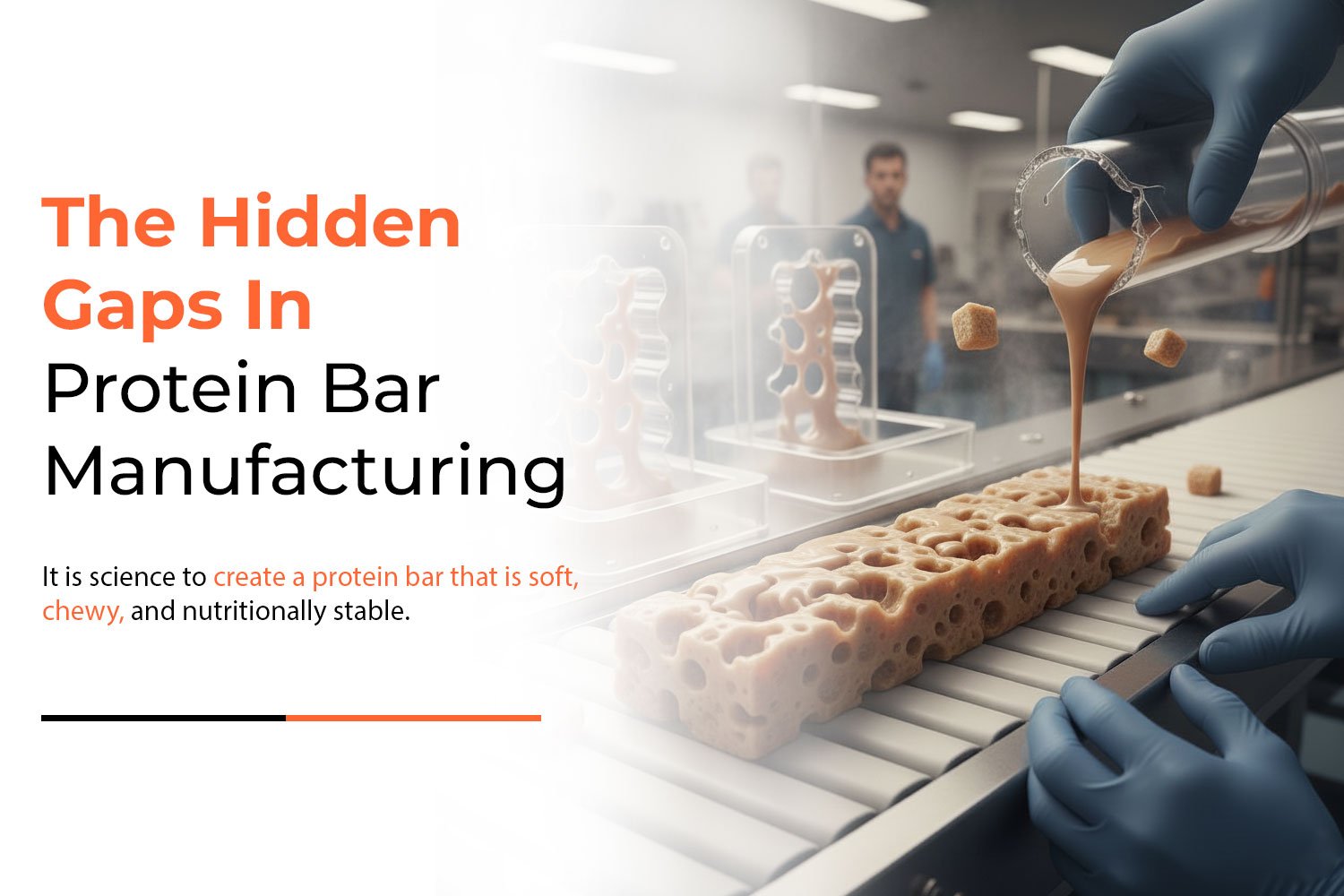
It is science to create a protein bar that is soft, chewy, and nutritionally stable. How do we do that? Protein, while important, can often make our bars too dense or dry, due to this often very high protein content. The problem is, without strict control of a set of variables related to temperature, mixing, and moisture, each batch can come out a little differently. Our product will also face a few bottlenecks during production when:
Most challenges come from poor control of critical variables like:
- Protein-to-moisture ratio
- Thermal load effect on binders
- Ingredient particle size & hydration
- Cooling time uniformity
- Compression force during forming
When these are not standardized, protein bars can:
- Become too hard, especially over shelf life
- Crack/crumble during cutting and wrapping
- Show oil separation due to unstable fat binding
- Lose texture and become chalky due to protein denaturation
Common Problems in Manual Protein Bar Manufacturing
Manufacturer using semi-automatic setups may have following problems:
- Touch texture issue was observed between different batches.
- Bars tend to harden over shelf life.
- Cracks develop during cutting.
- Over-dependence on labor.
- Some delays in lead times, but limited throughput.
Inefficiency essentially characterizes certain small-scale set-ups, and therefore, thoughts as to the existence and need for an automatic protein bar-making machine were found in the customers.
Foodsure’s Solution: Consistency = Confidence
The Foodsure automatic protein bar making line for small and medium manufacturers ensures that all aspects of production, including mixing and molding, are carried out in accordance with the set parameters.
Performance & Profitability Advantages
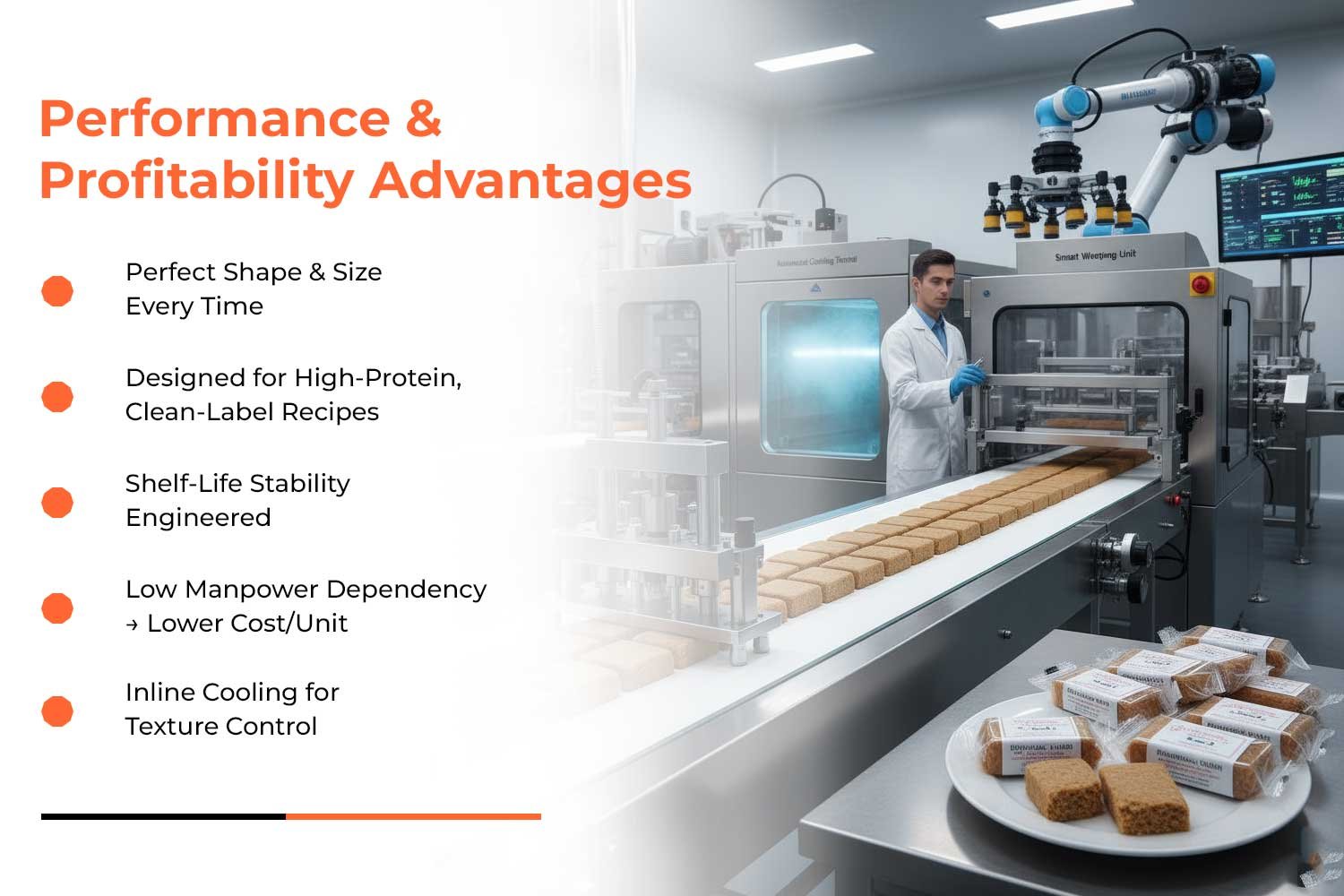
Perfect Shape & Size Every Time
Advanced forming and cutting units ensure uniform dimensions + ideal bar density to avoid rejections during wrapping.
Designed for High-Protein, Clean-Label Recipes
Can process 30–40% protein bars, nut bars, granola bars, energy bars, keto bars — without cracking or hardening.
Shelf-Life Stability Engineered
Controlled mixing temperatures prevent protein denaturation + sugar alcohol crystallization → softer texture over shelf life.
Low Manpower Dependency → Lower Cost/Unit
Automation reduces labor by up to 60%, allowing faster scaling without adding staff.
Inline Cooling for Texture Control
Prevents oil separation, stickiness, or moisture migration — maintaining bite consistency.
Why It Matters: Business Wins
| Challenge | Foodsure Machines Solution |
|---|---|
| Batch-to-batch variability | Full automation + parameter lock |
| Texture hardening | Thermal + moisture balance control |
| High wastage | Precise dosing + cutting accuracy |
| Low output | 30–40% more throughput |
| Hygiene issues | SS304 food-contact build |
The automatic protein bar making line for small and medium manufacturers is available in four different models, each with production capacity: 50kg/hr, 100kg/hr, 200kg/hr, and 500kg/hr. Each production line includes PLC automation, temperature-controlled mixing, and an extrusion module built for food processing durability.
Why an Automatic Protein Bar Making Line Is a Game-Changer
The Automatic Protein Bar Making Line provides measurable advantages through its upgraded system.
- Consistent Quality: The system provides consistent product quality to customers.
- Higher Output: The system maintains protein integrity through exact temperature control during its protein mixing process.
- Reduced Labor Costs: The Automatic Protein Bar Making Line enables production increases of 30 to 40 percent when compared to traditional manual methods.
- Suitable for High-Protein Formulas: The protein bar manufacturing system becomes more economical because automation decreases required worker hours.
Modern protein bar extrusion machines can process bars containing 30 to 40 percent protein without cracking.
Automatic Protein Bar Making Line Capacity Options
| Model | Capacity | Suitable For |
|---|---|---|
| 50 kg/hr | Startups | Pilot nutrition brands |
| 100 kg/hr | Growing brands | Regional distribution |
| 200 kg/hr | Established manufacturers | National supply |
| 500 kg/hr | Industrial operations | Export & mass retail |
Designed by People Who Understand Factories
“We are not designing machines, we are designing for the people who operate food factories,” says Mr. Himanshu Pratap, Founder of Foodsure Machines. “We have years of production floor experience that shows us where production slows down and how to identify real inefficiencies. In that information, we have based every design.”
With 13 years of food automation experience and installations in 5 different countries, Foodsure Machines builds machines that think like manufacturing organizations, simple to run, engineered to last, and constructed, with many of our installations, to work 98% of the time or greater.
Trusted by Growing Food Brands
- Scalable for all sizes: Whether you’re just getting started or a full-scale manufacturer, the same product line grows with you.
- Real-world results: A Gujarat-based nutrition brand tripled its production output within 90 days post-installation.
- Fully supported: Installations, staff training, and remote support round the clock — you will never stop producing.
Shaping the Future of Food Manufacturing
- As the functional food space in India continues to develop, automation is no longer optional; it is the default position to scale.
- Foodsure Machines helps food entrepreneurs reduce human error, control costs, and provide product consistency, day-in-and-day-out.
- Every system is intuitive, globally benchmarked, and is backed by an immediate response technical team to assist your operation well after your installation.
FAQ
What is an Automatic Protein Bar Making Line?
The Automatic Protein Bar Making Line operates fully as an integrated system which handles all production processes from ingredient mixing to final product wrapping with minimal need for human intervention.
How does a Protein Bar Production Line work?
A Protein bar production line transports the product step by step steps from mixing to forming for packaging across what can be a single, controlled event.
What is the role of a Protein Bar Extrusion Machine?
Protein bar extrusion machine shapes the mixture with an even texture first to get sized, then are cut to size to make ropes or slabs.
Can small businesses use an automatic protein bar making line for small and medium manufacturers?
The automatic protein bar production line, which serves small and medium manufacturers, begins with a minimal output capacity that expands according to increasing market demand.
What steps are involved in the protein bar manufacturing process?
The protein bar manufacturing process is made up of mixing raw ingredients, extruding or slab forming, rolling, cooling, shaping, and wrapping.
What capacity options are available in a protein bar production line?
The production capacity of protein bar production lines starts from 50 kilograms per hour for small businesses and extends to 500 kilograms per hour for big manufacturing plants.
Is a protein bar extrusion machine suitable for high-protein recipes?
Yes, assuming that the temperatures and pressures are well controlled, the protein bar extrusion machine is capable of handling dense, high-protein formulae.
Why is an Automatic Protein Bar Making Line better than manual production?
An automatic protein bar manufacturing line is characterised by consistent output as compared to manual work, higher output, and lesser humanness.
How does automation improve the protein bar manufacturing process?
The manufacturing process of protein bars uses automation to maintain essential factors, which include temperature and moisture, forming pressure at constant levels throughout the production process.
Who should invest in an automatic protein bar making line for small and medium manufacturers?
The automatic protein bar production line benefits small and medium manufacturers who operate growing nutrition brands and contract manufacturing businesses and expanding snack companies.