
The food processing industry in India is no longer a sunrise sector. As of 2026, it is expected to be a USD 535 billion industry, with a CAGR of more than 13% for the exports of processed farm products. For business opportunities, the gist is that India is the second-largest producer of fruit and vegetables, and we process only a meagre 10% of it.
It’s a lucrative decision to open a food processing plant setup India in 2026. Technology is quickly replacing the old, wasteful ways of food processing and producing with the emergence of Quick Commerce (Q-Comm) and the world’s shift towards “superfoods”. Transforming raw surplus farm produce into processed, branded retail food means you are not only selling food but offering the consumer convenience, health and quality.
Planning Your Food Processing Business Plan India
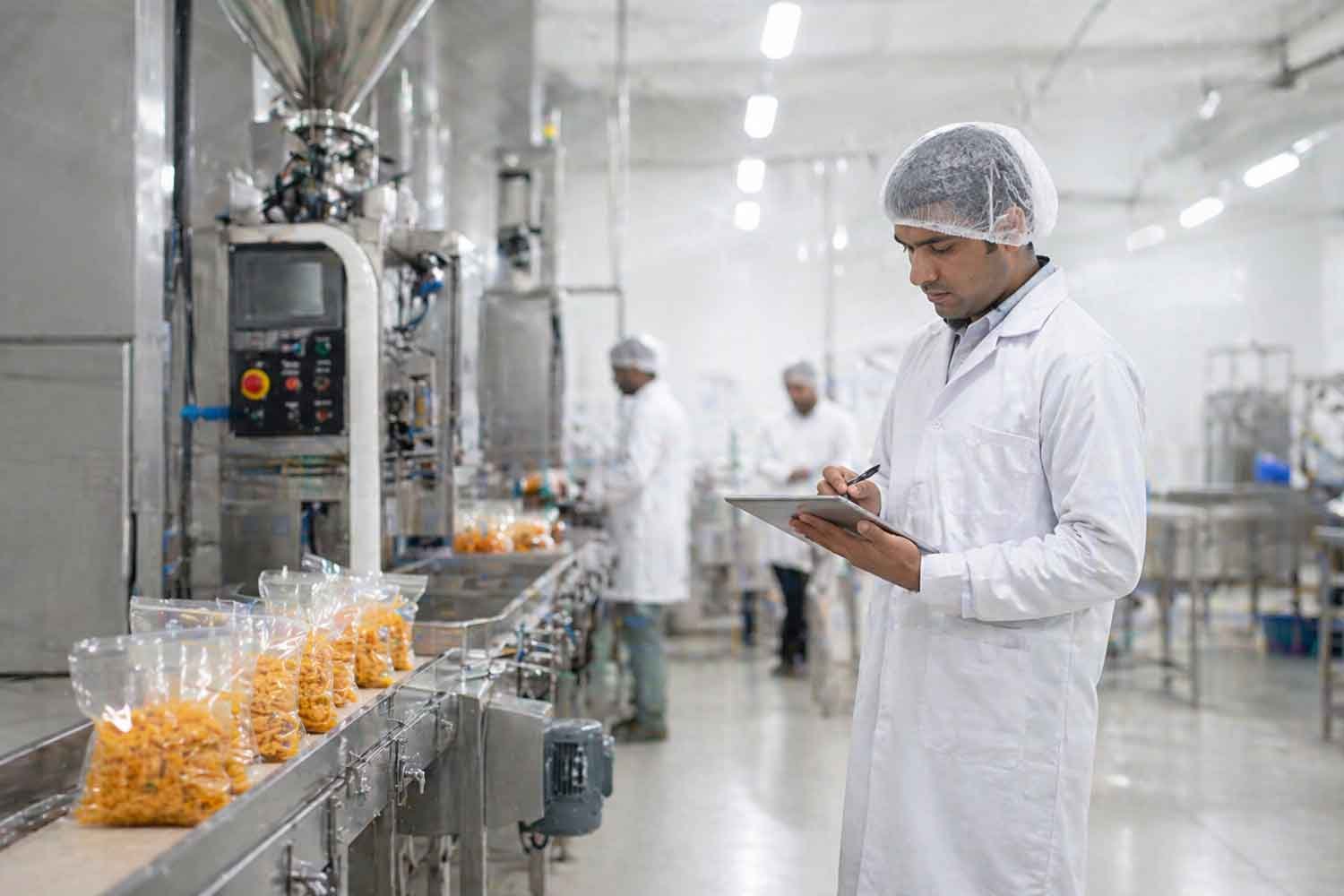
Before breaking ground, a solid food processing business plan India is required. In this business, the only three keys to success are:
- Market Research: In 2016, popular products were millet-based snacks, plant-based protein bars, and preservative-free gourmet sauces.
- Plant Location: Your factory should be a “Spoke” in the Hub and Spoke model. Be closer to the source; for example, locating makhana machine lines in Mithila (Bihar) minimises the transportation costs of raw materials and the spoilage of products.
- Modularity: Minimum viable product as a single line and then scaling up as a market opportunity arises.
Essential Food Processing Machinery India: The Engine of Your Plant
By 2026, your product quality will be reflected in your food processing machinery. Foodsure Machines offers state-of-the-art processing lines for today’s trends:
- Makhana Machine: Fully automatic roasting and grading equipment that slashes manual damage rates (15%) to less than 5%.
- Protein Bar Machine: Cold-press and extrusion systems that preserve the nutrients in ingredients without damaging proteins.
- Mayonnaise Making Machine: Ultra-high shear vacuum emulsifiers for a shelf-stable mayonnaise product with a smooth texture and minimal additives.
- Food Packaging Machinery India: MAP (Modified Atmosphere Packaging) and vacuum packaging are commonplace today to increase the shelf life of products to 6 – 12 months without preservatives.
When selecting equipment, use SS316 (food grade) for all products that come in contact with food and SS304 for equipment structures to maximise food safety and minimise downtime.
Understanding Food Processing Plant Cost in India
Cost depends on the degree of automation and the product processed.
- CAPEX (Capital Expenditure): Land, factory, civil work and your food processing machinery India. CAPEX can be reduced by 20-30% by joining a Mega Food Park, which includes shared cold storage and a warehouse.
- OPEX (Operational Expenditure): Raw material, power and labour.
Estimated Investment Tiers (2026 Trends):
- Micro: ₹10 – ₹25 Lakhs (For localised brands)
- Medium-scale: ₹5 Crores+ (For national and export markets)
- Large-scale: ₹5 Crores+ (Exports, & fully automated
Government Support: Food Processing Unit Subsidy India & Schemes
The government is actively promoting local manufacture with schemes:
- The PMFME Scheme: Provides a 35% CLM (Credit-Linked Mechanism) subsidy (maximum of ₹10 Lakhs) for micro enterprises. It has an emphasis on the “One District One Product” (ODOP) strategy.
- SAMPADA Yojana: To build infrastructure. It offers a 35 – 50% grant-in-aid of the cost for integrated cold chains and value addition activities.
- PLISFPI (Production Linked Incentive): This scheme for big players has incentives linked to incremental sales with an expenditure of ₹10,900 crore until 2026-27.
Regulatory Framework: Licensing & Compliance Overview
Compliance is vital to build consumer confidence and enable exports.
- FSSAI License: Since April 1, 2026, FSSAI has Perpetual Validity. Now you don’t have to renew your license every 3-5 years – valid until cancelled.
-
-
- Registration: Turnover ₹1.5 Crore or below.
- State License: Turnover ₹1.5 Crore – 50 Crore.
- Central License: Turnover more than ₹50 Crore.
-
- MSME (Udyam) Registration: Essential for getting bank loans at low rates and government tenders.
- GST & IEC: Required for incorporation and to get an Import Export Code for exports.
- Environmental Clearance: NOC for waste from the State Pollution Board.
Step-by-Step Guide to Food Processing Plant Setup India
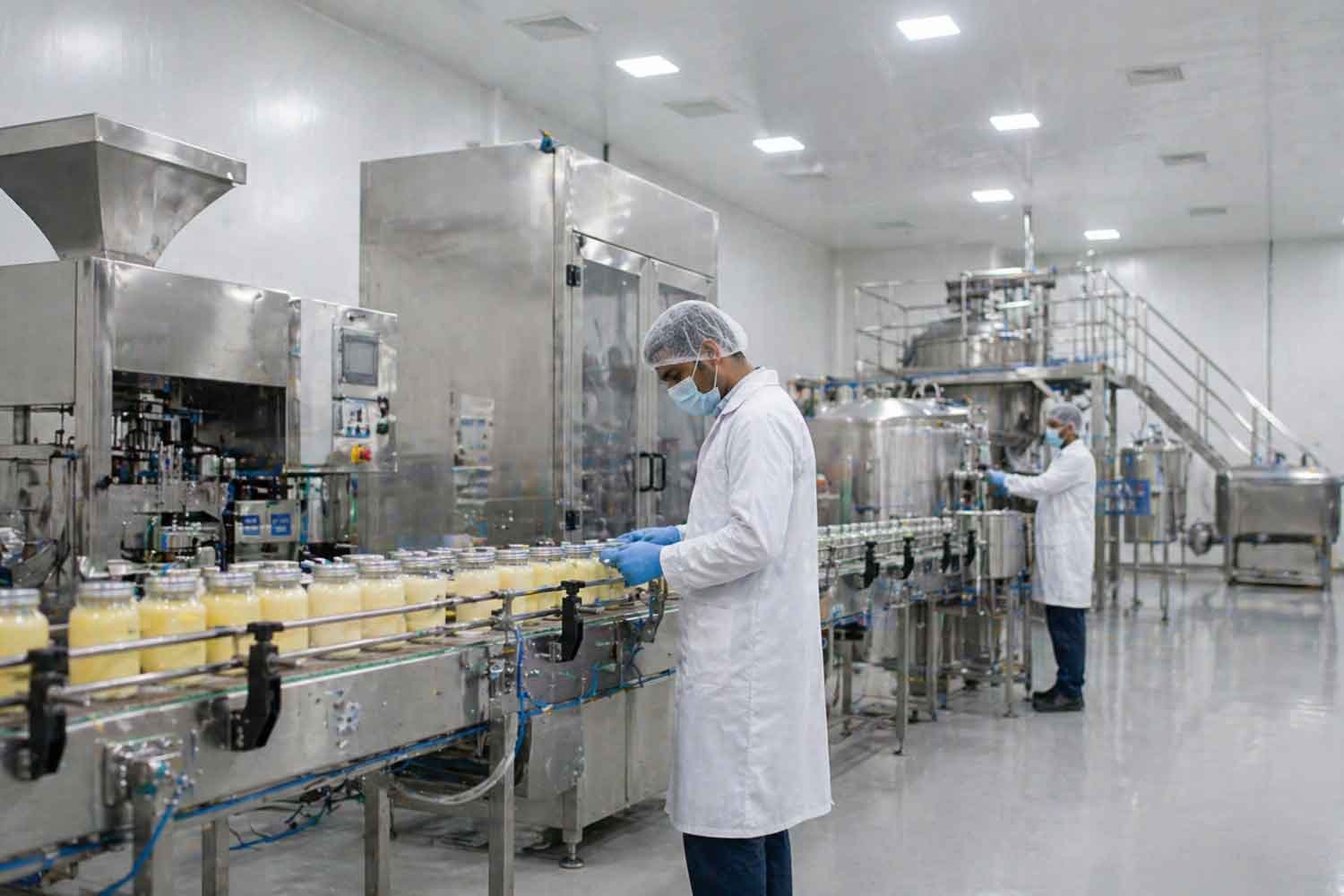
- Finalise Product & Model: Choose your hero with data-driven strategies.
- Source Equipment: Work with Foodsure Machines for complete Industrial Food Processing Equipment that adheres to international quality standards (HACCP).
- Layout Design: Design a “Linear Flow” plant layout to avoid contamination.
- Trial & Testing: Run a series of trials to set equipment to moisture, texture and packaging specifications.
Conclusion
India’s food processing industry is the fastest-growing. By 2026, there won’t be anyone left trading unorganised; manufacturing is key. Automation is the key to effective organisation; it makes the process less labour-intensive, consistent from batch to batch and increases margins.
Set up a factory for life!
Connect with Foodsure Machines for expert consultancy, latest machinery solutions, and a complete guide to food processing plant setup in India.
FAQs
What are the costs of food processing plant setup India?
A small plant is between ₹10 – 25 Lakhs, a medium plant is between ₹50 Lakhs and ₹2 Crores, and a large automated plant is around ₹5 Crores and above.
What is the PMFME SUBSSIDY rate?
PMFME offers a credit-linked subsidy of 35% (up to a maximum of ₹10 Lakhs) towards technology and machinery.
Do we need to renew the FSSAI every year?
No. In 2016, FSSAI licenses now have Perpetual Validity, meaning they will never expire until you cancel or surrender the license.
What’s the role of packaging machines?
New food packaging machinery (like Nitrogen flushing) is necessary to increase the shelf-life to 6 – 12 months and for export.
SS304 vs. SS316: Which is better?
SS316 is recommended for food contact parts because of its corrosion resistance, and SS304 is standard for all machinery frames and other structures.